Signs Your Engine Oil Is Too Thick for Winter Driving
If cold starts bring slow cranking, delayed oil-pressure light-out, or brief valve clatter, the oil may be too thick for the temperature or the wrong winter viscosity grade. Ignore that pattern and you can strain the starter, stretch startup wear, and miss a battery or fuel fault. This guide separates viscosity symptoms from lookalike faults and shows what to check next.
- Confirm the oil grade on the bottle and in the owner’s manual before guessing.
- Compare cold-start behavior with warm-start behavior; a viscosity issue is usually worst at startup.
- Check oil level and service history for long intervals, short trips, or sludge buildup.
- If the symptom stays after warm-up, shift your attention to battery, starter, fuel delivery, or mechanical wear.
Why thick oil acts up in winter
Engine oil viscosity is resistance to flow. Cold temperatures raise that resistance, so oil moves more slowly through narrow oil galleries, across the pickup tube, and into the upper valve train. That matters most during the first few seconds after a cold start, when metal still depends on fast oil delivery for protection.
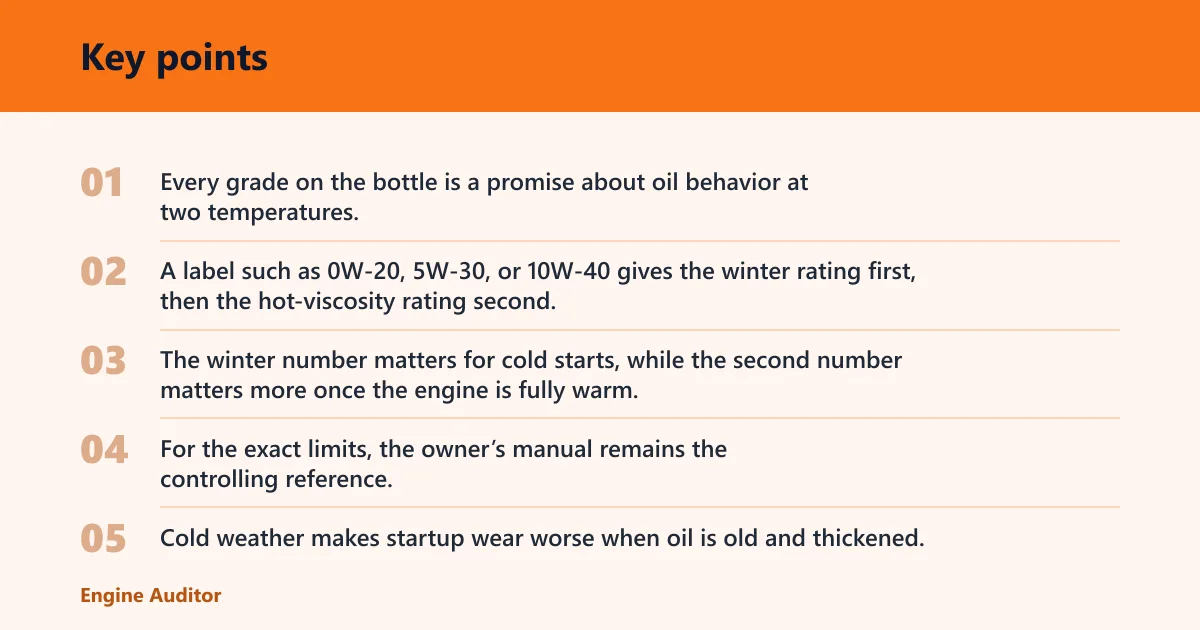
Every grade on the bottle is a promise about oil behavior at two temperatures. A label such as 0W-20, 5W-30, or 10W-40 gives the winter rating first, then the hot-viscosity rating second. The winter number matters for cold starts, while the second number matters more once the engine is fully warm. For the exact limits, the owner’s manual remains the controlling reference.
Cold weather makes startup wear worse when oil is old and thickened. Conventional oil contains paraffin waxes that stiffen as temperatures drop, while synthetic oil often has better low-temperature flow than conventional oil in the same grade. Exact cold performance still varies by formulation, CCS and MRV behavior, and the grade the engine calls for.
Why the first minute matters most
Viscosity grade matters most during the first few seconds after a cold start. At that point, the engine runs in boundary lubrication, a brief condition where the oil film is thin and metal must avoid touching metal. Delayed flow can lengthen that boundary phase and raise wear on lifters, chains, and bearings.
Once the engine warms, thick oil becomes less obvious because flow improves. That is why a problem that shows up only for about 10 to 60 seconds after startup points more strongly to viscosity trouble than a symptom that stays present throughout the drive. If the noise, stumble, or warning light disappears as temperatures rise, oil grade deserves a close look.
What changes once the engine warms
Warm oil moves more easily through the pump, galleries, and top end. If the problem is only a cold-start issue, the oil may be too thick for the weather, too old, or both. If the issue continues after warm-up, look harder at battery strength, fuel delivery, ignition, air intake, or mechanical wear.
Signs your oil is too thick
The clearest signs appear during the first minute after startup and fade as the engine warms. Hard cranking, top-end tapping, delayed oil-pressure light-out, and brief roughness are the patterns that fit thick oil best. Long-lasting misfire, weak cranking without change after starting, or a fuel smell in the exhaust point elsewhere.
Hard cranking that improves after the first start
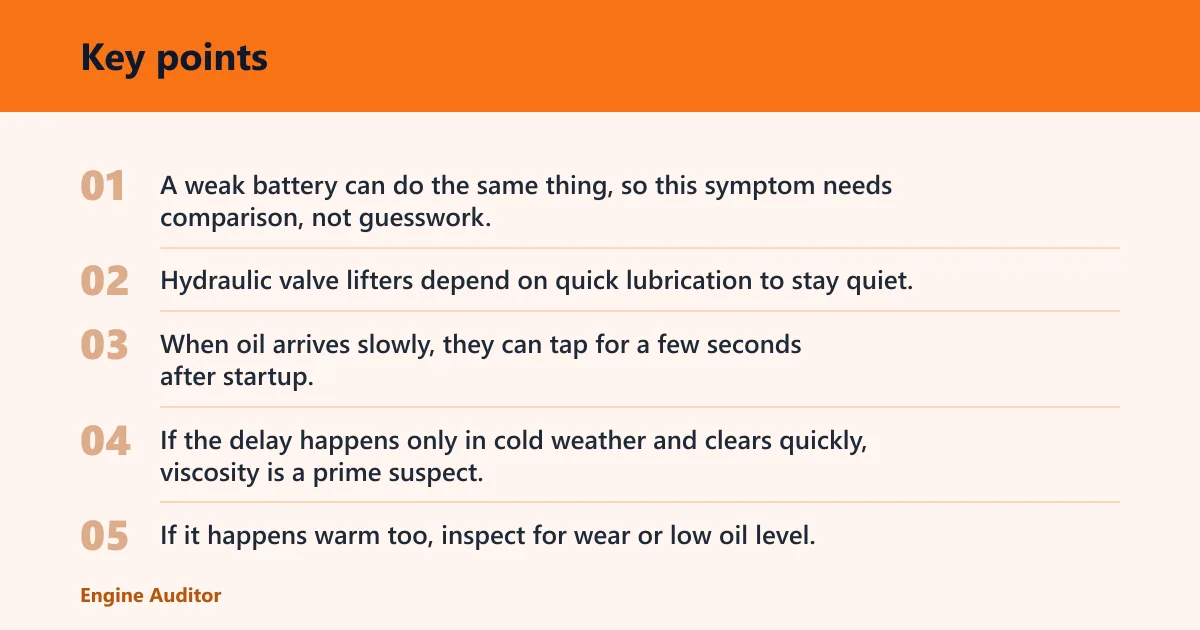
If the starter turns the engine slowly on a cold morning but the next restart is normal, oil thickness is one possible cause. Thick oil raises pumping resistance, which makes the oil pump work harder and can slow rotation until the first heat from combustion starts thinning the oil. A weak battery can do the same thing, so this symptom needs comparison, not guesswork.
Startup tapping from lifters or the top end
Hydraulic valve lifters depend on quick lubrication to stay quiet. When oil arrives slowly, they can tap for a few seconds after startup. Timing chain tensioners also rely on fast oil delivery, so a brief rattle or chain noise at first start can point to delayed flow through the galleries rather than a permanent mechanical failure.
Delayed oil-pressure light or slow gauge movement
A pressure light that stays on a little longer than usual after a cold start can mean the oil pump is pushing thick oil through a restricted pickup tube or past a bypass valve that has opened under load. If the delay happens only in cold weather and clears quickly, viscosity is a prime suspect. If it happens warm too, inspect for wear or low oil level.
Rough running or extra noise that fades as oil warms
Brief roughness after startup can come from oil drag, but it can also mimic fuel or ignition faults. Thick oil can make the engine feel stiff for the first minute, then normal once circulation improves. If the roughness remains after the temperature gauge rises, stop treating it as an oil question alone.
Winter oil symptom matrix
This matrix turns common cold-weather complaints into a quick diagnosis path. Use the oil-related cause as a lead, not a verdict. If the same symptom stays after warm-up, or if it happens with a fully charged battery and fresh fuel, move to the non-oil path. Severity key: low means monitor, moderate means check soon, high means inspect promptly.
| Symptom | Likely oil-related cause | Non-oil alternative cause | Urgency | More likely viscosity when… | Recommended check |
|---|---|---|---|---|---|
| Slow cranking only on cold starts | Oil too thick for the temperature; higher pumping resistance | Weak battery or poor cable connections | Moderate | the engine turns normally once the first start is over and the weather is the main change | Compare cold and warm starts; check battery voltage and cable corrosion |
| Brief lifter tapping for 5 to 30 seconds | Delayed lubrication to hydraulic valve lifters | Low oil level or worn lifter | Moderate | the noise fades as oil pressure and temperature rise and does not return warm | Check oil level and grade; listen for noise fade as oil warms |
| Oil-pressure light stays on a little longer | Slow oil delivery through galleries or pump strain | Faulty pressure sender or low oil pressure from wear | High | the delay appears mainly on cold starts and shortens as the engine warms | Verify oil level, then inspect the grade and sender if it persists |
| Top-end rattle that fades after startup | Slow flow to the upper valve train | Timing chain wear or tensioner wear | Moderate | the rattle is brief, temperature-linked, and absent once fully warm | Note whether the noise lasts only cold; inspect if it continues warm |
| Starter works harder in deep cold | Thick oil increases cranking resistance | Starter motor wear | Moderate | cold weather clearly makes the crank slower while warm restarts are normal | Test with a known good battery; compare current draw if available |
| Fuel economy drops in winter | Higher pumping losses from thick oil | Idling, winter fuel blend, short trips | Low to moderate | the drop begins with colder weather and the oil stays cold on short trips | Track whether the drop started with cold weather and short-trip use |
| Rough running that disappears after warm-up | Oil drag during the first minute | Fuel delivery, plugs, glow plugs, or air issues | Moderate | the roughness is brief and linked to cold starts rather than every drive | Look for misfire codes and check battery and fuel system health |
| Persistent noise after warm-up | Less likely to be oil alone | Mechanical wear, low oil pressure, or sludge restriction | High | the noise started after long service intervals or got worse with sludge buildup | Stop guessing and inspect for wear, sludge, and pressure loss |
| Delayed top-end quieting after cold start | Sludge-restricted oil galleries or slow tensioner refill | Chain wear, oil pump wear, or low oil pressure | High | the noise lasts longer in cold weather and improves as oil flow catches up | Check for sludge, service history, and whether the noise clears as pressure builds |
When it may be battery, fuel, or starter instead
Not every winter start problem is oil-related. If the engine cranks slowly with a fully warm engine, or if the symptom does not improve after the first minute, look first at battery strength, starter condition, fuel delivery, or ignition. Thick oil is most convincing when the symptom tracks closely with cold ambient temperature and disappears as the engine warms.
Symptoms that point away from oil
Repeated no-starts with no change in cranking speed usually point away from viscosity. So do clicking solenoids, dim lights during cranking, a fuel odor without startup noise, and a check-engine light with misfire codes. Oil can add drag, but it does not usually cause a dead battery or a failed fuel pump.
Cold-weather clues that point to battery strength
A battery problem often gets worse with temperature but does not improve much after the engine has already been cranked once. If the starter slows sharply, the dash dims, and the engine barely turns, check battery state before blaming oil. Cold weather lowers battery output, which can mimic thick oil very closely.
Fuel and ignition faults that mimic thick oil
Diesel engines can show extra starting delay in winter if fuel gelling, glow plug trouble, or weak injection pressure is present. Gas engines can stumble because of fouled plugs, weak coils, or stale fuel. If the engine starts quickly but runs rough for more than a brief cold interval, oil is less likely to be the main fault.
Picture a compact car that cranks normally at 20°F but rattles for 15 seconds, then quiets down. That pattern fits delayed oil delivery more than battery trouble. Now change one variable: if the same car cranks slowly and the dash lights sag, the battery becomes the first suspect instead.
What oil grades fit winter use
Multi-grade oil grades combine a winter rating and a hot-viscosity rating. 0W-20 is generally expected to flow better in cold starts than 10W-40, while still aiming to provide the hot-side protection the engine maker expects. The winter number matters most in severe cold and short-trip use, because the oil may never fully warm before shutdown.
How to read 0W-20, 5W-30, and 10W-40
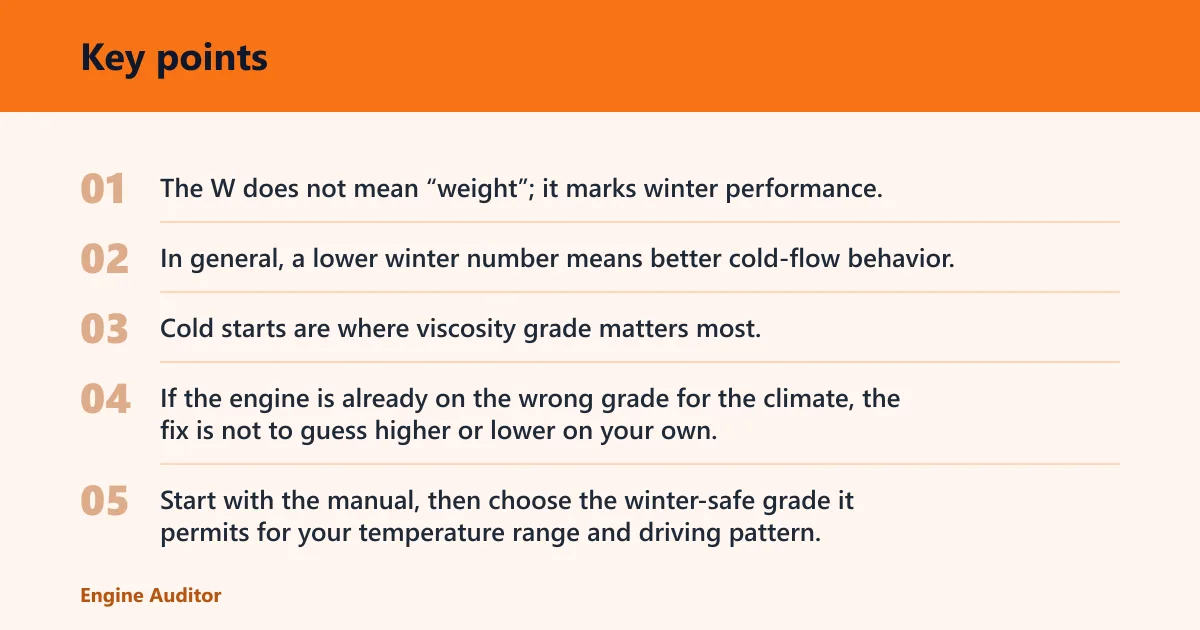
The W does not mean “weight”; it marks winter performance. In general, a lower winter number means better cold-flow behavior. The second number, such as 20, 30, or 40, describes hot-viscosity behavior once the engine reaches operating temperature. The correct grade is the one the owner’s manual allows, and the exact cold-flow result still depends on the oil’s formulation and low-temperature test performance.
Drivers in Moline often see January air below 10°F, which is the kind of cold that exposes the difference between grades quickly. In that kind of weather, the wrong winter rating can show up as slow pressure rise, brief lifter noise, or harder cranking even when the battery is fine.
Why the winter rating matters for cold starts
Cold starts are where viscosity grade matters most. If the engine is already on the wrong grade for the climate, the fix is not to guess higher or lower on your own. Start with the manual, then choose the winter-safe grade it permits for your temperature range and driving pattern. The SAE grading system is designed to compare oils by standardized low-temperature and high-temperature behavior, not by brand claims alone.
Why the manual still sets the limit
The owner’s manual still wins because engine clearances, oil pump design, and timing components all have limits. Some engines tolerate a broader range of grades than others. If the manual lists only one grade, stay with it unless a qualified repair source gives a specific exception for your engine family. API service categories and the automaker’s recommendation work together, not separately.
Does synthetic oil flow better in cold weather?
Yes, synthetic oil generally flows better in cold weather than conventional oil, and that can shorten the lag between startup and full lubrication. Exact cold performance still varies by formulation, CCS/MRV specs, and viscosity grade, so synthetic is not automatically better in every winter situation. It helps only when the grade still matches the engine and the manual allows the change.
Conventional oil contains paraffin waxes that stiffen as temperatures drop, so older formulas can slow more in severe cold. Synthetic oil is often a better winter choice for short trips, repeated cold starts, and engines that spend a lot of time below freezing. It is still not a cure for a wrong grade, sludge, or a worn pump.
A common first-timer mistake is switching to synthetic without checking the grade. A 10W-40 synthetic may still start too thick for a winter commute, while a 0W-20 conventional may still be the wrong answer if the engine was built for a different hot-viscosity range.
High-mileage and short-trip winter use
High-mileage engines can have more internal wear and more low-flow areas where sludge deposits build up. Those engines may show cold-start noise sooner because thick oil reaches the top end more slowly. Short-trip winter driving makes the problem worse because the oil spends more time cold and never fully clears moisture or deposits.
Diesel applications need extra caution in winter because starting loads are higher and cold-flow problems can stack with fuel and glow plug issues. In any engine, if thick oil signs appear after long service intervals, check for sludge, level loss, and the grade on the bottle before deciding anything else.
What to do if the oil is too thick
Start by verifying the grade on the bottle and in the owner’s manual. Then check the oil level, service history, and whether the car has been running long change intervals or short-trip winter use. If the symptoms are confined to the first minute and improve with a correct grade, the problem is likely viscosity-related. If not, inspect for damage or another fault.
-
Confirm the installed grade. Read the container and check the vehicle manual. If the grade does not match the winter range listed for your engine, do not keep guessing.
-
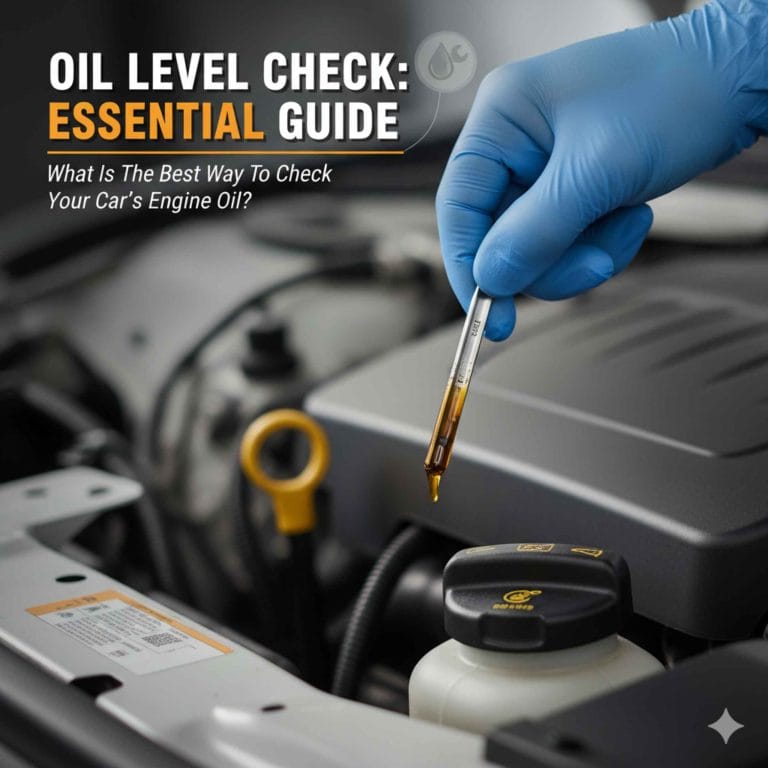
Check oil level and condition. Look at the dipstick on level ground and with the engine off long enough for the oil to drain back. Very dark oil, thick sludge, or a level below the mark can worsen cold-flow problems.
-
Compare cold and warm behavior. Note whether the symptom lasts only for the first 5 to 60 seconds. A short symptom that appears only when the engine is cold can support a viscosity-related diagnosis. A symptom that stays after warm-up needs a broader inspection.
-
Inspect service history. Long intervals, repeated short trips, and prior use of a heavier grade can leave deposits in narrow passages. That can restrict circulation to lifters, tensioners, and the upper valve train.
-
Stop driving if noise persists. If pressure delay, chain rattle, or lifter noise continues after warm-up, do not keep treating it as only a winter issue. The pump, sender, or internal wear may need attention.
Frequently asked questions
What are the signs my engine oil is too thick in winter?
Common signs include slow cranking, brief lifter tapping, delayed oil-pressure light-out, and startup noise that fades as the engine warms. Those symptoms fit thick oil best when they happen only during roughly the first minute after a cold start and improve once circulation and temperature rise. The answer is strongest when the pattern tracks temperature, not random drive cycles.
Can thick oil cause hard starts in cold weather?
Yes. Thick oil raises pumping resistance, so the starter has to work harder before the engine catches. That said, hard starts can also come from a weak battery, poor cable connections, or fuel-system trouble, so compare the symptom with warm starts before deciding it is oil alone. If warm starts are normal, viscosity moves up the list.
Does thicker oil reduce fuel economy in winter?
It can. Thick oil increases pumping losses, which can reduce fuel economy, especially in short-trip winter driving where the oil stays cold longer. The effect is usually modest, but it adds to other winter penalties such as long idling, denser air, and more stop-and-go use. A seasonal drop is not proof by itself, but it can fit the pattern.
Will too-thick oil cause engine noise on startup?
It can cause brief tapping, ticking, or chain rattle on startup because oil reaches lifters, tensioners, and the upper valve train more slowly. If the noise fades within seconds, viscosity is a likely factor. If it continues after warm-up, inspect for wear or low oil pressure. Persistent noise needs a broader diagnosis, not just a grade change.
What viscosity oil should I use for winter driving?
Use the grade listed in the owner’s manual, then choose the winter-safe version allowed for your climate. A lower winter number, such as 0W or 5W, generally helps cold starts more than 10W. Do not switch grades outside the manual’s limits just to chase a cold-weather symptom. The manual and the engine design set the boundary.
Products related to this article
Sponsored / affiliate links. As an Amazon Associate I earn from qualifying purchases. I may earn additional commission from eligible campaigns.