How Overnight Parking Outside Affects Engine Oil
Overnight parking outside in freezing temperatures can create a cold-soak situation for engine oil: use the lowest winter viscosity your owner’s manual allows, often 0W or 5W, so the oil can reach bearings faster on startup. Skip that guidance and you can get slow cranking, brief oil-starved wear, and a false diagnosis of battery or starter trouble. This guide explains cold-soak oil flow, how to choose viscosity, and how to separate oil-related symptoms from weak battery or starter problems.
Cold soak and engine oil
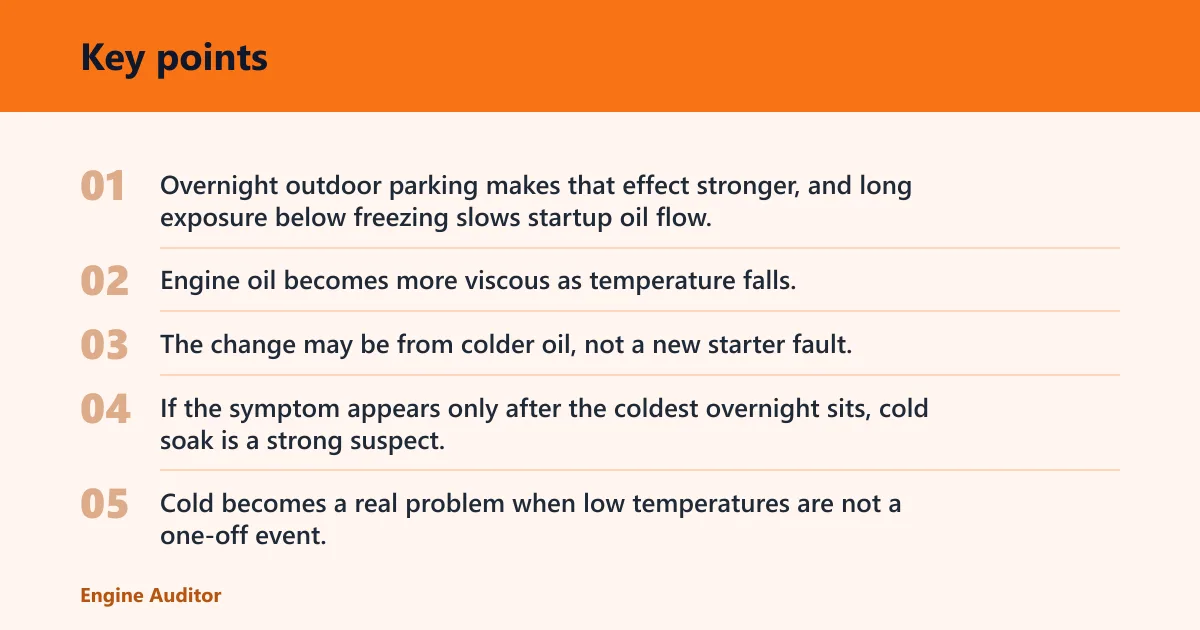


Cold soak is what happens when a parked engine sits long enough for its internal temperature to drift toward the outside temperature. Overnight outdoor parking makes that effect stronger, and long exposure below freezing slows startup oil flow. That matters most on the first crank, when the oil has not yet moved back through the galleries and bearings.
Engine oil becomes more viscous as temperature falls. It does not turn into a solid block, but it moves more slowly, especially after a night outside in freezing weather. On startup, that can delay engine oil pressure a little longer than normal and make the first few seconds after ignition the most sensitive part of the morning.
Does overnight parking outside thicken oil?
Yes. Overnight parking outside does not change the oil’s grade, but it does make the oil act thicker in the cold because the engine and oil cool toward ambient temperature. The colder the soak, the slower the first movement through the engine, and the more likely a driver is to notice delayed oil pressure, brief roughness, or a slower start.
A short frost is one thing. Sustained sub-freezing parking is another. Brief cold snaps may only make the first crank feel a little heavier, while repeated nights below freezing can slow cold-start flow enough that a driver may notice longer cranking or a warning light that stays on a bit longer than usual.
Say your sedan sits outside at 18°F overnight and starts normally once, then cranks more slowly the next morning after a colder night. The change may be from colder oil, not a new starter fault. If the symptom appears only after the coldest overnight sits, cold soak is a strong suspect.
When cold becomes a real problem
Cold becomes a real problem when low temperatures are not a one-off event. If the vehicle spends night after night below freezing, the oil has less chance to stay near operating temperature, and the first-start delay repeats. That is when winter viscosity choice matters most, especially for drivers who cannot garage the car.
Pay attention to repeated patterns, not one cold morning. A single slow crank can come from a weak battery, but a pattern of sluggish oil pressure only after outside overnight parking points more toward cold oil flow than toward an electrical fault.
What weight engine oil is best for winter driving?
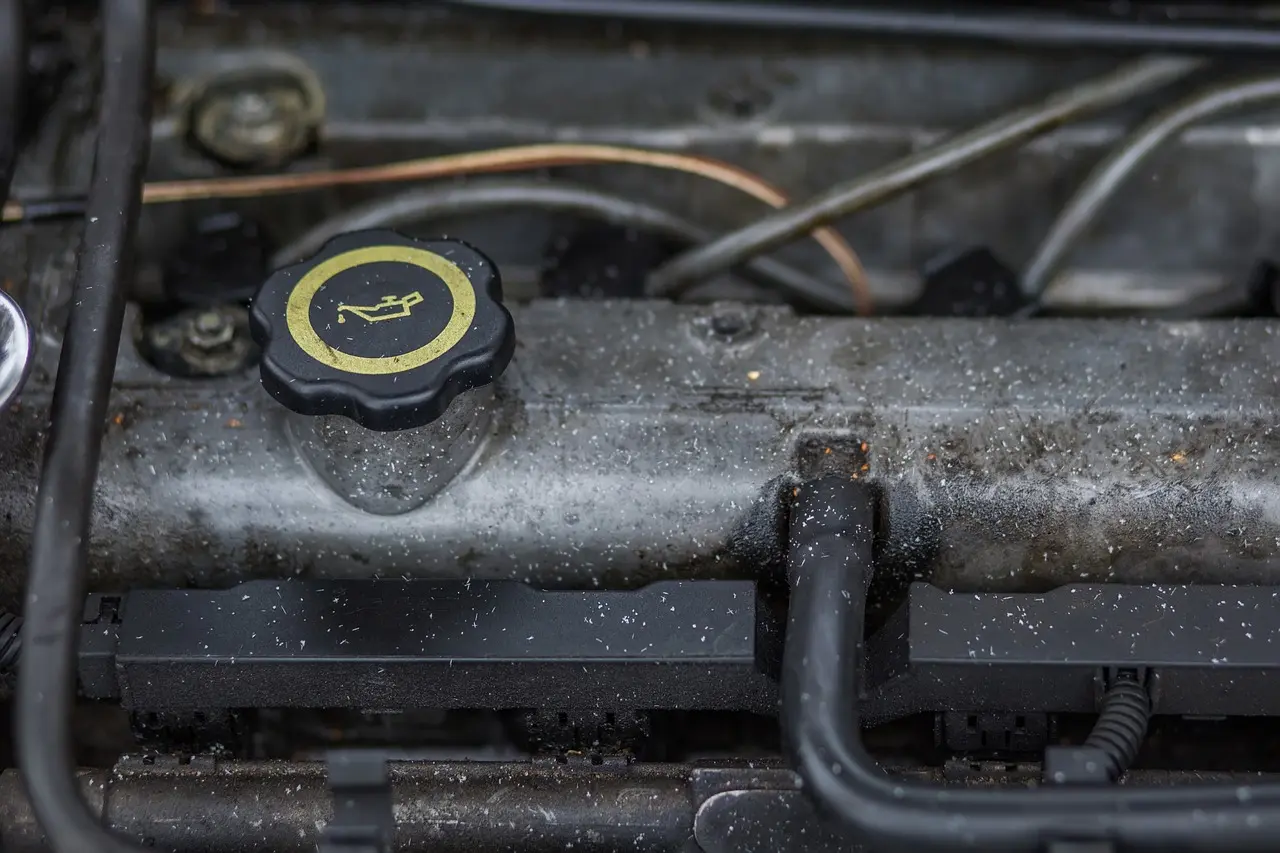
The best winter oil is the one your owner’s manual approves for your engine and climate. If you live where temperatures drop below freezing, you may need a thinner grade that the manufacturer lists for winter use. In this article’s winter example, 5W-30 is the suggested cold-weather choice when the summer oil is 10W-30.
The winter number matters because it describes how the oil behaves when cold. A lower winter number, such as 5W, usually means easier flow at startup than a higher winter number such as 10W. That is why 5W-30 is thinner than 10W-30 at low temperature and can be a better fit for sustained freezing conditions when the manual allows it.
5W-30 vs 10W-30 in freezing weather
For a vehicle that uses 10W-30 in warmer months, 5W-30 is the common winter example here because it offers easier cold-start flow. The difference matters most during cold soak, not after the engine is fully warm. Once oil reaches operating temperature, the second number in the grade matters more than the winter number.
That does not mean 5W-30 belongs in every engine. Some modern engines specify 0W-20, 5W-20, or another grade entirely. The manual decides the approved range, and the climate decides whether you are using the cold end of that approved range during winter.
- Check the manual first. Look for the exact oil approval and viscosity range listed for your engine. That is the first reference before any winter change.
- Match the climate to the grade. If your area sees sustained freezing temperatures, a lower winter number may improve first-start flow. If the manual lists only one grade, stay with it unless the manufacturer says otherwise.
- Use the winter example carefully. If summer oil is 10W-30 and the manual allows it, 5W-30 can be the winter choice for colder conditions. Do not assume the same switch is correct for every engine.
What the owner’s manual should decide
The owner’s manual should decide the oil before anything else. It gives the vehicle-specific approval and the recommended viscosity, and it can also limit which winter grades are acceptable. That matters because some engines are sensitive to oil thickness, oil consumption, or the way a particular formulation reaches tight passages on startup.
Check with your vehicle’s manufacturer if the manual is unclear or if you are considering a winter grade change for an older engine, a high-mileage engine, or a vehicle that already uses oil between changes. Those engines can react differently to a viscosity change, and guessing can create more problems than it solves.
When a winter oil change is allowed
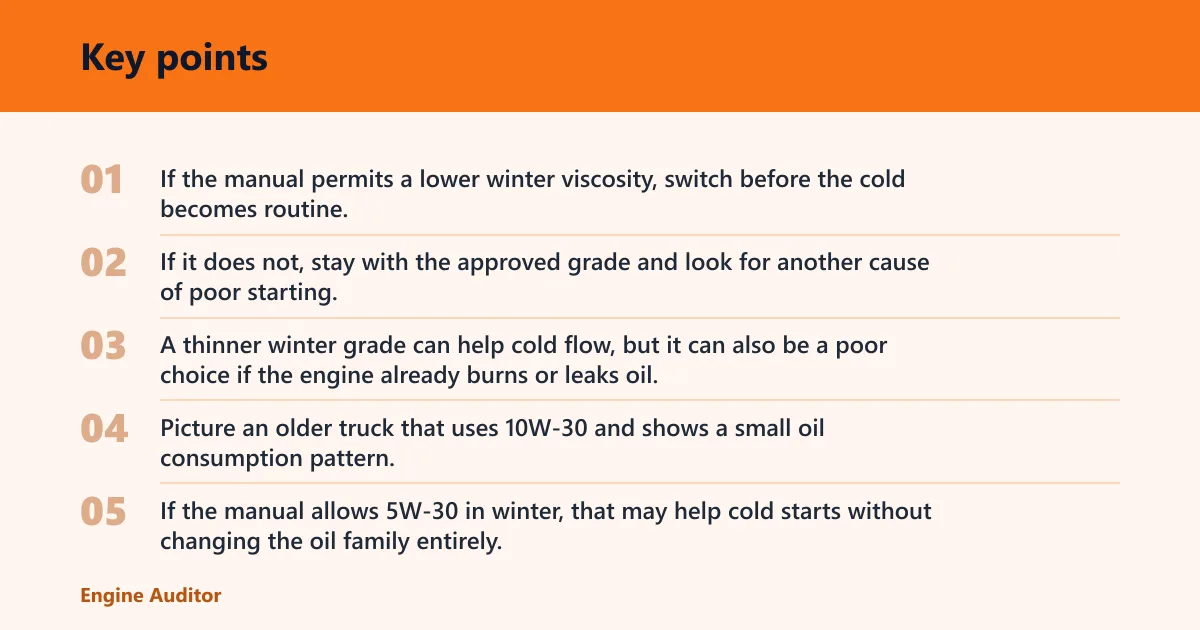
A winter change makes sense before sustained winter use, not after the first hard freeze has already made mornings difficult. If the manual permits a lower winter viscosity, switch before the cold becomes routine. If it does not, stay with the approved grade and look for another cause of poor starting.
Do not wait for symptoms to become a habit. A seasonal change is easiest to manage before winter sets in, and it avoids making a rushed decision after a slow-start morning.
Older engines and oil consumption cautions
Older engines and high-mileage engines need more caution because clearances, seals, and oil consumption patterns may already be different from new-engine assumptions. A thinner winter grade can help cold flow, but it can also be a poor choice if the engine already burns or leaks oil. That is why the manual and manufacturer guidance matter first.
Picture an older truck that uses 10W-30 and shows a small oil consumption pattern. If the manual allows 5W-30 in winter, that may help cold starts without changing the oil family entirely. If the manual does not allow it, leave the grade alone and diagnose the slow-start issue elsewhere.
How overnight parking outside decision table
| Overnight low temperature band | Likely startup effect on oil flow | Recommended next step |
|---|---|---|
| Near-freezing, 32°F to just above 32°F | Oil moves a little slower on the first crank, but most engines should start normally if the battery is healthy. | Use the manual-approved grade and watch for any repeated delay in oil pressure or cranking. |
| Sub-freezing, below freezing for an overnight soak | Oil thickens enough to slow startup flow, especially after hours outside in exposed parking. | If the manual allows it, consider the lower winter grade such as 5W-30 instead of 10W-30. |
| Severe cold, long exposure well below freezing | First-start oil flow can lag more noticeably, and the engine may sound heavier for a few seconds. | Use the lowest winter viscosity the manual permits and confirm battery health before blaming oil alone. |
| Factory-recommended oil only | Startup flow follows the approved grade, even if the weather is harsh. | Stay with the factory-approved viscosity and look at battery, starter load, and oil level if symptoms persist. |
| Considering a winter viscosity change | A lower winter number can improve cold-start flow if the manufacturer allows that grade. | Change before sustained winter use, not after repeated cold starts become a problem. |
How to separate oil problems from battery trouble
Slow cranking is not always an oil problem. A weak battery can spin the starter slowly even if the oil is fine, and a loaded starter or poor cable connection can create the same impression. Oil-related symptoms usually show up as delayed oil pressure or a brief heavy start only after the car has sat outside all night.
Battery condition matters because cold also cuts battery output. A full charge is usually around 12.6 to 12.8V, while a half charge is about 12.2 to 12.4V. If the engine cranks slowly before it ever tries to fire, the battery may be the first place to look.
Slow crank versus delayed oil pressure
Slow crank points toward battery strength, cable condition, or starter load. Delayed oil pressure points toward oil flow after cold soak. If the engine cranks at a normal speed but the pressure light stays on longer after a freezing night, oil viscosity becomes a more likely factor.
Low oil level can confuse the picture. A low level can make pressure behavior worse at startup, especially after the vehicle has sat outside and the oil is already thick from cold. Check level before assuming the oil grade is wrong.
How to check oil level after a cold soak
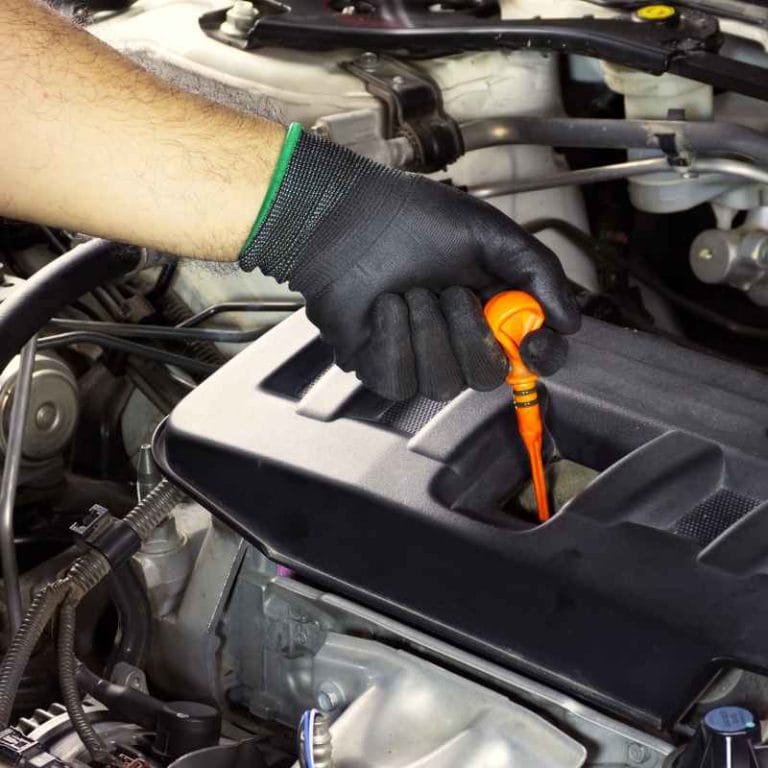
- Park on level ground. Use a flat surface so the dipstick reading is not skewed by angle. A sloped driveway can change the result enough to mislead you.
- Follow the manual method. Check the oil with the engine condition the manual specifies, because some engines call for a cold check and others call for a brief wait after shutdown.
- Compare the reading carefully. After an overnight cold soak, the reading can shift from a warm-engine reading. Use the same method each time so you can spot a real trend.
A common first-timer mistake is checking the dipstick right after a short run, then checking again the next morning and thinking the second reading is “wrong.” Cold-soaked oil drains back differently than warm oil, so the method and temperature condition must match the manual.
How long should you warm up a car in winter?
Warm it up only long enough to stabilize oil pressure and make the vehicle ready to drive. A long stationary idle is usually unnecessary unless the owner’s manual says otherwise. Gentle driving after a brief idle is often the better way to bring the oil, transmission, and cabin up to temperature.
That advice matters after overnight cold soak because idling for too long does little to solve thick-oil flow. The engine warms faster under light load than it does sitting still, and that helps the oil reach operating conditions sooner.
- Start the engine normally. Let it idle briefly so oil pressure can settle and the engine can smooth out. Avoid high rpm immediately after startup.
- Drive gently at first. Use light throttle and moderate speed until the engine and drivetrain feel normal. That helps the oil warm faster than sitting in place.
- Follow the manual if different. Some vehicles have special cold-weather instructions. If the manufacturer gives a specific idle or drive-away recommendation, use that instead.
Frequently asked questions
Does overnight parking outside thicken engine oil in freezing temperatures?
Yes. Overnight parking outside lets the engine cool toward the outside temperature, and freezing weather makes the oil move more slowly on the first crank. The effect is strongest after prolonged exposure below freezing, when cold soak has time to pull the whole engine closer to ambient temperature.
Can cold weather affect engine oil pressure after a car sits outside all night?
Yes. Cold weather can slow oil flow enough that engine oil pressure takes longer to build during startup. That delay is most noticeable after a full overnight cold soak, and it can look like a mechanical fault even when the engine is simply dealing with thick oil.
Should you use thinner oil in winter if you park outside?
Only if the owner’s manual and manufacturer allow it. A thinner, less viscous winter grade can help when overnight parking outside means repeated cold soak and sustained freezing temperatures. Do not switch blindly, especially on older engines or vehicles that already use oil between changes.
How long should you warm up a car in winter after an overnight cold soak?
Just long enough for the engine to settle and oil pressure to stabilize, then drive gently. A long idle usually adds little unless the manual says otherwise. Light driving warms the engine and oil more efficiently than sitting still in the cold.
Can cold weather affect engine oil level readings when the car is parked outside?
Yes. After a cold soak, oil can drain back and settle differently than it does when warm, so the reading may change. Check on level ground and use the method the owner’s manual specifies. That is the only reliable way to compare readings from one check to the next.
Is 5W-30 better than 10W-30 for freezing temperatures?
Usually, yes, if your manual allows both grades and you are dealing with sustained freezing temperatures. 5W-30 flows more easily at low temperature than 10W-30, which can help first-start lubrication after an overnight outdoor soak. The manual still decides whether that switch is acceptable.
When should you check the oil on a cold engine?
Check it the way the owner’s manual says, because some engines want a cold reading and others want a short wait after shutdown. The key is consistency. If you always check the same way, you can tell whether the level or the cold-soak behavior has actually changed.
Products related to this article
Sponsored / affiliate links. As an Amazon Associate I earn from qualifying purchases. I may earn additional commission from eligible campaigns.
 ACROPIX Engine Oil Level Indicator Dipstick for Ford Fusion 2010-2012 for Ford Escape 2010-2012 for Ford Fusion 2006-2007 No.6E5Z6750AC Car Parts
 DongJinK Engine Oil Level Gage Dipstick Compatible with Toyota 4Runner 1984-1995 for Toyota Celica 1984-1985 for Toyota Pickup 1984-1995 Replace# 15301-35020 1530135020