Frozen Parking Brake in Winter: Safe Ways to Release It
If a parking brake freezes, stop pulling on it; thaw the affected wheel or cable, then release it only when the mechanism moves freely. Forcing it can tear a cable, overheat a drum, or leave the car stuck until repairs are needed. This guide shows how to tell whether the freeze is in the lever, cable, shoes, or caliper and which fixes are safe.
What a frozen parking brake
Cold weather can trap moisture inside parking-brake parts. Road salt, slush, and corrosion make that more likely, especially after a wash, a wet drive, or overnight parking outdoors.
The freeze point is not always the same. A cable may bind, brake shoes may stick to a drum, a rear caliper may seize, or an electronic parking brake may hold because of a fault rather than ice alone.
What you’ll need
- Owner’s manual for the parking-brake release procedure
- Ice scraper or soft brush for snow and slush around the wheels
- Windshield defroster and cabin heat
- Garage or covered parking, if available
- Torch or inspection light
- Gloves and dry towels
- Wheel chocks, if the vehicle must remain parked on a slope
Frozen parking brake checklist
| Brake type | Symptom cues | Safe first action | Escalation trigger | Stop now |
|---|---|---|---|---|
| Manual cable brake | Lever or pedal feels stuck, very stiff, or won’t return fully; rear wheels stay locked after a wet freeze | Start the engine, set cabin heat to high, and let warm air reach the footwell and rear cabin for 15 to 30 minutes | Try a gentle release once, then inspect the cable, equalizer, and rear hardware if the lever still feels bound | Stop if the lever yanks hard, a cable snaps, or the car will not roll with normal release |
| Rear drum brake | One rear wheel drags; a dull thud or stuck feeling comes from the drum area; parking brake may have held after standing in snow or slush | Warm the area with engine heat, then tap the tire sidewall lightly with your palm while the vehicle is safely parked and in Park or gear | If the wheel still will not turn after warming, the shoes may be bonded to the drum and need inspection | Stop if you need to force the car to move or the drum gets hot quickly after release |
| Electronic parking brake | Warning light stays on, release button does nothing, or the motor sounds weak or absent | Follow the ignition-on release steps in the owner’s manual and let the system wake up fully | If the warning light remains on after a normal release attempt, the actuator or switch may need diagnosis | Stop if the EPB keeps faulting, one wheel remains locked, or repeated button presses do nothing |
How do you safely release a frozen parking brake?
Use heat, time, and a light touch first. Start the engine, aim the cabin heat at the footwell, clear snow and ice from the wheel wells, and try one normal release only after the parts have warmed enough to move freely.
- Clear the wheel area. Brush away snow, ice, and packed slush around the rear wheels and under the vehicle. Frozen slush can hold the shoes, pads, or cable housing in place.
- Warm the cabin slowly. Start the engine and set the heater and defroster to high for about 15 to 30 minutes. Gentle warm-up works better than a sharp blast of heat because it gives moisture time to thaw without shocking brake parts.
- Release once, gently. Use the normal lever, pedal, or switch without yanking, stomping, or repeated cycling. If the release feels normal, roll forward a few feet to confirm the wheel is free.
If that does not work, move to a system-specific check instead of pressing harder. Say your rear wheel was parked in slush overnight and the pedal feels solid; that points more toward a cable or shoe freeze than a transmission issue.
How do you tell what is frozen?
Use the symptom pattern, not guesswork. A lever that stays stiff points differently from a rear wheel that drags, and an EPB warning light points differently from a cable that will not return. The location of the symptom usually tells you where the freeze or fault sits.
Cable freeze signs
A parking brake cable can seize from corrosion or trapped moisture, especially on older cable-actuated systems and many rear-drum setups. You may feel a lever or pedal that binds, a release handle that returns slowly, or a cable that does not move smoothly under the car.
Rear caliper seizure signs
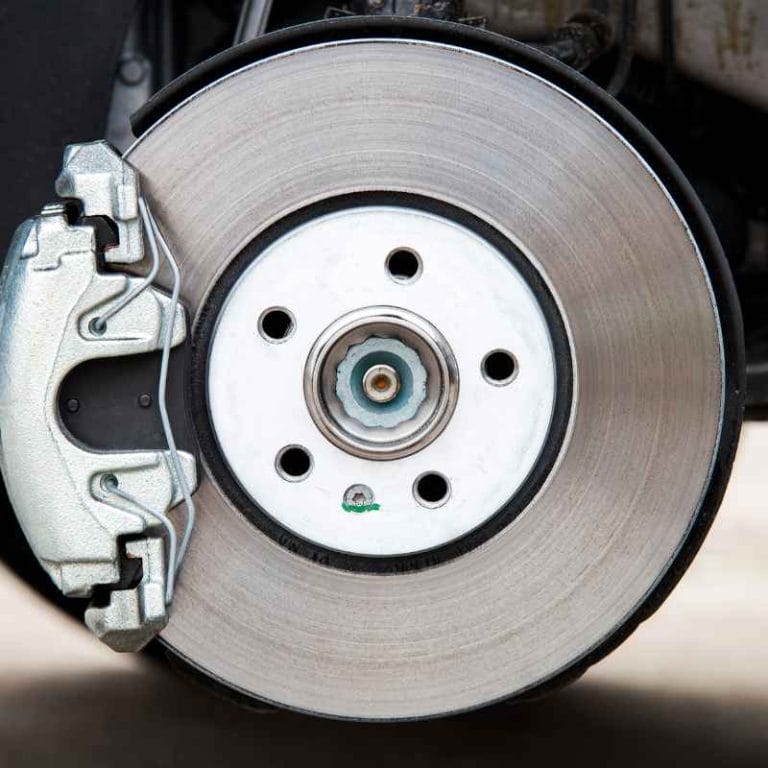
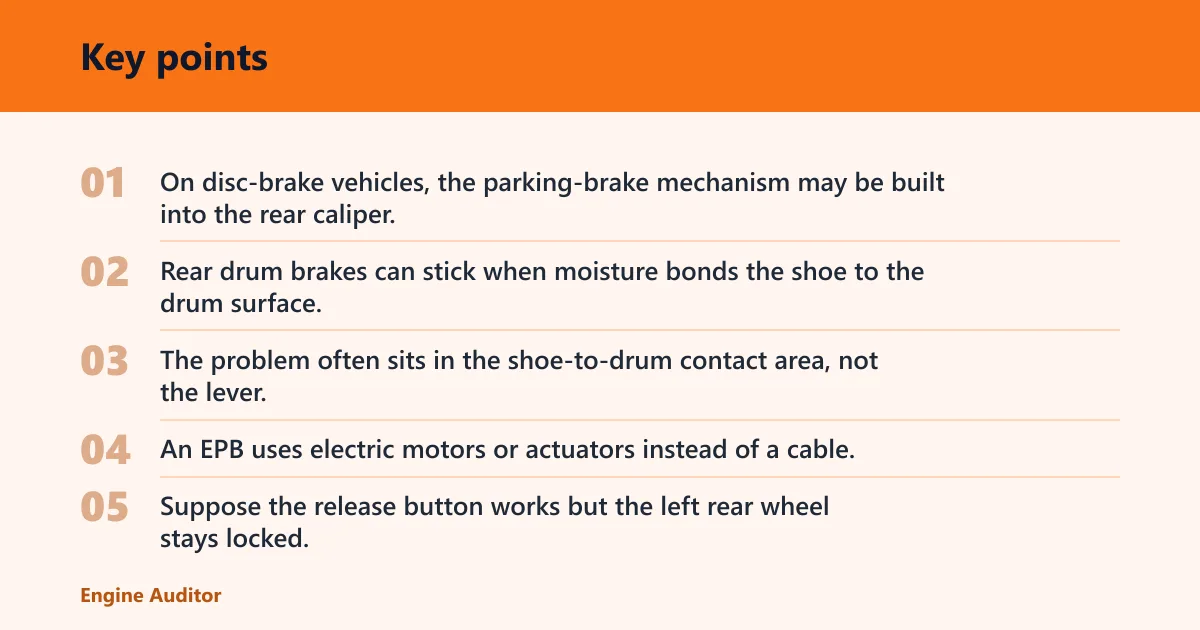
On disc-brake vehicles, the parking-brake mechanism may be built into the rear caliper. If one rear wheel stays hot, drags after release, or the car pulls to one side, the caliper may be sticking rather than the cable freezing.
Drum and shoe bonding signs
Rear drum brakes can stick when moisture bonds the shoe to the drum surface. A common clue is one wheel locked after overnight parking in wet cold, then a sudden free-up after controlled warming and a little movement. The problem often sits in the shoe-to-drum contact area, not the lever.
Electronic parking brake fault signs
An EPB uses electric motors or actuators instead of a cable. If the warning light stays on, the button does nothing, or the motor sounds weak, the issue may be an electrical fault, a frozen actuator, or a system that needs ignition-on release steps.
Suppose the release button works but the left rear wheel stays locked. That pattern is more consistent with a rear caliper or drum issue than a whole-system EPB failure.
What should I do if the parking brake won’t release in freezing weather?
Stop trying to muscle it free and choose the next least invasive step. If the brake stays stuck after a normal warm-up and one gentle release, move to inspection or roadside help rather than forcing the car to roll.
- Park safely first. If you are on a slope, keep the wheels pointed toward the curb or use wheel chocks. Do not keep shoving the car against a locked brake.
- Check the release feel. Compare lever, pedal, or switch behavior with a normal release. A grinding, hard stop, or dead button is a clue that more than ice may be involved.
- Call for help if needed. If the car will not move without force, one wheel is still locked, or warning lights stay on, use roadside assistance or a tow truck. That is safer than damaging pads, rotors, shoes, tires, or the transmission.
What not to do
Do not yank the lever, stomp the pedal, or keep pressing the switch. That can stretch a cable, break an actuator, or strip a release mechanism. It can also overheat a drum or glaze a pad if the wheel drags afterward.
- Do not pour hot or boiling water on brake parts. Rapid heating can crack a rotor or drum, and the water may refreeze.
- Do not force the vehicle to move if one wheel is locked. That can damage tires, pads, rotors, or the transmission.
- Do not assume all frozen parking brakes are the same problem. A cable, caliper, drum shoe, and EPB fault need different checks.
How can you prevent it from freezing again?
Dry parking helps more than repeated brute-force release attempts. A garage or covered parking spot reduces overnight freezing risk, and a dry drive after snow or road spray helps brake hardware shed moisture before it locks up.
- Park dry when possible. Use a garage or covered parking area after heavy snow, a wash, or slushy roads. That gives the brake hardware time to dry instead of freezing wet.
- Clean winter buildup. Rinse road salt and slush from the wheel wells and underbody before it cakes on. Salt raises corrosion risk and can speed up sticking in cables, calipers, and shoe hardware.
- Inspect before winter. Ask for a brake check if the lever feels uneven, the pedal travel changes, or the rear brakes have been noisy. A fraying cable, rusted sheath, or sticky caliper is easier to catch before freezing weather.
Frequently asked questions
Should I use hot water to unfreeze my parking brake?
No. Hot or boiling water can crack brake parts and often refreezes before the moisture drains away. Gentle engine heat, cabin heat, and time are safer first steps. If the brake remains stuck, the problem may be a cable, shoe, caliper, or actuator that needs service.
Why does my parking brake freeze in winter?
Moisture gets into cables, drums, calipers, and release mechanisms, then freezes when temperatures drop. Road salt and slush make the problem worse by holding water against the metal and speeding corrosion. A wet wash followed by an overnight freeze is a common setup.
Can I drive with a stuck parking brake?
No. Driving with a stuck parking brake can overheat the rear brakes, wear pads or shoes quickly, and damage rotors or drums. If the vehicle will not roll normally after a proper release attempt, use a tow truck or roadside assistance instead of forcing it.
How do I tell if the cable, caliper, or pads are frozen?
A stiff lever or pedal points toward the cable. A single hot or dragging rear wheel points more toward a rear caliper. A wheel that frees suddenly after warming, especially on a drum-brake vehicle, often points to shoe bonding inside the drum.
Is a frozen electronic parking brake different from a manual one?
Yes. An EPB uses motors or actuators, so it may need ignition-on release steps rather than a cable pull. If the warning light stays on or the button does nothing, the fault may be electrical, mechanical, or both. Follow the owner’s manual before repeating the command.
Products related to this article
Sponsored / affiliate links. As an Amazon Associate I earn from qualifying purchases. I may earn additional commission from eligible campaigns.