How Do I Fix a Squeaky Serpentine Belt?
Fix a squeaky serpentine belt by matching the noise pattern first: a cold-start chirp often points to belt glazing or misalignment, while a steady squeal under load usually means a weak tensioner, bad pulley, or slipping accessory. Ignore it and you can lose charging, cooling, or power steering. This guide shows how to pinpoint the cause, inspect the belt drive, and choose the cheapest durable fix.
What you’ll need
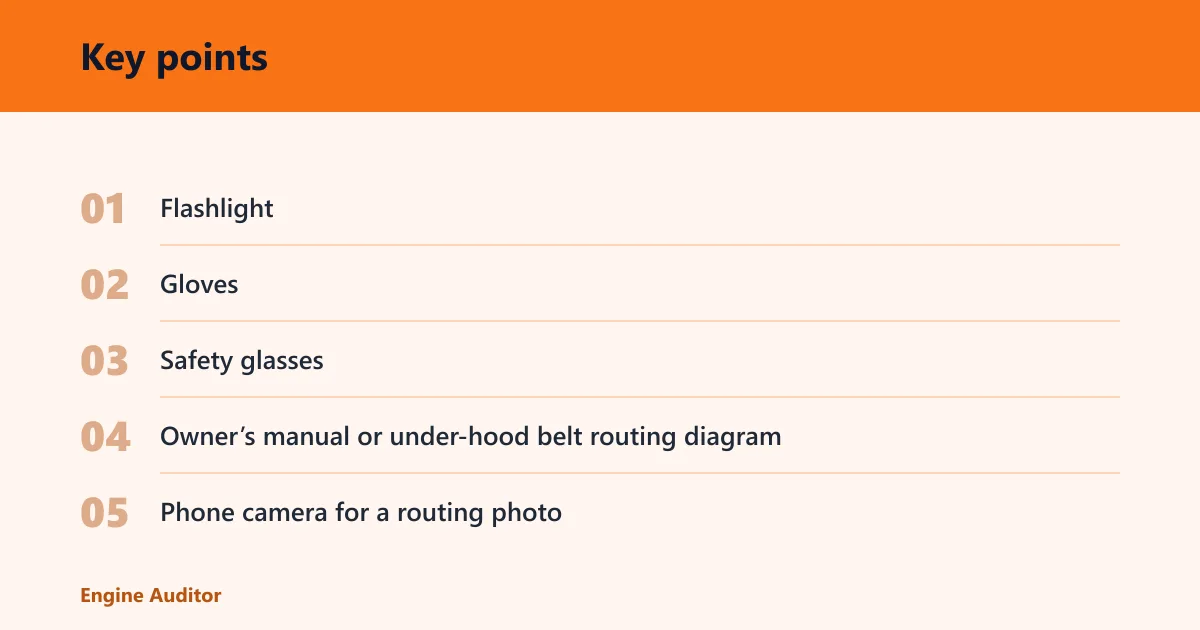


- Flashlight
- Gloves
- Safety glasses
- Owner’s manual or under-hood belt routing diagram
- Phone camera for a routing photo
- Basic hand tools for belt removal, if your model uses a manual tension adjuster
- Long-handled wrench or socket for an automatic tensioner, if equipped
- Replacement serpentine belt matched to your vehicle routing and size
- Replacement tensioner or idler pulley, if inspection points there
Serpentine belt squeal basics
The serpentine belt drives the alternator, power steering, water pump, fan, and A/C compressor. Squeal happens when the belt slips, the ribs are worn or glazed, a pulley bearing is rough, or the tensioner can no longer keep proper force on the belt.
Diagnostic table
| Symptom pattern | Most likely cause | Fastest confirmation test | Durable fix |
|---|---|---|---|
| Cold-start squeal | Belt glazing, pilling, or minor slip while cold | Inspect the belt surface for shiny ribs or missing rubber; note whether the noise fades as the engine warms | Replace a worn belt and check pulley alignment and tensioner condition |
| Squeal under A/C or steering load | Weak tensioner, slipping belt, or drag from an accessory | Switch on the A/C or turn the wheel at idle and watch for belt flutter or tensioner bounce | Replace the weak tensioner or the dragging accessory before fitting a new belt |
| RPM-linked squeal or groan | Idler pulley, accessory pulley bearing, or misalignment | Listen with the hood open, then compare pulley noise and inspect each pulley for roughness with the belt removed | Replace the noisy pulley and verify alignment |
| Squeal after belt replacement | Wrong routing, contamination, bad tensioner, or a bad pulley left in place | Compare the routing to the under-hood diagram and inspect for oil or coolant on the belt path | Correct routing, repair leaks, and replace the failed tensioner or pulley as needed |
What to inspect first
Start with the belt itself. A worn serpentine belt can squeak when it is cold and after startup, and a shiny or glazed surface can point to wear or contamination. Three listed wear types are pilling, glazing, and abrasion.
- Shut the engine off and let it cool enough to inspect safely.
- Check the ribbed side for cracks, fraying, missing ribs, and shiny sections.
- Look for oil or coolant on the belt, pulleys, or nearby covers.
- Compare the belt to the routing diagram before you touch anything else.
- Inspect the tensioner arm for bounce, tilt, or obvious weak spring action.
Suppose the belt is only six months old but already has a glossy rib face and a wet edge near the lower pulley. That points away from age and toward contamination, which will ruin a new belt again unless you fix the leak first.
How do I diagnose the noise?
Use the sound pattern to separate belt slip from bearing noise. A belt problem often changes with load, temperature, or a quick change in surface friction. A pulley problem often sounds rough, groans, or grinds and stays tied to one rotating part.
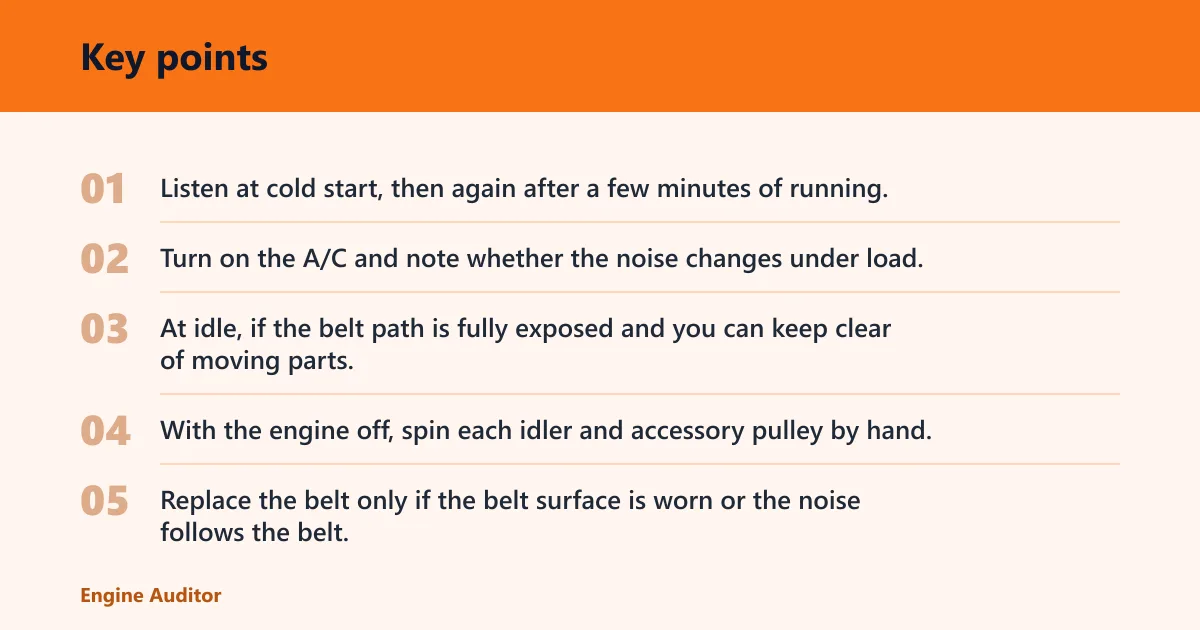
- Listen at cold start, then again after a few minutes of running.
- Turn on the A/C and note whether the noise changes under load.
- At idle, if the belt path is fully exposed and you can keep clear of moving parts, a light water mist can briefly change slip noise; if access is tight, skip this test and move to inspection.
- With the engine off, spin each idler and accessory pulley by hand.
- Replace the belt only if the belt surface is worn or the noise follows the belt, not one pulley.
Do not treat belt dressing, soap, or WD-40 as a repair. They may quiet the noise for a short time, but they can hide the real fault and attract dust and grit. WD-40 is especially poor as a belt spray because it can mask the root cause without fixing slip.
How do I fix the squeak?
The cheapest durable fix is the one that matches the cause. Replace a belt with cracked ribs, glazing, fraying, missing ribs, or contamination. Fit a new tensioner if the spring is weak or the arm oscillates. Replace any pulley that feels rough, binds, or grinds by hand.
- Replace the belt if it shows wear or contamination.
- Replace the tensioner if the spring is weak, the arm bounces, or the hydraulic unit leaks.
- Replace any idler pulley or accessory pulley that feels rough, binds, or grinds.
- Repair oil or coolant leaks before fitting the new belt.
- Verify belt routing and start the engine to confirm the noise is gone.
Some tensioners are automatic spring-loaded units; others use hydraulic damping. Many modern serpentine systems are generally not manually adjustable. If the tensioner is worn, replacing only the belt often buys little time because the same slip returns.
How do I replace the belt?
Replacement is straightforward if you verify routing first. The belt must match the vehicle routing and size, and the tension-release method varies by model. If the diagram is missing, photograph the old belt before removal so you can restore the exact path.
- Find the under-hood routing diagram and take a clear photo of the belt path.
- Release tension using the correct tool for your system: a wrench or socket on an automatic tensioner, or the manual adjuster if your vehicle has one.
- Slip the old belt off the easiest pulley last.
- Route the new belt over every pulley except the final one, then release tension and seat the belt fully in each groove.
- Spin the pulleys by hand if accessible, then start the engine and check for flutter, chirp, or tracking errors.
Picture a belt that squeals only after a new installation. If the routing is off by one pulley, the belt can ride sideways and squeak immediately. If the routing is correct but the sound returns within days, contamination or a weak tensioner is the more likely fault.
Common mistakes
These errors waste time and money.
- Using belt dressing or WD-40 instead of fixing the cause
- Replacing only the belt when the tensioner is weak
- Ignoring a pulley that feels rough by hand
- Installing a new belt over an oil or coolant leak
- Skipping the routing check before removal
- Assuming every squeak is the belt when the noise is actually a bearing or seized pulley
Stop driving if the squeal turns into grinding, the belt is frayed, the charging light comes on, steering effort rises sharply, or the engine starts to overheat. Those signs mean the belt drive may be losing a major accessory.
Prevention
Fix leaks early and inspect the belt drive whenever you replace the belt or tensioner. Modern serpentine belts may last longer than 100,000 miles, but contamination, misalignment, and weak tension can cut that life down fast.
Frequently asked questions
How do I fix a squeaky serpentine belt?
Start with the belt surface and the sound pattern, then inspect the tensioner and pulleys. Replace a glazed or cracked belt, but fix a weak tensioner, rough pulley, or fluid leak first if that is the real cause. The routing diagram should match the belt exactly before you start the engine again.
How do I stop a squeaky serpentine belt?
The lasting fix is to remove the source of slip or drag. Check for glazing, contamination, and pulley roughness, then replace the worn part instead of spraying the belt. If the tensioner bounces or the belt squeals only under load, the tensioner or accessory is the better repair target.
How much does it cost to fix a squeaky serpentine belt?
The total depends on whether you need a belt only, a tensioner only, or both along with a pulley or leak repair. A belt-only job is usually the least expensive path, but a worn tensioner often adds labor overlap, so it can be cheaper to replace both at once if inspection confirms wear.
Should I replace a squeaky serpentine belt?
Yes, if the belt is cracked, glazed, frayed, missing ribs, or contaminated. If the belt is new and squeaks again within days, do not blame the belt first. Check the tensioner, pulley bearings, alignment, and any oil or coolant leak before installing another belt.
How to fix a noisy drive belt
Use the same process for a drive belt that the serpentine setup uses: identify the noise pattern, inspect the belt surface, and check the pulley system for roughness or misalignment. A noisy belt that changes with A/C or steering load usually points to slip or tension loss, not a random surface noise.
Products related to this article
Sponsored / affiliate links. As an Amazon Associate I earn from qualifying purchases. I may earn additional commission from eligible campaigns.