Can You Put Car Engine Oil In A Bike? Here’S The Truth
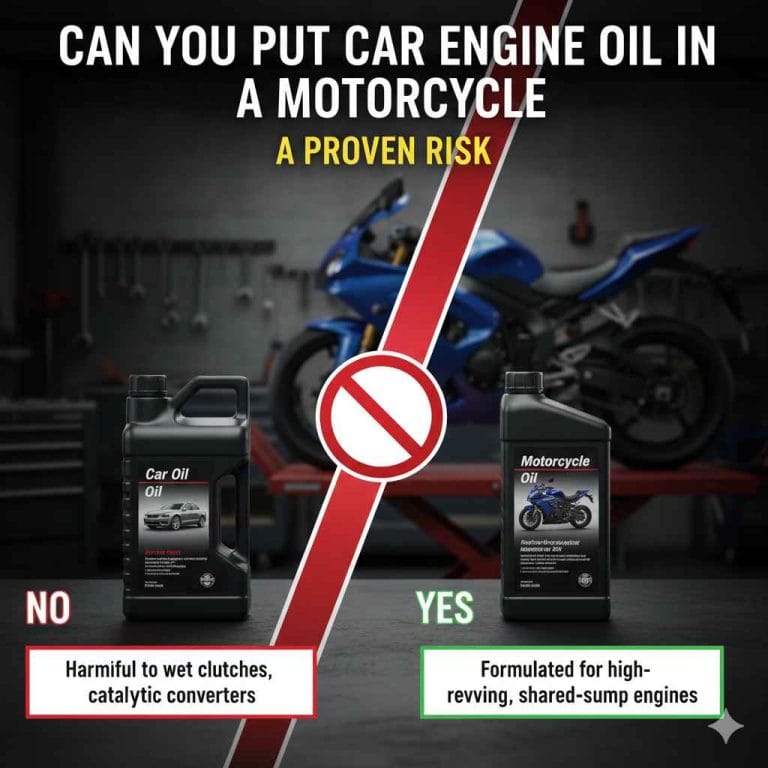
Using car engine oil in a motorcycle is generally not recommended. Motorcycles have different engine designs and operating conditions than cars. They often share the engine, transmission, and clutch, requiring oils with specific additives and viscosity ratings. Using car oil can lead to clutch slippage, premature wear, and overheating. Always use motorcycle-specific oil.
Understanding Motorcycle and Car Engine Oil
Motorcycles and cars are not the same. Their engines work in different ways. This is why they need different kinds of oil.
Think of it like shoes. You wouldn’t wear hiking boots to a ballet recital, right? They’re both shoes, but they do very different jobs.
Car engines are designed for a simpler task. They mostly just need to keep the engine parts moving smoothly. They also need to cool the engine down a bit.
Cars usually have separate compartments for the engine oil, transmission fluid, and clutch fluid. This means the oil doesn’t have to do as many jobs.
Motorcycle engines are much more complex. Many bikes have what’s called a “wet clutch.” This means the clutch plates are bathed in the same oil that lubricates the engine. The oil for a motorcycle’s engine also needs to keep the transmission gears lubricated.
Plus, it often helps cool the engine, which can run hotter than car engines.
Because of these extra jobs, motorcycle oil needs special ingredients. These ingredients make sure the clutch grips properly. They also protect the gears and handle the higher engine temperatures.
Car oils don’t have these special ingredients. They might even have things in them that hurt a motorcycle’s wet clutch or gearbox.
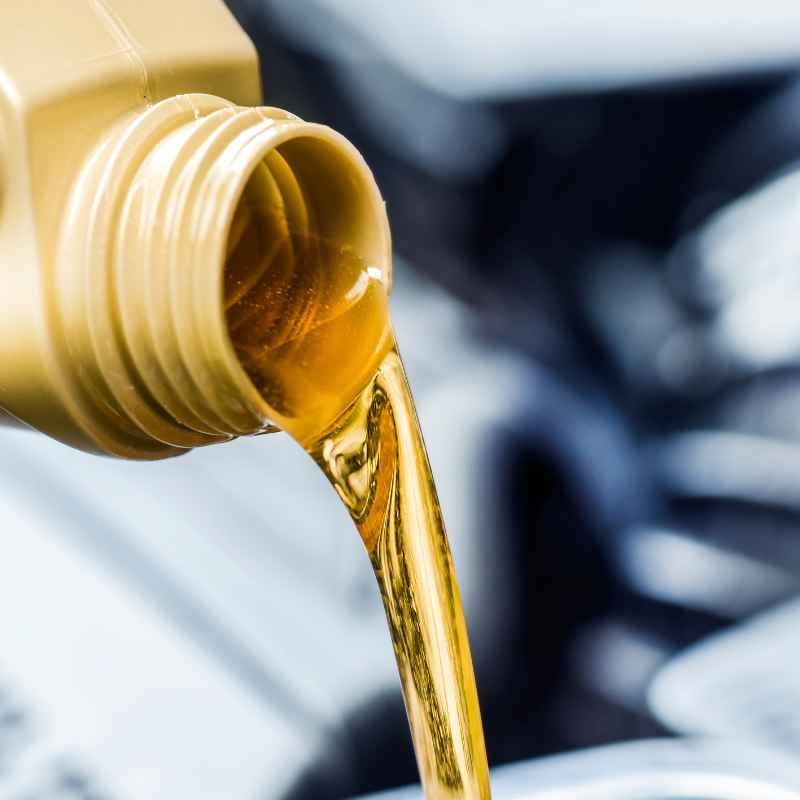
Why Car Oil Isn’t Right for Your Bike
So, what happens if you put car oil in your bike? Several things can go wrong. It’s not just about the oil being a different brand or color.
It’s about the chemical makeup and what it does inside your bike.
One of the biggest problems is clutch slippage. Motorcycle oil has special friction modifiers. These help the clutch plates grab each other.
This grip is what makes your bike move forward when you engage the clutch. Car oils often have different friction modifiers. Some are designed to reduce friction.
If you use car oil, your clutch might not grip well. This means your bike might not accelerate as fast. It could even feel like it’s slipping when you’re trying to go.
Another issue is wear and tear on your engine. Motorcycle engines often run at higher RPMs (revolutions per minute) than car engines. This means parts are moving much faster.
This creates more friction and heat. Motorcycle oils are designed to withstand these higher temperatures and pressures. They have better film strength, which means they create a stronger layer between metal parts.
Car oils might break down faster at these high speeds. This can lead to parts rubbing together more. Over time, this can cause serious damage to your engine.
Transmission gears are also a big concern. Motorcycle transmissions have very strong gears. They have to handle a lot of force.
Motorcycle oil has additives that protect these gears from wear. These additives are different from those found in car oil. Using car oil might not provide enough protection for your bike’s transmission.
This can lead to noisy gears or even transmission failure.
Overheating is another risk. As I mentioned, motorcycle oil often helps cool the engine. It does this by carrying heat away from hot parts.
Car oils might not be as good at this. They might also break down at the higher temperatures. This means they can’t cool the engine as effectively.
An overheated engine can suffer damage. It might run poorly. In severe cases, it can cause a breakdown.
Car Oil vs. Motorcycle Oil: Key Differences
Friction Modifiers: Motorcycle oil has specific ones for clutch grip. Car oil might reduce friction too much.
Viscosity Stability: Bike oil stays thicker at high temperatures. Car oil can thin out faster.
Additives: Motorcycle oil protects gears and clutches better. Car oil is for car engines.
Operating Conditions: Bikes run hotter and faster. Oils are made for this.
Understanding Oil Viscosity and Ratings
When you look at oil bottles, you see numbers and letters. These are important. They tell you about the oil’s thickness and what it’s good for.
For motorcycles, these numbers and ratings are very specific.
The most common rating you’ll see is the SAE (Society of Automotive Engineers) viscosity grade. This is the number like 10W-30. The “10W” part means how well the oil flows when it’s cold (W stands for Winter).
A lower number means it flows better in the cold. The “30” part means how thick the oil is when it’s hot.
But here’s where it gets tricky. A 10W-30 oil for a car might not be the same as a 10W-30 oil for a motorcycle. Why?
Because of those other additives I talked about.
Motorcycle oils also have other important ratings. You’ll often see “JASO” on motorcycle oil bottles. JASO stands for Japanese Automotive Standards Organization.
There are different JASO ratings, like MA, MA1, and MA2. These ratings tell you how the oil performs with a wet clutch. JASO MA and MA2 oils are designed to work with clutches.
They ensure good friction for engagement. JASO MB oils are for scooters or bikes with dry clutches. These oils might not work for bikes with wet clutches.
Car oils usually have API (American Petroleum Institute) ratings. These are things like API SN or SP. These ratings focus on engine protection and fuel economy for cars.
They don’t account for the needs of a wet clutch or motorcycle transmission. Some car oils might even have “Energy Conserving” labels. These oils have friction modifiers that are bad for motorcycle clutches.
They are designed to save gas in cars, but they can cause your bike’s clutch to slip.
So, even if the viscosity number looks the same (like 10W-40), the oil itself can be very different. Always look for the JASO rating on motorcycle oil. Make sure it matches what your bike needs.
My Own Close Call: A Lesson Learned
I remember one time, a few years back, I was on a long road trip. My trusty old Honda Shadow was humming along beautifully. We were miles from anywhere, and I realized I was low on oil.
Not critically low, but enough that I wanted to top it off. I had a small emergency can of oil in my saddlebag. I thought, “This is the same weight oil, it’ll be fine in a pinch.” It was a 10W-40, and that’s what my manual called for.
It was a car oil. I didn’t check the JASO rating. I just topped it up.
For the next fifty miles, everything seemed okay. The engine sounded normal. But then, as I was coming up to a stop sign, I noticed something odd.
When I pulled in the clutch and gave it a little gas, the engine revved, but the bike didn’t really speed up like it normally would. It felt sluggish. A wave of panic washed over me.
I thought, “Oh no, what have I done?”
I pulled over and shut off the engine. I could feel my heart beating faster. I started thinking about all the stories I’d heard about people ruining their clutches.
I remembered that car oil has different additives. I took a deep breath and looked in my saddlebag. Luckily, I had a proper motorcycle oil filter and a fresh quart of motorcycle-specific 10W-40 oil.
I drained the car oil, put in the new motorcycle oil, and replaced the filter. It was a bit of a mess, standing on the side of the road, but I felt so much better knowing I had fixed it.
From that day on, I never again doubted the importance of using the right oil. That little bit of convenience wasn’t worth the risk. The bike felt right again after the oil change, but the memory of that clutch slippage stuck with me.
It was a real, tangible sign that I had made a mistake. It taught me a powerful lesson about respecting the specific needs of a motorcycle engine.
Quick Check: What Oil Type is Your Bike?
- Wet Clutch: Most common in motorcycles. Needs oil that allows clutch plates to grab.
- Dry Clutch: Less common. Clutch is separate from engine oil.
- Shaft Drive: Some bikes use a driveshaft instead of a chain. This usually requires a specific gear oil in the final drive.
Always check your owner’s manual for the exact oil type and specifications.
When Could It Possibly Be Okay (Spoiler: It’s Not)?
I know what some of you might be thinking. “But what if it’s an emergency? What if there’s absolutely no other option?” This is a tough spot to be in.
Nobody wants to get stranded.
In a true, life-or-death emergency where your engine is seizing up and you absolutely must put something in to limp to safety, a very light weight car oil might be better than nothing. I’m talking about a situation where the alternative is catastrophic engine failure and leaving you completely stranded for days. This is an extreme, last-resort scenario.
However, even in this extreme case, you need to understand the risks. You are still risking damage to your clutch and transmission. You should drain that car oil and
For nearly all other situations, there is no good excuse to use car oil. Modern motorcycles are designed with very precise tolerances. They rely on specific oil formulations to perform correctly and last.
The cost of a proper motorcycle oil change is tiny compared to the cost of repairing a damaged clutch, transmission, or engine. It’s simply not worth the gamble.
Think about the environment your bike operates in. Motorcycles often live outdoors. They face wide temperature swings.
They can get very hot when stuck in traffic. Their engines are often air-cooled, meaning they rely heavily on the oil for cooling. Car engines are typically liquid-cooled and operate in a more stable environment.
This difference alone means the oils need to be formulated differently.
Real-World Scenarios and Consequences
Let’s look at some real scenarios where using the wrong oil causes problems. Imagine you’ve decided to use that leftover quart of car oil. You put it in your bike for a short ride around town.
Scenario 1: The Commuter Bike
You ride your motorcycle to work every day. It’s a 10-mile commute. You’ve used car oil to save money.
After a few weeks, you start noticing your clutch feels grabby. It’s hard to find neutral. Sometimes, when you’re stopped at a light, the bike still wants to creep forward a little.
This is your wet clutch complaining. The friction modifiers in the car oil are interfering with the clutch plates’ ability to grab and disengage properly. Eventually, the clutch plates can wear out much faster.
This means an expensive clutch replacement.
Scenario 2: The Sportbike Rider
You love to push your sportbike to its limits on twisty roads. You’ve used car oil because it’s cheaper. Your bike starts to feel like it’s losing power, especially when you’re winding it out.
The engine sounds a bit rougher. You might even notice a bit more vibration. The higher operating temperatures and engine speeds are breaking down the car oil too quickly.
It’s not providing enough lubrication. This leads to increased wear on the engine’s internal parts, like the crankshaft bearings and piston rings. You might not see the damage right away, but it’s happening.
Scenario 3: The Long-Distance Tourer
You’re on a cross-country trip. You decided to top off with car oil to avoid stopping. As you ride for hours, the engine gets very hot.
The car oil starts to thin out significantly. It’s no longer protecting your transmission gears. You hear a whining sound coming from the gearbox.
This is the sound of metal grinding against metal because the oil film is too thin. If you continue, you risk severe damage to the transmission. This could mean a breakdown in the middle of nowhere, far worse than a simple oil change.
These are not made-up stories. These are common problems that mechanics see all the time. The temptation to use the “wrong” oil is often driven by cost or convenience.
But the long-term costs of engine damage and repairs far outweigh any short-term savings.
Consequences of Using Car Oil in a Bike
Clutch Slippage: Loss of power, poor acceleration, premature clutch wear.
Transmission Damage: Gear grinding, increased noise, potential gearbox failure.
Engine Wear: Increased friction, higher operating temperatures, reduced engine life.
Overheating: Engine performance issues, potential for serious internal damage.
Voided Warranty: Using the wrong oil can void your manufacturer’s warranty.
What This Means for You: When to Worry and When It’s Normal
So, you’ve been using motorcycle oil. How do you know if everything is okay? Or maybe you’ve accidentally used car oil.
When should you really start to worry?
When It’s Normal:
- Your bike starts easily and runs smoothly.
- The engine temperature gauge (if you have one) stays within its normal range.
- You can shift gears easily without grinding sounds.
- When you pull in the clutch, the engine revs cleanly, and when you release it, the bike accelerates promptly.
- You don’t hear any unusual noises from the engine or transmission.
- Your oil changes are done at the recommended intervals with the correct motorcycle oil.
When to Worry:
- Clutch Slippage: The engine revs up, but the bike doesn’t speed up as it should. This is a big red flag.
- Difficulty Shifting or Finding Neutral: Gears feel like they’re grinding, or it’s hard to get the bike into gear.
- Unusual Noises: Any new clicking, grinding, whining, or knocking sounds from the engine or transmission area.
- Overheating: Your engine temperature rises unusually high, or you feel excessive heat coming from the engine.
- Oil Leaks: While not always related to the type of oil, leaks can indicate larger problems.
- Sudden Loss of Power: If your bike just doesn’t feel as strong as it used to.
- Visible Smoke: Blue or white smoke from the exhaust can indicate burning oil.
If you used car oil, even just once, and you notice any of these worrying signs, it’s time to get it checked out. It’s better to be safe than sorry. A quick oil change with the correct motorcycle oil might solve the problem.
But if there’s already damage, a mechanic will need to diagnose it.
The most important thing is to be proactive. Read your owner’s manual. It’s full of valuable information about your specific bike.
It will tell you the exact type of oil, the correct viscosity, and any special ratings required. Most modern motorcycles will specify a JASO MA or MA2 oil. Some might even have a specific brand or type they recommend.
Quick Tips for Choosing the Right Oil
Choosing the right oil might seem confusing at first. But once you know what to look for, it’s quite simple. Here are some quick tips:
- Consult Your Owner’s Manual: This is your absolute best friend. It will tell you precisely what your bike needs.
- Look for JASO Ratings: For most bikes with wet clutches, you need JASO MA, MA1, or MA2. Avoid JASO MB unless your manual specifically says it’s okay.
- Check the Viscosity: Pay attention to the numbers like 10W-30, 10W-40, or 20W-50. Your manual will recommend the right ones for your climate and riding conditions.
- Consider Synthetic vs. Mineral: Synthetic oils generally offer better protection at high temperatures and last longer. Mineral oils are cheaper but may need changing more often. Semi-synthetics are a good middle ground.
- Don’t Guess: If you’re ever unsure, ask a qualified motorcycle mechanic. They can guide you.
- Avoid “Energy Conserving” Labels: These are usually found on car oils and mean they have additives that can harm your motorcycle clutch.
It’s often a good idea to stick with a reputable brand that specializes in motorcycle oils. Brands like Motul, Castrol Power RS, Yamalube (for Yamaha), Honda GN4, and Mobil 1 Racing have excellent reputations. They understand the unique demands of motorcycle engines.
Myths vs. Reality About Motorcycle Oil
| Myth: Any oil of the right weight is fine. | Reality: Motorcycle oils have special additives for clutches and transmissions that car oils lack. |
| Myth: Synthetic oil is always better for every bike. | Reality: Some older bikes might not need or benefit from full synthetic oil. Check your manual. |
| Myth: You can use the same oil in your engine and final drive. | Reality: Some bikes require different oils for the engine and the shaft drive’s final gearbox. |
Frequently Asked Questions
Can I use car oil in my motorcycle if I only ride short distances?
Even for short distances, using car oil is risky. The additives in car oil can still negatively affect your wet clutch. While the immediate effects might not be as dramatic as on a long, hot ride, you are still increasing wear and tear.
It’s best to always use motorcycle-specific oil to protect your bike’s longevity.
What is the difference between JASO MA and JASO MA2?
Both JASO MA and MA2 are standards for motorcycle oils with wet clutches. JASO MA2 oils offer improved friction performance compared to MA. They are generally recommended for most modern motorcycles.
If your manual specifies JASO MA2, it’s best to use that. If it just says JASO MA, either will likely work, but MA2 is often a good upgrade.
How often should I change my motorcycle oil?
The frequency of oil changes depends on your motorcycle model, the type of oil you use (mineral, semi-synthetic, or synthetic), and your riding habits. Your owner’s manual will provide the manufacturer’s recommended intervals. As a general guideline, mineral oils might need changing every 3,000 miles or six months, while synthetic oils can often go 5,000-7,500 miles or a year.
Always follow your manual’s advice.
Is it bad if my motorcycle oil looks very black?
It’s normal for motorcycle oil to turn black relatively quickly. This is because the oil is doing its job. It’s picking up carbon deposits, soot, and other contaminants from the engine combustion process and the gears.
As long as you are changing your oil at the recommended intervals and the oil isn’t thinning out or leaking, dark color is not usually a sign of a problem. It just means the oil has done its work.
Can I mix different brands of motorcycle oil?
It’s generally best to avoid mixing different brands of motorcycle oil, especially if they have different formulations or bases (mineral vs. synthetic). While they might both be motorcycle oils, their additive packages could interact in unknown ways.
If you need to top off your oil and don’t have the same brand, try to at least match the viscosity and JASO rating. However, for an oil change, always use the same type and brand if possible.
What happens if I use a 20W-50 oil in a bike that calls for 10W-40?
Using a thicker oil like 20W-50 in a bike that calls for 10W-40 can be problematic, especially in colder weather. The thicker oil won’t flow as easily when the engine is cold, which can lead to insufficient lubrication during startup. While it might offer slightly better protection at very high temperatures, it’s crucial to follow your manual’s recommendations for viscosity.
Using the wrong viscosity can affect engine performance, fuel economy, and increase wear.
Conclusion
The answer to whether you can put car engine oil in a bike is a clear no. Motorcycles have unique needs due to their integrated engine, transmission, and clutch systems. These systems require specialized oils designed for those specific demands.
Using car oil, even if it’s the same viscosity, can lead to significant problems like clutch slippage, premature wear, and overheating. Always prioritize using motorcycle-specific oil that meets your bike’s recommended standards, especially the JASO rating. Your bike will thank you with a longer, healthier, and more enjoyable life.