What Is The Difference Between Car Tyres? Types Explained
It’s a common frustration. You head to the garage or look online for new tires, and suddenly you’re met with a wall of jargon. All-season, summer, winter, performance, eco-friendly… what does it all mean?
How do you know which ones are best for your car and your driving? You’re not alone in feeling a bit lost. The right tires can make a huge difference in how your car handles, how safe you feel, and even how much fuel you use.
Let’s break down the world of car tires so you can make a confident choice. We’ll explore the main types, what they’re good for, and when you might need to switch them up.
Understanding Car Tyre Differences
At their heart, all car tyres share a basic job: to connect your vehicle to the road. They provide grip, support your car’s weight, and help you steer and stop. But not all tyres are created equal.
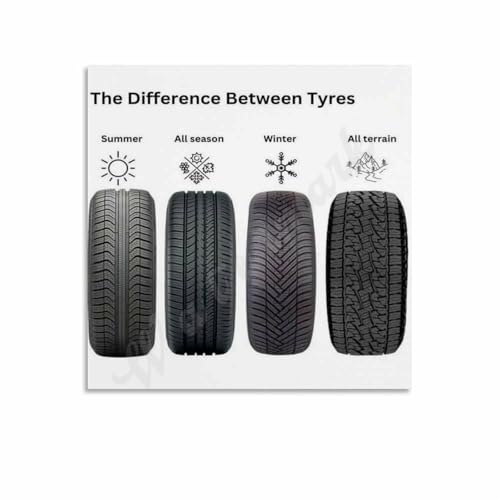
Generic
Car Difference Between Tyres Poster Canvas Painting…
- Size : 5 size for choice(1 inch=2.54cm)
- The poster is printed on canvas. It is waterproof,moisture proof and high tensile strength.The poster has rich printing color and…
- If you need other sizes, please leave me a message. We can also customize any design, you can send pictures to us, or create pictu…
As an Amazon Associate I earn from qualifying purchases.
Different designs and rubber compounds are made for specific conditions and driving styles. Think of them like shoes. You wouldn’t wear flip-flops for a marathon, and you wouldn’t wear heavy hiking boots for a swim.
Car tyres work the same way. The main differences come down to tread patterns, rubber composition, and overall construction.
These differences affect how the tyre performs in various weather. They also impact ride comfort, noise levels, and fuel efficiency. Understanding these variations helps you pick the best fit for your needs.
It’s about safety, performance, and getting the most out of your car. The tyre is the only part of your car that touches the road. So, it makes sense that it’s a pretty important component.
My Own Tyre Trouble
I remember a few years back. It was late autumn, and the first real chill was in the air. I had a set of tyres that were maybe two years old.
They were okay in the dry and the warm. But when a surprise frost hit one morning, my car felt… floaty. Every turn felt a bit wobbly.
Braking seemed to take longer than usual. I was driving my older sedan on a familiar route, but it felt alien. That day, I got a stark reminder that tyres are not just “tyres.” They have a job to do in specific conditions.
I felt a knot of worry in my stomach. Was I being careless? I pulled over at the first chance I got and decided right then that I needed to learn more.
I was lucky it was just a light frost and not a sheet of ice. That experience pushed me to really dig into what makes tyres different.
Tyre Essentials Checklist
Grip: How well the tyre sticks to the road.
Durability: How long the tyre lasts before wearing out.
Comfort: How smooth and quiet the ride is.
Fuel Economy: How much the tyre affects your gas mileage.
Safety: How the tyre performs in different weather and emergency situations.
Summer Tyres: Ready for the Warm
Summer tyres are designed for mild to warm weather. They are built to perform best when temperatures are above 7 degrees Celsius (about 45 degrees Fahrenheit). Their rubber compound stays firm in the heat.
This gives you excellent grip on dry and wet roads. The tread patterns are often simpler. They might have fewer grooves than other tyre types.
This means more rubber is in contact with the road. More contact means better handling and braking. They are fantastic for spirited driving.
If you like to feel connected to the road, summer tyres deliver. They help your car hug corners.
However, summer tyres are not for cold weather. When the temperature drops, their rubber gets hard. This reduces their grip significantly.
Ice and snow are a big problem for them. They can also wear out faster if used in very hot climates for long periods without care. Think of them as the athletic shoes of the tyre world.
Great for peak performance when the conditions are right.
Winter Tyres: Conquering Cold and Snow
Winter tyres are a game-changer when the temperature drops. They are made with a special rubber compound. This compound stays soft and flexible even in freezing conditions.
This keeps the tyre grippy on cold roads. They have deeper tread grooves. These grooves are designed to bite into snow and ice.
They also have lots of small cuts, called sipes. These sipes help push away water and slush. They act like little claws on slippery surfaces.
Winter tyres can dramatically improve your stopping distance and control in snow, ice, and very cold rain.
The tread patterns are usually more aggressive. This helps them clear snow and mud. Many winter tyres will have a symbol on the sidewall.
It looks like a mountain with a snowflake inside. This means they meet certain performance standards for snow. Using winter tyres when it’s cold makes a huge difference in safety.
It’s like trading your running shoes for ice skates. They offer a level of security you just don’t get with other types in winter.
Winter Tyre vs. All-Season Tyre
Winter Tyres:
- Soft rubber compound for cold temps.
- Deep, aggressive tread for snow and ice grip.
- Many sipes for extra biting edges.
- Best below 7°C (45°F).
All-Season Tyres:
- Moderate rubber compound, okay in most temps.
- Balanced tread pattern for various conditions.
- Fewer sipes than winter tyres.
- A compromise, not ideal for extreme cold or heat.
All-Season Tyres: The Middle Ground
All-season tyres are probably the most common type on cars today. They try to be a compromise. They aim to offer decent performance in a range of conditions.
This includes warm weather, light snow, and wet roads. Their rubber compound is formulated to work reasonably well across a wider temperature range. The tread patterns are designed to balance grip in dry conditions with some ability to channel water and light snow.
The main advantage of all-season tyres is convenience. You don’t have to switch them out seasonally. They offer acceptable performance for many drivers.
However, they are not the best at anything. They don’t offer the sharp handling of summer tyres in warm weather. They also don’t provide the superior grip of winter tyres on ice and heavy snow.
Think of them as a good all-around tool. They can do many jobs, but they won’t excel at the most demanding ones. They are a good choice for drivers who don’t face extreme weather or push their car to its limits.
Performance Tyres: For the Enthusiast
Performance tyres are for drivers who want more from their car. These tyres are engineered for speed and handling. They often have softer rubber compounds.
This softer rubber gives them incredible grip. The tread patterns are designed for maximum road contact. They typically have larger tread blocks.
This reduces tread flex during hard cornering. They can help your car feel more responsive. Braking distances are often shorter with performance tyres.
They are a favorite among sports car owners.
However, performance tyres come with trade-offs. The softer rubber wears out faster. They can also be noisier.
Ride comfort might be reduced because they are stiffer. And, like summer tyres, they are not good in cold weather or snow. Some performance tyres are even designed for summer use only.
If you have a high-performance car and enjoy dynamic driving, these are likely the tyres for you. But be prepared for them to need replacing more often.
Performance Tyre Characteristics
Softer Rubber: Provides better grip.
Larger Tread Blocks: Enhance stability and handling.
Lower Profile: Often have shorter sidewalls for quicker steering response.
Increased Road Noise: A common side effect of their design.
Faster Wear: Due to softer compounds.
Eco-Friendly or Fuel-Efficient Tyres
Eco-friendly tyres, also known as fuel-efficient tyres, are designed with one main goal in mind: saving you money on gas. They achieve this through several design features. One is their rubber compound.
It’s often harder and contains special silica. This makes the tyre roll more easily. Less rolling resistance means your engine doesn’t have to work as hard.
This leads to better fuel economy.
The tread patterns might also be designed to reduce drag. They might have less aggressive patterns or specific groove designs. These tyres can also last longer.
This is because the harder rubber often means slower wear. The trade-off can sometimes be in grip. They might not offer the same level of traction as performance or even some standard tyres.
This is especially true in wet or snowy conditions. But for the everyday commuter looking to cut down on fuel costs, they are a great option.
Fuel-Saving Tyre Features
- Low Rolling Resistance: Less energy needed to move the tyre.
- Special Rubber Compounds: Optimized for durability and efficiency.
- Aerodynamic Tread Designs: Reduce air resistance.
- Longer Lifespan: Often last more miles than standard tyres.
Specialty Tyres: For Specific Needs
Beyond the main categories, there are also specialty tyres. These are made for very particular uses. For example, all-terrain tyres are popular for SUVs and trucks.
They have a more aggressive tread pattern. This helps them grip well on unpaved surfaces like dirt, gravel, and mud. They offer a decent compromise for on-road driving too.
But they are usually louder and less fuel-efficient than standard tyres.
Then there are mud-terrain tyres. These are even more aggressive. They are built for serious off-roading.
Their large, widely spaced tread blocks are excellent at clearing mud. They are not practical for everyday driving. They are very noisy and provide a harsh ride on pavement.
You also have run-flat tyres. These are designed to keep you driving for a short distance even after a puncture. They have reinforced sidewalls.
This allows them to support the vehicle’s weight without air pressure. This is a safety feature for many drivers.
Quick Scan: Tyre Type Comparison
| Tyre Type | Best For | Pros | Cons |
|---|---|---|---|
| Summer | Warm, dry, wet roads | Excellent grip, handling | Poor in cold/snow |
| Winter | Cold, snow, ice | Superior cold grip, safety | Wears fast in warm temps |
| All-Season | Moderate conditions | Convenient, balanced | Compromise, not extreme |
| Performance | Enthusiast driving | Sharp handling, grip | Faster wear, noisy |
| Eco-Friendly | Fuel economy | Saves gas, lasts long | Can lack ultimate grip |
What This Means For Your Car
The type of tyres you choose has a direct impact on your car. For example, if you live in a region with harsh winters, using winter tyres in the cold months is crucial. It’s not just about comfort; it’s about safety.
The difference in stopping distances on ice can be enormous. I’ve seen friends struggle with cars that felt unsafe in the snow. Once they switched to proper winter tyres, their confidence and control returned.
If you drive a lot of miles, eco-friendly tyres can add up savings. Over a year, the improved fuel efficiency can be significant. For those who enjoy driving their sports car on twisty roads, performance tyres offer the thrill.
But remember the cost of replacing them more often. For most people, all-season tyres are a sensible choice. They offer a good balance for everyday driving.
It’s about matching the tyre to your local climate, your driving habits, and your car’s capabilities.
When to Worry About Your Tyres
Tyres can tell you a lot about your car and your driving. If your car pulls to one side, it might be a sign of uneven tyre wear. This could mean a wheel alignment issue.
If you feel vibrations through the steering wheel, especially at higher speeds, it’s a good idea to have them checked. This could be a sign of unbalanced tyres or a problem with the tyre structure itself.
Pay attention to the tread depth. Most tyres have wear indicators. These are small raised bars in the grooves.
When the tread wears down to these bars, it’s time for new tyres. Worn tyres have much less grip. This is especially dangerous in wet conditions.
Also, look for any cuts, bulges, or cracks on the sidewalls. These can be serious safety hazards. A bulging sidewall, for instance, means the internal structure of the tyre is compromised.
It could lead to a blowout.
Tyre Health: Red Flags to Watch For
Uneven Wear: Car pulling, steering issues.
Vibrations: Felt in the steering wheel or seat.
Low Tread Depth: Tread worn down to wear bars.
Visible Damage: Cuts, bulges, cracks on sidewalls.
Frequent Punctures: Could indicate old or damaged tyres.
Quick Tips for Tyre Care
Taking good care of your tyres extends their life. It also keeps you safer on the road. Always maintain the correct tyre pressure.
Check it at least once a month. You can find the recommended pressure on a sticker in your driver’s side doorjamb or in your car’s manual. Under-inflated tyres wear out faster.
They also reduce fuel efficiency and affect handling. Over-inflated tyres can lead to a harsher ride and make you more prone to damage from road hazards.
Rotate your tyres regularly. This means moving them from one position on the car to another. A common rotation pattern is front-to-back and side-to-side.
Doing this helps them wear more evenly. Most experts recommend rotating tyres every 5,000 to 7,500 miles. Also, have your wheel alignment checked periodically.
Misaligned wheels can cause rapid and uneven tyre wear. Finally, keep an eye on your tyre’s age. Tyres degrade over time, even if they have good tread.
Most manufacturers recommend replacing tyres after about six to ten years, regardless of tread depth.
Tyre Care Quick Guide
Pressure Check: Monthly, or before long trips.
Tyre Rotation: Every 5,000-7,500 miles.
Alignment Check: If you notice pulling or uneven wear.
Visual Inspection: Look for damage or wear weekly.
Age:
Common Tyre Questions Answered
Do I really need winter tyres?
If you live where temperatures frequently drop below 7 degrees Celsius (45°F), especially with snow or ice, then yes. Winter tyres offer significantly better grip and safety in these conditions. All-season tyres are a compromise and are not designed for extreme cold or snow.
Can I mix different types of tyres on my car?
It’s generally not recommended to mix tyre types or brands. This can affect your car’s handling and braking. For best performance and safety, all four tyres should be the same type, brand, and size.
If you must mix, at least ensure the tyres on the same axle are identical.
How often should I replace my tyres?
Tyres should be replaced when the tread is worn down to the wear indicators (about 2/32nds of an inch deep). Additionally, tyres degrade over time. Most manufacturers suggest replacing them after 6 to 10 years from their date of manufacture, even if the tread looks good.
What do the numbers on the tyre sidewall mean?
The numbers refer to the tyre’s size (width, aspect ratio, rim diameter), load index (maximum weight it can carry), and speed rating (maximum speed it can sustain). For example, P205/55R16 91V means the tyre is a Passenger tyre, 205mm wide, with an aspect ratio of 55%, for a 16-inch rim, with a load index of 91, and a speed rating of V.
Are run-flat tyres worth the extra cost?
Run-flat tyres offer peace of mind because you can drive a limited distance after a puncture. This can be very convenient. However, they are typically more expensive, offer a firmer ride, and are harder to repair if damaged.
The benefit depends on your priorities and driving habits.
Why do my tyres make noise?
Tyre noise is normal, especially with more aggressive tread patterns like those on winter or performance tyres. It can also be a sign of wear. Irregular wear patterns can cause humming or whining noises.
Check your tyre pressure and look for any signs of uneven wear. Sometimes, a specific type of tyre is just noisier by design.
Wrapping Up Our Tyre Talk
Choosing the right tyres for your car is more than just a purchase. It’s an investment in your safety and your driving experience. By understanding the differences between summer, winter, all-season, performance, and eco-friendly tyres, you can make a much more informed decision.
Remember to consider your local climate, how you drive, and what you expect from your vehicle. Regular checks and proper care will also help you get the most out of your tyres. Drive safely!
See also why don’t we use airless tires yet here’s the truth.
Related pick: Check today's price on Amazon
Products related to this article
Sponsored / affiliate links. As an Amazon Associate I earn from qualifying purchases. I may earn additional commission from eligible campaigns.