How Many Miles Do Cars Typically Last? (200,000+ Explained)
Most modern cars last 150,000 to 200,000 miles with proper care, and well-maintained models can reach 300,000 or more — not always a fixed number tied to age alone. This guide covers what actually drives that range and how to tell if your car is near the end.

Siless
Siless Hybrid 3in1 200 mil 25 sqft…
- ★ Get Extra Cool and Quiet Comfort. SILESS Hybrid is a heavy, thick, three layer (Butyl Mastic, Pe Foam, Mass Loaded Butyl Membran…
- ★ The heavy-duty composite barrier SILESS HYBRID provides damping vibrations, kills low frequency exhaust and road noise, and bloc…
- ★ Value - SILESS HYBRID 3in1 (Damping vibrations, Heat barrier and Sound insulation Material) is just priced to be cost effective,…
As an Amazon Associate I earn from qualifying purchases.
Understanding Car Lifespans How Many Miles Do Cars Typically Last? Real Data
Figuring out how long a car will last is something many people want to know. It helps with planning, budgeting, and making smart decisions about vehicles. The idea of a car’s “lifespan” isn’t just about how many years it’s been on the road, but also how many miles it has driven.
This is because mileage is often a better indicator of wear and tear on the engine and other important parts.
Many factors influence how many miles a car can last. These include the make and model of the car, how well it’s been maintained, and the driving conditions it experiences. High-quality materials and good engineering can make a difference.
Regular oil changes, tire rotations, and addressing small issues before they become big ones are key to extending a car’s life.
For those new to car ownership or maintenance, the variety of opinions and advice can be confusing. Some might say a car only lasts 100,000 miles, while others claim their cars have gone much further. This post aims to clear up that confusion by looking at real data and what experts say.
We want to give you a clear picture so you can make informed choices.
Average Lifespan Based On Real Data
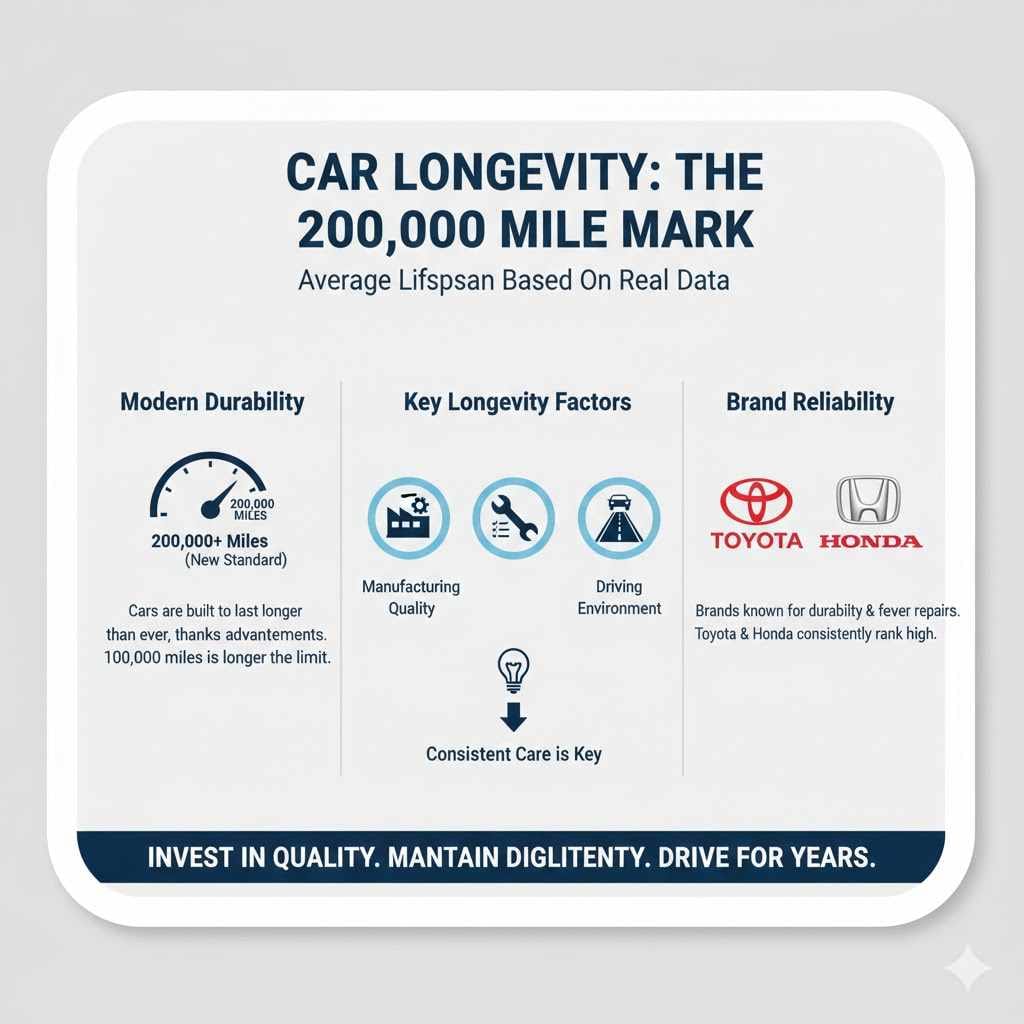
When we look at the numbers, the average lifespan of a car in the United States is quite impressive. Many sources suggest that cars today are built to last longer than ever before. This is due to advancements in technology, better materials, and improved manufacturing processes.
It’s not uncommon for modern cars to reach 200,000 miles or even more. This is a significant jump from the lifespans of cars a few decades ago. This extended durability means that a well-maintained vehicle can serve its owner faithfully for many years.
The exact number can vary depending on the type of car. For instance, larger sedans and SUVs often have robust engineering that supports higher mileage. Economy cars can also last a long time if they receive consistent care.
The key takeaway is that 100,000 miles is no longer the upper limit for most vehicles.
- The 200,000-Mile Mark
This is becoming a more common milestone for many vehicles. Cars that reach this point have typically been through a lot of driving. It signifies a well-built car and often, a dedicated owner. It’s a target many drivers hope to achieve with their vehicles, offering substantial value over the years. - Factors Affecting Longevity
Several elements play a role in how many miles a car will last. These include the quality of the original manufacturing, how often the car receives maintenance, and the type of driving it does. City driving with frequent stops can be harder on a car than highway driving. - Brand Reliability
Some car brands are known for their reliability and longevity. Brands like Toyota and Honda have consistently ranked high in customer satisfaction for vehicles that last a long time. This reputation is built on years of producing durable cars that require fewer major repairs.
Understanding Vehicle Longevity By Type
The type of vehicle you own can significantly influence how many miles it typically lasts. Different car categories are designed with different priorities, and this often translates into varied durability and lifespan potentials.
For example, trucks and SUVs, often built on stronger frames and with more powerful engines, can sometimes last longer than smaller, more compact cars. However, this isn’t a universal rule, as the specific model and its maintenance history are critical. A well-cared-for compact car can easily outlast a neglected truck.
Luxury cars also have their own considerations. While they often use high-quality materials and advanced technology, their complex systems can sometimes be more expensive to repair. This can affect their overall cost of ownership and perceived lifespan if maintenance is deferred due to cost.
Electric vehicles (EVs) present a new frontier in car longevity. Their powertrains have fewer moving parts than internal combustion engines, potentially leading to less wear and tear. However, battery degradation is a key factor to consider for their long-term lifespan and value.
Sedans And Hatchbacks
Sedans and hatchbacks are the workhorses for many families and commuters. They are generally designed for a balance of efficiency, comfort, and practicality. Their engines and transmissions are usually built to handle daily driving with a focus on fuel economy.
With proper care, many sedans and hatchbacks can comfortably surpass 150,000 miles. Some models, particularly those known for reliability, can go much further, often reaching 200,000 miles or even more. The key is regular maintenance, such as oil changes, filter replacements, and checking fluid levels.
The wear and tear on these vehicles often depend on their usage. A sedan used primarily for highway commuting will likely experience less stress than one used for frequent short trips in stop-and-go city traffic. Regular brake checks and tire rotations are also vital for extending their lifespan.
- Common Wear Items
Even reliable sedans will eventually need parts replaced due to normal wear. These can include brake pads, tires, spark plugs, and timing belts. Addressing these proactively prevents more significant damage. - Engine Longevity
The engine is the heart of any car. For sedans, engines are typically designed to be durable. However, neglecting oil changes or allowing the engine to overheat can dramatically shorten its life. - Transmission Health
The transmission is another critical component. Regular fluid changes and avoiding aggressive driving can help ensure the transmission lasts for the life of the vehicle.
SUVs And Crossovers
SUVs and crossovers often appeal to drivers looking for more space, a higher driving position, and sometimes, more capability. They are built to be versatile, handling family needs, cargo, and varied road conditions.
Generally, SUVs and crossovers tend to have robust construction, which can contribute to a longer lifespan. Many are built on truck-like frames or have strengthened chassis, allowing them to withstand more stress. This makes them good candidates for reaching high mileage.
The mileage potential for SUVs and crossovers often mirrors that of larger sedans and trucks. It’s common for well-maintained models to reach 200,000 miles and beyond. However, the type of use matters.
An SUV used for off-roading or towing heavy loads will experience more wear than one used for light commuting.
- Drivetrain Durability
Many SUVs and crossovers come with all-wheel-drive or four-wheel-drive systems. These systems, while offering benefits, can add complexity and require specific maintenance to ensure their longevity. - Suspension Systems
These vehicles often have more substantial suspension components to handle varied terrain and loads. Regular checks of shocks, struts, and bushings are important for maintaining ride quality and preventing further damage. - Cooling Systems
With potentially larger engines and more demanding use, the cooling system in an SUV or crossover is crucial. Overheating can cause severe engine damage, so ensuring the radiator, coolant, and fans are in good working order is paramount.
Trucks
Pickup trucks are built for durability and heavy-duty tasks. Their primary purpose often involves hauling, towing, and working, which means they are engineered for strength and resilience.
Due to their robust construction, trucks often have some of the longest lifespans among vehicle types. It is not unusual for trucks to consistently reach or exceed 250,000 miles, and many can go even further with diligent care.
The heavy-duty nature of trucks means their components, such as engines, transmissions, and frames, are built to withstand significant stress. However, the type of work they do heavily influences their longevity. A truck used for constant heavy towing or construction work will likely wear out faster than one used for occasional hauling.
- Frame Strength
The frame of a truck is its backbone. It’s designed to be very strong to support heavy loads and endure tough conditions. Regular inspections for rust or damage are important for maintaining structural integrity. - Engine Power and Longevity
Truck engines are typically larger and more powerful, designed for torque. This often translates to greater durability, but they require proper maintenance, especially for oil and cooling systems, to reach their full potential mileage. - Towing and Hauling Impact
Frequent towing or hauling puts extra strain on the engine, transmission, brakes, and suspension. Drivers who regularly perform these tasks need to be especially diligent with maintenance and consider upgrades like heavy-duty brakes or cooling systems.
Factors That Influence How Many Miles Do Cars Typically Last? Real Data
While the make and model of a car certainly play a role in its potential lifespan, several other crucial factors significantly impact how many miles a car will actually last. These are the everyday elements that owners control, making vehicle longevity a partnership between the manufacturer and the driver.
One of the most significant factors is maintenance. A car that receives regular, scheduled maintenance will almost always last longer than one that is neglected. This includes simple tasks like oil changes, but also more complex services like checking and replacing fluids, filters, and belts.
Driving habits also have a major impact. Aggressive driving – rapid acceleration, hard braking, and high-speed cornering – puts excessive stress on the engine, transmission, brakes, and suspension. Conversely, smooth, consistent driving, especially on highways, is much gentler on a vehicle.
Environmental conditions and how a car is stored can also affect its lifespan. Cars exposed to harsh weather, like extreme heat or cold, or heavy road salt in winter, may experience more wear and tear, particularly on the body and undercarriage. Storing a car in a garage can help protect it from these elements.
Regular Maintenance Is Key
Regular maintenance is the cornerstone of a long-lasting vehicle. It’s the proactive approach that prevents minor issues from becoming major, expensive problems.
This involves adhering to the manufacturer’s recommended service schedule. This schedule outlines when to change the oil and filter, replace air filters, inspect belts and hoses, and check various fluid levels like coolant, brake fluid, and transmission fluid.
Skipping these basic services can lead to accelerated wear on engine components, poor fuel efficiency, and ultimately, a significantly shortened lifespan for the vehicle. Think of maintenance as preventative medicine for your car.
- Oil Changes
Changing the engine oil and filter regularly is arguably the most critical maintenance task. Oil lubricates moving parts, cleans the engine, and helps dissipate heat. Old, dirty oil can cause parts to grind against each other, leading to premature wear. - Tire Care
Proper tire inflation and regular rotations ensure even wear, extend tire life, and improve fuel economy and handling. Balancing tires is also important to prevent vibrations that can damage suspension components. - Fluid Checks
Coolant prevents the engine from overheating, brake fluid ensures safe stopping, and transmission fluid keeps the gears shifting smoothly. Low or dirty fluids can lead to catastrophic failures in these vital systems.
Driving Habits And Their Impact
How you drive your car every day makes a big difference in its lifespan. Smooth driving is like a gentle massage for your car, while aggressive driving is like a high-impact workout.
Accelerating too quickly and braking too hard puts immense stress on the engine, transmission, brakes, and tires. This constant strain causes parts to wear out much faster than they would under normal driving conditions.
Consistent, moderate driving, especially on highways, is much easier on a vehicle. It allows the engine to run at optimal temperatures and reduces the wear on mechanical components. This leads to a more comfortable ride and a longer-lasting car.
Consider this: if you frequently slam on the brakes because you’re always running late, your brake pads will wear out much faster. If you constantly floor the accelerator from a standstill, your transmission and engine are working much harder than they need to.
- Smooth Acceleration And Braking
Gentle acceleration allows the engine and transmission to warm up and operate efficiently. Similarly, anticipating stops and braking gradually reduces wear on brake pads and rotors. - Avoiding Idling In Traffic
While sometimes unavoidable, excessive idling can be hard on an engine. It doesn’t allow the engine to reach optimal operating temperatures, and emissions can build up. - Cornering Gracefully
Taking sharp turns at high speeds puts lateral stress on tires, suspension components, and bearings. Smooth cornering is much kinder to these parts.
Environmental Factors And Storage
The environment where your car spends its life, and where it’s parked, plays a significant role in its overall condition and longevity.
Cars exposed to harsh climates, such as extreme heat, constant humidity, or heavy snowfall with road salt, can experience accelerated wear. Salt, in particular, is highly corrosive and can damage the undercarriage, brake lines, and body panels over time.
The best way to protect a car from these elements is by parking it in a garage or under a carport whenever possible. This shields it from direct sunlight, extreme temperatures, and precipitation, helping to preserve its paint, interior, and underbody components.
Even if you live in a milder climate, taking steps like washing your car regularly, especially after driving in salty conditions, can make a difference in preventing rust and corrosion. Proper storage also includes things like using a car cover if it’s parked outside for extended periods.
- Protection From Sun Damage
Prolonged exposure to direct sunlight can fade paint, crack dashboards, and degrade interior materials. A garage or car cover offers vital protection. - Shielding From Salt And Rust
Road salt is a major enemy of car bodies and undercarriages. Washing your car frequently, especially in winter months, can help remove corrosive salt residue. - Temperature Extremes
Extreme heat can degrade rubber and plastic components, while extreme cold can make fluids thicker and harder on engines during startup. A stable temperature environment is ideal.
The Role Of Repair And Upkeep
Beyond routine maintenance, how you approach repairs and general upkeep has a significant impact on how many miles do cars typically last? Real Data. It’s about addressing issues as they arise and keeping the car in optimal working condition.
One of the most important aspects is fixing problems promptly. Small issues, like a minor oil leak or a strange noise, can often be signs of bigger problems developing. Ignoring them can lead to more severe damage and much higher repair costs down the line.
The quality of parts used for repairs also matters. Using genuine manufacturer parts or high-quality aftermarket alternatives generally ensures better fit, performance, and longevity compared to cheap, low-quality parts.
Choosing a trustworthy mechanic is also crucial. A good mechanic will not only fix the problem but also explain what happened and advise on how to prevent it in the future. They can also identify potential future issues before they become critical.
- Addressing Issues Promptly
Don’t wait for a warning light to turn into a breakdown. If you notice something unusual, get it checked by a professional. Early detection saves money and prevents further damage. - Quality Of Replacement Parts
Cheap parts might seem like a good deal, but they often don’t last as long or perform as well as higher-quality alternatives. This can lead to more frequent repairs and a shorter overall vehicle life. - Choosing A Reliable Mechanic
A skilled and honest mechanic is invaluable. They can help you keep your car in top shape and make sure repairs are done correctly the first time.
Importance Of Prompt Repairs
When your car develops a problem, addressing it quickly is paramount. This isn’t just about comfort; it’s about preventing a cascade of further damage.
For instance, a small coolant leak might seem minor, but if left unaddressed, it can lead to engine overheating. An overheated engine can suffer severe damage, like warped cylinder heads or a blown gasket, repairs that can cost thousands of dollars.
Similarly, a worn-out belt might start to squeak. If that belt breaks while you’re driving, it could damage other engine components. Promptly replacing a worn belt saves you from a potentially much larger repair bill.
Think of it like a minor health issue. If you see a doctor for a small ailment, it’s usually easier and cheaper to treat than if you let it fester and become a serious condition.
- Preventing Secondary Damage
Many car problems are interconnected. A failure in one system can put undue stress on another, causing a domino effect of damage. - Avoiding Costly Breakdowns
A small, inexpensive repair now can prevent a major, expensive breakdown later, saving you money and inconvenience. - Maintaining Resale Value
Cars that have been well-maintained and promptly repaired tend to have a higher resale value because they are in better condition.
Using Quality Parts
When it’s time to replace a part on your car, the choice of which part to use is significant. Not all parts are created equal.
Opting for original equipment manufacturer (OEM) parts or reputable aftermarket brands is generally a wise investment. These parts are designed to meet specific performance and durability standards, ensuring they integrate seamlessly with your vehicle.
Cheaper, off-brand parts might fit the initial price tag, but they often lack the quality and longevity of better options. They might fail sooner, require more frequent replacement, or even perform less effectively, potentially impacting other vehicle systems.
Consider the long-term costs. A slightly more expensive, high-quality part that lasts for years is often more economical than a cheap part that needs replacing multiple times.
- OEM Parts
These are parts made by the same company that manufactured your car. They are guaranteed to fit and perform as intended by the manufacturer. - Reputable Aftermarket Brands
Many companies specialize in producing high-quality replacement parts that meet or exceed OEM standards. Researching brands known for reliability is important. - Durability And Performance
Quality parts are built to withstand the demands of your vehicle. They ensure optimal performance, safety, and a longer lifespan for the component and the vehicle itself.
How Many Miles Do Cars Typically Last? Real Data
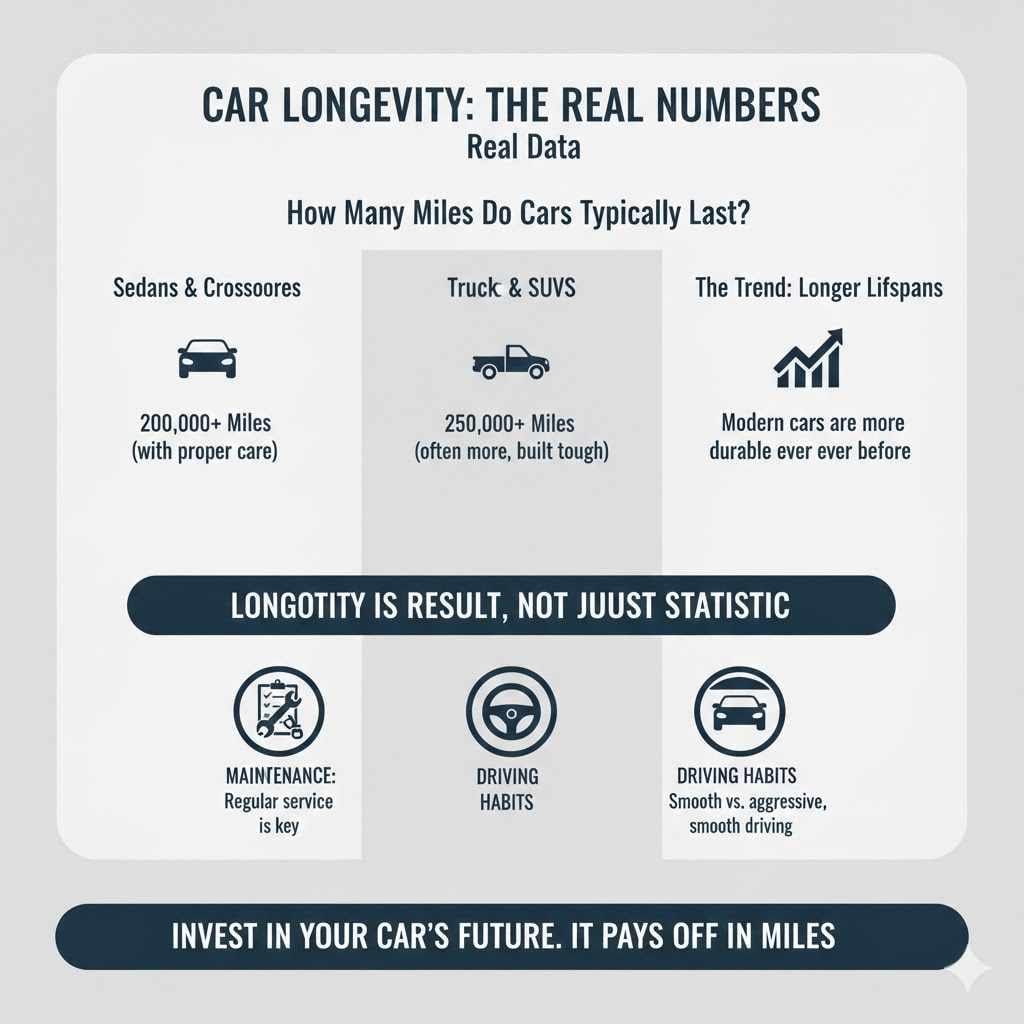
So, to tie it all together, what is the real answer to how many miles cars typically last? Based on the data and expert insights, modern cars are incredibly durable. We’re seeing average lifespans well beyond what was common in the past.
For many sedans and crossovers, reaching 200,000 miles is a realistic goal with proper care. Trucks, built for tougher tasks, can often go even further, sometimes 250,000 miles or more.
The crucial takeaway is that mileage is a statistic, but longevity is a result. How many miles your car will last is heavily influenced by how you maintain it, how you drive it, and how you protect it from the elements. Consistent, quality care is the most significant factor in maximizing your vehicle’s lifespan.
Making smart choices about maintenance, driving habits, and repairs will help your car serve you for many years and many miles to come. It’s about investing in your vehicle’s future, and yours.
Frequently Asked Questions
Question: What is the average lifespan of a car in miles?
Answer: The average lifespan for modern cars is often cited as being around 200,000 miles, with many vehicles exceeding this mark with good care.
Question: Can a car last longer than 200,000 miles?
Answer: Absolutely. With diligent maintenance, smooth driving habits, and prompt repairs, many cars can last well over 200,000 miles, sometimes reaching 300,000 miles or more.
Question: Does driving style affect how long a car lasts?
Answer: Yes, very much so. Aggressive driving, like rapid acceleration and hard braking, puts significant stress on components and shortens a car’s lifespan compared to smooth, gentle driving.
Question: What is the most important factor for car longevity?
Answer: Regular and consistent maintenance, following the manufacturer’s recommended service schedule, is widely considered the most important factor for ensuring a car lasts as long as possible.
Question: Do electric cars last longer than gasoline cars?
Answer: EVs have fewer moving parts than gasoline cars, which can mean less wear. However, battery degradation is a key factor in their long-term lifespan, and this technology is still evolving.
Summary
Your car’s lifespan depends on many things. Regular maintenance, gentle driving, and prompt repairs help cars go further. Many cars now reach 200,000 miles or more.
Trucks can often last even longer. Taking good care of your vehicle maximizes its miles and value.
Related pick: Check today's price on Amazon