How To Fix A Ford Focus Car Horn (DIY Repair Made Simple)
You might feel a pang of panic. Is this a huge, expensive repair? Will I have to take it to the dealer and pay a fortune?
Take a deep breath. Many car horn issues are surprisingly simple to fix. You can often solve them yourself with a little patience and the right guidance.
This guide will walk you through the common problems and how to fix them.
A silent car horn in a Ford Focus can often be fixed by checking the horn fuse, horn relay, horn button itself, or the horn actuators. Most issues stem from these components failing. Simple DIY steps can diagnose and resolve these problems, restoring a crucial safety feature.
Understanding Your Ford Focus Car Horn System
Your car’s horn system might seem simple, but it has a few parts working together. On a Ford Focus, like most cars, it’s an electrical system. When you push the horn button, you complete a circuit.
This circuit tells a relay to send power to the horn itself.
The horn actuator is what actually makes the sound. It’s a small electromagnet that vibrates a diaphragm. This vibration creates the loud noise you hear.
If any part of this chain breaks, the horn won’t work.
Let’s break down the key players in this system:
- The Horn Button/Switch: This is what you touch on your steering wheel. It’s the trigger.
- The Fuse: This protects the electrical system from too much power. A blown fuse means no power.
- The Horn Relay: This is like a switch for the horn circuit. It uses a small amount of power to control a larger amount of power going to the horn.
- The Horn Actuator(s): These are the actual sound-making devices, usually one or two horns.
- Wiring: All the connections that carry the electricity.
Most problems will happen with one of these parts. Knowing them helps you pinpoint the issue faster.

My Ford Focus Horn Suddenly Stopped Working: A Personal Story
I remember one sweltering July afternoon. I was driving my old Ford Focus, the trusty blue one, on a busy street. A delivery truck had double-parked, blocking a lane.
I needed to get the driver’s attention to move. I honked. Nothing.
Just a faint, sad click from somewhere under the hood.
My heart did a little flip. This was the second time I’d needed the horn in a week. The first time, it worked fine.
Now, nothing. I felt a surge of annoyance, then a bit of worry. It was hot, traffic was building, and I felt helpless without that essential sound.
I pulled over, put my head in my hands for a second. What was wrong? Was it going to be an expensive fix?
I really didn’t want to deal with a mechanic right then.
Common Causes of a Non-Working Ford Focus Horn
Okay, so the horn stopped. What’s usually the culprit? It’s rarely a complex engine problem.
It’s almost always one of the simpler electrical parts.
1. Blown Fuse
This is the most common and easiest thing to check. A fuse is a safety device. If there’s a power surge or a short circuit, the fuse blows to protect other parts.
If the horn fuse blows, no power gets to the horn relay or the horn itself.
Why it happens: Sometimes it’s just a fluke. Other times, it means there’s a small wiring issue somewhere causing a momentary overload. You’ll need to
2. Faulty Horn Relay
The horn relay is a small electrical switch. It allows the horn button to control the high-current circuit that powers the horn. If the relay fails, the signal from the button won’t reach the horn, even if the fuse is good.
Why it happens: Relays have moving parts and electrical contacts. Over time, these can wear out, get dirty, or simply fail. They are relatively inexpensive to replace.
3. Bad Horn Actuator(s)
These are the actual sound-makers. Your Ford Focus likely has one or two horn actuators. They are often located behind the front bumper or grille.
Why it happens: Exposure to the elements (water, salt, dirt) can cause them to corrode or fail internally. If one horn fails, the other might still work, but if both fail, you’ll have silence.
4. Damaged Horn Button/Switch
The button on your steering wheel can also fail. The contacts inside can wear out, break, or become corroded. This means even when you press it, it doesn’t complete the circuit properly.
Why it happens: Age and repeated use can cause wear and tear on the internal switch mechanism.
5. Wiring Issues
While less common for sudden failure, damaged wiring is a possibility. Wires can fray, corrode, or get pinched, breaking the electrical connection.
Why it happens: Rodents chewing on wires, accidental damage during other repairs, or vibration can cause wires to break over time.
Horn Fuse & Relay Location
Fuse Box Locations: Ford Focus cars typically have two fuse boxes. One is usually under the dashboard on the driver’s side. The other is often in the engine compartment, near the battery.
Check your owner’s manual for the exact locations for your model year.
Fuse Identification: Inside the fuse box covers, you’ll usually find a diagram showing which fuse goes to which component. Look for a label like “Horn,” “HORN,” or similar. The relay might be near the fuse box.
Fuse Amperage: Always
DIY Diagnostic Steps for a Silent Horn
Let’s start troubleshooting. You don’t need to be a master mechanic for this. Just a little patience and a few basic tools.
Step 1: Check the Fuse
This is your first stop. It’s the easiest and most likely culprit.
- Find the Fuse Box: Consult your Ford Focus owner’s manual. It will show you where the fuse box is located. Most commonly, it’s inside the car, on the driver’s side, near the steering column, or under the hood.
- Identify the Horn Fuse: Look at the diagram on the fuse box cover or in your manual. Find the fuse that powers the horn. It will have a label like “Horn” or “HORN.”
- Inspect the Fuse: Carefully pull the fuse out using a fuse puller (often found in the fuse box or a small tool kit). Hold it up to the light. You’re looking for a broken wire inside the plastic casing. If the wire is broken, the fuse is blown.
- Test the Horn: Get back in your car and try the horn. If it works, you found your problem! If not, move on to the next step.
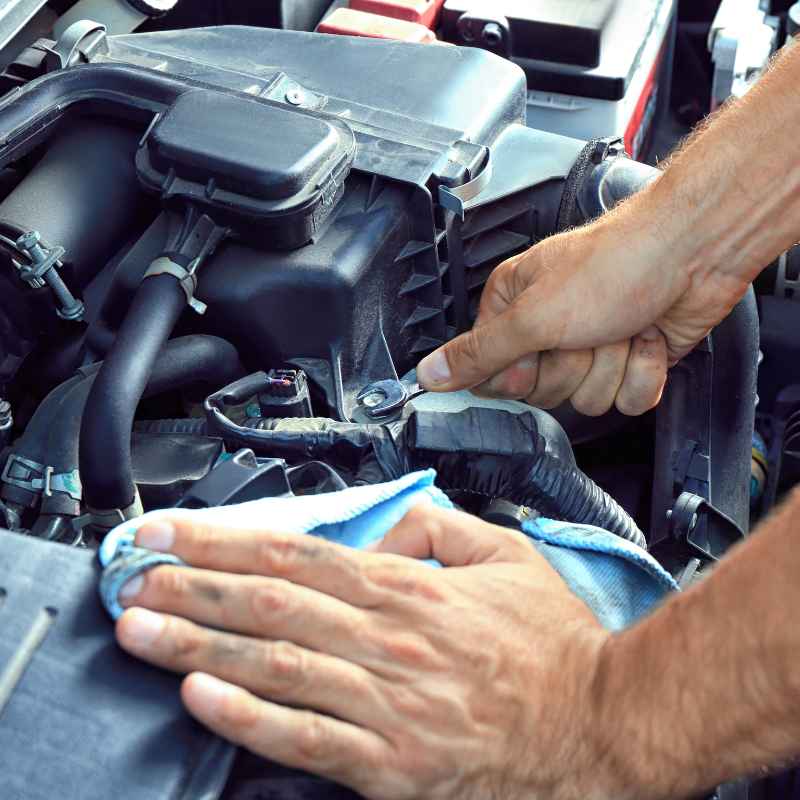
Pro Tip: Keep a spare set of common fuses in your glove box. You never know when you might need them.
Step 2: Check the Horn Relay
If the fuse is good, the next suspect is the relay. Sometimes, you can swap a similar relay to test it.
- Locate the Relay: Again, your owner’s manual is your best friend here. The horn relay is usually in the same fuse box as the horn fuse or in a separate relay box under the hood.
- Identify a Test Relay: Look for another relay in the fuse box that has the exact same part number and pin configuration as the horn relay. Often, the headlights or fog lights use a similar relay.
- Swap the Relays: Carefully pull out the horn relay and the test relay. Swap them. Make sure they click in securely.
- Test the Horn: Try your horn again. If it works now, you know the original horn relay was faulty and needs to be
Important Note: Only swap relays if they are identical. Swapping the wrong relay can cause problems with other electrical systems.
Testing the Horn Actuators Directly
If fuses and relays check out, the horns themselves might be the issue. This requires a bit more hands-on work.
Accessing the Horns: The horn actuators are usually located behind the front bumper, often on either side of the radiator support. You might need to remove some plastic covers or splash shields to get to them. Be careful not to damage clips or fasteners.
Visual Inspection: Look for any obvious signs of damage, corrosion, or loose connections on the wires leading to the horns.
Testing with a Jumper Wire: With the ignition OFF, disconnect the wire connector from one of the horns. You can then use a jumper wire (with alligator clips) to momentarily connect the positive battery terminal to the horn’s positive terminal. If the horn sounds, it’s working.
Repeat for the other horn. This requires caution and understanding of basic electrical flow.
Caution: Always disconnect the battery or ensure the ignition is off before working directly on electrical components like horns.
Step 3: Check the Horn Button
This can be trickier to test without specific tools or taking apart your steering wheel. However, you can often infer if it’s the issue.
Symptoms: If your horn worked intermittently before failing completely, or if you notice other steering wheel controls (like cruise control buttons) acting strange, the horn button might be failing.
How to Check (Basic): Sometimes, there are wiring harnesses connected to the back of the steering wheel clock spring that can become loose or damaged. This often requires removing the airbag (which should only be done by a professional if you are not experienced, due to safety risks) to access. If you are not comfortable with this, it’s best to have a mechanic check it.
Expert Tip: Many modern cars have a “clock spring” behind the steering wheel. This is a coiled ribbon cable that allows electrical connections to the steering wheel to rotate. If this fails, it can affect the horn and airbag functions.
Step 4: Inspect Wiring
This is the most labor-intensive part and usually the last resort unless you see obvious damage.
What to Look For: Start from the horn actuators and trace the wires back. Look for any:
- Cut or frayed wires
- Corroded connectors
- Wires that look pinched or stressed
- Signs of rodent damage (chewed insulation)
Testing Continuity: If you have a multimeter, you can test the continuity of the wires. This involves checking if the wire allows electricity to flow from one end to the other. You’d disconnect the battery and then place the multimeter probes on each end of a wire you suspect is faulty.
If the meter doesn’t show continuity, the wire is broken.
Contrast: Normal Horn Behavior vs. Concerning Signs
Normal: Loud, distinct honk. Both horns (if equipped) sound at the same time with equal volume. The sound is consistent.
Concerning Signs:
- Faint or weak sound: Suggests a power issue, a failing horn actuator, or a loose connection.
- Intermittent operation: Horn works sometimes but not others. This often points to a failing relay, switch, or loose wiring.
- Buzzing or distorted sound: Could indicate a failing horn actuator or a grounding issue.
- No sound at all (but a click): Often points to a relay that is activating but not sending power, or a horn that has completely failed.
- Horn honking on its own: This is a serious issue, usually caused by a faulty horn switch or a short circuit. It can drain your battery and is a safety concern.
Replacing a Faulty Horn Actuator
If you’ve diagnosed that one or both of your horn actuators are bad, replacing them is a manageable DIY task for many. Here’s a general guide.
Tools You’ll Likely Need:
- Socket set (metric sizes, commonly 10mm, 12mm, 13mm)
- Ratchet and extensions
- Screwdriver set (Phillips and flathead)
- New horn actuator(s) (ensure they match your Ford Focus model)
- Wire cleaner or sandpaper
- Optional: Penetrating oil
Steps:
- Safety First: Disconnect the negative battery terminal. Wait a few minutes for any residual power to dissipate.
- Access the Horns: You’ll need to get under the front of your car or remove the front bumper cover to reach the horns. Your owner’s manual might have instructions for bumper removal, or you can find many videos online specific to your Ford Focus year.
- Locate and Disconnect: Find the horn(s). They are usually mounted on a bracket near the radiator. Disconnect the electrical connector from the horn. There might be a small tab to press.
- Unbolt the Old Horn: Remove the bolt(s) holding the horn in place. Be ready to catch the horn if it’s loose.
- Prepare the New Horn: Inspect the mounting bracket and the new horn. Make sure it looks identical to the old one.
- Mount the New Horn: Place the new horn onto the bracket and secure it with the bolt(s). Don’t overtighten, but make sure it’s snug.
- Clean Connectors: Before plugging in the new horn, clean the electrical connector on your car’s wiring harness. Use wire cleaner or a small piece of sandpaper to remove any corrosion or debris. This ensures a good connection.
- Connect the New Horn: Plug the electrical connector firmly into the new horn actuator.
- Reassemble: If you removed any covers or the bumper, reassemble everything carefully, ensuring all clips and bolts are secured.
- Reconnect Battery: Reconnect the negative battery terminal.
- Test: Get in your car and test the horn.
Real-World Tip: Sometimes, the mounting bracket itself can corrode. If it looks bad, you might need to clean it up with a wire brush or replace it if it’s too far gone. A good ground connection is crucial for the horn to work correctly.
Quick-Scan Table: Horn Troubleshooting Flow
| Step | Action | Likely Fix | Notes |
|---|---|---|---|
| 1 | Check Fuse | Replace fuse | Use correct amperage |
| 2 | Check Relay | Replace relay | Swap with identical relay |
| 3 | Inspect Horns | Replace horn actuator(s) | Check wiring connections |
| 4 | Inspect Steering Wheel Switch | Repair/replace switch | May need professional help |
| 5 | Inspect Wiring | Repair/reroute wires | Look for damage, corrosion |
When to Call a Professional
While many horn issues are DIY-friendly, there are times when it’s best to seek expert help.
- Airbag System Involvement: If you suspect the problem is with the horn button located within the steering wheel, and it’s tied to the airbag system, it’s a safety-critical component. Tampering with airbags without proper training can be dangerous.
- Complex Wiring Problems: If you’ve checked fuses, relays, and actuators, and the wiring seems intact but the horn still doesn’t work, there might be a more complex short circuit or a fault deeper within the car’s electrical system. This can be hard to diagnose without professional equipment.
- Lack of Tools or Confidence: If you don’t have the necessary tools, or you’re simply not comfortable working with electrical components, it’s always okay to take it to a trusted mechanic.
- Intermittent Issues You Can’t Pinpoint: Sometimes, intermittent problems are the hardest to fix. A mechanic might have specialized diagnostic tools to trace these elusive faults.
Don’t feel discouraged if you can’t fix it yourself. The important thing is to get it repaired so your car is safe to drive.
What This Means for Your Ford Focus
A working horn is about more than just the law. It’s about safety. When your horn isn’t working, you lose a vital way to alert others to potential dangers.
This can be especially critical in situations like:
- Preventing accidents with pedestrians or cyclists.
- Warning other drivers of hazards.
- Getting attention in an emergency.
So, addressing a faulty horn isn’t just about fixing a broken part; it’s about restoring a critical safety function to your Ford Focus. It’s a repair that’s usually worth doing promptly.
Quick Fixes & Preventative Tips
Regular Checks: Test your horn every few months, especially before long road trips. It takes just a second.
Listen for Changes: Pay attention to the sound of your horn. Any change in tone or volume could indicate an early problem.
Protect the Front End: Avoid hitting curbs or objects with your front bumper, as this can damage horn components.
Keep it Clean: While you can’t directly clean the horns, keeping the area around them free of excessive mud and debris can help prevent corrosion.
Fuses: Always use the correct amperage fuse. A fuse that is too high can cause electrical damage and fire hazards.
Frequently Asked Questions About Ford Focus Horns
Why does my Ford Focus horn only make a clicking sound?
A clicking sound usually means the horn relay is working, but the horn actuator itself isn’t getting enough power or has failed. Check the wiring to the horn for loose connections or corrosion. If the wiring is good, the horn actuator likely needs to be replaced.
Can I replace just one horn on my Ford Focus if the other still works?
Yes, you can. Many Ford Focus models have two horn actuators. If one fails, you can replace just that one.
However, it’s often a good idea to replace them in pairs if they are old, as the other might fail soon. Check your owner’s manual to confirm if you have one or two.
How much does it typically cost to fix a Ford Focus horn?
The cost varies. If it’s just a blown fuse or a bad relay, the parts are very inexpensive (a few dollars). Replacing the horn actuators can cost anywhere from $50 to $150 for the parts, depending on the quality and where you buy them.
Labor costs at a shop can add $100-$300 or more, depending on the complexity and shop rates.
Is it illegal to drive without a working car horn?
Yes, in most U.S. states, a functioning horn is required by law for safety reasons. Driving without one could result in a ticket and a fine.
It’s essential to get it fixed promptly.
Where is the horn located on a Ford Focus?
The horn actuators are typically located behind the front bumper, often mounted on the radiator support structure. You might need to remove some plastic splash shields or even the bumper cover to access them for inspection or replacement. Consult your owner’s manual for specific details.
What does it mean if my Ford Focus horn honks by itself?
If your horn honks randomly or by itself, it’s usually caused by a faulty horn switch in the steering wheel or a short circuit in the wiring. This can drain your battery and is a safety concern. It’s best to have this diagnosed and repaired by a professional mechanic immediately.
Conclusion
A silent horn on your Ford Focus can be unsettling, but as you’ve seen, it’s often a straightforward fix. By systematically checking the fuse, relay, actuators, and wiring, you can often identify and resolve the problem yourself. This not only saves you money but also restores a crucial safety feature to your vehicle.
Remember to work safely, consult your owner’s manual, and don’t hesitate to call a professional if you’re unsure. Getting your horn back in working order is a rewarding DIY task that keeps you and others safer on the road.
See also how to stop a ford car alarm that won’t shut off. See also how to stop a ford car alarm that won’t shut off.
Products related to this article
Sponsored / affiliate links. As an Amazon Associate I earn from qualifying purchases. I may earn additional commission from eligible campaigns.