How to Tell If Vibration Is From a Tire or Wheel Bearing
If the vibration changes with road speed, suspect a tire or wheel. If it changes when you brake, suspect the brakes. If it grows louder or rougher while turning or loading one side, suspect a wheel bearing. Guessing wrong can waste money on parts that do nothing and let a failing bearing or tire problem worsen. This guide gives a symptom-by-symptom decision tree to separate tire, wheel, brake, and bearing faults.
What you’ll need


- Flashlight
- Tire pressure gauge
- Tread depth gauge or a coin for a quick tread check
- Notebook or phone for speed and symptom notes
- Basic safety gear for a parked inspection
What should you check first after a pothole?
Start with a short road test, then a parked inspection. Note the speed where the shake starts, where you feel it, and whether braking or turning changes it. A pothole can knock a wheel weight off, bend a wheel, damage a tire internally, or stress a bearing, so the first clue is usually the pattern.
Road test in a fixed order
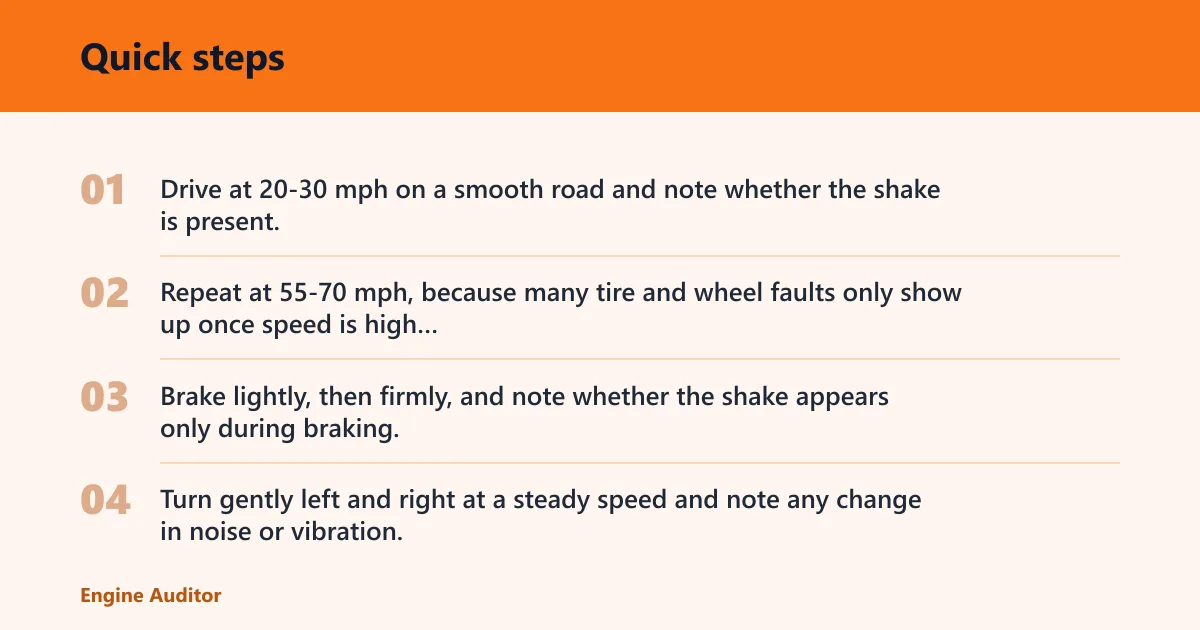
- Drive at 20-30 mph on a smooth road and note whether the shake is present.
- Repeat at 55-70 mph, because many tire and wheel faults only show up once speed is high enough to force the imbalance or runout to the surface.
- Brake lightly, then firmly, and note whether the shake appears only during braking.
- Turn gently left and right at a steady speed and note any change in noise or vibration.
Suppose the steering wheel shakes at 65 mph after a curb strike, but the seat stays calm and braking does nothing. That pattern points first to a front wheel, tire, or balance issue, not a rear bearing.
What does the vibration location tell you?
Where you feel the vibration matters. Steering wheel shake often points to a front tire, wheel, brake, or suspension issue. Seat or floor vibration often points to a rear tire or wheel issue. A vibration that shows up only at highway speed often points to balance, runout, or a damaged tire, while brake pulse points toward the rotors.
Use the feel of the shake
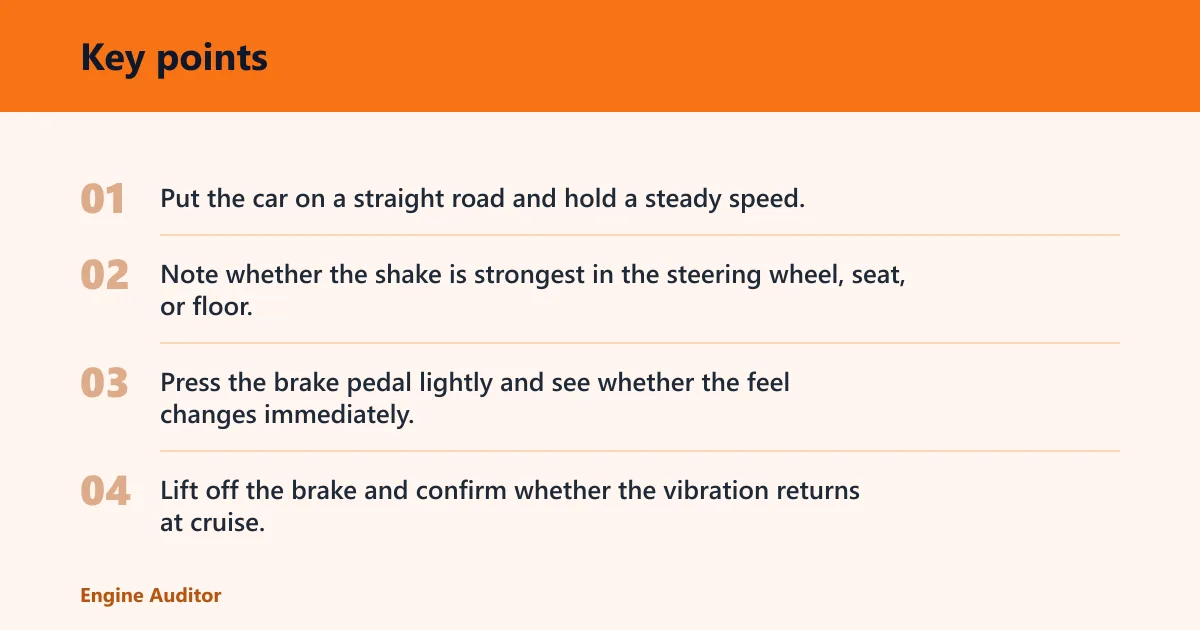
- Put the car on a straight road and hold a steady speed.
- Note whether the shake is strongest in the steering wheel, seat, or floor.
- Press the brake pedal lightly and see whether the feel changes immediately.
- Lift off the brake and confirm whether the vibration returns at cruise.
A common first-timer mistake is to call every steering shake a tire problem. A front brake rotor with pulse can shake the wheel only during braking, while a front balance problem can shake the wheel at cruise and stay unchanged under light brake pressure.
Does turning point to a bearing?
Often, yes. Wheel bearing issues can cause vibration in the steering wheel, and bad bearings may get louder above about 55 mph or during long sweepers and tight turns. A bearing can hum or growl more on one turn because the load shifts to that side. Noise that grows with steering input is a strong clue, even before any looseness is obvious.
Watch for load changes
- At 30-40 mph, make a gentle lane change left, then right.
- Listen for humming or growling that gets louder in one direction.
- Note whether steering vibration worsens when the car loads one side.
- Check for ABS light changes, because a bearing issue may call for code checks.
Suppose the left turn makes a growl louder and the right turn quiets it. That pattern fits a left bearing being loaded more heavily. If the same road section only shakes the wheel at 60 mph and never changes in turns, balance or runout stays higher on the list.
Tire, wheel, and bearing diagnostic matrix
| Symptom location | Speed range | Braking effect | Turning effect | Likely tire cause | Likely wheel-bearing cause | Next check | Do not drive |
|---|---|---|---|---|---|---|---|
| Steering wheel | 55-70 mph | No change | Little change | Out-of-balance front tire, road-force variation, uneven tread wear | Front bearing with steering vibration | Check tire pressure, tread wear, and wheel runout | Sidewall bulge or exposed cords |
| Seat or floor | 45-70 mph | No change | Little change | Rear tire imbalance, flat spot, bent wheel, belt separation | Rear bearing noise with added vibration | Inspect rear wheel weights and rim condition | Escalating growl plus hot hub |
| Steering wheel | Any speed, strongest under braking | Worse only while braking | No clear change | Rare tire cause; look first at wheel or brake | Possible but less likely than brake parts | Check rotor pulse and caliper hardware | Brake fade, pulling, or smoke |
| One side of vehicle | 30-70 mph | No change | Worse on left or right turns | Uneven tread wear, bent wheel, internal tire damage | Worn bearing that changes with load | Lift and check for play, spin noise, and visible damage | Wheel play or metal scraping |
| Whole car | After pothole or curb impact | Usually no change | Usually no change | Balance weight loss, bent wheel, runout, hidden tire damage | Impact can damage bearing or hub | Inspect rim, tire sidewall, and wheel weight locations | Rapidly worsening noise or looseness |
How can you tell if vibration is from the tire or wheel bearing?
Start with the three clues that separate them best: speed, braking, and turning. Tire and wheel faults usually track vehicle speed and stay similar in a straight line. Bearing faults often add humming or growling, and the noise or vibration may worsen when the car is loaded in a turn. Braking-only shake usually points elsewhere.
Use this sequence
- Confirm whether the vibration starts at a steady speed, often around highway speed.
- Confirm whether braking changes it; if yes, move the brake system up the list.
- Confirm whether turning left or right makes it louder or rougher.
- Inspect the tire and wheel before replacing a bearing.
If that didn’t work, try this next
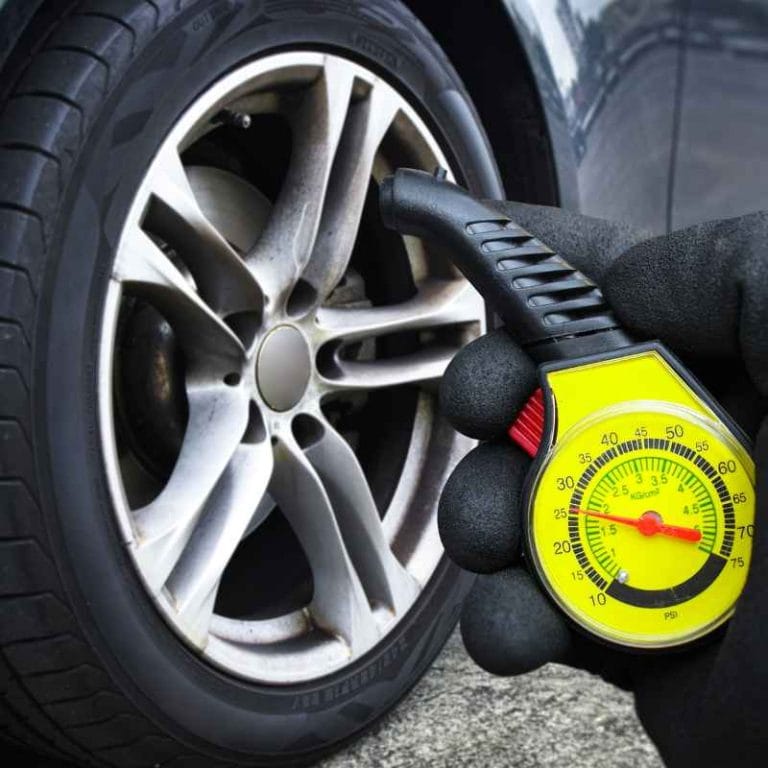
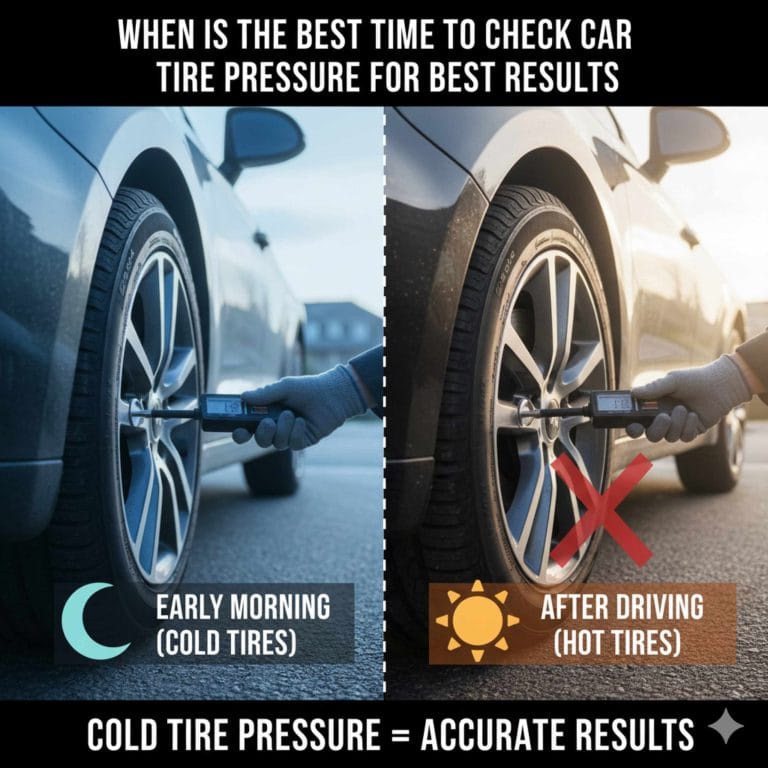
- Check tire pressure, tread wear, flat spots, and visible belt bulges.
- Inspect the rim for a bend, crack, missing weight, or mounting issue.
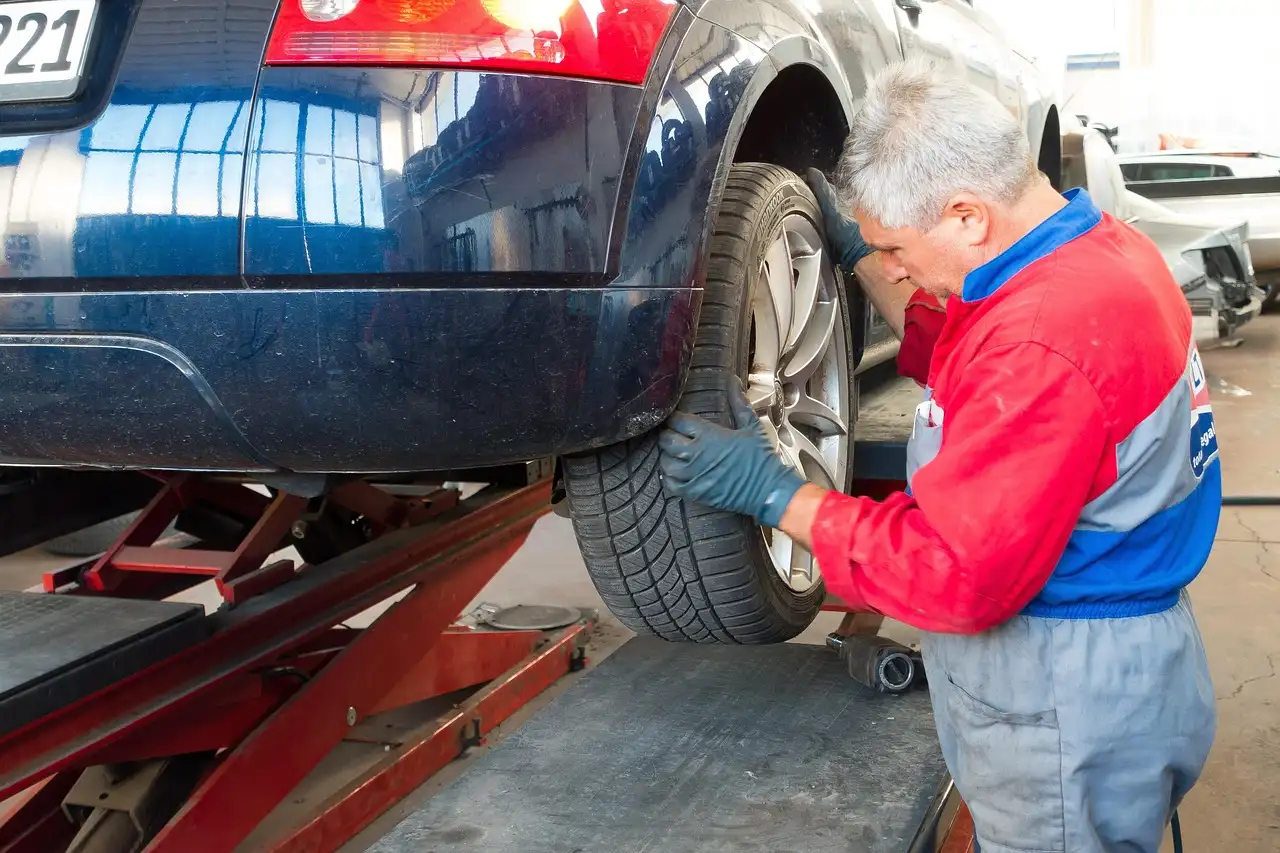
- Check for wheel play with the car safely lifted.
- If the ABS light is on, read codes before buying parts.
Common mistakes
Do not call every highway-speed vibration a bad bearing. Tire and wheel vibration is often an imbalance problem, and a shaking steering wheel can come from an out-of-balance assembly. Hitting a curb or pothole can knock wheel weights off, and a bent wheel can add runout that a balance job will not fix.
Do not mix brake pulse with cruise vibration. Rotor pulse appears under braking. Cruise vibration points back to tire, wheel, bearing, or suspension.
Do not skip suspension and steering parts. Tie rods, ball joints, bushings, shocks, and struts can add shake or make another fault feel worse.
Will balancing fix every tire-related vibration?
No. Wheel balance helps many highway-speed shakes, especially when the steering wheel is the main symptom and the car was recently hit by a pothole or curb. But balancing does not repair an out-of-round tire, internal belt separation, a flat spot, a bent rim, or excessive runout.
Check balance, then the hard parts
- Ask for a spin balance on the affected wheel or wheels.
- Inspect for lost weights after impact.
- Measure wheel runout if the shake remains.
- Replace damaged tires or bent wheels if the shake returns after balancing.
Bridgestone notes alignment can help prevent vibration on the road, and that matters after impact because toe or camber changes can speed up uneven wear. Balance solves only one part of the problem.
When is it unsafe to keep driving with vibration?
Stop driving if the tire has sidewall damage, cords showing, a bulge, or rapid pressure loss. Stop driving if a wheel bearing has noticeable play, a scraping sound, or a growl that seems to get worse with speed. Those are not “drive and see” symptoms.
Failure checks that mean park it
- Look for a sidewall bulge or cut deep enough to expose cords.
- Check for wheel wobble or play at the hub.
- Listen for a noise that rises quickly with speed.
- Check for an ABS light and read the codes if it appears.
A bearing can sometimes make more noise than shake at first, so a quiet vibration does not clear it. If the noise is changing fast, or the wheel feels loose, do not wait for it to get louder.
Frequently asked questions
What does a bad wheel bearing feel like while driving?
It often feels like a hum, growl, or rough vibration that rises with speed. The feel may get louder in one direction during turns because the load shifts onto that bearing. Some bearings add steering vibration before they add obvious looseness.
Does a bad tire cause vibration at highway speed?
Yes. Out-of-round tires, internal belt separation, flat spots, uneven tread wear, and road-force variation can all show up most clearly at highway speed. If the shake starts around about 55-70 mph and stays similar on straight roads, tire or wheel issues remain high on the list.
Why does the steering wheel shake but the car is smooth in the seat?
That pattern often points to a front tire, wheel, brake, or suspension issue. The front axle feeds the steering wheel first, while rear problems often show up in the seat or floor. A front wheel balance problem is a common cause, but not the only one.
Can a wheel bearing cause vibration without making noise?
Yes. A bearing can start with vibration or light steering feel before the noise becomes obvious. If the vibration changes on left and right turns, or if there is any play at the wheel, that is enough to justify a closer inspection even when it is quiet.
Products related to this article
Sponsored / affiliate links. As an Amazon Associate I earn from qualifying purchases. I may earn additional commission from eligible campaigns.