How to Tell If Your Car Tire Is Out of Balance
A tire is likely out of balance if vibration starts around 50–70 mph, grows with speed, and fades when you slow down; if the shake changes with braking or steering, suspect alignment, bent wheel, or tire damage instead. Ignoring it can chew tires, stress suspension parts, and send you toward the wrong repair. This guide maps symptoms to balance, alignment, rim, and tire issues so you can narrow the fix before you spend money.
What tire imbalance feels like



Tire balancing corrects uneven weight distribution in the wheel-and-tire assembly. The usual clue is speed-related vibration, not a constant shake at every engine speed. A steering wheel that trembles, a seat that buzzes, or a floorboard that hums can all point to imbalance, depending on which wheel is affected.
Steering wheel shake at highway speeds
A vibrating steering wheel can indicate front tires need balancing. The classic pattern shows up at highway speeds, often around 50–70 mph, then eases as road speed drops. That speed link matters more than engine RPM, because the tire, wheel, and hub are the moving parts creating the symptom.
If the wheel shakes more during steady cruising than during acceleration, imbalance climbs higher on the list. If the wheel also pulls or sits crooked, alignment or a bent component may be in play too.
Seat or floor vibration in the cabin
Seat vibration can suggest a rear-wheel imbalance. Drivers often feel it through the seat cushion, seatback, or floorboard rather than the steering wheel. The change usually tracks vehicle speed, and the vibration can seem to spread through the cabin instead of being concentrated in the hands.
Rear tire imbalance can be easy to miss because the steering wheel may stay relatively calm. That makes location one of the fastest clues you have.
Speed-related clues versus engine-speed clues
Tire imbalance follows vehicle speed. Engine-related shake often changes with RPM, even if the car is standing still or moving slowly. If the symptom only appears on the road and becomes stronger at a specific speed band, tire balance moves up the list before you start thinking about powertrain issues.
Suppose a compact car begins to tremble at 62 mph on smooth pavement, then calms down at 45 mph. That pattern fits a balance issue better than an engine fault. If the same car shudders when braking from 60 mph, check alignment, rotor condition, or tire damage too.
Tire balance checklist
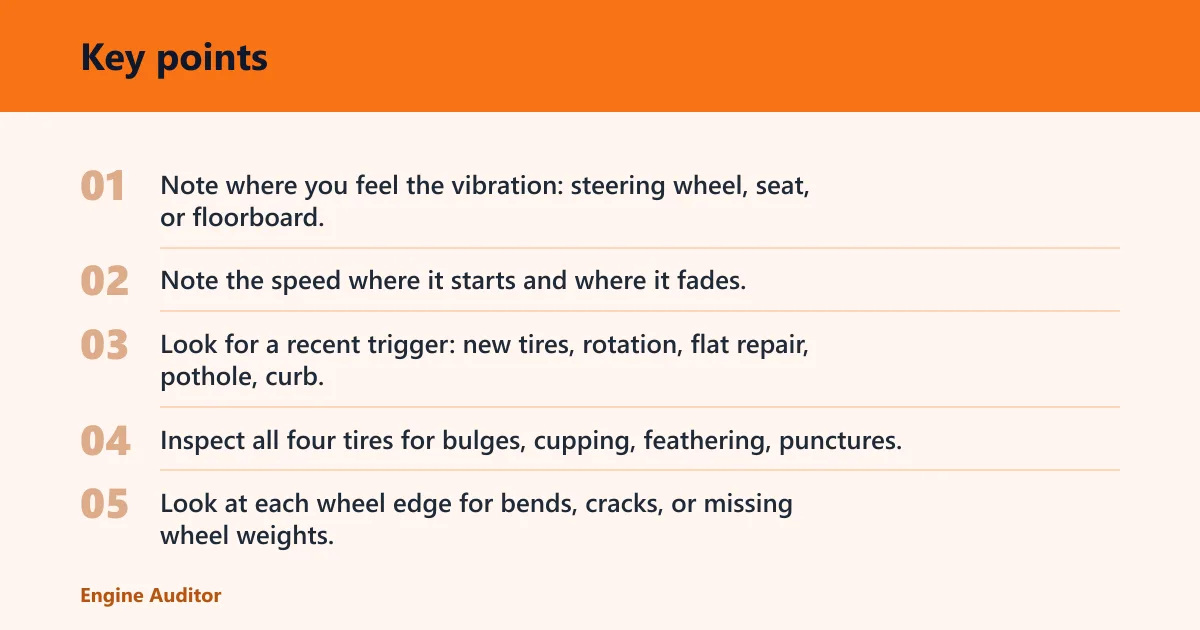
Use this four-part check before you book service. It will not diagnose every fault, but it can separate balance problems from lookalikes and point you toward the next check.
| Clue | What points to imbalance | What points elsewhere | Likely next check |
|---|---|---|---|
| Vibration location | Steering wheel at front axle; seat or floorboard at rear axle | Pulling, crooked wheel, braking shake, or localized thump | Balance or alignment inspection |
| Speed range | Starts near 50–70 mph and changes with road speed | Changes with engine RPM, braking, or steering input | Road test and wheel check |
| Visible wear pattern | Uneven tire wear and cupping can fit imbalance | Feathering, inside-edge wear, or one-sided wear often points to alignment | Inspect all four tires individually |
| Recent trigger | New tires, rotation, flat repair, pothole, curb, or storage | Visible rim bend, missing weight, bulge, crack, or puncture | Balance, rim inspection, or tire replacement |
- Note where you feel the vibration: steering wheel, seat, or floorboard.
- Note the speed where it starts and where it fades.
- Look for a recent trigger: new tires, rotation, flat repair, pothole, curb, or long storage.
- Inspect all four tires for bulges, cupping, feathering, punctures, and visible sidewall damage.
- Look at each wheel edge for bends, cracks, or missing wheel weights.
- Match the symptom pattern to the likely next check before you pay for service.
Out-of-Balance or Something Else?
| Branch | What you notice | Likely cause | Next check | Action |
|---|---|---|---|---|
| Vibration location | Steering wheel shakes most | Front tire or wheel imbalance | Wheel balance check on the front pair | Have the front pair balanced |
| Vibration location | Seat or floorboard buzzes more than the wheel | Rear tire or wheel imbalance | Wheel balance check on the rear pair | Have the rear pair balanced |
| Speed range | Shake starts near highway speed and eases as speed drops | True tire imbalance | Road-wheel balance check | Have the wheels balanced |
| Visible wear pattern | Cupping, chopping, or uneven wear on one tire | Imbalance, alignment issue, or worn suspension part | Inspect wear on all four tires and check alignment if wear is directional | Alignment or tire replacement, depending on damage |
| Recent trigger | New tires, rotation, flat repair, storage, or lost wheel weights | Balance changed after service or inactivity | Confirm weights are present and tires were balanced on the wheel balancer | Have the wheels balanced |
| Recent trigger | Pothole, curb, or rough-road hit plus visible rim damage | Bent rim or tire damage | Inspect wheel lip, sidewall, and suspension parts | Rim inspection or tire replacement |
Is it balance or alignment?
Balancing and alignment solve different problems. Wheel alignment adjusts a car’s steering and suspension, not the tires themselves. If the car pulls, the steering wheel sits off-center, or one edge of a tire wears much faster than the rest, alignment rises above balancing on the checklist.
Pulling or off-center steering wheel
A car that drifts to one side on a straight road is more likely dealing with alignment than balance. A crooked steering wheel is another strong sign. Balancing does not reset tire angle, so it will not correct a steady pull caused by toe, camber, or caster issues.
Uneven tire wear patterns
Uneven tire wear can point to either imbalance or alignment issues, so inspect the pattern closely. Cupping and chopping can fit imbalance or worn suspension parts. Feathering and edge wear often point more strongly to alignment. Check all four tires individually rather than judging only the worst one.
When alignment is the next check
Alignment is the next check after a car accident, pothole, or curb impact when the car begins to pull or the steering wheel sits off-center. Firestone suggests checking alignment every 6,000 miles or twice a year, and that cadence makes sense for daily drivers that rack up road miles quickly.
A common first-timer mistake is booking a balance when the car has a clear pull after clipping a curb. In that case, the weight problem may be secondary. The better next step is an alignment check, with rim inspection if the impact was hard enough to bend a wheel.
What can throw a tire out of balance?
New tires and rotation are common trigger points because the wheel-and-tire assembly changes. Balancing is recommended after new tire install, rotation, or flat repair. A lost wheel weight can also throw the assembly off, and rough impacts can shift the balance enough to create a new vibration.
New tires and rotation
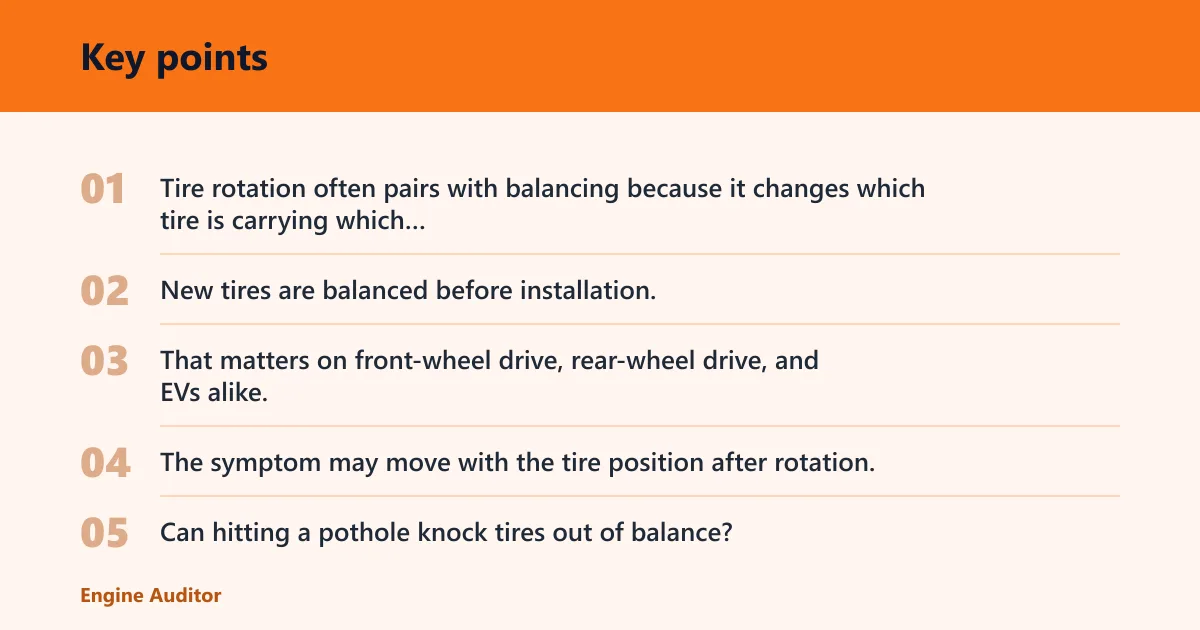
Tire rotation often pairs with balancing because it changes which tire is carrying which load. New tires are balanced before installation, and a shop should confirm the assembly on a computerized wheel balancer before the wheel goes back on the car.
That matters on front-wheel drive, rear-wheel drive, and EVs alike. The symptom may move with the tire position after rotation, which is one reason the shake can feel new even when the tires themselves are not.
Pothole or curb impact
Can hitting a pothole knock tires out of balance? Yes. A pothole or curb impact can knock tires out of balance, and it may also damage the rim or affect alignment. Light impact may leave no visible marks. Hard impact can bend the wheel, cut a sidewall, or disturb suspension parts.
If the steering wheel starts shaking right after a pothole hit, inspect for rim damage first. A balance correction will not fix a bent wheel.
Flat spots from storage
Flat spots can form on parked cars and may cause imbalance after extended inactivity. The symptom often shows up after a long sit, then may improve as the tire warms and flexes. Severe flat spotting can stay loud or rough even after a few miles.
Vehicles stored for weeks or months can feel this most clearly on the first drive. EVs and long-sitting seasonal cars are common examples because the tire can hold one shape for a long time.
Signs the tire is bad, not just out of balance
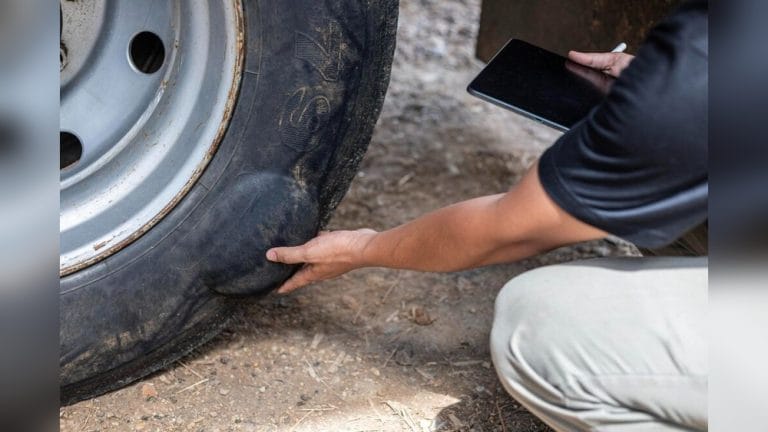
Some symptoms call for more than balancing. Bulges, cracks, punctures, bent rims, and severe flat spots can mimic imbalance or make it worse. If the tire itself is damaged, balancing will not fix the shake for long, and in some cases it should not be driven on at all.
Cupping and chopping
Cupping and chopping create a chopped, scalloped tread pattern that can cause vibration and noise. This wear may come from imbalance, but it can also come from worn shocks, struts, or other suspension issues. If the same pattern appears across one tire only, inspect that corner closely.
Bulges, cracks, or punctures
Bulges, sidewall cracks, or punctures are tire-damage clues, not balance clues. A bulge means the tire structure is compromised. A patch or plug cannot correct a sidewall issue. If you find visible damage, tire replacement is the safer path than a balance-only visit.
Bent rim and missing wheel weights
Lost wheel weights are a common cause of imbalance. Missing weight often follows a tire rotation, brake service, or road impact. A bent rim is different: it can still cause a shake after balancing because the wheel may no longer run true.
Look closely at the inner and outer rim lip. If one section has a flat spot or visible bend, a wheel balancer may still flag the problem, but the real fix may be rim repair or replacement.
What a shop does during balancing
Wheel balancing uses a computerized spin machine called a wheel balancer. The machine detects heavy and light spots in the tire and wheel assembly. The technician then adds wheel weights, often clip-on or adhesive styles, to correct uneven weight distribution.
Wheel balancer spin check
The wheel balancer spins the assembly and measures where mass is off-center. That data tells the shop where the heavy spot sits and how much correction the wheel needs. This is why balancing is a measurement job, not a guess.
Finding heavy and light spots
During the spin check, the machine maps the assembly’s imbalance in more than one plane. That matters because a tire and wheel can be out in a way that is not obvious by sight. A missing weight, a tire bead issue, or a wheel defect can all show up here.
Adding clip-on or adhesive wheel weights
Wheel weights are small metal weights mounted to the wheel after diagnosis. Clip-on styles attach to the rim flange. Adhesive styles stick to the wheel barrel. The aim is the same: bring the assembly back into balance so vibration drops at road speed.
Daily drivers should use a shop balancer rather than DIY methods. Balancing on the car is not a practical home repair for most drivers, and the wrong correction can waste time while the real fault stays in place.
When should you balance tires?
Balance tires after new tire installation, after rotation or flat repair, and after a hard impact or long storage. Firestone recommends balancing every 5,000 to 6,000 miles. If the car develops a new shake before that interval, follow the symptom, not the calendar. (Firestonecompleteautocare)
After new tire installation
Should new tires be balanced before installation? Yes. New tires are balanced before installation so the assembly starts in range. That step matters even when the tire itself is brand new, because the wheel and tire together still need correction.
After rotation or flat repair
Balancing is recommended after tire rotation and flat repair because the assembly has changed. If a tire was repaired, remounted, or shifted to another corner, the previous weight pattern may no longer be correct. Balancing again helps keep the ride smooth and the wear even.
After a hard impact or storage
If a pothole or curb hit is followed by a vibration, inspect for rim damage and tire damage first, then balance if the wheel looks intact. After storage, check for flat spots before assuming the problem is only balance. A severe flat spot or bent rim needs a different repair path.
Balancing usually costs $10–$25 per tire in the US, which is modest compared with the cost of ignoring a shake that can wear tires faster or strain suspension parts. The larger cost is misdiagnosis: paying for balance when the tire, wheel, or alignment is the real issue.
Frequently asked questions
What are the signs of out of balance tire symptoms?
The main signs are steering wheel vibration, seat vibration, and floorboard buzz that grows with speed. Uneven tire wear and a sensation that the car smooths out at lower speeds also fit. If the vibration changes when braking or the steering wheel sits crooked, look at alignment or damage too.
Why does my steering wheel vibrate at highway speeds?
A vibrating steering wheel at highway speeds is a classic imbalance symptom, especially for the front tires. It is speed-related, not engine-RPM-related, and often shows up most clearly between 50 and 70 mph. If the wheel also pulls or the car wanders, alignment or a bent wheel may be part of the problem.
Is tire vibration in the seat or steering wheel a balance problem?
It can be. Steering wheel vibration often points to front-wheel imbalance, while seat vibration often suggests a rear-wheel imbalance. That said, a bent rim, damaged tire, or worn suspension part can produce a similar feel. Use the vibration location as a clue, then inspect the tires and wheels closely.
How often should you balance car tires?
Firestone recommends balancing every 5,000 to 6,000 miles, and also after new tire install, rotation, or flat repair. You should also check after a pothole or curb hit, or after long storage if the car develops a new shake. A new symptom matters more than the schedule.
How can you tell if tires are bad or just out of balance?
Out-of-balance tires usually create speed-related vibration without obvious damage. Bad tires often show bulges, cracks, punctures, severe flat spots, or tread wear such as cupping and chopping. If the rim is bent or a wheel weight is missing, that can mimic a bad tire. Inspect each tire separately before booking service.
Products related to this article
Sponsored / affiliate links. As an Amazon Associate I earn from qualifying purchases. I may earn additional commission from eligible campaigns.