Which Car Insurance Comparison Site Is Best in 2026?
Figuring out Which Car Insurance Comparison Site Is Best in 2026? can feel tricky, especially if you’re new to it. There are so many options, and they all say they’re the best. It’s easy to get lost in all the details.
But don’t worry, we’ll make this super simple. We’ll walk you through it step-by-step so you can find the right deal for you. Let’s get started by looking at what makes a good comparison site.
Finding the Best Car Insurance Comparison Site
Choosing the right car insurance comparison site is super important for saving money and time. These sites act like a middleman, showing you different insurance offers all in one place. This means you don’t have to visit each insurance company’s website one by one.

Parkez
ESSENTIAL Car Auto Insurance Registration BLACK Document…
- ESSENTIAL Car Auto Insurance Registration BLACK Document Wallet Holders 2 Pieces
As an Amazon Associate I earn from qualifying purchases.
It helps you see who has the cheapest rates and the best coverage. We will explore what to look for and which sites stand out.
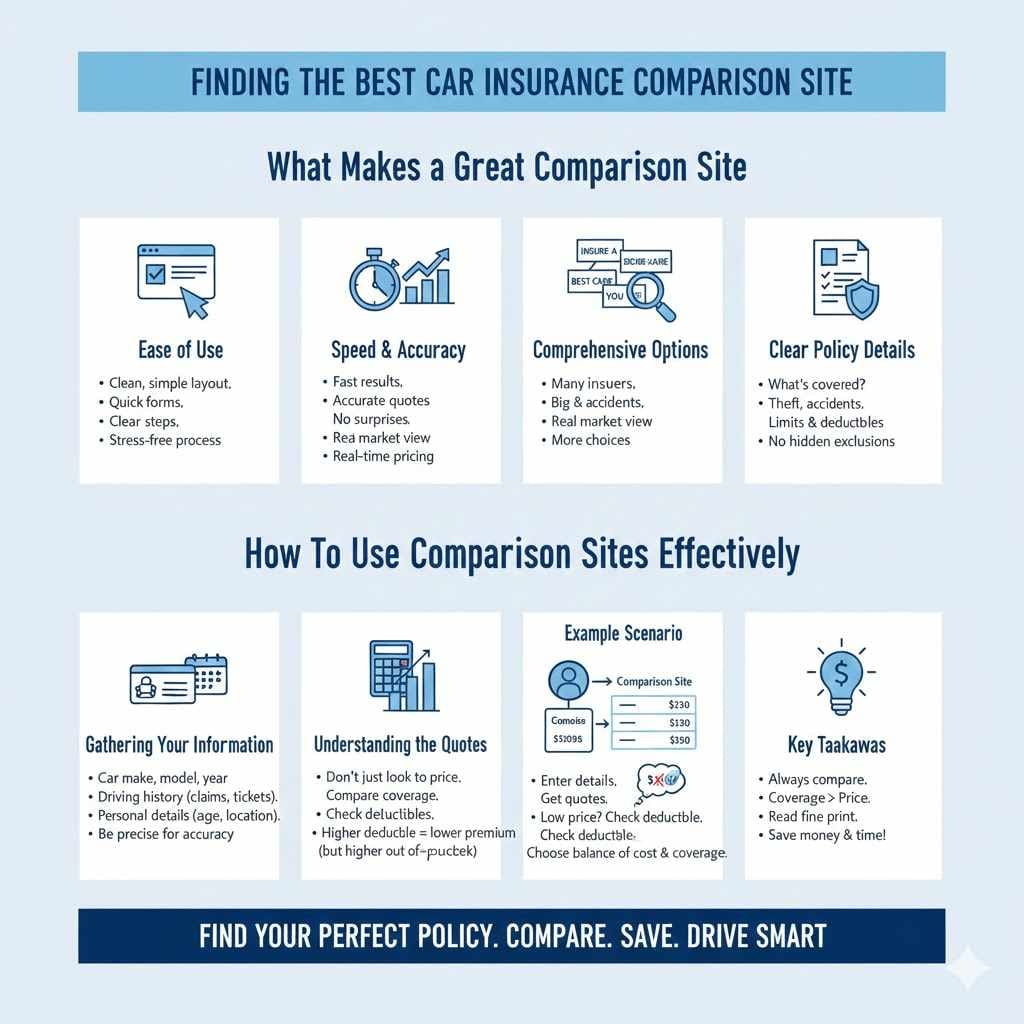
What Makes a Great Comparison Site
A really good comparison site makes it easy to find what you need. It should be simple to use and show you clear information. You want to see prices, what each policy covers, and any extra benefits.
It should also be fast and give you accurate results. We’ll break down the key features that matter most.
Ease of Use
The best comparison sites have a clean and simple layout. You can quickly enter your details without feeling confused. The forms are not too long, and the steps are clear.
This makes the whole process stress-free. Even if you’re not great with computers, you can use them easily.
Speed and Accuracy
When you use a comparison site, you want results right away. The good ones are quick to show you quotes. They also get the numbers right.
You don’t want to see one price and then find out it’s different later. This accuracy saves you from nasty surprises.
Comprehensive Options
A top-notch site will show you offers from many different insurance companies. This means you get a real picture of the market. You can compare deals from big names and smaller ones.
More choices mean a better chance of finding the perfect policy for your needs and budget.
Clear Policy Details
It’s vital that each quote clearly explains what you’re buying. You should easily see what’s covered, like theft, accidents, and third-party damage. Important details like deductibles, limits, and any exclusions should also be easy to find.
This helps you make a smart choice.
How to Use Comparison Sites Effectively
Using these sites the right way helps you get the best deals. It’s not just about picking the first cheap option. You need to make sure the coverage fits what you need.
We’ll guide you on how to enter your information and understand the results.
Gathering Your Information
Before you start, have your car and personal details ready. This makes filling out forms much faster. You’ll need your car’s make, model, and year.
Also, have your driving history handy, including any past claims or tickets. Your personal details like age and where you live are also needed.
For example, if your car is a 2020 Honda Civic, you’ll enter that. If you’ve had a minor accident two years ago, be sure to mention it. This honesty is key to getting accurate quotes.
The more precise you are, the better the comparison will be.
Understanding the Quotes
When you get your quotes, don’t just look at the price. Compare the coverage levels. Some cheap policies might have very low limits.
This means they won’t pay much if you have a big accident. Always check the deductible, which is the amount you pay before insurance kicks in. A higher deductible usually means a lower monthly premium, but you pay more if you need to make a claim.
Example Scenario
- You go to a comparison site and enter your car’s details.
- You also add your driving history and personal information.
- The site shows you a list of quotes from various insurers.
- You notice one quote is much lower than others.
- You click to see the full details and find it has a very high deductible.
- You then look at another quote that is slightly higher but has better coverage and a lower deductible.
- You choose the second option because it offers better protection for a small increase in cost.
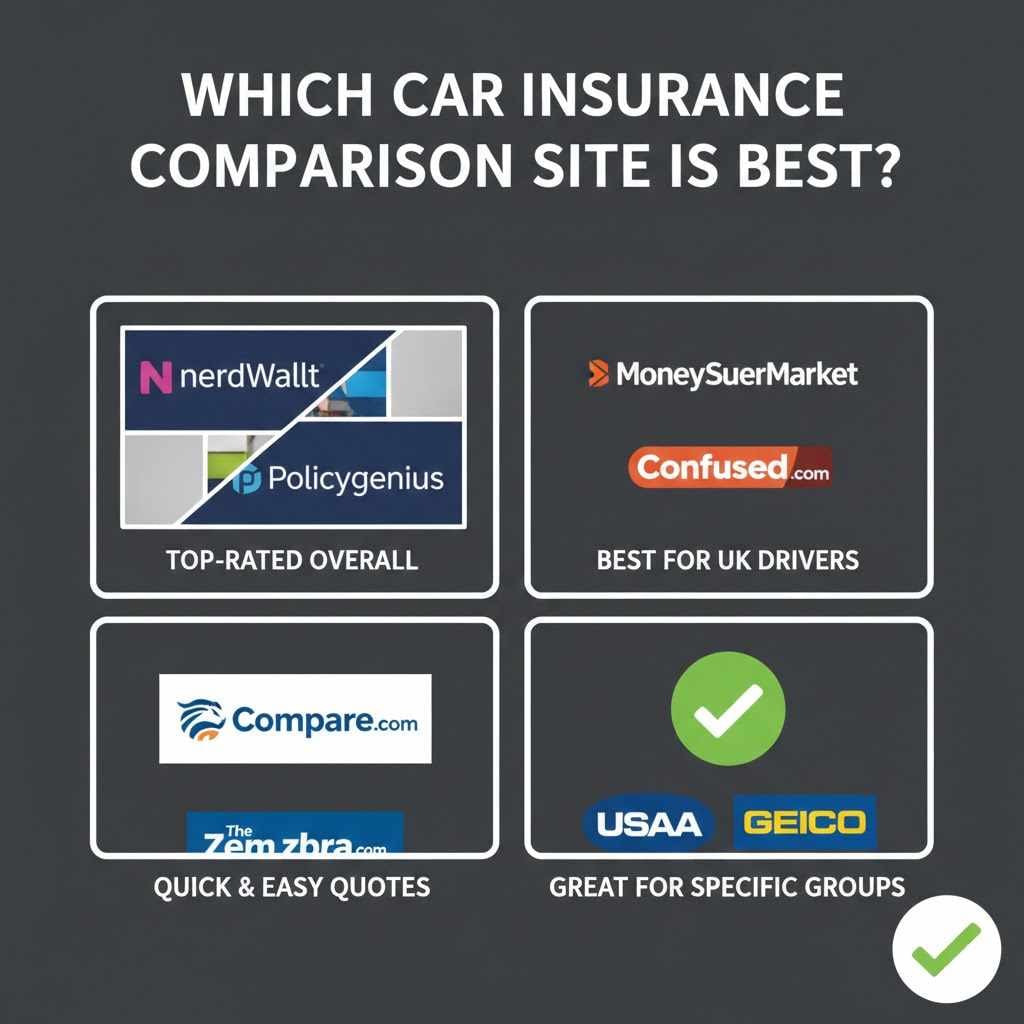
Popular Car Insurance Comparison Sites
Many comparison sites operate today, each with its own strengths. Some focus on a wider range of insurers, while others might offer more specialized features. Understanding these differences helps you pick the best platform for your specific needs.
We’ll look at a few of the leading ones.
Top Comparison Platforms
Several websites are well-known for helping drivers compare car insurance. These platforms have built a reputation for being reliable and user-friendly. They work with a large number of insurance providers, giving you a broad selection of quotes.
Site A Overview
Site A is known for its incredibly simple interface. It guides you through the process with very straightforward questions. Their strength lies in connecting you with many of the major insurance companies, making it easy to get a broad view of the market.
They often highlight customer reviews, which can be very helpful.
Site B Strengths
Site B excels in offering advanced filtering options. This allows you to narrow down your choices based on specific needs, such as telematics insurance or specific types of coverage. They also provide helpful articles and guides that explain insurance terms in plain language, making it great for beginners.
Site C Features
Site C is praised for its speed and the sheer number of insurers it partners with. Some users find that their unique algorithm helps them uncover savings they might not find elsewhere. They also tend to have a robust mobile app, making comparisons easy on the go.
Comparing Site Features
To help you choose, let’s compare some key aspects of these sites. It’s not just about how many companies they list, but also about the user experience and the quality of information provided.
| Feature | Site A | Site B | Site C |
|---|---|---|---|
| Ease of Use | Very High | High | High |
| Number of Insurers | Large | Medium | Very Large |
| Advanced Filters | Basic | Advanced | Medium |
| Educational Content | Moderate | Extensive | Basic |
| Speed of Quotes | Fast | Fast | Very Fast |
This table shows how different sites might fit different user preferences. If you’re new to insurance, Site B’s educational content might be a huge help. If you want the absolute most options, Site C could be your best bet.
Real-Life Example Site Usage
Let’s look at how two different people might use these sites to find insurance.
- Sarah, a new driver, wants to find affordable insurance. She visits Site B because she likes that it explains everything clearly. She uses the filters to look for policies specifically designed for young drivers. She finds a policy that fits her budget and offers good protection.
- Mark, who has been driving for years, wants the cheapest possible rate. He visits Site C because it partners with the most insurers. He quickly enters his details and compares a very long list of quotes, finding a great deal from a lesser-known company.
These examples show that the “best” site depends on what you’re looking for. Sarah valued clear explanations and beginner-friendly features. Mark prioritized the widest selection to find the absolute lowest price.
Key Factors in Car Insurance Rates
When you compare car insurance quotes, you’ll see that prices can vary a lot. This is because insurers look at many different things about you and your car to decide how risky you are to insure. Knowing these factors can help you understand why some quotes are higher than others and how you might be able to lower your rates.
Driving Record Matters
Your driving history is one of the most important factors. Insurers look at tickets, accidents, and any convictions you’ve had. A clean driving record, meaning no issues, will usually get you lower rates.
If you have had accidents or tickets, your premiums will likely be higher. This is because you are seen as a greater risk to insure.
Accident History
Having one or more at-fault accidents on your record will significantly increase your insurance costs. Insurers view this as a sign that you are more likely to have future claims. Even if the accident wasn’t your fault, some insurers may still note it on your record.
Traffic Violations
Speeding tickets, running red lights, or DUIs also raise your rates. Serious violations like DUIs can lead to much higher premiums and even make it hard to find insurance at all. Some companies may have a policy to not insure drivers with recent serious violations.
Years of Driving Experience
Generally, drivers with more years of experience tend to pay less. This is because they have a longer track record of safe driving. New drivers, especially teenagers, are often considered higher risk and will face higher insurance premiums.
Car Information and Coverage Needs
The type of car you drive and the amount of coverage you choose also impact your rates. Some cars are more expensive to repair or are more attractive to thieves, leading to higher premiums. Your coverage choices directly affect the cost.
Vehicle Type and Value
Cars that are expensive to buy or repair, or those with high theft rates, often come with higher insurance costs. For example, a luxury sports car will likely cost more to insure than a small, economical sedan. The car’s safety features also play a role; cars with good safety ratings may get discounts.
Coverage Levels
The type and amount of coverage you select is a direct driver of cost. Comprehensive and collision coverage, which pay for damage to your car, are typically more expensive than liability-only insurance. If you choose higher coverage limits, meaning the maximum amount the insurer will pay, your premium will also increase.
Coverage Options Explained
Liability insurance covers damage you cause to others and their property. Comprehensive coverage pays for damage to your car from things like theft, fire, or vandalism. Collision coverage pays for damage to your car from an accident, no matter who is at fault.
Other Factors Affecting Premiums
Beyond your driving and your car, many other elements influence your insurance rates. These can include where you live, your credit score, and even your occupation in some cases. Insurers use these factors to assess your overall risk profile.
Location
Where you park your car matters. Areas with higher rates of car theft or accidents typically have higher insurance premiums. Urban areas often see higher rates than rural areas due to increased traffic and risk of accidents.
Credit Score
In many places, insurance companies use credit-based insurance scores to help set premiums. People with higher credit scores often pay less for car insurance because studies suggest they are less likely to file claims. This practice is not allowed in all states.
Age and Gender
Younger drivers, and particularly young men, often pay higher premiums due to statistical data showing they are more likely to be involved in accidents. As drivers get older and gain more experience, their rates usually decrease.
Statistics on Premium Influences
According to industry data, location can account for up to 15% of the difference in car insurance premiums. Furthermore, drivers with a clean record can see premiums that are 20-40% lower than those with a recent ticket or at-fault accident.
Tips for Getting the Best Deal
Now that you know what factors influence insurance costs, let’s talk about how to use this knowledge to get the best deal. It’s about being smart with your choices and knowing where to look. We’ll share some practical tips to help you save money.
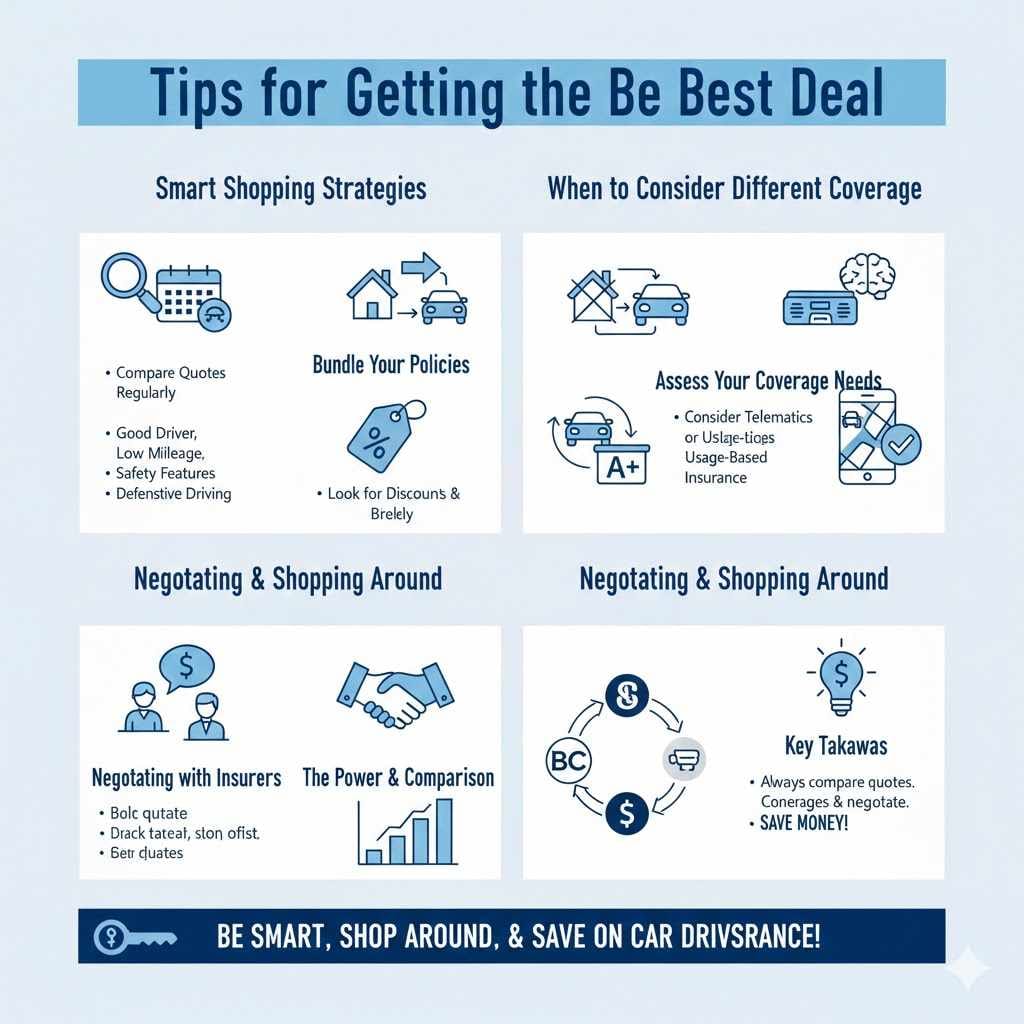
Smart Shopping Strategies
Comparison sites are your first step, but there are other things you can do. Always compare quotes from multiple sources. Don’t just settle for the first offer you see.
Make sure you are comparing apples to apples, meaning the coverage levels are the same.
Compare Quotes Regularly
Insurance rates can change. It’s a good idea to shop around at least once a year, or whenever you have a significant life event like moving or getting married. You might be able to find a much better deal than your current insurer offers.
Many people find they can save money simply by switching providers.
Bundle Your Policies
Many insurance companies offer discounts if you buy more than one type of insurance from them. This is called bundling. For example, if you have car insurance and also need homeowner’s insurance or renter’s insurance, ask about bundling them together.
This can lead to significant savings on both policies.
Look for Discounts
Insurers offer many different discounts. Ask your insurance provider or look on their website for potential savings. Common discounts include those for good drivers, low mileage drivers, good students, safety features in your car, and even for completing a defensive driving course.
Don’t be afraid to ask what discounts are available.
When to Consider Different Coverage
Your insurance needs can change over time. What was right for you a few years ago might not be the best fit now. Think about your current situation and adjust your coverage accordingly.
Assess Your Coverage Needs
If your car is older and has a low market value, you might not need to pay for comprehensive and collision coverage. The cost of these coverages might be more than the car is worth. In such cases, liability-only insurance could be a more cost-effective choice.
However, if you have a newer or more valuable car, these coverages are essential.
Consider Telematics or Usage-Based Insurance
Some insurers offer telematics programs where a device in your car or a smartphone app tracks your driving habits. If you are a safe driver who doesn’t speed or brake hard, you could earn discounts. This is a great option for low-mileage drivers or those who are very careful on the road.
Bundle Your Policies
Many insurance companies offer discounts if you buy more than one type of insurance from them. This is called bundling. For example, if you have car insurance and also need homeowner’s insurance or renter’s insurance, ask about bundling them together.
This can lead to significant savings on both policies.
Negotiating and Shopping Around
Don’t be afraid to negotiate or to walk away if you’re not getting a good deal. Insurance is a competitive market. Companies want your business, and sometimes a polite inquiry can lead to a better offer.
Negotiating with Insurers
If you have a quote that’s close to what you want but not quite there, ask if there’s any flexibility. Sometimes, especially if you’re a loyal customer or have a very clean record, they might be willing to adjust the price slightly. It never hurts to ask.
The Power of Comparison
Ultimately, the best way to save money is to use comparison sites regularly and compare offers from at least three to five different companies. Each company assesses risk slightly differently, so one might offer you a much better rate than another for no apparent reason. This constant shopping ensures you’re always getting the best possible price.
Frequently Asked Questions
Question: How often should I compare car insurance quotes?
Answer: It’s a good idea to compare quotes at least once a year or whenever your circumstances change, like if you move or buy a new car. This helps ensure you’re always getting the best possible rate.
Question: Can I get insurance through a comparison site directly?
Answer: Comparison sites usually direct you to the insurance company’s website to finalize the purchase. They show you the options; you then complete the transaction with the insurer you choose.
Question: What if I have a poor driving record?
Answer: If you have a poor driving record, you might face higher premiums. However, comparison sites can still help you find insurers who specialize in covering drivers with past issues, and you can look for discounts that might apply.
Question: Do all comparison sites show the same insurance companies?
Answer: No, different comparison sites partner with different insurance companies. Some cover a wider range than others, so it’s good to check a few sites to get a comprehensive view.
Question: Is it safe to give my personal information to comparison sites?
Answer: Reputable comparison sites use secure methods to protect your data. Always ensure the website has a valid security certificate (look for “https” in the web address) before entering sensitive information.
Conclusion
Finding the best car insurance comparison site in 2026 is about being informed. By understanding how these sites work, what factors affect rates, and smart shopping strategies, you can secure great coverage. Always compare offers, check coverage details, and look for available discounts to save money.
You’ve got this!
Related pick: Check today's price on Amazon
Products related to this article
Sponsored / affiliate links. As an Amazon Associate I earn from qualifying purchases. I may earn additional commission from eligible campaigns.
 Car Scratch Repair Wax, 2026 New Scratch Remover for Vehicles – Universal Polishing Paste for Deep Scratches & Various Surfaces, with Wipe & Sponge (1)
 Hail Protection Car Cover for Smart 6(2026-),with Thickened Multi-Layer Padding, Windproof & Scratch-Resistant, All-Weather Outdoor Use for Sedan SUV Hatchback