How to Clean Dirty Car Pedals Without Damaging Them
Clean dirty car pedals with a damp microfiber cloth and a mild soap solution, then dry them fully before driving. Use a soft-bristled brush only for textured residue, keep liquid off hinges, and avoid oily cleaners or dressings that can reduce grip. For safety, also check the floor mat, because pedal interference is a known risk. NHTSA warns that floor mats can interfere with pedals, and cleaning chemicals should be used sparingly so residue does not create a slick surface or migrate into moving parts. This guide covers safe cleaning steps for accelerator, brake, and clutch pedals, plus how to check mats and worn rubber before you drive.
Not a bicycle pedal guide: This article is for car pedals and pedal covers, not bike pedal removal, repair, or replacement.
What you’ll need
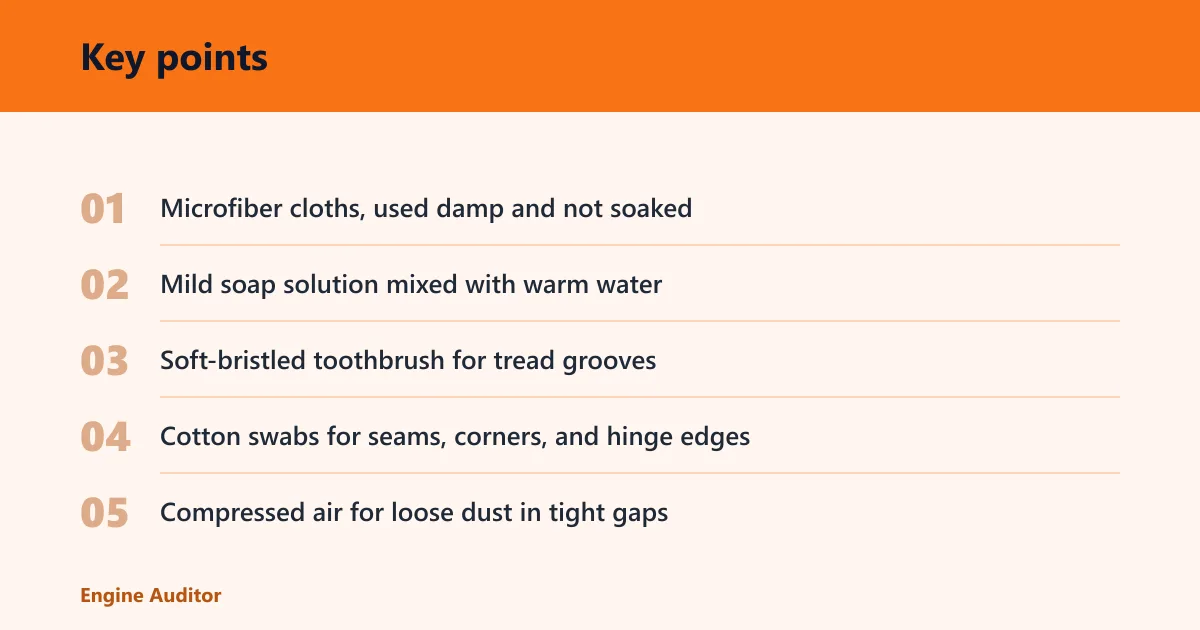
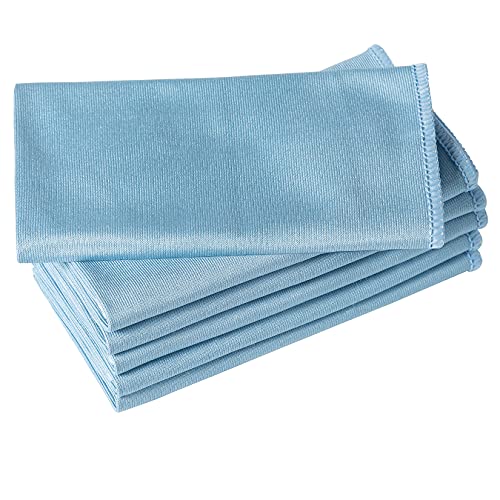


- Microfiber cloths, used damp and not soaked
- Mild soap solution mixed with warm water
- Soft-bristled toothbrush for tread grooves
- Cotton swabs for seams, corners, and hinge edges
- Compressed air for loose dust in tight gaps
- Isopropyl alcohol at about 70% for greasy residue
- Vacuum or dry brush for loose grit before any liquid
Pedal cleaning decision table
| Contamination type | Safest tool | Cleaning liquid | Do not use |
|---|---|---|---|
| Dust | Vacuum, dry microfiber cloth | None | Direct spray and soaking |
| Muddy grit | Soft-bristled toothbrush, damp microfiber cloth | Mild soap solution | Stiff scrubber or abrasive pad |
| Oily film | Microfiber cloth, cotton swab | About 70% isopropyl alcohol on the cloth or swab | Spraying alcohol directly onto the pedal |
| Salt residue | Damp microfiber cloth, then dry cloth | Mild soap solution, used sparingly | Harsh degreaser or bleach |
| Sticky spill | Cotton swab, soft toothbrush | Mild soap solution first, then a little isopropyl alcohol on the cloth if needed | Scraping with metal tools |
| Final safety check | Hand test and mat check | None | Driving before the pedal dries and returns freely |
How do I clean dirty car pedals without damaging them?
Start with a dry pickup of loose grit, then wipe the pedal face with a damp microfiber cloth and a mild soap solution. Use a soft brush for tread grooves and cotton swabs for seams. Finish by drying the pedal fully, then check that it returns freely and that the floor mat does not catch it.
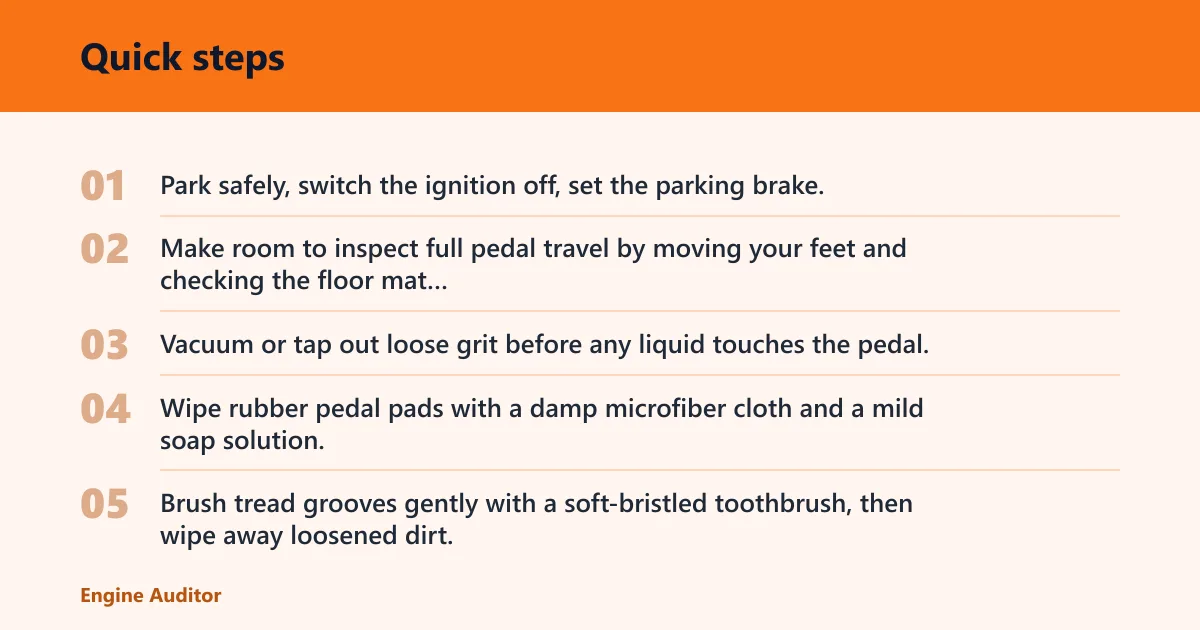
- Park safely, switch the ignition off, set the parking brake, and put the transmission in Park or Neutral as appropriate.
- Make room to inspect full pedal travel by moving your feet and checking the floor mat position.
- Vacuum or tap out loose grit before any liquid touches the pedal.
- Wipe rubber pedal pads with a damp microfiber cloth and a mild soap solution.
- Brush tread grooves gently with a soft-bristled toothbrush, then wipe away loosened dirt.
- Use cotton swabs and a little compressed air at a distance for seams, corners, and the hinge area.
- Let the pedal dry completely, then press it through full travel and release it to confirm free return motion.
What makes this different from a normal interior wipe-down?
Pedals are control surfaces, so the main concern is grip and travel, not shine. Rubber pedal pads, metal faces, and pedal covers collect grime in different places, and the wrong cleaner can leave a film that feels clean but slips under your shoe. Keep products mild and controlled. For general chemical handling, the CDC/NIOSH guidance on isopropyl alcohol is a useful reminder to use it carefully and let it dry.
Say your brake pedal has a gray dust layer plus a shiny spot near the center. Clean the dust with a damp cloth first, then treat the shiny patch with a cloth lightly moistened with about 70% isopropyl alcohol. That sequence matters because residue often needs a different treatment than loose dirt.
What can I use to clean rubber car pedals safely?
Use a lint-free microfiber cloth, warm water with a small amount of soap, a soft-bristled toothbrush, and cotton swabs. Those tools remove routine grime without scuffing the OEM treaded rubber surface. Keep the cloth damp, not dripping, and avoid any product that leaves a slick finish or a heavy dressing layer.
How to treat tread grooves and seams
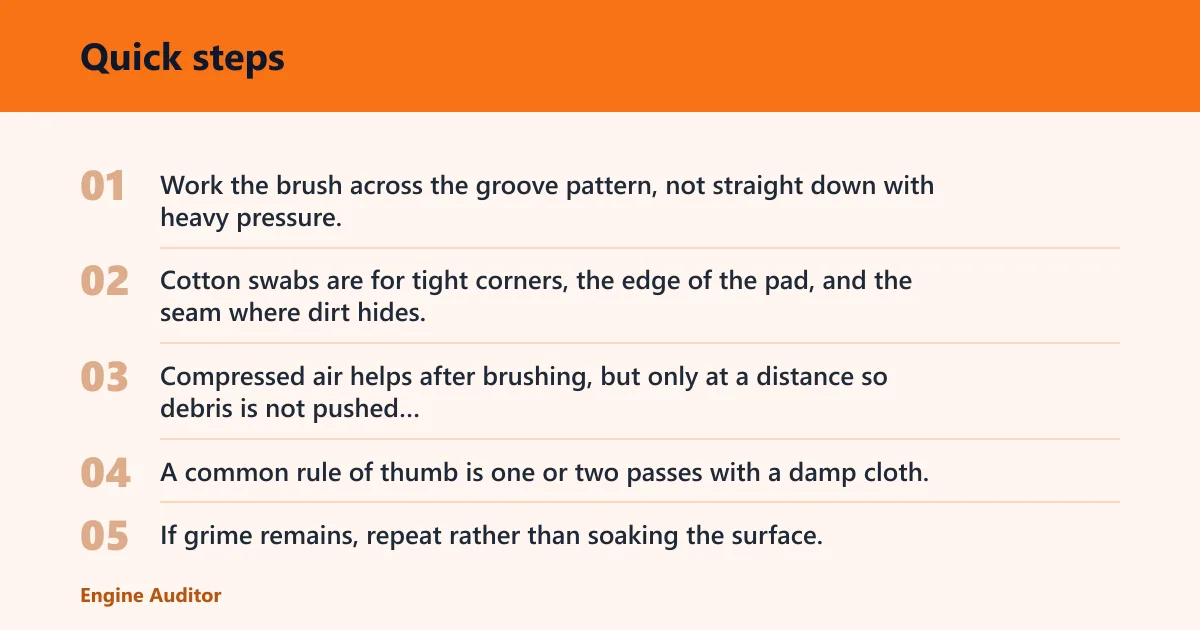
Work the brush across the groove pattern, not straight down with heavy pressure. Cotton swabs are for tight corners, the edge of the pad, and the seam where dirt hides. Compressed air helps after brushing, but only at a distance so debris is not pushed deeper into gaps.
How much liquid is enough?
Use the smallest amount that lifts the dirt. A common rule of thumb is one or two passes with a damp cloth, then a second pass with a clean dry side. If grime remains, repeat rather than soaking the surface. More liquid increases the chance of residue near the pivot, which is why keeping the area nearly dry is safer for moving parts.
Can I use rubbing alcohol on car pedals?
Yes, but only for greasy residue and only on a cloth or cotton swab. About 70% isopropyl alcohol is commonly used because it evaporates quickly and can help around seams and crevices. Do not spray it directly onto the pedal, and let the surface dry completely before driving.
Where alcohol helps most
Use it where soap does not cut a greasy film, such as near the upper edge of the brake pedal or along a pedal cover seam. A lightly dampened swab is enough for precise cleanup. If the surface still feels slick after drying, stop and rewipe with a clean dry microfiber cloth.
How do you clean brake pedal grime and grease?
Brake pedal grime usually builds where shoe contact is heaviest, so it often combines dust, road film, and oily residue. Clean the surface first with mild soap solution, then spot-treat any slick patch with about 70% isopropyl alcohol on a cloth. Dry it fully and confirm the pedal face still feels grippy.
What if the grime keeps coming back?
Repeated buildup near the same spot can mean a mat is shifting, a shoe is transferring residue, or the pedal pad is wearing smooth. Suppose the center strip of the brake pedal stays shiny after two cleanings. Inspect the pad for thinning tread and check whether the mat edge is touching the pedal.
How do I clean around pedal hinges and crevices?
Use minimal liquid near the pedal pivot and hinge area. A cotton swab, a soft toothbrush, and a brief burst of compressed air are the safest tools there. The goal is to lift dust without flooding the moving joint or leaving cleaner where the pedal needs to return freely.
Step-by-step for tight spaces
- Brush the outer seam lightly to loosen dirt.
- Use compressed air at a distance to blow debris away from the gap.
- Follow with a dry cotton swab in the corner.
- If residue remains, touch the swab with a little mild soap solution or alcohol, not both.
- Wipe the area dry and test pedal movement immediately.
Why the hinge area matters
Dust trapped near the pivot can change how the pedal feels when you press and release it. Liquid pooling there can slow return motion or leave a sticky edge. Clean only the visible surfaces, and keep cleaners off hidden cavities.
Should I remove pedal covers?
Remove a pedal cover if it is loose, shifting, or trapping grime at the edges. Fixed metal or rubber overlays need a different approach from bare OEM rubber pads. If the cover is secure, clean around the retention points carefully and inspect the fit before reinstalling or driving.
When a cover should come off
Take it off when dirt is packed under the edge, the grip surface is worn unevenly, or the cover moves under pressure. A cover that slides can create a slip risk even if the face looks clean. Refit only after the underlying pedal and the cover are both dry.
Slip checks for reinstalled covers
Press the pedal several times with your hand, then check the edges and retention points for movement. If the cover lifts, creaks, or leaves a gap, stop and correct the fit. A clean cover that shifts is still a hazard.
What should you avoid on car pedals?
Avoid soaking pedals, spraying cleaner directly onto them, and using harsh chemicals that can leave a slippery film or damage the finish. Do not use abrasive scrubbers, stiff brushes, bleach, brake cleaner, degreaser, or polish on the pedal face. Cleaners belong on the cloth, not flooding the pedal.
Common mistakes
- Using too much liquid and letting it pool in grooves
- Scrubbing so hard that the tread texture wears down faster
- Ignoring the hinge area and cleaning only the visible center
- Skipping the mat check and reintroducing dirt immediately
- Driving before the pedal is fully dry
What happens after a bad clean?
The failure mode is often a surface that looks better but feels worse. Residue can make the shoe slip, and excess cleaner can spread onto nearby trim or into the pivot. Picture a clutch pedal with a wet edge and a crooked mat: the pedal may still move, but the return feel and travel check are no longer trustworthy.
How often should car pedals be cleaned?
Light wipe-downs can be done whenever visible dust or shoe residue appears. Deeper cleaning is needed when buildup is visible, grip feels compromised, or the floor mats have shifted dirt back onto the pedals. Worn rubber that has lost tread is a replacement issue, not a cleaning issue.
Routine cadence
For most drivers, a quick dry wipe and mat check every few weeks is enough, with a more careful clean only when needed. If the car sees mud, salted roads, or wet shoes often, inspect the pedals sooner. Clean before the residue hardens.
When replacement matters more than cleaning
Inspect rubber pedal pads for cracking, hardening, thinning, or missing tread. Those signs mean the grip texture is failing. Cleaning cannot restore worn rubber. A loose or damaged pedal cover also needs attention, because no cleaner fixes poor fitment.
Frequently asked questions
Should I remove pedal covers before cleaning them?
Remove them if they are loose, trap dirt at the edge, or shift under pressure. Fixed-fit covers can often be cleaned in place, but the retention points and slip risk need a careful check afterward. If the cover moves, correct the fit before driving.
Final safety checklist
- Pedal surface is dry
- Pedal returns fully and freely
- Floor mat is secured and clear of travel
- Grip surface is intact and not worn smooth
Products related to this article
Sponsored / affiliate links. As an Amazon Associate I earn from qualifying purchases. I may earn additional commission from eligible campaigns.