How to Choose the Right Vehicle Type for Your Lifestyle
Match the body style to your weekly reality: sedan or hatchback for mostly solo commuting, compact SUV for mixed use, minivan or three-row SUV only when you carry people or large cargo most weeks. Pick for the 90% case, not the 10% exception. Choose badly and you pay more in fuel, insurance, parking stress, and resale losses. This guide gives you a simple decision matrix for commute, passengers, cargo, roads, and budget.
Which vehicle type fits your routine?
Start with the routine you repeat, not the errand you do twice a year. A short commute, one or two passengers, light cargo, and tight parking usually point to a smaller vehicle. Longer drives, frequent carpooling, rough weather, or regular cargo hauling change the answer quickly.
Start with commute length
Commute length shapes which powertrain and body style stay bearable every day. Short urban trips can favor a hybrid or EV if charging is easy, while mixed city and highway driving often suits a hybrid. Longer highway commutes often favor a sedan for ride comfort and lower running costs.
Add passengers, cargo, and parking
Passenger count and cargo use matter more than spec sheets. Families or frequent carpoolers should consider SUVs or minivans with expanded seating, while cargo needs may point buyers toward hatchbacks, crossovers, or fold-down-seat vehicles. Parking tightness matters too; a vehicle that is hard to fit into a garage or curb space adds friction every day.
Separate weekday use from weekend use
Do not buy for rare hauling if most weeks look simple. A common first-timer mistake is choosing a large SUV for one annual road trip, then living with extra fuel use, larger tires, and harder parking the rest of the year. Weekday use should drive the choice first.
Vehicle fit decision matrix
Use this table as a quick filter. Score each lifestyle input from 1 to 5, then compare the total with the vehicle type that fits most of your week. Higher scores mean better fit. The notes explain why each body style works, or where it starts to miss.
| Vehicle type | Commute length | Parking tightness | Passenger count | Cargo frequency | Snow or rough roads | Road-trip use | Charging access | Budget pressure | Total | Why it fits / why it doesn’t |
|---|---|---|---|---|---|---|---|---|---|---|
| Sedan | 5 | 5 | 3 | 2 | 3 | 4 | 3 | 5 | 30 | Fits solo drivers, couples, and commuters. Easy parking, smoother highway ride, and lower running costs. Rear-seat room and bulky cargo space run out sooner. |
| Hybrid | 4 | 4 | 3 | 3 | 3 | 4 | 3 | 4 | 28 | Fits mixed city and highway routes. Fuel savings are useful without charging. Less compelling if you want max cargo space. |
| Compact SUV | 4 | 3 | 4 | 4 | 4 | 4 | 3 | 3 | 29 | Flexible cargo area, elevated seating, and a practical layout. Works well for mixed use, but fuel use rises and garage fit needs checking. |
| Plug-in hybrid | 4 | 4 | 3 | 3 | 3 | 4 | 5 | 2 | 28 | Strong if daily trips are short and charging is convenient at home or work. Without regular charging, the benefit drops fast. |
| Electric vehicle | 4 | 4 | 3 | 3 | 2 | 3 | 5 | 2 | 26 | Best for urban drivers with reliable charging access and predictable daily mileage. Cold weather can cut usable range, so advertised range is not the number to trust alone. |
| Midsize SUV | 3 | 2 | 4 | 4 | 4 | 4 | 3 | 2 | 26 | More passenger space and cargo room than a compact SUV. Maneuverability drops, and tire replacement cost tends to be higher than on smaller vehicles. |
| Three-row SUV | 2 | 2 | 5 | 4 | 4 | 4 | 3 | 1 | 25 | Seat count helps larger households and carpools. Third-row access and comfort vary, and cargo space shrinks fast when all rows are in use. |
Read the rank order
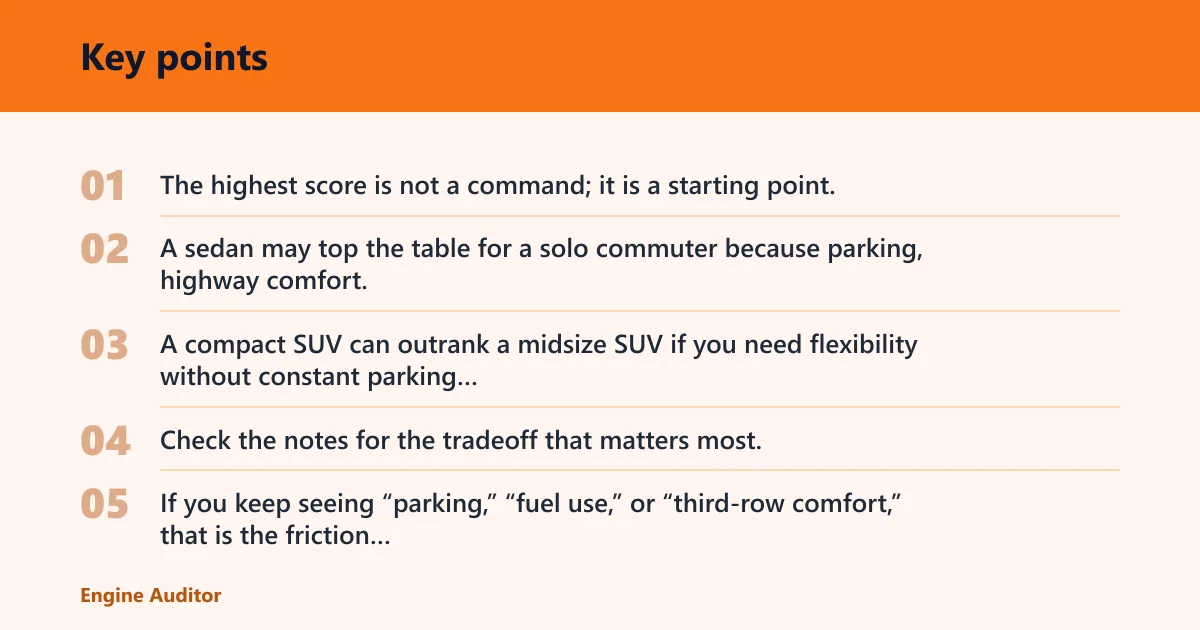
The highest score is not a command; it is a starting point. A sedan may top the table for a solo commuter because parking, highway comfort, and lower running costs matter more than extra cargo room. A compact SUV can outrank a midsize SUV if you need flexibility without constant parking stress.
Use the why-it-fits notes
Check the notes for the tradeoff that matters most. If you keep seeing “parking,” “fuel use,” or “third-row comfort,” that is the friction you are buying. The right vehicle is the one that creates the fewest annoyances across the week, not the one with the biggest number on the brochure.
When does a sedan make sense?
A sedan makes sense when your routine is mostly commuting, parking is tight, and you do not haul bulky cargo every week. Sedans often suit solo drivers, couples, and commuters because they are easier to park, usually quieter at highway speed, and often cheaper to run than larger vehicles.
Best fit for city parking
If you park in a narrow garage, dense apartment lot, or crowded street space, sedan size can save real time and stress. Smaller footprints are easier to place. That matters more than having extra room you may use only a few times a year.
Highway comfort and running costs
Many sedans ride smoothly on highways and can be easier on fuel than larger body styles. Insurance, tires, and brakes can also be easier to budget when the vehicle is lighter and smaller. That makes sedans a strong fit when your driving is steady and predictable.
Where sedan space runs out
Sedan rear-seat room can be limiting for taller passengers, child seats, or frequent adult carpooling. Trunk opening shape also limits bulky cargo. If you often load strollers, sports gear, or home improvement items, a hatchback, compact SUV, or crossover may fit better.
Should you choose an SUV?

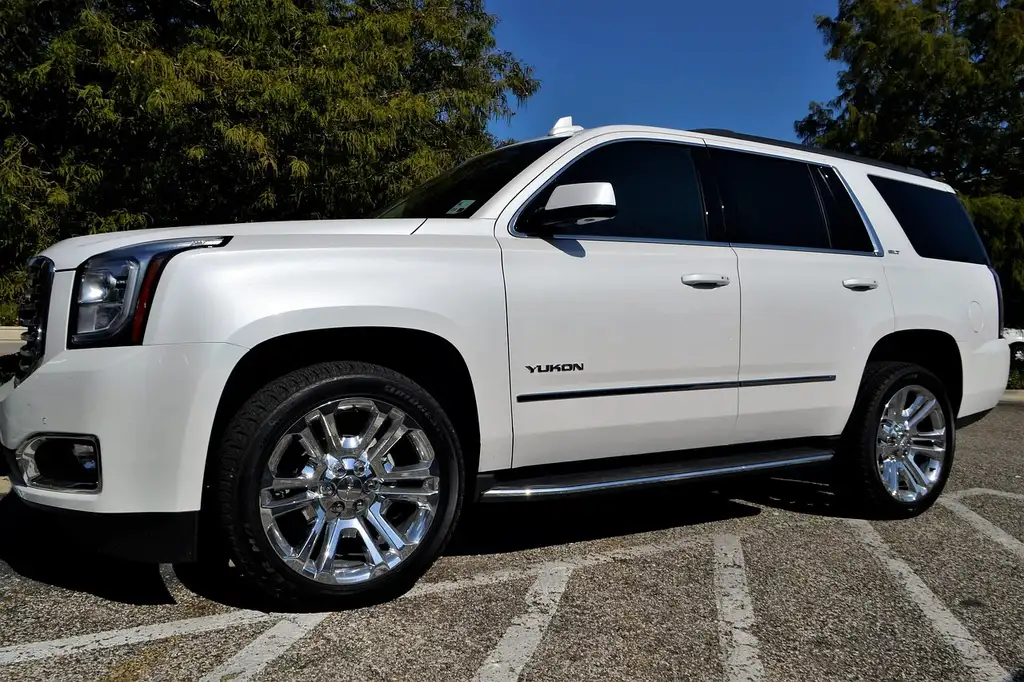
Choose an SUV when you need more seating, a more flexible cargo area, or a higher driving position, but only if the extra size will not make daily life harder. Compact and midsize SUVs offer practical layouts, yet they trade away some fuel use, maneuverability, and, in many cases, lower tire and insurance costs.
Compact SUV versus midsize SUV
A compact SUV is often the better everyday choice if you want flexible cargo space and easier garage fit. A midsize SUV makes sense when passenger room and cargo room matter more than easy parking. That extra space usually comes with larger tires and more effort in tight lots.
Three-row SUV reality check
A three-row SUV can help larger households and carpools, but seat count is only half the story. Check third-row access, third-row comfort, and cargo space with all rows in use. Some models turn the last row into occasional seating that is cramped for adults.
Cargo room versus maneuverability
Do not buy unused cargo space for rare needs. Bigger vehicles can be harder to place in parking spaces, harder to turn in narrow streets, and more expensive when tires need replacement. If you only need extra room once in a while, fold-down seats may solve the problem without moving up a full class.
Which powertrain matches your driving?

Powertrain choice should follow distance, charging access, and traffic pattern. Hybrids suit mixed city and highway routes. PHEVs work best when daily trips are short and charging is convenient. EVs make the most sense when you have reliable charging access and your mileage fits within usable range, not just the advertised figure.
Hybrid for mixed driving
Hybrids are a compromise for mixed city and highway routes. They save fuel without asking you to plug in. Stop-and-go city use often helps them most, and they stay simple if your parking or work setup cannot support charging.
PHEV for short trips with charging
Plug-in hybrids are especially useful when daily trips are short and charging is convenient at home or work. Without regular charging, the performance drops toward a heavier conventional hybrid. If you cannot plug in consistently, the value case weakens fast.
EV for home charging and low daily mileage
EVs are positioned for urban drivers with reliable charging access. They fit best when your daily mileage is predictable and public charging is available for longer days. Cold weather can reduce usable range, so judge the vehicle by usable range rather than the advertised number alone.
Say your round-trip commute is 28 miles, you have a driveway outlet, and most errands stay inside the same metro area. An EV can fit that routine well. Change only one variable, such as adding frequent winter highway trips, and the charging plan needs a closer look.
What should you compare beyond the sticker price?
Sticker price is only the first line in the bill. Total cost of ownership generally includes purchase price, sales tax and registration, insurance, fuel or electricity, maintenance, tires, brakes, repairs, and resale or trade-in value. That last item matters because a lower purchase price can still be a worse deal later.
Insurance, taxes, and registration
Insurance and registration often rise with vehicle value and size. A bigger vehicle can cost more to insure, and taxes scale with purchase price in many areas. Those costs show up every year, not just at the dealership.
Fuel or electricity, maintenance, and tires
Fuel use is one of the clearest body-style costs. Larger vehicles often use more fuel, and they may need pricier tires. EVs cut fuel bills, but charging access must be reliable. Maintenance also differs by powertrain, so compare service schedules before you decide.
Safety tech and crash ratings
Compare automatic emergency braking, blind-spot monitoring, and lane-keeping assistance across the models you are considering. Also review crash-test scores from NHTSA or IIHS. A good comparison includes those safety features rather than relying on size alone for protection.
Frequently asked questions
Which vehicle type fits my lifestyle best?
Match the body style to your weekly pattern. Sedans suit solo drivers, couples, and commuters. Compact SUVs fit mixed use. Midsize and three-row SUVs make sense when passenger count and cargo needs are frequent, not occasional. Hybrids, PHEVs, and EVs should follow your driving and charging setup.
How do I choose between a sedan, SUV, hybrid, or EV?
Start with how you drive most days. Choose a sedan for easy parking and lower running costs, an SUV for more space and flexibility, a hybrid for mixed routes, and an EV only if charging is dependable and your daily mileage fits the usable range.
What should I consider besides the monthly payment?
Look at taxes, registration, insurance, fuel or electricity, maintenance, tires, brakes, repairs, and resale or trade-in value. Monthly payment can hide the cost of a bigger vehicle that is pricier to insure, less efficient, and more expensive to keep in good shape.
How much cargo and passenger space do I really need?
Use your normal week, not your rare outlier. Count the passengers you carry most often and the largest cargo you move most often. If folding seats solves the problem, you may not need a larger body style. Extra space should earn its keep every week.
Is a bigger vehicle actually better for my routine?
Only if your routine truly needs it. Bigger vehicles help with larger households, carpools, and frequent cargo, but they also bring parking friction, higher fuel use, and often higher tire and insurance costs. If those needs are rare, smaller can be the better fit.
Which vehicle type is easiest to live with every day?
For many buyers, a sedan or compact SUV is easiest to live with because both balance parking, highway comfort, and cost. The answer changes if you regularly haul people or gear. Then a midsize SUV, hybrid, or minivan may reduce daily hassle more effectively.
Which car has the right of way?
Right-of-way depends on traffic law and the specific situation, not on vehicle type. A sedan, SUV, hybrid, and EV all follow the same rules at intersections, merges, and crosswalks. When in doubt, slow down, look for signs and signals, and yield when the law requires it.
Products related to this article
Sponsored / affiliate links. As an Amazon Associate I earn from qualifying purchases. I may earn additional commission from eligible campaigns.