Best Vehicle Type for Summer Road Trips
For many summer road trips, a midsize SUV or wagon may be a good vehicle type; a minivan can suit 5+ passengers or lots of luggage, a sedan can suit 1-3 people, and an EV is typically best only if the route supports charging stops. Pick wrong and you pay in cramped seats, overheated cabins, extra fuel stops, or range anxiety. This guide compares body styles by passenger count, cargo room, heat management, fuel use, range, and charging tolerance.
Start with people, bags, distance, and stop tolerance
Start with people, bags, and distance. Then separate cabin comfort from fuel economy. A cool rear seat and steady airflow matter more on a hot July drive than a badge or trim level. If your route has long gaps between stops, fuel or charging tolerance becomes a hard filter, not a nice-to-have.
Use trip pattern first
A two-adult highway loop has different needs than a five-person beach trip with folding chairs, a cooler, and sand gear. The right body style depends on passenger count, luggage volume, roof cargo use, and whether you want to stop often or keep moving.
Separate heat comfort from efficiency
Summer exposes weak cabin cooling, poor rear-seat airflow, and dark interiors that soak up heat. Comfortable front seats help, but rear-seat temperature and ventilation matter more once you add children, pets, or adults riding for hours. Fuel economy still matters, yet it should not override heat management.
Use stop tolerance as a filter
Gas vehicles let you add miles with a short refill. Hybrids reduce fuel stops. EVs require route planning, charging density, and patience for queues. If your schedule is tight, a vehicle that needs fewer pauses is usually the safer fit.
📊 Car and Driver says its road-trip rankings use roughly 200 data points. Source: Best Cars for Road Trips, Ranked.
Road trip vehicle chooser
| Trip scenario | Passengers | Luggage load | Heat comfort priority | Fuel/range priority | Top 2 body styles |
|---|---|---|---|---|---|
| Couple on a 700-mile highway loop | 2 | 2 carry-ons, 2 small bags | Medium | High | Sedan; station wagon |
| Parents with two kids and beach gear | 4 | 4 bags, cooler, folding chairs | High | Medium | Minivan; SUV |
| Five adults on a long weekend trip | 5 | 5 bags, soft cooler | High | Medium | Minivan; full-size SUV |
| Camping trip with roof box and tents | 2-4 | Large, bulky, dirty gear | Medium | Medium | Station wagon; SUV |
| Hot-weather city-to-city drive with one overnight stop | 1-3 | Light to moderate | High | High | Sedan; hybrid sedan or wagon |
| Route with frequent fast chargers and short daily legs | 2-4 | Moderate | High | High, with charging access | EV with fast charging; hybrid wagon or SUV |
Are sedans good for road trips?

Yes, a sedan can be the best road trip vehicle for couples and small families when a quiet highway ride, fuel economy, and supportive seats matter more than cargo volume. The limit is trunk opening size and total luggage space, so it works best when you pack light and keep the passenger count low.
Why sedans work for couples and small families
Sedans usually ride lower, with car-like handling that feels steady at highway speed. For 1-3 people, that often means less wasted space and less fuel use than a larger body style. A well-shaped trunk can handle suitcases, soft bags, and a cooler without taking over the cabin.
Quiet highway ride, mpg, and trunk limits
The strongest sedan case is simple: quiet cruising, good mpg, and comfortable front seats. The weak point is access. A small trunk opening makes it harder to load hard-sided bags, strollers, or a bulky cooler, even if the total volume is acceptable on paper.
Say your trip is two adults driving from Phoenix to Santa Fe with one carry-on each and a small cooler. A sedan is enough, because the load is light and the highway miles reward a quiet cabin and good fuel economy more than extra height or sliding doors.
When a sedan is enough for summer travel
Choose a sedan when you have no roof box, no bulky camping gear, and no third-row passengers. If rear-seat comfort matters, check legroom and climate vents, because summer heat makes cramped back seats feel worse faster than winter does.
When a minivan beats an SUV
A minivan often beats an SUV for family road trips because it loads easier, carries more people in better comfort, and keeps luggage access simple. If you need 7-8 seats, sliding doors, and flexible cargo space, the minivan is usually the cleaner answer than a taller SUV.
Sliding doors and easy loading
Sliding doors help in tight parking spaces and busy rest areas. Children can climb in without swinging a door into another car, and adults can load bags without crouching as much. That matters on hot days when quick loading keeps the cabin from baking.
Passenger comfort for 7 to 8 people
MotorTrend notes the Chrysler Pacifica can seat up to seven adults, which shows why minivans belong in family-trip conversations. The seating position is low enough for easy entry and high enough for comfort, and the cabin packaging usually gives rear passengers better access to vents and cupholders than many SUVs.
Cargo flexibility for family gear
Minivans are strong when you need to mix passengers and cargo. The rear seats often fold flat or remove more easily than SUV rows, and the long interior floor makes it easier to stack beach bags, folding wagons, and soft luggage without wasting vertical space.
A common mistake is picking a convertible for a summer highway trip, then realizing the tiny trunk cannot hold beach chairs, coolers, and overnight bags. A minivan usually fixes that problem without forcing roof storage or a second vehicle.
SUVs, wagons, and the tradeoffs
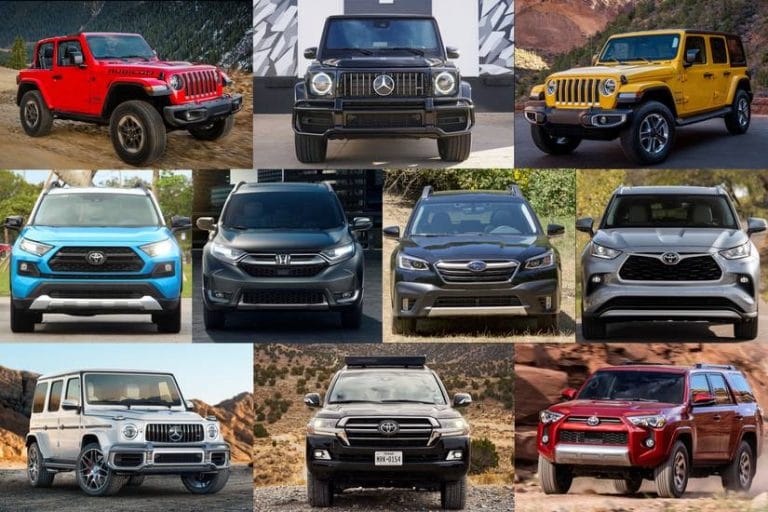
SUVs fit mixed-use trips well when you want cargo capacity, a higher seating position, and available all-wheel drive. Station wagons can be the better answer when you want long cargo space, lower load height, and car-like handling. The wrong choice is usually the one that adds height you do not need.
SUV cargo room and seating height
An SUV helps when you want easy visibility, room for mixed passengers, and space for camping or sports gear. The tradeoff is fuel economy. Higher bodies usually pay a mileage penalty, and that matters on long summer drives where fuel stops eat time.
Station wagon practicality and handling
A wagon gives you a long cargo floor and a lower load height, which makes luggage, coolers, and strollers easier to manage. Roof rails add flexibility for seasonal gear. MotorTrend describes the Subaru Outback as a redesigned all-wheel-drive station wagon/SUV mashup, and it notes a 220-pound dynamic roof load capacity, which shows how wagons can fit outdoor trips without moving to a full SUV.
When an SUV is the wrong choice
An SUV is the wrong choice when you only need two or three seats and a few bags. In that case, the extra height, weight, and fuel use buy little. A wagon or sedan gives you enough room with less heat buildup, easier loading, and usually better efficiency.
What makes long trips easier?
Long trips get easier when the vehicle cuts fuel stops, handles heat well, and reduces driver fatigue. Hybrid powertrains help with MPG and stop spacing. EVs can work if fast charging is dense along your route. Driver-assistance tech matters too, especially on repetitive highway miles.
Hybrid powertrains for fewer fuel stops
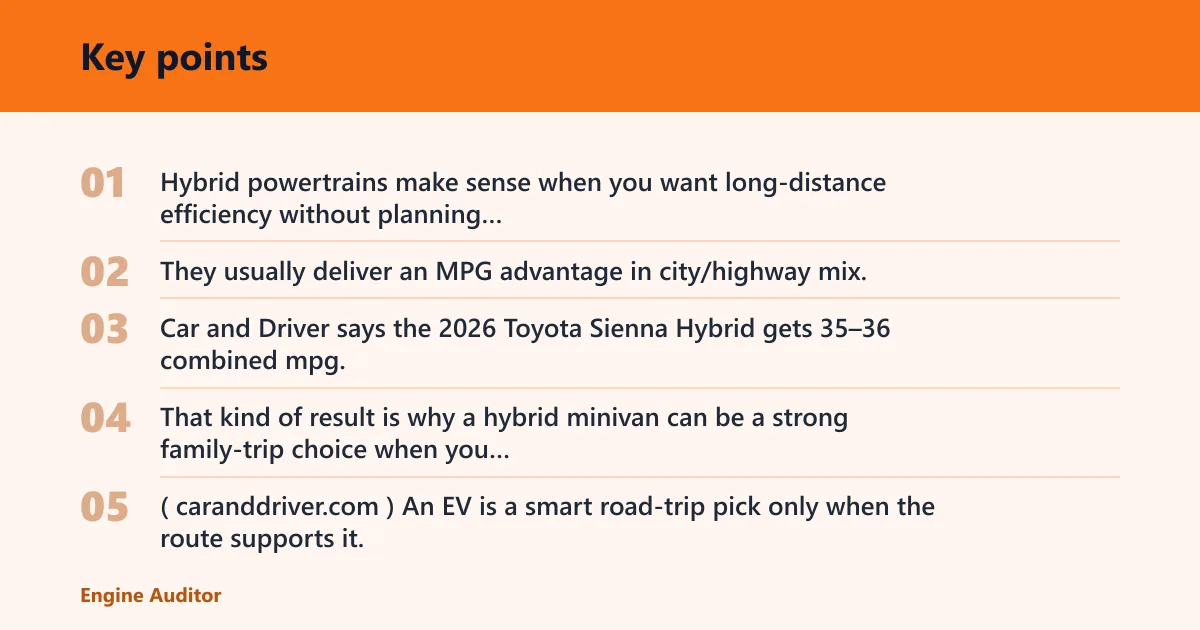
Hybrid powertrains make sense when you want long-distance efficiency without planning around plugs. They usually deliver an MPG advantage in city/highway mix, and that means fewer fuel stops across a summer route with traffic, detours, or long idle periods in heat.
Car and Driver says the 2026 Toyota Sienna Hybrid gets 35–36 combined mpg. That kind of result is why a hybrid minivan can be a strong family-trip choice when you want space and fewer pump stops in one package. (Caranddriver)
EV fast-charging realities in summer
An EV is a smart road-trip pick only when the route supports it. MotorTrend says the Cadillac Escalade IQ posted a 415-mile highway range in its 70-mph test, and it says the Hyundai Ioniq 5 can recharge from 5 to 80 percent in as little as 22 minutes. Even so, summer charging still depends on station density, wait times, and route planning. (Motortrend)
Charging access matters as much as battery size. A route with NACS or Supercharger access can reduce friction, but heat, traffic, and occupied stalls can still add trip-time penalties. If you dislike waiting, an EV should be chosen only when the corridor is dense and the schedule is flexible.
Driver-assistance tech that reduces fatigue
Adaptive cruise control, lane-keep assist, and driver attention monitoring make long highway days less tiring. Hands-free driving features, where available, can also help on monotony-heavy stretches. These systems do not replace attention, but they reduce the small corrections that wear drivers down over hours.
Frequently asked questions
What is the best road trip vehicle?
For most summer trips, the best road trip vehicle is the one that fits your passenger count and luggage without forcing extra stops. A midsize SUV or wagon is the broadest fit, but a minivan is better for larger families, and a sedan is enough for couples or small families traveling light.
What cars are good for summer?
Cars that are good for summer usually have strong air conditioning, comfortable seats, and enough cabin space to keep rear passengers cool. Efficient sedans and hybrids work well for light loads, while wagons, minivans, and SUVs suit family trips, beach gear, or camping equipment.
What is a good road trip car?
A good road trip car is quiet at highway speed, comfortable for long stints, and efficient enough to keep fuel or charging stops manageable. It should also fit your bags without roof clutter. For many drivers, that means a sedan, wagon, hybrid, or minivan rather than a large SUV.
Which vehicle type is best for long road trips?
For long road trips, hybrids are often the best fit when you want fewer fuel stops and strong highway efficiency. If you need more seats, a minivan usually beats an SUV on comfort and cargo access. If your route includes reliable charging, a fast-charging EV can work too.
Are SUVs better than sedans for road trips?
Not always. SUVs are better when you need higher seating, more cargo flexibility, or occasional rough-road use. Sedans are better when the trip is mostly highway, the passenger count is low, and quiet ride plus mpg matter more than height or extra cargo room.
What vehicle type is best for road trips and camping?
For road trips and camping, a wagon or SUV is usually the best fit because both handle bulky gear better than a sedan. A wagon gives you lower load height and car-like handling, while an SUV gives you more vertical cargo room and often better ground clearance.
Products related to this article
Sponsored / affiliate links. As an Amazon Associate I earn from qualifying purchases. I may earn additional commission from eligible campaigns.