How Do I Reduce Road Noise Inside My Car?
Start by pinning down the noise source: tire roar changes with speed, bearing hum often gets louder on one side, wind noise tracks gaps at windows or mirrors, and impact drone shows up on rough pavement. Fix the cheapest verified cause before you add insulation. Guessing burns money and can leave the cabin just as loud. This guide gives a practical checklist to separate tire, bearing, wind, and suspension noise, then pick the right fix.
Start with the loudest source


Road noise can come from tire roar, wheel bearing hum, wind leak, body drone, and surface impact. Sort them before you buy parts. A quiet repair on the wrong source usually does very little.
Match the sound to speed and steering
Use the same road at two speeds. Tire roar often rises with speed and may get louder on coarse asphalt or concrete. Bearing noise may change when you steer left or right. Wind noise is often tied to a gap, seal, mirror, or trim edge.
Impact drone feels different. It shows up on rough pavement, expansion joints, or patched lanes. That points toward suspension, liners, loose panels, or simple tire construction, not a cabin trim problem.
Use a quick no-parts test first
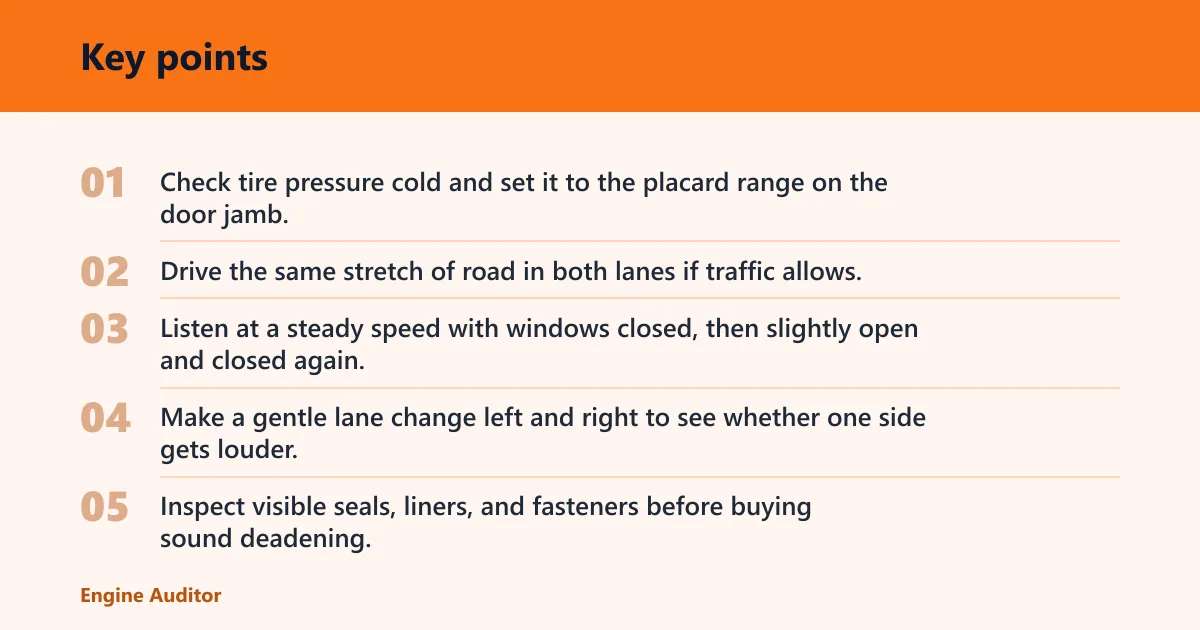
- Check tire pressure cold and set it to the placard range on the door jamb.
- Drive the same stretch of road in both lanes if traffic allows.
- Listen at a steady speed with windows closed, then slightly open and closed again.
- Make a gentle lane change left and right to see whether one side gets louder.
- Inspect visible seals, liners, and fasteners before buying sound deadening.
A common first-timer mistake is buying cabin mats before checking tire pressure. A tire that is several PSI off placard can affect both noise and wear, while a loose liner or torn seal can create a clearer, louder path for road spray and air.
Road noise diagnostic table

Use this table to separate symptoms before spending money. The cheapest useful fix is usually listed first, but some problems need inspection before any part purchase.
| Symptom | Likely source | Quick driveway test | Best fix |
|---|---|---|---|
| Speed-dependent hum that rises with road speed | Tire tread pattern, cupping, or wheel bearing | Drive the same road at 30 and 50 mph; if the pitch rises with speed, note whether it changes on turns | Check pressure, inspect tread wear, then isolate a bearing before replacing tires |
| One-side drone that changes on left versus right turns | Wheel bearing | Swerve gently left and right on a safe road; if the sound loads one side, suspect the opposite bearing | Replace the worn bearing assembly |
| Coarse-surface roar on asphalt or concrete | Tire tread block spacing and road surface | Compare the same speed on two pavement types; note whether the lane changes the loudness | Choose a quieter tire pattern at next replacement; no insulation fix will fully cancel this source |
| Wind whistle at highway speeds | Door seal, window seal, mirror edge, or body gap | Run a hand near the seal line and listen for a narrow whistle; check for uneven compression | Replace weatherstripping, correct door alignment, or repair seal compression |
| Thump or slap over sharp bumps | Loose liner, underbody panel, or suspension mount | Look for missing clips, dangling plastic, or obvious looseness around wheel wells | Reattach or replace fasteners; inspect bushings and mounts if the noise persists |
| Roar that gets worse with high tread wear or uneven wear | Cupping, feathering, or aggressive tread blocks | Run a hand across the tread; cupping feels scalloped, feathering feels sharp one way | Correct alignment or replace the tire if wear is severe |
| Noise that changes after moving to a different lane | Surface variation | Compare adjacent lanes on the same highway segment | No part fix; tire choice and cabin isolation help most after diagnosis |
| Harsh splash and road grit sound after rain | Missing wheel-well liner clips or damaged splash shield | Inspect the liner edge for gaps, torn plastic, or missing fasteners | Replace liner clips or the damaged panel |
Could your tires be the cause?
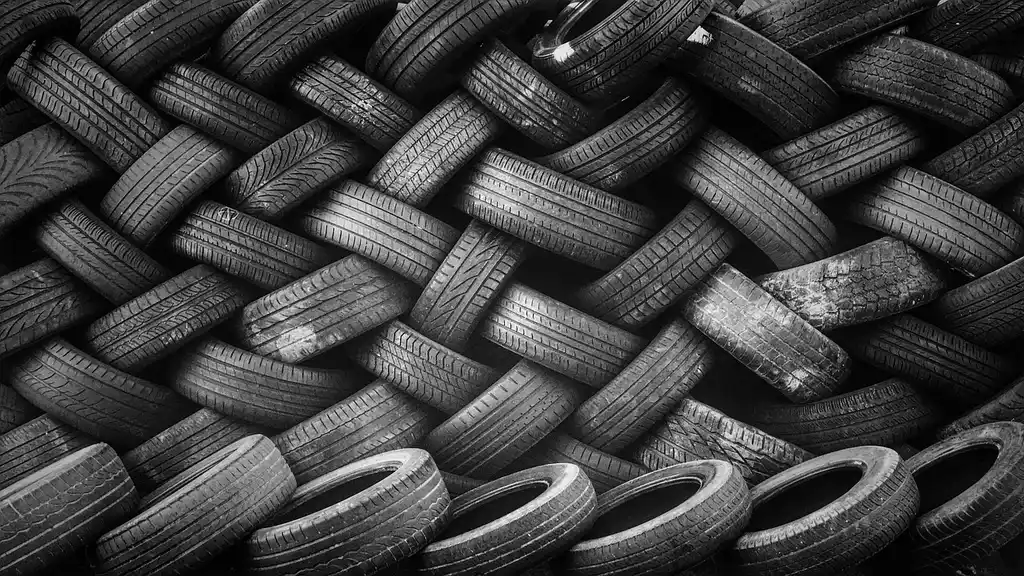
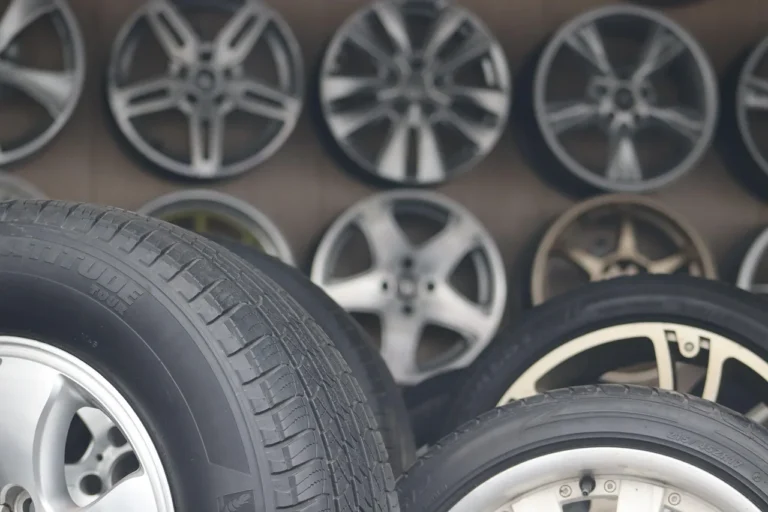
Tires are one of the most common causes of cabin noise. Tread pattern, block spacing, tire size, and sidewall height all matter. A wide tire with large tread blocks can sound louder than a narrower touring tire, even when both are in good condition.
Check tread pattern and wear first
Look for cupping, feathering, and irregular wear. Cupping makes a rhythmic roar or flutter. Feathering often points to toe wear from alignment. Aggressive all-terrain tread can be noticeably louder than a highway all-season tire, especially on concrete.
Then check pressure. Most manufacturers list a placard range on the driver door jamb. Inflate to that range before deciding the tires are the problem. Overinflation and underinflation can both make the cabin louder and can alter wear patterns.
Know when tire replacement helps
Tire replacement helps when the noise comes from tread design, severe cupping, or damaged tires. It will not fix a wheel bearing hum, a wind whistle, or a loose liner. If the same roar stays on the same road after pressure is corrected, the next step is diagnostic, not guesswork.
Suppose a crossover on 18-inch all-season tires gets loud above 45 mph and the tread shows scalloping on the rear axle. If pressure is correct and the wear is severe, a new set may help, but only after the alignment and suspension are checked so the replacement does not wear the same way.
Could a wheel bearing sound like tire noise?
Yes. A worn wheel bearing can sound like a tire hum or coarse roar, especially at highway speed. The key clue is side-to-side change: the noise often gets louder when the load shifts during a left or right turn, while tire roar usually follows pavement texture more closely.
Use turn testing to separate the two
On a safe road, make a gentle lane change or a mild curve. If the sound grows when the car loads one side and fades on the other, the bearing on the opposite side is a strong suspect. If the sound changes very little in turns, tire tread is more likely.
Because tire and bearing noise overlap, a quick drive on a second road helps. If the same hum appears only on coarse pavement, the tires or surface are the first place to look. If the sound stays on smooth pavement and changes with turn direction, the bearing moves up the list.
What role does alignment play?
Alignment affects both wear and noise. Toe errors often create feathered tread, and camber problems can produce uneven wear that turns into a hum or roar. Alignment will not fix a bearing, a seal leak, or a coarse-road tire pattern, but it can stop a noise source from getting worse.
Read the wear pattern
Pulling to one side, a crooked steering wheel, or feathered tread edges all point toward alignment checks. Toe is especially important because it scrubs the tread and can create a buzzing or sawtooth feel. Camber can create shoulder wear that changes how the tire contacts the road.
If the car has loud tires but the wear is even, alignment may not change the noise much. If the tires are already cupped or badly feathered, alignment should be corrected before another tire set goes on. Otherwise the new tires can become noisy in the same pattern.
Check seals, liners, and mounts
Door and window seals matter most for wind whistle and high-speed air noise. Wheel-well liners, underbody panels, and suspension bushings matter more for impact sound and splash transmission. These parts do different jobs, so inspect them separately.
Inspect door and window seals
Look for weatherstrip gaps, hard or flattened rubber, and doors that do not compress the seal evenly. Old seals can harden and stop sealing at highway speed. A door that sits slightly out of adjustment can whistle even when the glass is closed correctly.
Inspect liners, clips, and underbody panels
Plastic wheel-well liners and splash shields block road spray and tire slap. Missing clips or broken fasteners let the panel flutter and transmit noise into the cabin. Check for torn edges, hanging sections, and bare attachment points around the wheel arch and underbody.
Check bushings and mounts
Control arm bushings and strut mounts do not create every noise, but looseness can transmit impact sound through the body. A clunk over bumps is different from a steady hum. If the car is noisy and feels loose, suspension wear deserves attention even when the complaint starts as road noise.
Add insulation where it counts
Sound deadening helps most after the source is known. Butyl sound deadener reduces panel resonance. Closed-cell foam helps decouple trim. Mass loaded vinyl blocks airborne noise better than thin foam alone. None of them should be the first fix for a bearing hum or bad tire roar.
Use the right material in the right place
Doors are a common target for wind and panel resonance. Floor panels, trunk floors, and rear quarter areas help with tire and exhaust-related drone. Wheel wells matter when the car passes a lot of road spray and splash noise through the body.
Do not cover every surface and expect the same result. The return is highest where the noise path enters the cabin. On many cars, a small, well-placed treatment in the doors or trunk does more than a full layer in the wrong panel.
Vehicle-specific notes
EVs often make tire and wind noise more obvious because engine noise is low. Trucks with aggressive all-terrain tires can be loud even with no fault. Older cars may have hardened seals that leak air more easily, so the same whistle may appear at lower speed.
How do I reduce road noise in my car?
Start with the cheapest verified cause: tire pressure, tread wear, seal gaps, or a loose liner. Then use steering changes and pavement changes to separate tire roar from bearing hum and wind leak. Add insulation only after the source is known, or the repair may miss the real problem.
Priority order that saves time
- Set tire pressure to the placard range.
- Inspect tread for cupping, feathering, and uneven wear.
- Compare noise on smooth and coarse pavement.
- Check whether turns change the sound.
- Inspect seals, liners, and underbody panels.
- Check suspension looseness and alignment wear clues.
- Add insulation to the correct body panels only after diagnosis.
How to reduce road noise in car
Use the same order every time: pressure, tread, turns, pavement, then body sealing and insulation. That sequence prevents wasted parts and makes it easier to tell whether the fix worked. It is a diagnostic problem first and an insulation problem second.
Common fixes by source
Tire noise usually needs the right tire choice, correct pressure, and sometimes replacement for cupped or uneven wear. Bearing noise needs the faulty hub corrected. Wind whistle needs sealing or door adjustment. Impact drone often improves with liner repair, mount checks, and targeted panel damping.
Frequently asked questions
Are my tires causing the road noise?
They probably are if the noise rises with speed and changes more on coarse pavement than on smooth pavement. Check for cupping, feathering, uneven wear, and tire type. If the sound changes on turns, a wheel bearing may be the better suspect.
Can wheel bearing noise sound like tire noise?
Yes. A bad bearing can sound like a steady hum or roar that closely resembles tire noise. The best clue is turn response: one side often gets louder when the load shifts. Tire roar usually tracks pavement texture more than steering input.
What is the cheapest way to make a car quieter?
The cheapest useful step is free or nearly free: set tire pressure to the placard range and check for loose clips, panels, or obvious seal gaps. After that, repair the actual source. Sound deadening helps only after the main noise path has been identified.
What parts should I check first for road noise?
Check the tires first, then the wheel bearings, door and window seals, wheel-well liners, underbody panels, and suspension mounts. That order matches the most common noise paths. It also avoids buying insulation for a mechanical problem that needs repair instead.
Why is my car so loud on the highway?
Highway speed exposes tire roar, wind leaks, and bearing noise more than city driving does. Coarse asphalt and concrete can make the cabin much louder, and lane changes may confirm a surface effect. Older seals and aggressive tires often make the difference obvious.
Products related to this article
Sponsored / affiliate links. As an Amazon Associate I earn from qualifying purchases. I may earn additional commission from eligible campaigns.