What Is the Creaking Noise When I Go Over Speed Bumps?
A creak over speed bumps can point to dry or worn control-arm bushings, sway-bar end links, or upper strut mounts; a single clunk may be from a loose brake shield, exhaust hanger, or body mount, and any noise with steering pull or uneven tire wear should be inspected promptly. Ignoring it can turn a cheap bushing or link into tire wear, brake noise, or a loose component that changes how the car tracks. This guide shows how to narrow the source by the sound’s timing, location, and whether it happens on compression, rebound, or only one wheel.
What that bump noise usually means

- Eliminates suspension noise during bumps
- Reduces vehicle body roll
- Precision bushings included
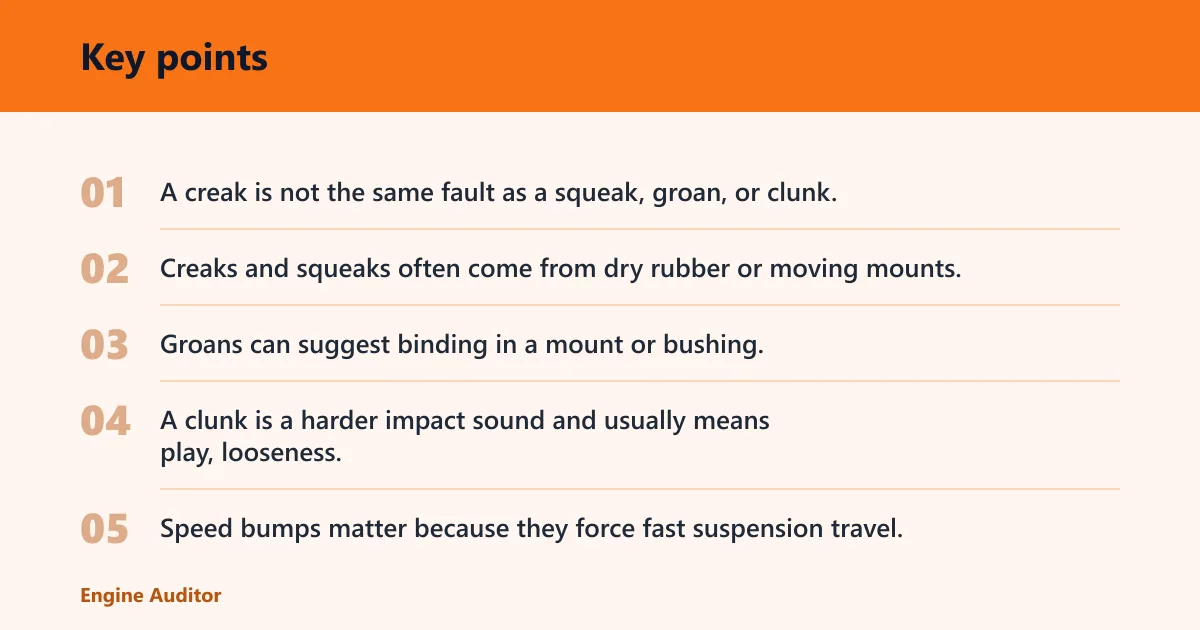
A creak is not the same fault as a squeak, groan, or clunk. Creaks and squeaks often come from dry rubber or moving mounts. Groans can suggest binding in a mount or bushing. A clunk is a harder impact sound and usually means play, looseness, or a part hitting its stop.
Speed bumps matter because they force fast suspension travel. One-wheel compression is especially useful for diagnosis. If the sound appears when only one front wheel climbs the bump, the front corner, sway bar link, or strut mount becomes more likely than the rear axle area. If both sides complain at once, look higher in the chassis, spring seats, or body mounts.
Why speed bumps change the sound
A speed bump loads the suspension through a short, sharp stroke. That motion twists bushings, rotates ball joints, and moves strut mounts farther than normal road ripples do. Parts that are quiet on flat pavement can creak only during compression or rebound.
What one-wheel compression tells you
One-wheel compression loads the sway bar, end links, and the corner that moved first. If the noise changes when a single front wheel hits the bump, the source is often near that wheel. If the sound comes from the rear only when one rear wheel drops into a driveway dip, inspect trailing arm bushings, rear links, and rear spring perches first.
Front vs rear noise clues
Front noises often change with steering angle, braking, or small turns into a driveway. Rear noises are more likely to show up when the body twists, such as crossing a speed bump at an angle or backing out of a sloped driveway. The point is not to guess the exact part yet; it is to decide which end deserves the first look.
Signs the front suspension is involved
A front-end creak often shows up with low-speed turning, parking maneuvers, or a single front wheel compressing first. If the steering feels loose, chatters over bumps, or pulls to one side, the front control arms, ball joints, strut mounts, or sway bar links deserve priority.
Signs the rear suspension is involved
Rear suspension noise often sounds duller and may come from behind the front seats or cargo area. Repetitive squeaks over driveway lips, speed bumps, or a diagonal entry pattern often point to rear sway bar bushings, trailing arm bushings, spring perches, or body mounts on larger vehicles.
When steering angle changes the clue
If the noise gets louder while the wheel is turned, suspect a strut bearing, upper mount, or ball joint before blaming the brake hardware. If the sound does not change with steering but does change with braking, look harder at pad clips, caliper slides, or a loose dust shield.
Bump noise decision table
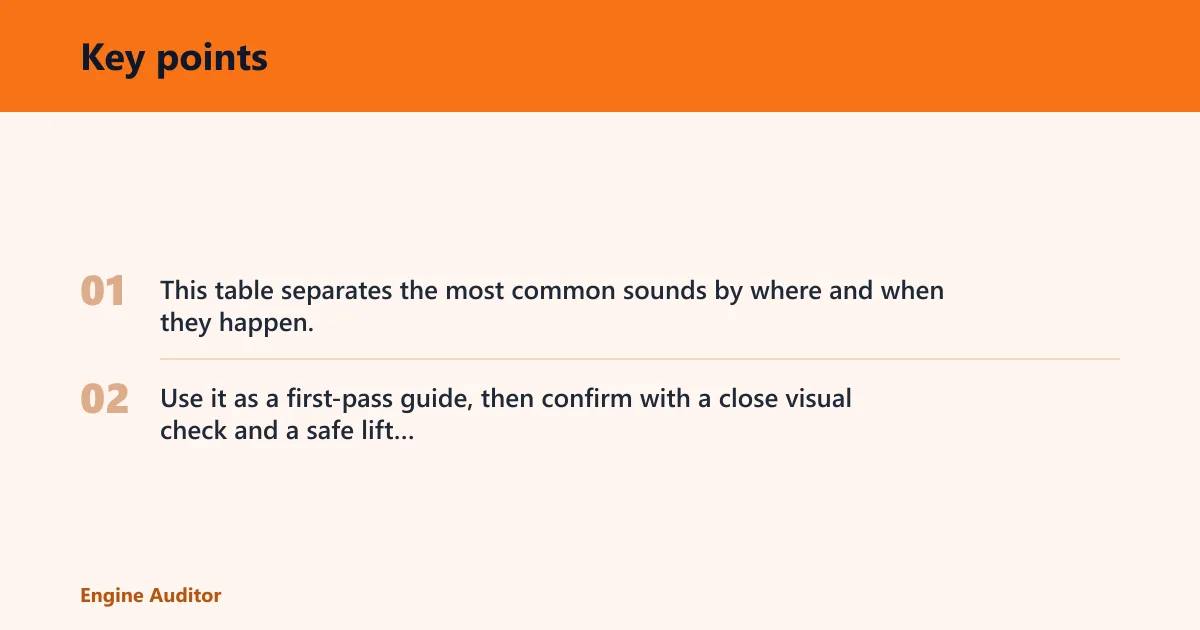
This table separates the most common sounds by where and when they happen. Use it as a first-pass guide, then confirm with a close visual check and a safe lift inspection.
| Sound type | When it happens | Front or rear clue | Most likely component | Quick check | Urgency | Red-flag symptoms |
|---|---|---|---|---|---|---|
| Creak | Compression, rebound, or slow diagonal bumps | Often front, sometimes rear on larger vehicles | Control-arm bushings, upper strut mount, spring isolator | Look for cracked rubber, dry joints, rust at the perch | Soon | Steering looseness, visible bushing separation |
| Squeak | Repeated on each bump or driveway lip | Either end, common at one wheel | Sway bar end link or sway bar bushing | Listen for repeatable noise on one-wheel compression | Soon | Rattle plus clunk, uneven tire wear |
| Groan | Slow body roll, ramping curb entry, cold mornings | Front or rear body structure | Body mounts or subframe bushings | Check for loose fasteners, cracked isolators | Schedule inspection | Body shift feel, wandering track, broken mount |
| Clunk | Sharp hit over a bump or pothole | Often front, can be rear | Ball joint, control arm play, loose brake hardware, exhaust contact | Check for movement with a pry bar and lift | High | Steering pull, unstable handling, visible play |
| Click or tick | While rolling over bumps and during braking | Usually near wheel ends | Pad clips, caliper slide pins, dust shield | See whether the sound changes with braking or wheel rotation | Moderate | Brake drag, heat smell, wheel wobble |
Suspension bushings and control arms
Suspension bushings are rubber or hydraulic isolation parts used at control arms, sway bars, and trailing arms. They soften movement between the wheel and chassis. When they dry out, crack, or detach, they can creak, groan, or clunk during bump travel. Cold weather can make the noise louder, and rain can change it briefly if water reaches a worn edge.
Common bushing wear points
Control arm bushings are common wear points because they carry braking loads and suspension movement at the same time. Sway bar bushings can squeak when the bar twists in its mounts. Trailing arm bushings on the rear suspension can creak on one-wheel bumps and diagonal driveway entries.
Dry, cracked, or detached bushings
A dry bushing often squeaks or creaks before it fails. A cracked bushing may still hold the arm in place, but it no longer isolates movement well. A detached or torn bushing can let metal contact metal, which usually shifts the sound toward a clunk or sharp knock.
How control arm play creates creaks and looseness
The control arm links the wheel hub to the chassis. It usually uses bushings and often a ball joint. If the bushings wear, the arm moves too far during compression and braking, which can create creaks and steering looseness. If play is visible, the concern is beyond nuisance noise.
Ball joints, struts, and sway bar links
Ball joints, struts, and sway bar links can all sound similar from the driver seat. The difference is in the motion that triggers the noise. A joint that creaks only under suspension load points one way; a mount that binds while steering points another.
Ball joint wear and safety risk
A ball joint is the pivot point between the suspension knuckle and control arm. Wear can produce a creak, pop, or clunk over bumps. Excessive play is safety-critical because it can change wheel alignment and, in severe cases, affect wheel control. That is not a part to keep monitoring for long.
Upper strut mounts and bearings
A failed upper strut mount or strut bearing can creak, bind, or knock. The sound is often louder at low speed over bumps and can change when the steering wheel turns. Strut leaks, bouncing after a bump, and top-mount movement together point toward strut wear rather than a simple trim rattle.
Sway bar end links and bushings
Sway bar end links and bushings are frequent sources of repetitive creaking or squeaking on one-wheel bumps and driveway lips. If the sound repeats every time one corner of the car loads, check the links closely. Loose or worn links often rattle as well as squeak.
Say your sedan only creaks when the left front wheel climbs a 4-inch speed bump at parking-lot speed. That pattern points more toward the left front link, bushing, or strut mount than toward the rear axle or the brakes.
Could brakes or body mounts be the source?
Yes. Brake hardware and body mounts can imitate suspension noise. The clue is how the sound behaves. If it changes with braking or wheel rotation, brakes move up the list. If it appears when the chassis twists over a bump, body mounts or subframe bushings become more likely.
Brake hardware that mimics suspension noise
Pad clips, caliper slide pins, and dust shields can make intermittent noises that sound like suspension wear. A bent dust shield may rub only after a bump knocks it out of position. A sticky slide pin can click or squeak, but the sound usually changes with braking more than with road impact alone.
Body mounts and subframe bushings
Body mounts and subframe bushings isolate chassis movement from the frame or drivetrain structure. Dry or loose mounts can groan or creak over bumps, especially on larger vehicles and high-mileage trucks or SUVs. Lift kits and old hardware can change bushing angles and make the noise start earlier.
When rust or loose fasteners matter
Rust-belt corrosion can stiffen a perch, seize a bolt, or thin a bracket until it flexes. A loose fastener can sound harmless for weeks, then turn into a harder clunk. If the noise started after suspension work, verify torque on affected fasteners before assuming a new part failed.
What to check first
Start with a flashlight and a slow walk around the car. Look for torn bushings, wet shock bodies, cracked spring isolators, shiny contact marks, bent dust shields, and fresh rust around a perch or bracket. Do not ignore a wheel that sits crooked, a tire with uneven wear, or a corner that looks lower than the others.
- Park on level ground, set the parking brake, and chock the wheels.
- Use a flashlight to inspect the front and rear bushings, strut tops, end links, and brake shields.
- Raise one end with a floor jack and support it on jack stands before reaching underneath.
- Use a pry bar to check for unwanted movement at the control arm, link, and ball joint.
- Verify visible fasteners with a torque wrench during reassembly if any part was removed.
Suppose a compact crossover creaks only in winter and the sound fades after a rainy week. That pattern fits dry rubber or a bushing edge that changes friction with temperature and moisture, which is different from a clunk that follows a loose joint or brake shield.
Frequently asked questions
Why does my car make a noise when I go over bumps?
Most bump noises come from parts that move under load: bushings, ball joints, strut mounts, sway bar links, or brake hardware. The key is whether the sound is a creak, squeak, groan, or clunk, and whether it comes from the front, rear, or only one wheel.
What causes a creaking noise when I go over speed bumps?
A creaking noise over speed bumps usually comes from dry or worn control-arm bushings, an upper strut mount, or a sway bar link. If the creak is sharper on one side, inspect that corner first. If it changes with steering, move the strut bearing and ball joint higher on the list.
Is a squeaking noise over bumps a suspension problem?
Often, yes, but not always. Squeaks over bumps commonly come from bushings, sway bar parts, or strut mounts. Brake clips and dust shields can also squeak if they shift. The deciding factor is whether the sound follows suspension movement or braking and wheel rotation.
Can worn bushings make a car creak over bumps?
Yes. Worn bushings are one of the most common reasons for creaking over bumps because they are meant to isolate movement. When rubber dries, cracks, or separates from its sleeve, the arm or bar starts moving against metal or a stiff edge instead of a cushion.
Does a bad strut or shock absorber creak over bumps?
Yes. A worn strut or shock can creak, knock, or make the car bounce more than it should. The upper mount or bearing is often the noisy part, especially at low speed over bumps or while steering. Fluid leaks and a loose top mount raise the likelihood.
Can ball joints or control arm bushings cause creaking?
Yes. Control arm bushings can creak when they dry out or tear, and ball joints can creak, pop, or clunk when they wear. Ball joint play is more urgent because it can affect steering and wheel control. Any visible looseness deserves prompt inspection.
When should I stop driving after hearing creaking over bumps?
Stop driving if the noise comes with steering looseness, a pull, uneven tire wear, a clunk that gets worse, or visible joint play. A light creak without other symptoms is usually less urgent, but it still needs a timely inspection before the wear spreads to nearby parts.
How can I tell if the sound is suspension, brakes, or body trim?
Use the trigger. If the sound follows bumps and suspension travel, suspect suspension parts. If it changes with braking or wheel rotation, inspect brake hardware. If it sounds hollow or comes from the cabin or rear body, check trim, body mounts, and subframe bushings.
What should I check first if my car squeaks over bumps?
Check the obvious wear points first: sway bar links, bushings, strut mounts, spring perches, and brake shields. Look for cracked rubber, rust, leaks, and loose fasteners. A flashlight, jack stands, pry bar, and torque wrench cover most first-pass checks without guessing.
Why does my car make a noise when I go over bumps: because something is moving?
Because something is moving or rubbing when the suspension compresses. The sound may come from a dry bushing, worn ball joint, strut mount, brake shield, or body mount. The best clue is where the noise appears and whether it changes with steering, braking, or one-wheel compression.
Products related to this article
Sponsored / affiliate links. As an Amazon Associate I earn from qualifying purchases. I may earn additional commission from eligible campaigns.