How Often Do You Change Car Headlights? Mechanic’S Answer
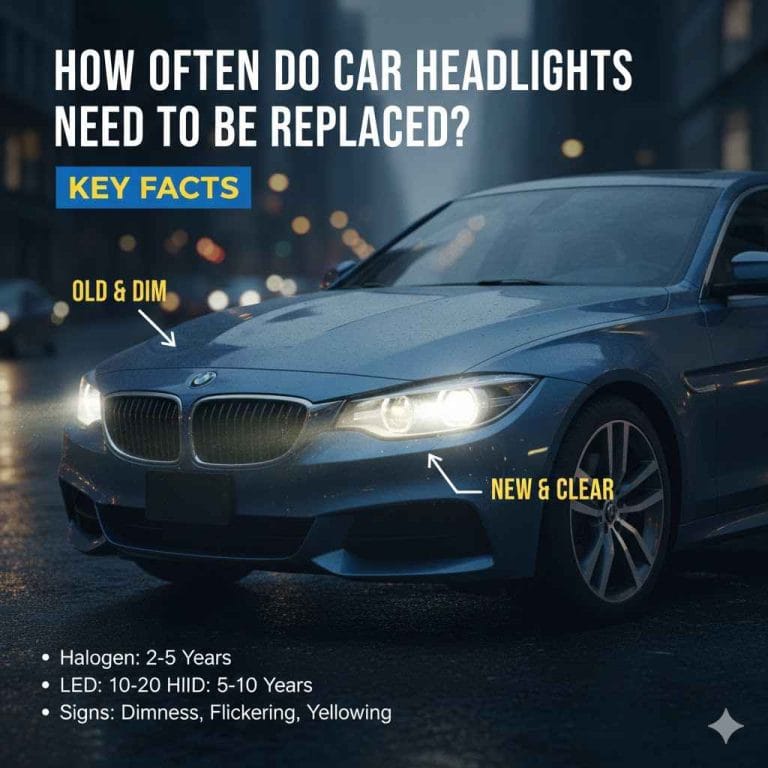
A general guideline is to replace car headlights every 2 to 5 years, or when they show signs of dimming, yellowing, or flickering. Actual lifespan varies by bulb type, driving conditions, and environmental factors. Regular checks are crucial for optimal visibility and safety.
Understanding Your Car’s Headlights
Your car’s headlights are more than just lights. They are crucial for your safety. They help you see the road ahead.
They also help others see your car. This is especially true when it’s dark or the weather is bad. Think rain, fog, or snow.
Without good headlights, you can’t drive safely.
There are a few main types of headlight bulbs used today. The older style is the halogen bulb. It’s like the ones used in home lamps.
It works by heating a wire inside a glass bulb. This makes light. They are common and usually the cheapest to buy.
Then you have HID (High-Intensity Discharge) bulbs. These are also called xenon lights. They produce light differently.
They use electricity to create an arc through a gas. This makes a very bright light. They tend to last longer than halogens.
They also use less energy.
The newest and most advanced type is LED (Light-Emitting Diode) headlights. These use semiconductors to make light. They are super efficient.
They last a very long time. They also produce a bright, clean light. Many new cars come with LED headlights as standard.
Each type has its own lifespan. Halogen bulbs typically last around 500 to 1,000 hours of use. HID bulbs can last much longer, often 2,000 to 3,000 hours.
LED headlights are the champions, often lasting 15,000 to 50,000 hours or even more. That’s a huge difference!
Why Headlight Bulbs Don’t Last Forever
Even though they are designed to be tough, headlight bulbs don’t last forever. Several things cause them to wear out. It’s a bit like how a light bulb in your house eventually burns out.
The filament inside heats up and gets thinner over time.
With halogen bulbs, the thin wire filament is key. Electricity passes through it. This makes it glow hot and produce light.
The constant heating and cooling cycles stress the filament. Over many hours, it can break. When it breaks, the bulb is dead.
Vibrations also play a big role. Your car is constantly moving. It hits bumps and shakes.
These vibrations can weaken the filament over time. Think of it like bending a paperclip back and forth. Eventually, it will snap.
Heat is another factor. The bulbs get hot when they are on. This intense heat can degrade the materials inside the bulb.
It can also affect the wiring and connections over time. Some bulbs are sealed units, but the internal parts still experience stress from heat.
For HID and LED bulbs, the lifespan is often tied to the electronic components. These bulbs have ballasts or drivers that manage the electricity. These parts can fail.
The LEDs themselves can degrade over many thousands of hours. They don’t “burn out” like a filament. They just get dimmer.
Environmental factors also contribute. Exposure to moisture, dirt, and road salt can impact the bulb housing and connections. Even extreme temperature changes can stress the materials.
All these things add up. They slowly shorten the life of your headlight bulbs.
Signs Your Headlights Need Replacing
Your car is pretty good at telling you when something is wrong. Headlights are no different. There are clear signs that your bulbs are on their way out.
You just need to know what to look for. Catching these early means you don’t have to drive around with weak lights.
The most obvious sign is a burnt-out bulb. One light is completely off. This is a safety hazard and often illegal.
You can’t see well. Other drivers can’t see you clearly. It’s usually easy to spot because one side will be dark.
Another common issue is dimming. Your headlights might not be as bright as they used to be. The light output gradually decreases over time.
This is especially noticeable on dark country roads. You might feel like you need to squint to see. This is a clear sign the bulb is weakening.
Yellowing or cloudiness is another indicator. Over time, the plastic lens cover of your headlights can become hazy. This reduces the light that can pass through.
It makes the light appear dimmer and more yellow. It’s not just the bulb; it’s the whole assembly.
Flickering is a big warning sign. If your headlights flicker on and off, it’s a problem. This could be a sign of a failing bulb.
It could also be an issue with the electrical connection or the ballast. Whatever the cause, it needs attention.
You might also notice a change in the color of the light. New headlights often have a clean, white light. As bulbs age, especially halogens, they can start to look more yellow.
This means less light is being produced. Different bulb types can also have different color temperatures when new.
Sometimes, you might hear a buzzing sound. This can happen with HID headlights. It’s often the ballast working hard.
If it’s louder than usual or constant, it could mean trouble.
Many car owners don’t think about their headlights until one burns out. But these early signs are important. They give you a heads-up.
You can plan to replace them before you’re left in the dark. It’s proactive maintenance.
Headlight Health Check: Quick Scan
Dimming Light: Reduced brightness means the bulb is fading.
Yellow Tint: A hazy or yellow color indicates degradation.
Flickering Beam: An unsteady light suggests an electrical or bulb issue.
One Light Out: A clear sign of a burnt-out bulb.
Uneven Beam Pattern: Can be bulb or alignment issue.
The Lifespan of Different Bulb Types
As we touched on, not all headlight bulbs are created equal. Their lifespans vary a lot. Knowing the type of bulb in your car helps you estimate when you might need replacements.
It also helps you understand the cost difference.
Halogen Bulbs: These are the workhorses of the past and present. They are reliable but have the shortest lifespan. On average, expect a halogen bulb to last between 500 and 1,000 hours.
If you drive about 15,000 miles a year, this could mean replacing them every 2 to 3 years. They are also the most affordable bulbs to buy. A pair can cost as little as $20 to $50.
HID (Xenon) Bulbs: These offer better brightness and longevity. They typically last between 2,000 and 3,000 hours. For the same 15,000 miles per year, this could be 6 to 9 years.
However, HID systems are more complex. They include ballasts. These can sometimes fail before the bulb itself.
HID bulbs and ballasts are more expensive. Expect to pay $100 to $300 or more per bulb, not including installation.
LED Bulbs: These are the modern standard for many new cars. Their lifespan is incredibly long. They often range from 15,000 to 50,000 hours.
This translates to potentially 15 to 25 years or more for the average driver. LEDs are also very energy efficient. They produce less heat.
This can benefit other components. While the bulbs themselves are very durable, the LED driver electronics could eventually fail. LED headlight assemblies are the most expensive.
They can cost several hundred dollars to over a thousand for a pair, often integrated into the headlight unit.
Remember, these are average numbers. Your actual lifespan can be shorter or longer. Driving habits matter.
If you drive a lot at night, your bulbs will accumulate hours faster. Constant on-off cycling can also shorten bulb life more than steady use.
I remember a customer who drove a lot of long highway trips. Their halogen bulbs lasted them almost four years. Another customer who did short city trips with frequent starting and stopping needed replacements closer to every two years.
It’s a good idea to check your owner’s manual for specific recommendations for your car model and bulb type.
Bulb Type Lifespan Comparison (Hours)
| Bulb Type | Typical Lifespan (Hours) | Estimated Years (15k miles/yr) |
|---|---|---|
| Halogen | 500 – 1,000 | 2 – 3 |
| HID (Xenon) | 2,000 – 3,000 | 6 – 9 |
| LED | 15,000 – 50,000+ | 15 – 25+ |
The Importance of Replacing Bulbs in Pairs
This is a point that many people miss. When one headlight bulb goes out, it’s best practice to replace both bulbs. Yes, both of them.
Even if the other one seems perfectly fine.
Why is this so important? Well, remember that bulbs have a lifespan. The bulbs in your car were likely installed at the same time.
They have been exposed to the same driving conditions. They have experienced the same number of heat cycles and vibrations. Therefore, they are likely to have a similar amount of life left in them.
If one bulb has failed, it means the other bulb is probably not far behind. If you only replace the bad bulb, the new bulb will be much brighter than the old one. This can create an imbalance.
The light patterns might be different. One side might be brighter, and the other dimmer.
This imbalance can affect your night vision. It can also affect how other drivers perceive your car. One bright light and one dimmer light can be confusing for oncoming traffic.
It’s also not ideal for your own visibility. You want consistent, even lighting.
Replacing them in pairs ensures that both headlights have similar brightness and color. This provides a more balanced and effective beam. It also saves you a trip back to the mechanic or auto parts store soon.
You’re getting ahead of the problem.
Think of it like replacing the tires on your car. You always replace them in sets of two or four. You don’t replace just one tire, because the grip and wear would be uneven.
Headlight bulbs are similar in principle. Consistency is key for optimal performance and safety.
I’ve had customers come back a week later because the “good” bulb suddenly failed. They were annoyed they didn’t just do both at once. It’s a small extra cost upfront that saves hassle and potential safety issues down the road.
It’s a simple rule that makes a big difference.
Factors That Accelerate Headlight Wear
We’ve talked about the average lifespan. But some things can make your headlights wear out faster than normal. Understanding these can help you take better care of your car’s lighting system.
It’s about more than just the bulb itself.
Driving Conditions: If you frequently drive on rough, unpaved roads, the constant vibrations will take a toll on your bulbs. Similarly, driving in very dusty or muddy environments means more debris can get into the headlight housing. This can affect heat dissipation and clarity.
Environmental Exposure: Living in an area with extreme temperatures can accelerate wear. The constant expansion and contraction of materials due to heat and cold can stress bulbs and seals. Exposure to corrosive elements like road salt or sea air can also degrade components over time.
Frequent On/Off Cycles: While modern bulbs are better, repeatedly turning your headlights on and off can shorten their life. This is more true for older halogen bulbs. Frequent use in stop-and-go traffic, or turning them on and off at every stop sign, adds to the wear.
Poor Quality Bulbs: Not all bulbs are created equal. Cheaper, off-brand bulbs may not meet the same quality standards. They might use less durable materials.
They might not be manufactured as precisely. This can lead to a shorter lifespan and less reliable performance. Stick to reputable brands for best results.
Electrical System Issues: Problems with your car’s alternator, voltage regulator, or wiring can supply inconsistent power to the headlights. Voltage spikes can burn out bulbs quickly. Low voltage can cause them to dim prematurely.
If you’re going through bulbs unusually fast, have your electrical system checked.
Headlight Housing Damage: Cracks or gaps in the headlight housing can let in moisture and dirt. This moisture can corrode bulb sockets and wiring. It can also affect the bulb’s temperature.
Dirt and grime on the inside of the housing can block light output. Keeping the housings clean and sealed is important.
High Heat Environments: If your car is parked in direct sun for long periods in a hot climate, the engine bay and headlight assemblies get very hot. This prolonged heat can degrade bulb components and seals faster.
I had a customer once whose headlights kept failing very quickly. We checked everything. Turns out, their car had a slight leak in the headlight assembly.
Every time they washed the car, a little water would get in. It caused corrosion on the bulb contacts. Once we sealed the housing, the new bulbs lasted the normal amount of time.
Factors Speeding Up Bulb Burnout
Heavy Vibrations: Rough roads mean more stress on filaments.
Extreme Weather: Constant heat or cold cycles shorten life.
Frequent Use: Many on/off cycles add up, especially for older types.
Low-Quality Bulbs: Cheap bulbs often fail sooner.
Electrical Problems: Inconsistent voltage can fry bulbs.
Damaged Housings: Moisture and dirt cause corrosion and dimming.
When Is It Normal for Headlights to Dim or Yellow?
It’s completely normal for headlights to dim and yellow over time. This is a gradual process. It’s not like a light switch flipping off.
It’s a slow fade that happens with use.
The bulb itself degrades. As the filament in a halogen bulb ages, it gets thinner. It also deposits material on the inside of the glass.
This reduces the light output. For HID and LED bulbs, the light-emitting elements also degrade over thousands of hours. They become less efficient.
The plastic lens of the headlight assembly is also a big factor in yellowing. This plastic is exposed to UV rays from the sun, road debris, and harsh cleaning chemicals. Over time, it oxidizes.
It becomes hazy and yellow. This haze acts like a filter. It blocks a lot of the light produced by the bulb.
You might have a perfectly good bulb inside, but the yellowed lens makes it seem dim.
Think about it: your headlights are on the front of your car. They take a beating from bugs, rocks, and weather. This constant exposure wears them down.
It’s a sign of wear and tear, like the tread on your tires getting low.
This dimming and yellowing is usually most noticeable when you compare them to a new car’s headlights or a recently replaced bulb. You might not notice it day-to-day because the change is so slow. But one day, you’ll realize you can’t see as far as you used to.
It’s a sign that the bulbs are nearing the end of their effective lifespan. They might still be producing light, but it’s not the optimal amount. This reduced visibility poses a safety risk.
It’s more dangerous at night and in adverse conditions.
The good news is that yellowed or hazy headlight lenses can often be restored. There are headlight restoration kits available. They involve sanding and polishing the plastic.
It’s a DIY project that can make a huge difference. It can restore clarity and brightness significantly. It’s often much cheaper than replacing the whole headlight assembly.
How to Check Your Headlights
Checking your headlights is super easy. You can do it yourself in just a few minutes. It’s a routine check that can save you a lot of trouble.
Make it a habit, maybe once a month.
Step 1: Find a Dark Spot. Park your car in a safe, dark area. A driveway at night or an empty parking lot works well. Make sure the area is level.
Step 2: Turn on Your Lights. Start your car. Turn on your headlights. Make sure both the low beams and high beams are activated.
Also, check your parking lights and turn signals.
Step 3: Visual Inspection. Walk around your car. Look at each headlight. Is one out?
Are they both on? Do they look the same brightness? Is the light color consistent?
Step 4: Check the Beam. Stand in front of your car. Look at the pattern of the light on a wall or the ground. Does it look even?
Are there any dark spots?
Step 5: Test High Beams. Switch to high beams. Do they appear significantly brighter? Do they illuminate further down the road?
Step 6: Look for Yellowing/Hazing. Inspect the plastic lenses. Do they look cloudy, yellow, or scratched? This indicates reduced light output.
Step 7: Listen for Odd Noises. For HID lights, listen for any unusual buzzing or humming sounds. While some noise is normal, excessive or new sounds could be a problem.
Step 8: Check Tail Lights and Brake Lights. While you’re at it, have a friend help you check your tail lights and brake lights. Step on the brake pedal and watch the rear lights.
I often tell my customers to make this part of their monthly car wash routine. It’s simple. It’s quick.
And it’s a very effective way to stay on top of your car’s safety features. You don’t want to discover a burnt-out bulb when you’re driving on a dark road.
Easy Headlight Check Steps
- Park in a dark area.
- Turn on low and high beams.
- Visually inspect for burned-out or dim bulbs.
- Check for consistent brightness and color.
- Note any yellowing or cloudiness on the lenses.
- Test high beams for increased brightness.
- Check tail and brake lights too.
Replacing Headlight Bulbs: DIY vs. Professional
Replacing a headlight bulb can be a straightforward DIY task. For many cars, it’s as simple as opening the hood and accessing the back of the headlight assembly. But it’s not always that easy.
DIY: For simpler vehicles, you might just need to twist off a cap or disconnect a wire harness. Then, unclip the old bulb and pop in a new one. Some cars require removing the entire headlight housing or even getting under the car.
Tools like screwdrivers or pliers might be needed. There are plenty of online videos showing how to do it for specific car models. It can save you labor costs.
A pair of halogen bulbs might cost $20-$60. Doing it yourself means you only pay for the parts.
Professional Replacement: On many modern cars, the headlight assemblies are tightly packed. Accessing the bulbs can be very difficult. Sometimes, you might need to remove the front bumper or other components just to get to the bulb.
This is where a mechanic’s expertise and specialized tools come in handy. If you’re not comfortable working on your car, or if the job looks complicated, it’s best to go to a professional. The labor costs can add up.
A mechanic might charge $50-$150 or more for installation, depending on the complexity.
For HID and LED systems, replacement can be more involved. HID bulbs often require careful handling of the ballast. LED headlights are often integrated into the entire assembly, meaning if one part fails, you might need to replace the whole unit.
This is usually best left to a professional.
When I see a car come in with a tricky headlight replacement, I always think about the customer. Do they have the tools? Do they have the time?
Do they have the patience? For some, the peace of mind of having it done right is worth the extra cost. For others, saving money by doing it themselves is the priority.
Consider your comfort level. If you’re a beginner, start with a simple car or a task like changing a wiper blade. If headlight replacement seems daunting, there’s no shame in calling a mechanic.
Safety and correct installation are the most important things.
How Often Do You Change Car Headlights? The Mechanic’s Recommendation
So, to finally answer the question directly: how often do you change car headlights? There’s no single, hard number like “every two years.” It really depends on the bulb type, how much you drive, and the specific car.
For Halogen bulbs: Most mechanics recommend checking them annually. Replacing them proactively every 2 to 3 years is a good idea, even if they haven’t burned out yet. This prevents unexpected failures and ensures optimal brightness.
Consider replacing them sooner if you notice dimming or yellowing.
For HID (Xenon) bulbs: These last much longer. A check every 2 to 3 years is usually sufficient. Replacement might be needed every 5 to 7 years on average.
However, pay attention to the ballast. If you suspect an issue, get it checked sooner.
For LED bulbs: These are designed to last the life of the vehicle for most people. They rarely need replacement unless there’s an electrical fault or physical damage to the assembly. If your car has LED headlights, you probably won’t need to worry about them for many, many years.
The Golden Rule: The best advice is to inspect your headlights regularly. Look for the signs we discussed: dimming, yellowing, flickering, or one bulb being out. Don’t wait for a bulb to fail completely.
A proactive approach is always safer and more convenient.
Always replace in pairs. This ensures consistent light output and a balanced beam. It’s a small step that greatly enhances your safety and the safety of others on the road.
If you’re unsure, or if your car’s headlight system seems complex, don’t hesitate to ask a trusted mechanic. They can give you personalized advice based on your car and your driving habits. They can also perform a professional inspection to ensure everything is working as it should.
Your visibility is too important to overlook.
Frequently Asked Questions About Headlight Replacement
How do I know if my car needs new headlights?
You’ll know if your car needs new headlights if they are dim, yellowed, flickering, or if one completely burns out. Regular visual checks are key to spotting these signs early.
Can I replace just one headlight bulb?
While you can technically replace just one bulb, it’s highly recommended to replace them in pairs. This ensures equal brightness and color, maintaining balanced visibility and preventing the other bulb from failing soon after.
What’s the difference between halogen, HID, and LED headlights?
Halogen bulbs use a heated filament. HID (Xenon) bulbs use an electric arc through gas. LED bulbs use semiconductors.
LEDs and HIDs are generally brighter, more efficient, and last longer than halogens.
How long do LED headlights typically last?
LED headlights are known for their long lifespan, often lasting between 15,000 to 50,000 hours, which can be many years, even decades, for average drivers.
Is it safe to drive with one headlight out?
No, it is not safe to drive with one headlight out. It severely reduces your visibility and makes it harder for other drivers to see you, increasing the risk of an accident. It’s also often illegal.
How much does it cost to replace car headlights?
The cost varies widely. For a pair of halogen bulbs, it can be $20-$60 for parts. Professional installation can add $50-$150 or more depending on the car.
HID and LED replacements are generally more expensive.
Final Thoughts on Headlight Longevity
Your car’s headlights are essential for safe driving, especially after dark. While there’s no strict schedule for replacing them, staying aware of their condition is vital. Regular checks and understanding the signs of wear will help you stay ahead.
Replacing bulbs in pairs is a simple yet critical step for consistent performance and safety. Keep those beams bright!
See also fog and drl. See also do car lights come on automatically how it really works.