Should You Leave Your Car Lights on Auto? Pros and Cons Explained
Many drivers wonder if they should leave their car lights on the Auto setting. Modern vehicles often come with this feature, but is it the best choice? Today, people drive in cities, countryside, and highways—all with different lighting needs. The auto setting sounds convenient, but does it really work for every situation? Some drivers worry about battery drain, others about safety. If you want to understand if auto lights are right for you, this guide explains the pros, cons, and real-world details.
How Auto Car Lights Work
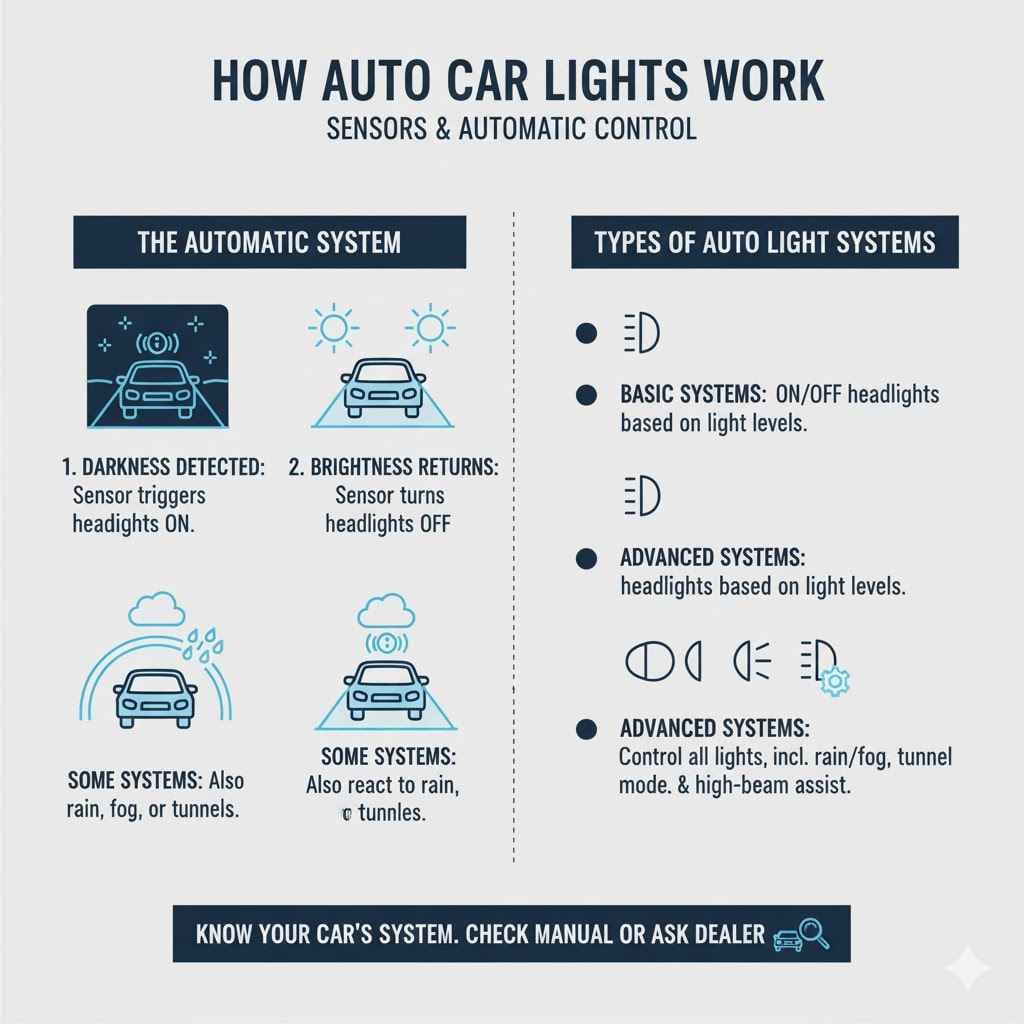
Auto lights use sensors to detect light around your car. When it gets dark, the system turns on your headlights. When it’s bright again, it switches them off. Most systems rely on a sensor placed on the dashboard or near the windshield. Some cars also use sensors to detect rain, fog, or tunnels.

Hemei9319
Wireless LED Lights for Car, Rechargeable Interior…
- ✨【Helpful Tips for Best Use】Before installation, thoroughly clean and dry the mounting surface for stronger adhesion. Before using…
- ✨【WIRELESS LED LIGHTS FOR CAR – NO WIRING NEEDED】 Upgrade your vehicle without messy wires. Each compact rechargeable light featur…
- ✨【8 COLORS, 10 MODES & 3 BRIGHTNESS LEVELS】 Customize your car interior lights with 8 colors, 10 lighting modes and 3 adjustable b…
As an Amazon Associate I earn from qualifying purchases.
For example, if you drive into a parking garage, your auto lights should turn on within a few seconds. If you exit and it’s sunny, they turn off again. This automatic switch helps drivers avoid forgetting their lights.
Different Types Of Auto Light Systems
Not all auto light systems are the same. Some only control the main headlights, while others handle taillights, parking lights, and even fog lights.
- Basic auto systems: Only turn on/off headlights based on outside brightness.
- Advanced systems: Include rain sensors, adjust lights for tunnels, and sometimes dim high beams for oncoming traffic.
Knowing your car’s system is important. Check your manual or ask your dealer if you’re unsure.
The Advantages Of Leaving Car Lights On Auto
Many drivers find the auto setting useful. Here are some real benefits:
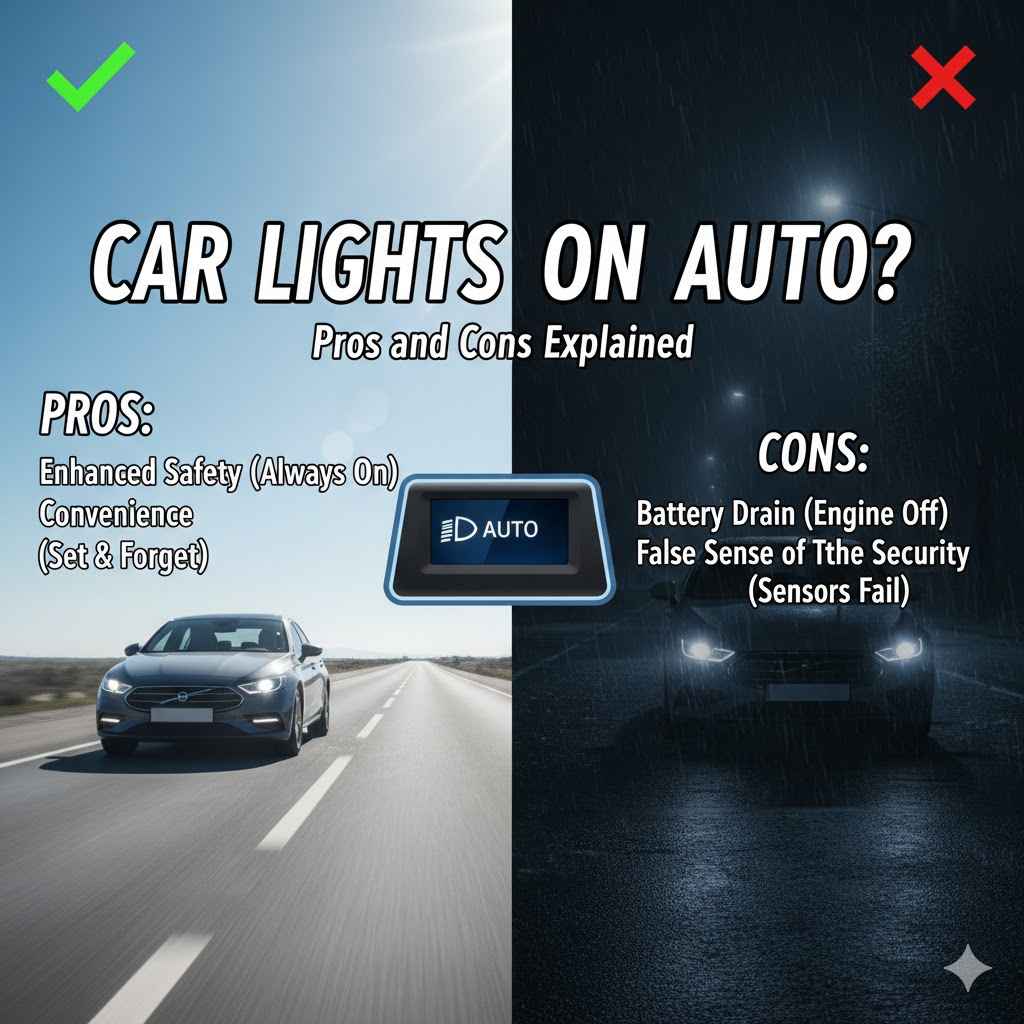
- Convenience: You never have to remember to turn your lights on or off. The system does it for you.
- Safety: Lights come on when needed, even if you forget. This reduces accidents caused by poor visibility.
- Legal compliance: In some countries, it’s illegal to drive without lights at certain times. Auto settings help you follow the law.
- Battery protection: Most systems turn off lights when you lock the car, preventing battery drain.
- Adaptability: Sensors respond to changing conditions quickly, like entering tunnels or driving in rain.
These advantages make auto lights popular, especially in busy cities and for night driving.
Real-world Example
A study by the National Highway Traffic Safety Administration found that nearly 60% of accidents at dusk happen because drivers forgot to turn on their lights. Auto lights could reduce this number by making sure cars are visible even when drivers are distracted.
Potential Drawbacks Of Using Auto Lights
Auto lights are not perfect. Here are some issues drivers should know:
- Sensor limitations: Sensors may not detect fog or heavy rain, leading to poor visibility.
- Delayed response: Sometimes, lights switch on or off too slowly, especially when entering tunnels.
- Battery concerns: If the system malfunctions, lights could stay on, draining the battery.
- Manual override confusion: Some drivers struggle to switch to manual mode when needed.
- False sense of security: Drivers may trust the system too much and not check their lights.
Example Of Sensor Limitation
In thick fog, auto sensors might not activate headlights because the ambient light is still high. This can be dangerous, as other drivers may not see your car well.
Comparing Auto Vs Manual Light Control
Let’s see how auto and manual settings differ in key areas.
| Feature | Auto | Manual |
|---|---|---|
| Convenience | High | Low |
| Safety | Good (if sensors work) | Depends on driver |
| Legal compliance | Automatic | Driver must remember |
| Battery risk | Low (if system works) | Medium (if forgotten) |
| Adaptability | Quick changes | Driver must react |
| Sensor risk | Present | None |
Auto lights are best for those who value convenience and safety. Manual control suits drivers who want more control and awareness.
Common Situations Where Auto Lights Help
Auto lights shine in certain scenarios:
- Entering tunnels: Lights switch on quickly without driver action.
- Sudden weather changes: Rain or snow triggers sensors, improving visibility.
- Low-light city driving: Lights come on at dusk, reducing accidents.
- Parking garages: Sensors turn lights on in dark indoor spaces.
- Leaving car parked: System turns off lights, avoiding battery drain.
Auto lights are especially useful for drivers who frequently travel in changing light conditions.
Times When Manual Light Control Is Better
There are moments when manual control beats the auto setting:
- Foggy mornings: Sensors may not activate lights, but manual control ensures visibility.
- Heavy rain: Manual mode lets you turn on fog lights, which auto may miss.
- Car washes: You may want to keep lights off to avoid water damage.
- Driving in countries with different rules: Manual control helps you follow local laws.
- System malfunction: If sensors fail, manual mode is essential.
Smart drivers know when to switch to manual, especially if they notice poor visibility or system errors.
Does Leaving Lights On Auto Drain The Battery?
Most modern auto systems are designed to prevent battery drain. When you lock the car, the system turns off the lights. However, rare malfunctions can lead to lights staying on.
Battery Protection Features
- Automatic shut-off: Most cars cut power after a set time.
- Warning signals: Dashboard alerts if lights stay on.
- Smart sensors: Detect if the car is parked and turn off lights.
If you notice your lights staying on after parking, get your car checked. This prevents battery problems and ensures you don’t get stranded.
Auto Lights And Car Safety
Auto lights improve safety by making cars more visible. Studies show that daytime running lights reduce accidents by up to 25%. Nighttime accidents drop when lights come on automatically.
Safety Data
According to a report by the European Transport Safety Council, countries that require daytime running lights see fewer road deaths. Auto lights help drivers follow these rules without extra effort.
Non-obvious Insight
Some newer cars use adaptive lighting. This means lights adjust brightness and direction based on speed and steering. If your car has this feature, auto mode is even safer.
Legal Requirements Around Car Lights
Different countries have different rules for car lights. In Europe, daytime running lights are mandatory. In the US, rules vary by state.
Auto lights help drivers comply with these laws. However, it’s important to check local regulations, especially when traveling.
Example
If you drive from France to Germany, both countries require daytime lights, but the enforcement and fines differ. Auto mode helps, but manual control is needed if your system doesn’t turn on all required lights.
Auto Lights In Older Vs Newer Cars
Older cars may not have reliable auto systems. Sensors can fail or be inaccurate. Newer cars use advanced sensors and software.
| Car Age | Auto Light Reliability | Sensor Technology |
|---|---|---|
| Older (pre-2010) | Medium to low | Basic (light only) |
| Newer (2010+) | High | Advanced (rain, tunnels, adaptive) |
If you own an older car, test your auto lights regularly. For newer cars, auto mode is more reliable, but always check for recalls or updates.
How To Check If Your Auto Lights Are Working
It’s smart to test your auto lights every few months. Here’s how:
- Park your car in a garage or dark area.
- Set the lights to Auto.
- Watch if lights switch on and off as you move in and out of darkness.
- Test rain and fog sensors, if your car has them.
- Check dashboard signals for errors.
If you notice delays or lights failing to turn on, get your sensors checked. Sometimes, cleaning the sensor area improves performance.
Non-obvious Insight
Some cars have hidden settings to adjust sensor sensitivity. Ask your dealer or check the manual. Adjusting sensitivity can improve response in tricky conditions.
Tips For Using Auto Lights Safely
Auto lights are helpful, but smart use makes them better.
- Clean your dashboard and sensor area regularly.
- Learn how to switch to manual mode quickly.
- Check legal requirements in countries you visit.
- Test your lights before long trips.
- Watch for warning signals on your dashboard.
These tips help you avoid problems and stay safe.
Common Mistakes Drivers Make With Auto Lights
Drivers often make simple mistakes with auto lights:
- Ignoring manual override: Not knowing how to switch to manual mode.
- Trusting sensors too much: Assuming auto lights work in all conditions.
- Neglecting maintenance: Dirty sensors cause malfunctions.
- Forgetting legal rules: Not checking local requirements.
- Overlooking battery alerts: Ignoring dashboard signals.
Avoid these mistakes by staying aware and learning about your car’s system.
Should You Leave Your Car Lights On Auto? The Final Verdict
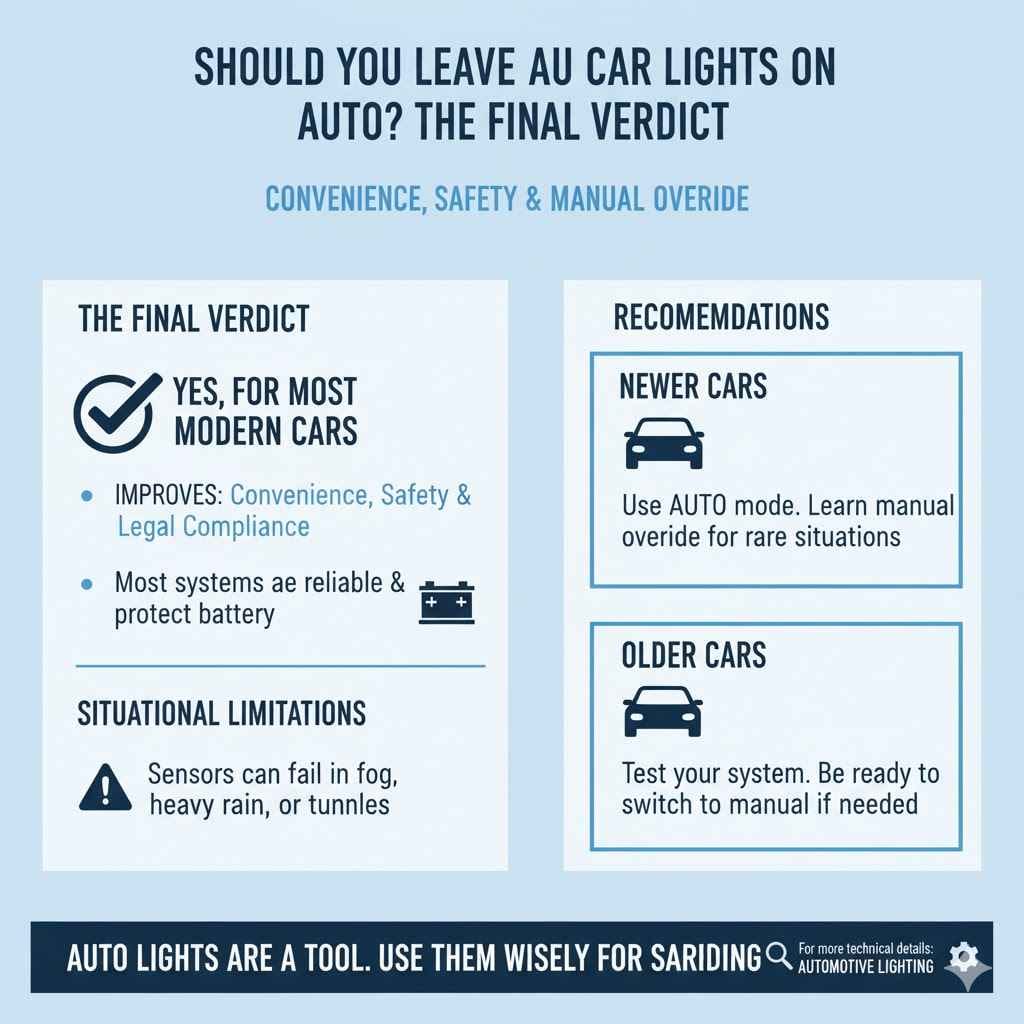
Leaving your car lights on Auto is usually the best option for modern vehicles. It improves convenience, safety, and legal compliance. Most systems are reliable and protect your battery. However, auto mode is not perfect. Sensors can fail in fog, heavy rain, or tunnels. Manual control is important in rare situations.
If you drive a newer car, auto mode is your friend—just check sensors and learn manual override. For older cars, test your system and be ready to switch to manual if needed.
Remember, auto lights are a tool. Use them wisely, and you’ll enjoy safer, easier driving.
If you want more technical details about auto lighting systems, visit the Wikipedia Automotive Lighting page.
Frequently Asked Questions
How Do Auto Car Lights Know When To Turn On?
Auto car lights use light sensors placed on the dashboard or near the windshield. These sensors detect the level of light outside. When it gets dark, the system sends a signal to turn on the headlights. If it’s bright again, the lights switch off. Some advanced systems also use rain or tunnel sensors to adjust lights.
Will Leaving My Car Lights On Auto Drain The Battery?
Usually, leaving your lights on auto will not drain the battery. Modern systems turn off the lights when you lock the car or after a certain time. If your system malfunctions and lights stay on, it can drain the battery.
Always check your dashboard for alerts and get malfunctions fixed.
Are Auto Lights Reliable In All Weather Conditions?
Auto lights work well in most conditions, but they can struggle in fog or heavy rain. Sensors may not detect low visibility if the ambient light is high. In these cases, manual control is safer. Clean sensors regularly and know how to switch to manual mode.
Can I Adjust The Sensitivity Of My Auto Lights?
Some cars allow you to adjust sensor sensitivity through hidden settings or dealer tools. Check your manual or ask your dealer. Adjusting sensitivity can help lights respond faster in tunnels, garages, or during rain.
Is It Legal To Use Auto Lights Everywhere?
Auto lights help you follow legal requirements in most places. However, laws differ by country and state. Some areas require daytime running lights or specific types of headlights. Always check local laws before traveling. Auto mode is helpful, but manual control may be needed for full compliance.
Leaving your car lights on Auto is usually smart, but always stay aware and ready to switch to manual when needed. This way, you enjoy both safety and convenience, wherever you drive. See also when to use car hazard lights and when to avoid them.
Related pick: Check today's price on Amazon
Products related to this article
Sponsored / affiliate links. As an Amazon Associate I earn from qualifying purchases. I may earn additional commission from eligible campaigns.
 CARLOCK Anti Theft Car Device - Real Time 4G Car Tracker & Car Alarm System. Comes with Device & Phone App. Tracks Your Car in Real Time & Notifies You Immediately of Suspicious
 RamPro Hide A Key Magnetic Key Holder Under Car - Hide A Key for Your Car So You Never Lock Out - Plastic Magnet Key Hider to Store a Spare for Your Home, Storage, Office, or Vehicle