Car Light That Looks Like a Lightning Bolt: ETC Warning
A lightning bolt on your dashboard means your Electronic Throttle Control (ETC) system detected a fault, not a battery or electrical issue.
It can trigger limp mode or reduced power, which is hazardous at speed. This guide covers exactly what to check and when to stop driving.
What Is The Lightning Bolt Car Light?
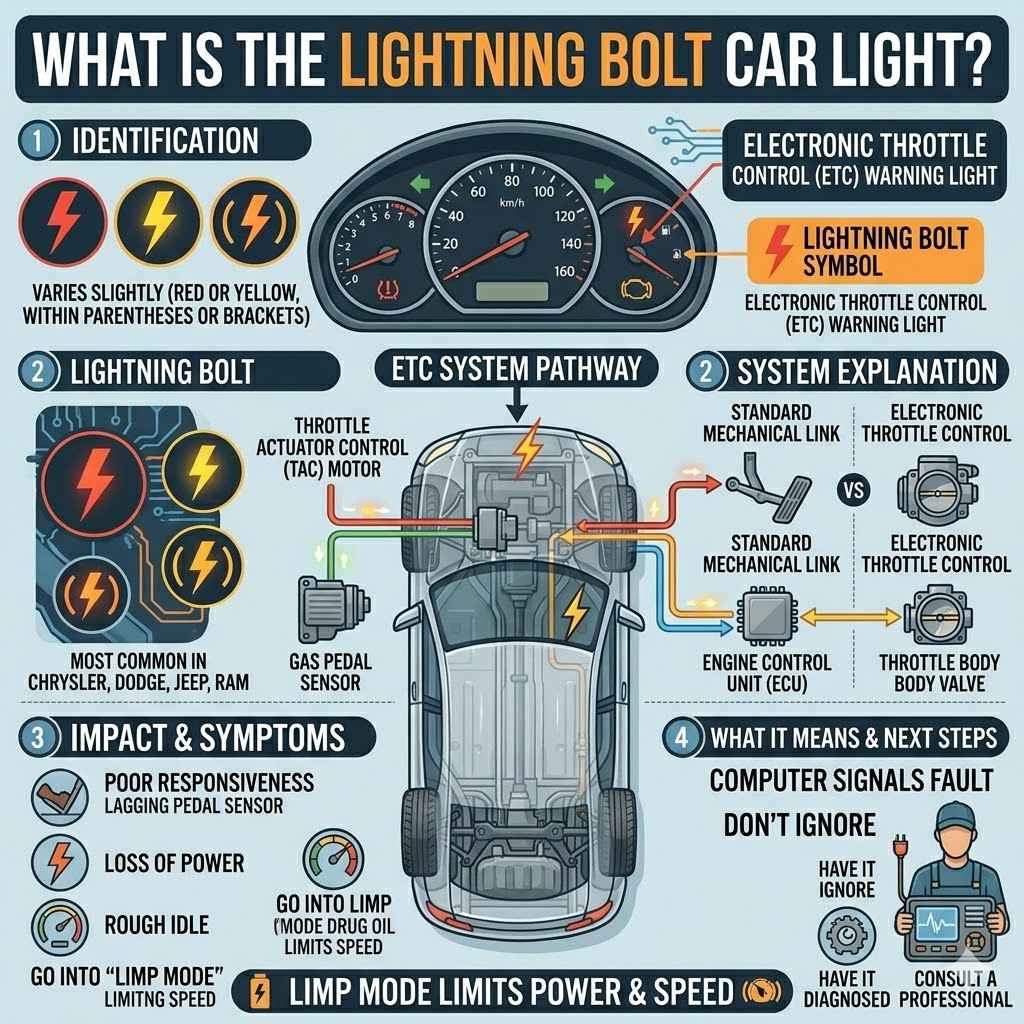
The lightning bolt warning light is a dashboard symbol that looks like a zigzag or bolt of electricity. Most often, you’ll see it in vehicles with electronic throttle control (ETC), especially in Chrysler, Dodge, Jeep, and RAM models. The symbol can vary slightly, but it’s usually a red or yellow lightning bolt inside a parenthesis or bracket.
This light is more than just a fancy icon. It’s a serious warning from your car’s computer that something is wrong with the electronic throttle system. When this light appears, your car may not respond as it should when you press the gas pedal. In some cases, your engine may run poorly, lose power, or even go into “limp mode,” limiting how fast you can drive.
Why Do Modern Cars Use The Lightning Bolt Symbol?
Years ago, cars used a mechanical cable to connect the gas pedal to the engine. Today, many cars use electronic throttle control instead. This system uses sensors and a small motor to control engine speed. The benefit is smoother, more precise control and better fuel efficiency. However, when something goes wrong with this system, you can’t always see or hear the problem.
Car companies use the lightning bolt light as a clear, easy-to-recognize warning for issues with the ETC system. By choosing a lightning bolt—a universal symbol for electricity—they make it obvious that the problem is electronic, not just mechanical.
What Does The Lightning Bolt Car Light Mean?
If you see the lightning bolt light, it means your car has detected a fault in the electronic throttle system. This could involve one or more of the following:
- Throttle body or throttle position sensor problems
- Faulty accelerator pedal sensor
- Wiring or connector issues
- Software glitches in the car’s computer
- Power supply problems
In some cases, the lightning bolt light flashes, while in others, it stays solid. Both signals are important. A flashing light often means the problem is urgent and should be checked right away. A steady light still requires attention but may not need immediate action unless you notice other symptoms like loss of power.
Common Reasons The Lightning Bolt Light Turns On
Several issues can trigger the lightning bolt warning. Understanding these can help you decide what to do next.
1. Faulty Throttle Body
The throttle body controls how much air enters the engine. If it gets dirty, sticks, or fails, the ETC system can’t work properly, and the warning light comes on.
2. Defective Accelerator Pedal Sensor
Modern cars use sensors to detect how much you press the gas pedal. If the sensor fails, the car’s computer may not get the correct signal, causing the lightning bolt light.
3. Wiring And Connector Problems
Damaged or loose wiring can break communication between the pedal, throttle body, and car computer. Even a small short or disconnect can trigger the warning.
4. Bad Throttle Position Sensor
This sensor tells the computer how open the throttle is. If it fails, the system gets confused and activates the lightning bolt light.
5. Low Battery Voltage
Weak or fluctuating power can make the electronic throttle system act up. Sometimes, simply charging or replacing the battery fixes the problem.
6. Software And Calibration Errors
The car’s computer may need a reset or software update. Glitches or outdated firmware can sometimes cause false warnings.
7. Other Engine Problems
In rare cases, engine misfires, intake leaks, or other issues can confuse the ETC system and turn on the lightning bolt light.
Symptoms You May Notice Along With The Lightning Bolt Light
The warning light is only the first sign. You might also experience other symptoms, such as:
- Poor acceleration or loss of power
- Engine “limp mode” (car won’t go faster than a set speed)
- Unstable idle or stalling
- Jerky or delayed response when pressing the gas
- Check engine light on at the same time
If you notice any of these symptoms, it’s important to act quickly. A car in limp mode can be dangerous to drive, especially on busy roads or highways.
What To Do Immediately When The Lightning Bolt Light Appears
Seeing the lightning bolt warning can be stressful. Here’s what you should do if it lights up while you’re driving:
1. Stay Calm And Assess
Don’t panic. Check if your car is still running normally. If you lose power or can’t accelerate, safely move to the side of the road.
2. Check For Other Warning Lights
If the check engine light or other warnings appear with the lightning bolt, it’s a stronger sign you need to stop soon.
3. Try Restarting The Car
Sometimes, turning the car off and on again can reset the electronic system and clear a false warning.
4. Drive With Caution
If the car feels okay and no other lights are on, drive to a safe place or repair shop as soon as you can.
5. Avoid Heavy Acceleration
Press the gas pedal gently. Hard acceleration can make the problem worse.
6. Call For Help If Needed
If the car won’t move, runs poorly, or goes into limp mode, call roadside assistance or a tow truck.
Diagnosing The Lightning Bolt Light: How Mechanics Do It
Fixing the lightning bolt warning is rarely a guesswork process. Mechanics use special tools and steps to find the cause:
1. Scan For Trouble Codes
A diagnostic tool (OBD-II scanner) reads the car’s computer memory for error codes. These codes point to the specific part or sensor causing the problem.
2. Inspect Sensors And Wiring
Technicians look for broken wires, loose connectors, or damaged sensors in the throttle system.
3. Test The Throttle Body
The throttle body is checked for sticking, carbon buildup, or failure.
4. Check Battery And Power Supply
Low voltage or weak batteries are ruled out early, since the ETC system needs steady power.
5. Software Updates
If all hardware is fine, mechanics may update or reset the car’s computer to clear glitches.
Here’s an example of typical error codes linked to the lightning bolt warning:
| Error Code | Possible Cause | Severity |
|---|---|---|
| P2110 | Throttle Actuator Control System – Forced Limited RPM | High |
| P2122 | Throttle/Pedal Position Sensor/Switch D Circuit Low Input | Medium |
| P2101 | Throttle Actuator Control Motor Circuit Range/Performance | High |
Not all error codes mean you need an expensive repair. Sometimes, cleaning a sensor or tightening a connection is enough.
Can You Drive With The Lightning Bolt Light On?
It depends on how your car behaves. If the light is on but the car drives normally, you might be able to reach a repair shop without problems. However, if you notice loss of power, rough running, or the car won’t accelerate, it’s best to stop driving and get help.
Driving too long with an active lightning bolt warning can risk further damage. In some cases, the car will force “limp mode” to protect the engine and transmission. This mode limits your speed and power, making highway driving unsafe.
Remember: The warning light is a sign the car’s computer has detected a fault. Ignoring it can lead to more costly repairs or dangerous situations.
How To Fix The Lightning Bolt Car Light
Fixing the lightning bolt warning depends on the cause. Here’s what usually works:
1. Reset The System
Sometimes, disconnecting the battery for a few minutes resets the car’s computer and clears a false warning. However, if the problem returns, further diagnosis is needed.
2. Clean The Throttle Body
A dirty or sticking throttle body is a common trigger. Cleaning it with the correct spray can restore proper movement and signal.
3. Replace Faulty Sensors
If a sensor (throttle position or pedal sensor) is bad, replacement is needed. Most sensors are plug-and-play but may require calibration.
4. Repair Wiring
Damaged wires or loose connectors must be repaired or replaced.
5. Update Or Reprogram The Computer
Sometimes, a software update from the dealer fixes bugs or glitches in the ETC system.
6. Replace The Throttle Body
If cleaning doesn’t work and the throttle body has failed, replacement is the solution.
Here’s a quick comparison of common fixes and their average costs:
| Repair Action | Typical Cost (USD) | Difficulty |
|---|---|---|
| Clean Throttle Body | $80 – $200 | Low |
| Replace Throttle Position Sensor | $150 – $350 | Medium |
| Repair Wiring | $50 – $200 | Medium |
| Replace Throttle Body | $400 – $900 | High |
| Software Update | $50 – $150 | Low |
Non-obvious tip: Sometimes, a low-quality or old battery can cause ETC issues, even if the car starts fine. Replacing the battery may solve the problem, especially in cold weather or older vehicles.
How To Prevent The Lightning Bolt Light From Coming On
While not every problem can be prevented, you can reduce the risk of seeing this warning by following some simple habits:
- Keep your battery and electrical system in good shape. Weak batteries and poor connections cause many ETC problems.
- Use good quality fuel. Cheap gas can leave deposits in the throttle body, causing it to stick.
- Have your car serviced regularly. Mechanics can spot early signs of sensor or wiring problems before they trigger a dashboard warning.
- Don’t ignore small warning lights. A check engine light or other small warning could be a sign of issues that lead to the lightning bolt symbol.
- Avoid deep water or mud. Moisture can get into sensors and connectors, causing false warnings.
- Drive gently. Hard acceleration and sudden stops can stress electronic systems, especially as a car gets older.
Pro tip: If you live in a region with cold winters, have your battery and throttle body checked before the season starts. Cold weather can worsen small electrical problems.
Special Cases: When The Lightning Bolt Light Means Something Else
While most cars use the lightning bolt for ETC problems, some electric or hybrid cars use a similar symbol for high-voltage system warnings. In these cars, the light may mean:
- High-voltage battery issues
- Problems with electric drive systems
- Charging faults
Always check your car’s manual if you’re not sure. The same symbol can mean different things in different car brands or models.
Real-world Example: Dodge Ram Lightning Bolt Warning
The Dodge RAM pickup is one of the most common vehicles where drivers see the lightning bolt light. In these trucks, the warning often appears with other symptoms: rough idle, poor acceleration, and sometimes a check engine light.
One RAM owner noticed the lightning bolt symbol after replacing his truck’s battery. The truck went into limp mode. After scanning for codes, he found a throttle position sensor error. Cleaning the throttle body and resetting the system cleared the warning.
However, a few weeks later, the light returned. This time, a mechanic found a loose connector at the throttle body. Securing the connection fixed the problem for good.
This example shows that the lightning bolt warning can come from more than one source. Sometimes, it’s a combination of minor issues rather than one big failure.
How The Lightning Bolt Car Light Differs From Other Dashboard Lights
It’s easy to confuse the lightning bolt with other warning symbols. Here’s a quick guide to tell them apart:
| Symbol | Meaning | Action Needed |
|---|---|---|
| Lightning Bolt | Electronic Throttle Control problem | Check throttle system soon |
| Battery (rectangle with + and -) | Charging system fault | Check battery/alternator immediately |
| Check Engine | General engine/emissions issue | Scan for codes, service soon |
| Oil Can | Low oil pressure | Stop engine, check oil now |
Always take dashboard lights seriously, but understanding the difference helps you act wisely and avoid panic.
Lightning Bolt Light And Modern Car Technology
Today’s vehicles use many computers and sensors. The electronic throttle control system is just one part of a larger network that manages everything from shifting gears to controlling emissions. This means a problem in one area can sometimes trigger warnings in another.
For example, a simple battery disconnect can reset your car’s computers and temporarily “confuse” the throttle system. Similarly, a failing alternator can cause low voltage, which the ETC system reads as a fault.
Non-obvious insight: Some cars need a throttle “relearn” after repairs or battery changes. If you recently worked on your car and see the lightning bolt, follow the relearn procedure in your owner’s manual or ask a mechanic to do it.
When To See A Mechanic
If the lightning bolt light appears once and does not return, it may have been a temporary glitch. But if it comes back, stays on, or is joined by other warning lights, you should have the car checked as soon as possible.
See a mechanic immediately if:
- The car goes into limp mode or loses power
- The lightning bolt light flashes
- Multiple warning lights are on at the same time
- The engine runs poorly or stalls
Delaying repairs can lead to more expensive problems or even leave you stranded.
Cost Of Ignoring The Lightning Bolt Warning
Some drivers try to ignore dashboard warnings to avoid repair bills. But this can backfire. For example, a dirty throttle body might cost $100 to clean, but if ignored, it can damage the throttle motor or sensor, leading to a $900 replacement.
Driving with ETC problems can also harm your transmission or catalytic converter, costing thousands more.
In short, fixing the problem early is almost always cheaper and safer than waiting.
DIY Vs. Professional Repairs
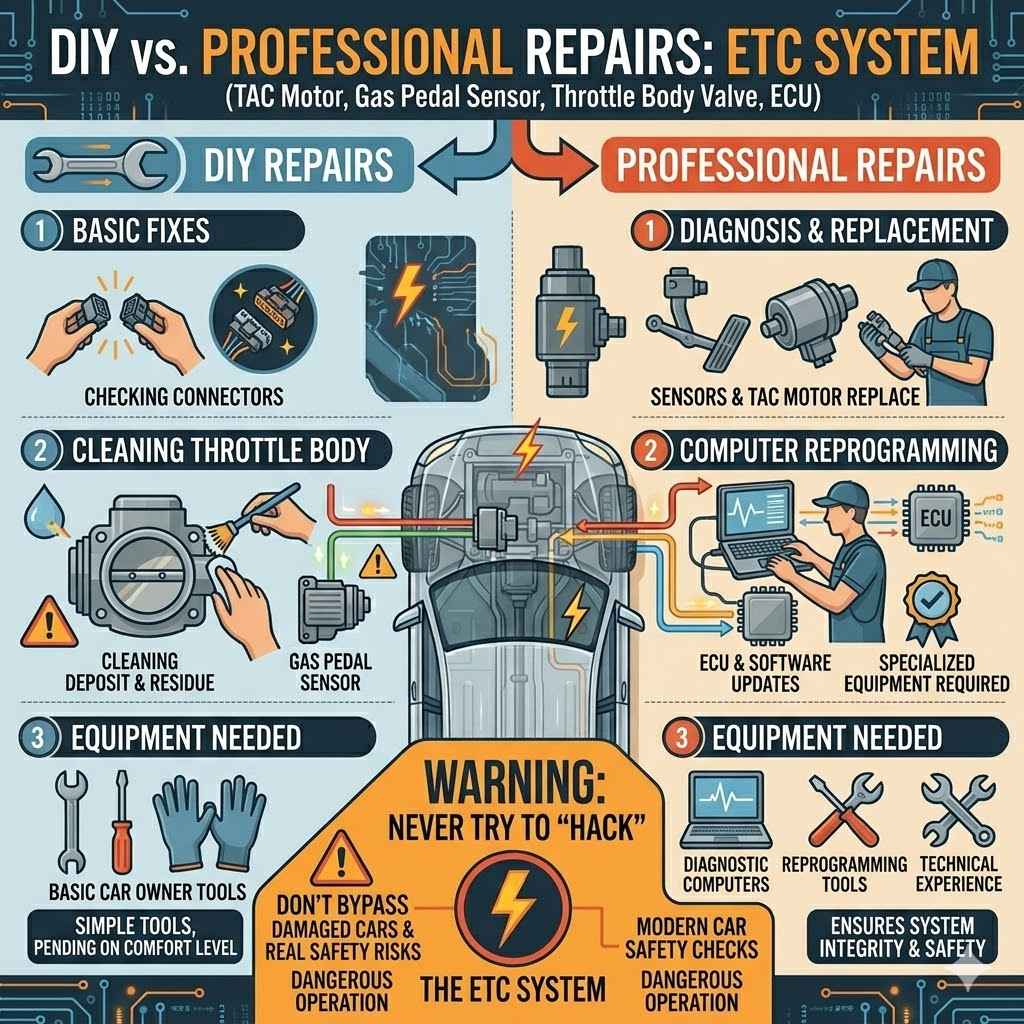
Some basic fixes, like cleaning the throttle body or checking connectors, can be done by a handy car owner with simple tools. However, diagnosing and replacing sensors or reprogramming the computer usually requires special equipment. If you’re not comfortable working with car electronics, it’s best to let a professional handle it.
Warning: Never try to bypass or “hack” the throttle system. Modern cars have safety checks to prevent dangerous operation. Shortcuts can damage your car or create real safety risks.
Resources For More Information
For more details on dashboard warning lights and electronic throttle control systems, you can visit the Wikipedia ETC page. This resource offers technical explanations and background for those who want to dig deeper.
Frequently Asked Questions
What Should I Do First If I See The Lightning Bolt Light?
First, stay calm and check how your car is driving. If it still runs normally, drive to a safe place or repair shop. If you lose power or the car goes into limp mode, pull over safely and call for help.
Is The Lightning Bolt Warning Always An Expensive Fix?
No. Sometimes, it’s caused by a dirty throttle body, weak battery, or loose connector—simple fixes. However, more serious problems like a failed sensor or throttle body can be costly. Diagnosing the exact cause is important.
Can I Clear The Lightning Bolt Light Myself?
You can try disconnecting the battery for a few minutes to reset the computer. If the light returns, a deeper problem exists. An OBD-II scanner can also clear codes, but this won’t fix the underlying issue.
Is It Safe To Drive With The Lightning Bolt Warning On?
If the car drives normally and you don’t notice other symptoms, you can drive short distances to a repair shop. If you experience loss of power, rough running, or limp mode, it’s safer to stop and get help.
Does The Lightning Bolt Light Mean My Car Is Electric?
Not always. In most cars, this symbol means an electronic throttle problem, not that the car is fully electric. Some hybrids and electric cars use a similar symbol for high-voltage system warnings, so check your owner’s manual.
The lightning bolt car light is a modern warning system designed to keep you, your passengers, and your car safe. Understanding what it means, how to respond, and how to prevent future problems will help you avoid stress and costly repairs.
Stay alert, address warnings quickly, and your car will reward you with years of reliable service. See also car headlights vs high beams when to use which one.