How Can I Find Where a Noise Is Coming From in My Car?
Start by sorting the noise by condition: stationary or moving, engine load, speed, steering, braking, or bumps. The first input that changes the sound usually points to the source. Ignoring that pattern can waste parts, raise repair bills, or leave a safety problem hidden. This guide shows a fast zone-and-symptom method to narrow the noise before you replace anything.
What kind of noise is it?

Match the sound first. A whistle often points to air leaks, a click to an actuator or relay, a hum to tires or bearings, a squeal to belt or brake wear, and a clunk or thump to loose suspension or body hardware. Then note what changes it: speed, rpm, steering input, braking, or bumps.
That one change matters because cabin noise and chassis noise behave differently. Cabin-transmitted sounds often shift with HVAC settings, dash movement, or panel flex. Chassis-mounted sounds usually follow road speed, load, braking, or steering angle.
Sound clues that narrow the source
- Whistle or air rush: often wind noise, seal leak, or open trim gap.
- Click: often a relay, blend door actuator, or stepper motor.
- Hum: often tire tread, wheel bearing, or drivetrain speed.
- Squeal: often belt, brake pad, or pulley wear.
- Clunk or thump: often suspension, mount, loose exhaust, or underbody contact.
- Rattle: often trim, shield, loose fastener, or cargo area hardware.
- Grind: often brake, bearing, or metal contact that needs prompt attention.
A common first-timer mistake is calling every sound “engine noise.” If the noise changes only when the car moves, the engine may have nothing to do with it. If it changes at idle with the hood closed, the source is more likely in the engine bay, HVAC case, fuse box, or dash.
Where is the noise coming from?
Check one zone at a time: front left, front right, center dash, rear cargo area, and underbody. That split keeps you from replacing the wrong part. A helper standing outside the car during a slow pass can often tell whether the sound comes from one corner or the center of the vehicle.
Use a phone recorder from inside and outside. A practical approach is to record the same route twice if possible, once at low speed and once at highway speed. Compare the left side against the right side before touching parts.
Zone-by-zone check
- Front left or front right: tire, brake, wheel bearing, steering, or engine bay noise.
- Center dash: HVAC actuator, relay, gauge cluster motor, loose trim, or wiring buzz.
- Rear cargo area: spare tire hardware, trim, exhaust, rear suspension, or cargo movement.
- Underbody: heat shields, exhaust hangers, skid plates, or suspension contact.
Suppose a whistle grows louder only at around 55 mph and seems to come from the passenger door area. That pattern points away from the engine and toward a seal, window, or roof opening on that side. Suppose a click starts in the dash with the key on and keeps going after shutdown. That points toward a blend door actuator or relay, not a wheel problem.
When does the noise happen?
The timing is often the best clue. Idle and startup noises usually point to belts, pulleys, relays, or HVAC parts. Acceleration and deceleration noise usually points to engine load, mounts, exhaust movement, or drivetrain parts. Turning, braking, and bumps narrow the source to steering, brake, suspension, or wheel components.
Timing map
- Idle: dash clicks, relay chatter, belt chirp, fan or HVAC noise.
- Startup: relay clicks, actuator movement, belt slip, starter-related noise.
- Acceleration: engine mount shift, exhaust contact, drivetrain whine, tire roar under load.
- Braking: pad wear, rotor scrape, loose pad hardware, brake shield contact.
- Turning: wheel bearing, CV joint, tire rub, steering component noise.
- Bumps: strut, shock, sway bar link, loose trim, cargo-area rattle.
- Highway speed: wind noise, tire noise, bearing hum, panel resonance.
Noise diagnostic matrix
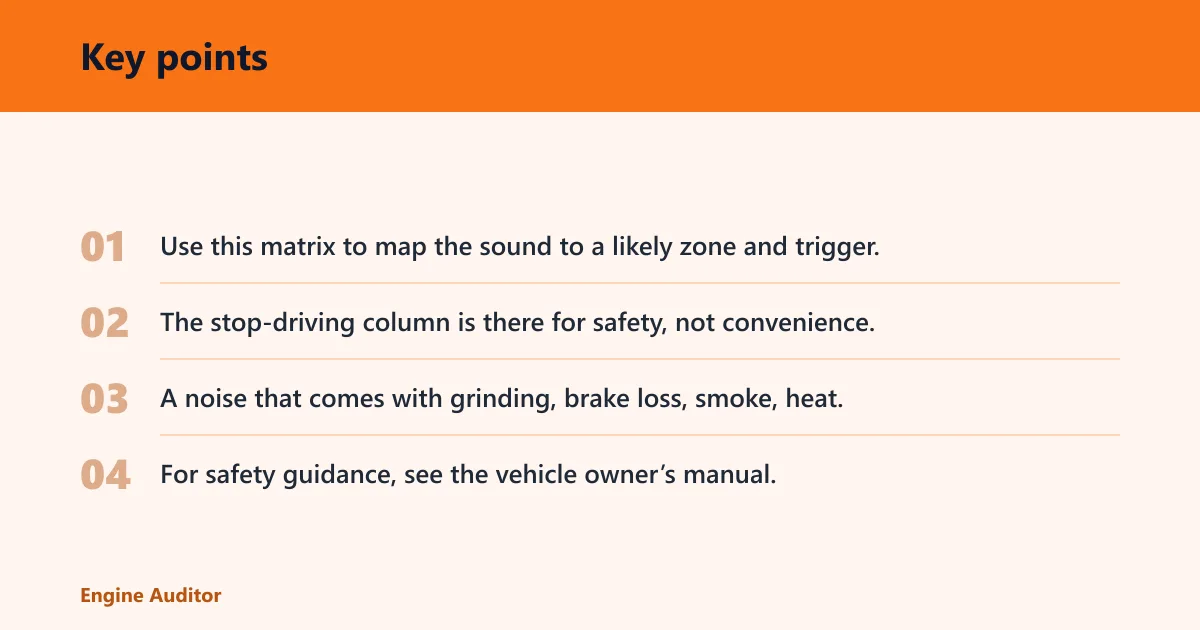
Use this matrix to map the sound to a likely zone and trigger, then check the first two items before replacing anything. The stop-driving column is there for safety, not convenience. A noise that comes with grinding, brake loss, smoke, heat, or severe vibration needs a parked car, not a longer test drive. For safety guidance, see the vehicle owner’s manual, NHTSA brake and tire safety resources, and OEM service information for the specific model.
| Noise pattern | Vehicle zone | Trigger | First 2 checks | Stop-driving status | Confidence |
|---|---|---|---|---|---|
| Whistle at highway speed | Door, window, roof opening, rear hatch area | Speed rises; radio off makes it easier to hear | Inspect weatherstripping; check window and sunroof seal alignment | No, unless water intrusion or loose panel is severe | 4 |
| Air rush from one corner | Front door or mirror area | Highway speed, crosswind, passing trucks | Check door seal compression; inspect trim around mirror base | No | 3 |
| Repeated click behind glove box | Center dash HVAC case | Key on, temperature change, startup, or shutdown | Listen near glove box; test blend door actuator movement | No | 4 |
| Relay-like clicking from fuse box | Under-dash fuse box or power distribution area | Ignition on, or cycling continues with ignition off | Identify which relay clicks; swap or test one at a time | No, unless electrical odor or hot fuse panel is present | 4 |
| Clicking with gauge twitch | Behind gauge cluster | Key on or cluster wake-up | Watch gauge movement; inspect stepper motor area | No | 4 |
| Hum that rises with speed | Tires, wheel bearings, or road surface | Vehicle speed increases | Compare left and right tire noise; check for bearing play | Maybe, if a bearing is hot or rough | 4 |
| Squeal during braking | Front or rear brakes | Brake pedal input | Inspect pads and rotors; check for worn hardware | Maybe, if braking performance changes | 5 |
| Grinding at one wheel | Brake, bearing, or wheel area | Brake use, speed, or turns | Inspect wheel and brake area; check for heat | Yes | 5 |
| Clunk over bumps | Suspension, sway bar, loose underbody part | Rough road or driveway entry | Check end links and mounts; inspect shields and fasteners | No, unless steering feel changes sharply | 4 |
| Thump on acceleration or lift-off | Mounts, exhaust, drivetrain | Load shifts forward or rearward | Inspect mounts; check exhaust hangers and contact points | Maybe, if vibration is severe | 3 |
| Rattle from rear cargo area | Trim, cargo hardware, spare tire area | Bumps or uneven road | Remove loose cargo; inspect spare tire and trim fasteners | No | 3 |
| Click after shutdown | HVAC actuator, relay, or cooling-related component | After key off | Listen for source; test one relay or actuator at a time | No, unless battery drains fast or heat is present | 4 |
What should you inspect first?
Start with the checks that can prove or rule out the biggest causes fast. Drive with the radio off. Change HVAC fan speed, recirculation, and temperature on and off to see whether the sound follows the system. Then inspect seals, openings, wheels, underbody parts, and dash panels in that order.
Weatherstripping should be checked around doors, sunroof, and trunk because worn or flattened seals can whistle and leak air. Sound deadening material can reduce cabin noise on floors, doors, trunk liners, or under carpets, but it will not fix a mechanical fault by itself.
Where noise coming from checklist
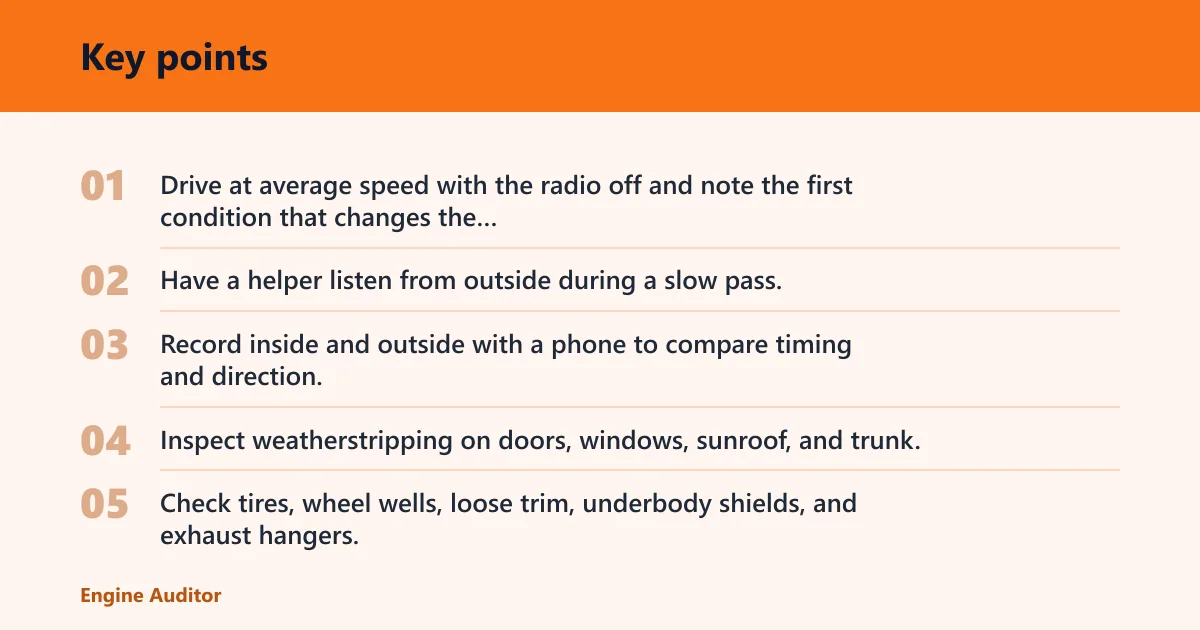
- Drive at average speed with the radio off and note the first condition that changes the sound.
- Have a helper listen from outside during a slow pass.
- Record inside and outside with a phone to compare timing and direction.
- Inspect weatherstripping on doors, windows, sunroof, and trunk.
- Check tires, wheel wells, loose trim, underbody shields, and exhaust hangers.
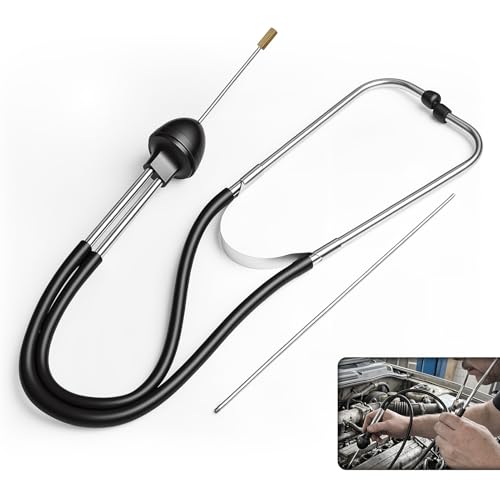
- Use a mechanic’s stethoscope on stationary parts where safe and accessible.
- Pull fuses one at a time when chasing a relay or dash click, then reinstall each fuse before moving to the next.
Use fuse pulling carefully. Test one fuse at a time, because removing several at once can hide the source and create new faults. If a relay keeps cycling with the ignition off, that is a clue, not a fix point. The goal is to identify which circuit makes the noise, not to silence the panel at random.
When the sound is cabin-transmitted
Cabin-transmitted noise reaches you through the interior trim, HVAC case, or openings in the body. It often sounds louder inside than outside, and it may change with fan speed, recirculation, or a window position. That is why a wind leak, dash click, or trim buzz can fool you into blaming the wrong corner of the car. See also wind noise through door seals and blend door actuator clicking.
When the sound is chassis-mounted
Chassis-mounted noise comes from moving parts under the car or in the engine bay. It usually follows speed, load, steering, braking, or bumps. Tire roar, wheel bearing hum, brake scrape, suspension clunk, and exhaust rattle belong in this group, and they need undercar, wheel, or brake checks first. If you want the next likely branch, compare wheel bearing noise, brake grinding, and suspension clunk.
Why is my car making a noise?
Most vehicle noise comes from tires, wind, or mechanical components. The useful question is not “why is it noisy?” but “what changed when the noise started?” If the sound appears only at highway speed, wind and tires move higher on the list. If it appears at idle, startup, or with HVAC changes, look at dash, relay, belt, or engine-bay sources first.
The fastest path is to match the noise to a condition, then to a vehicle zone. That approach prevents random parts replacement and keeps you focused on the likely source.
Why does my car make a noise?
A car makes noise when air moves through openings, parts vibrate, or worn components contact each other under load. Engine noise can leak into the cabin through body panels and openings, so a sound inside the car does not always mean the source is inside the cabin. That is why condition and zone matter more than the word “noise” itself.
Road noise reduction starts by finding the primary cause first. If the main source is a bad tire, a leaking seal, or a loose shield, adding material only hides part of the symptom.
What noise does a car make?
A healthy car can still make a range of normal sounds: tire hum, light wind rush, fan noise, and occasional relay or actuator movement. What matters is a new, louder, or changing sound. A grind, repeated click, sharp squeal, or heavy clunk is not normal and deserves a quick check before the part fails further.
If the sound is steady and tied to speed, think rolling parts or wind. If it is tied to startup, shutdown, or dash controls, think HVAC or electrical components. If it changes with braking or steering, think brake or front-end hardware.
What causes road noise in a car?
Road noise commonly comes from tires, wind, engine, or brakes, and it can be amplified by cabin panels and openings. Worn tires, rough pavement, weak seals, and loose trim can all make the cabin louder. Source isolation matters because the same hum can come from a tire, a wheel bearing, or a body opening.
Check the tire set first, then the wheel wells, then the seals and panels around the doors and hatch. If the sound changes when you steer left or right, that can point to a wheel bearing or tire problem on one side.
Why my car make noise when driving?
Noise while driving often comes from the parts that are loaded only when the car moves. Tires, wheel bearings, brakes, suspension joints, exhaust hangers, and wind leaks are the usual suspects. The first clue is whether the sound changes with speed, turning, braking, or bumps. That clue usually beats guesswork.
If the sound appears at one speed only, compare it on a smoother road. If it changes with acceleration, shift attention to engine load, mounts, or exhaust movement. If it changes only on rough pavement, inspect the suspension and underbody.
How do I tell where a car noise is coming from?
Use a helper, a recorder, and a zone-by-zone check. Listen with the radio off, repeat the sound under one condition at a time, and compare front versus rear, left versus right, and inside versus outside. The first repeatable change usually points to the source more reliably than the loudest point in the cabin.
Then confirm with a simple tool. A mechanic’s stethoscope can help on stationary parts, and fuse pulling can isolate a dash click. The goal is to move from “somewhere in the car” to one likely system before any repair.
When should you stop driving?
Stop driving if the noise is a grind, comes with reduced braking, creates smoke or burning smell, causes strong vibration, or is paired with a wheel that feels hot. Those are not “watch it” symptoms. They can indicate a brake, bearing, tire, or drivetrain problem that can worsen quickly and affect control.
If the noise is loud but stable and there is no heat, vibration, or loss of function, drive only enough to confirm the pattern and arrange service. NHTSA guidance on brakes and tires, plus the vehicle owner’s manual, are the right references when a symptom changes from annoying to unsafe.
Frequently asked questions
Why is my car making a noise: most car noise comes?
Most car noise comes from tires, wind, or mechanical components. The quickest way to narrow it is to note when it happens: idle, startup, speed, braking, turning, or bumps. That condition usually tells you whether to look at the engine bay, cabin trim, wheels, brakes, suspension, or underbody first.
Why does my car make a noise: a car makes noise?
A car makes noise because moving parts, airflow, and vibration all create sound. A new or louder sound usually means wear, looseness, air leakage, or contact where parts should not touch. If the noise changes with speed or steering, start outside the cabin; if it changes with HVAC or key position, start inside the dash area.
What noise does a car make: a car can make
A car can make a hum, whistle, click, squeal, clunk, rattle, grind, or thump. Normal sounds are usually steady and familiar. A new grind, hard squeal, or repeated click that keeps going after shutdown deserves prompt attention, especially if it comes with warning lights, heat, or rough braking.
What causes road noise in a car: road noise often comes
Road noise often comes from tires, wind, engine, or brakes, and cabin openings can make it louder. Worn weatherstripping, tire tread wear, loose shields, and body-panel gaps are common contributors. Start with the tires and seals, then compare left and right sides so you do not replace parts by guess.
How do I tell where a car noise is coming from: separate the noise by condition?
Separate the noise by condition and zone. Listen with the radio off, then repeat the sound at idle, on the move, over bumps, while turning, and during braking. Use a helper outside the car, compare front to rear, and test one fuse or actuator at a time if the sound is inside the dash.
Does the noise change when I accelerate, brake, or turn?
That change is one of the best clues you can get. Acceleration points toward engine load, mounts, exhaust, or drivetrain parts. Braking points toward pads, rotors, or brake hardware. Turning points toward wheel bearings, tires, steering, or suspension. If the sound does none of those things, inspect wind leaks, trim, or HVAC parts next.
Sources: NHTSA brake safety and tire safety pages; owner’s manual and maintenance schedules from the vehicle manufacturer; OEM service information; established repair references for HVAC blend door actuators, wheel bearing diagnosis, brake noise diagnosis, and wind noise/water leak inspection.
Products related to this article
Sponsored / affiliate links. As an Amazon Associate I earn from qualifying purchases. I may earn additional commission from eligible campaigns.