Why Is There a Scraping Noise Under My Car?
A scraping noise under your car usually comes from brake wear, a bent dust shield, a loose splash shield, or tire contact. Stop driving if it gets louder, changes with wheel speed, or comes with pulling, vibration, smoke, or a hot wheel. The fastest fix is to sort the sound by when it happens and whether it follows braking, turning, bumps, or acceleration.
- Most common causes: brake pad wear indicators or rotor contact, a bent brake dust shield/backing plate, a loose splash shield or heat shield, and tire or liner rub.
- Immediate red flags: constant metal-on-metal grinding, a hot wheel, smoke or burning smell, or a wheel that feels loose.
- If the noise changes with braking, focus on pads, rotors, caliper slide pins, and hardware drag first.
- If it changes with turning or load, check wheel bearing symptoms and CV joint behavior next.
What does the scraping sound point to?
A scraping sound usually means something is touching metal, plastic, or rubber under load, and the pattern matters. A constant, speed-related scrape often comes from brakes, a dust shield, or a wheel bearing. A noise that changes with braking, turning, bumps, or acceleration usually narrows the search faster than location alone.
Scraping versus grinding versus rattling
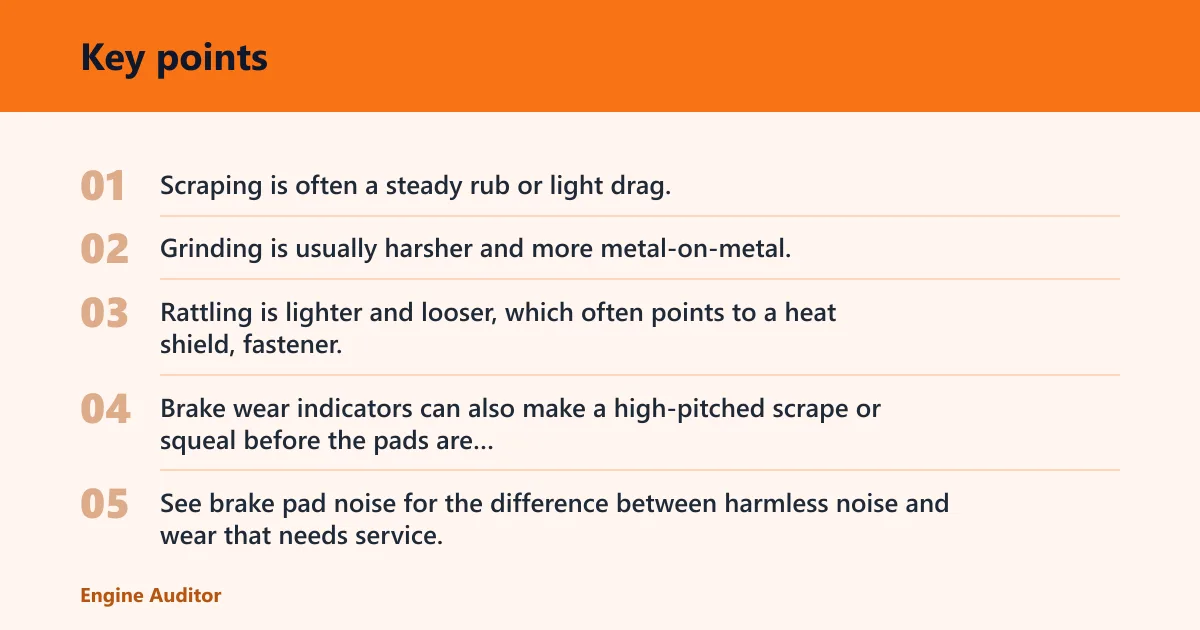
Scraping is often a steady rub or light drag. Grinding is usually harsher and more metal-on-metal, especially with worn pads or a failing bearing. Rattling is lighter and looser, which often points to a heat shield, fastener, or undertray that moves rather than drags. Brake wear indicators can also make a high-pitched scrape or squeal before the pads are fully gone, which is why a brake pad noise check matters early. See brake pad noise for the difference between harmless noise and wear that needs service.
Why speed and load matter
If the noise rises with vehicle speed, think rotating parts such as the rotor, dust shield, tire, or bearing. If it changes when weight shifts in a turn, that points more toward a wheel bearing, tire rub, or CV joint. If it changes mainly during braking, the brake system moves to the top of the list. For bearing-specific clues, compare what you hear with wheel bearing symptoms rather than guessing from location alone.
When the sound is urgent
Constant metal-on-metal contact, a hot wheel, smoke, a burning smell, fluid loss, or a wheel that feels loose needs immediate attention. A part dragging on the road can fail fast. Do not keep driving if the car pulls hard, vibrates severely, or the sound suddenly gets much louder. NHTSA advises treating brake changes, unusual pulling, and warning signs seriously because a braking problem can worsen quickly under load.
Where is the scraping noise coming from?
Location helps separate a brake issue from an underbody panel, tire rub, or a suspension-related problem. Front-wheel-area scraping can often point to brakes, dust shields, or CV parts. Rear-wheel-area noise may more often involve brakes, bearings, or an exhaust shield. A center-underbody scrape is often a loose panel or heat shield.
Front wheel area
Front-end scraping commonly comes from a bent brake dust shield rubbing the rotor, worn pads, a caliper issue, or a tire liner touching the tire. On front-wheel-drive and all-wheel-drive vehicles, CV axle or CV joint wear can also add noise that changes during turns or acceleration. A damaged outer CV joint often clicks or scrapes more obviously during turns, which is why CV axle failure signs are a useful separate clue set.
Rear wheel area
Rear-wheel scraping can come from brake hardware, rotor contact, a bearing, or a tire rubbing the wheel well liner. On some vehicles, the rear area can also carry a loose exhaust heat shield that rattles or scrapes over bumps. If the noise is mostly from the rear and gets worse as speed rises, compare it with known wheel bearing symptoms before assuming it is only a shield.
Center underbody
A scrape from the middle of the car often comes from a loose undertray, splash shield, or exhaust heat shield hanging low. Road debris, missing fasteners, or curb contact can leave a panel dragging. That type of contact often gets worse over bumps or at idle, and a hanging shield can eventually damage nearby lines or exhaust parts if ignored. See heat shield repair and splash shield replacement for the usual fixes.
Scraping noise diagnosis matrix
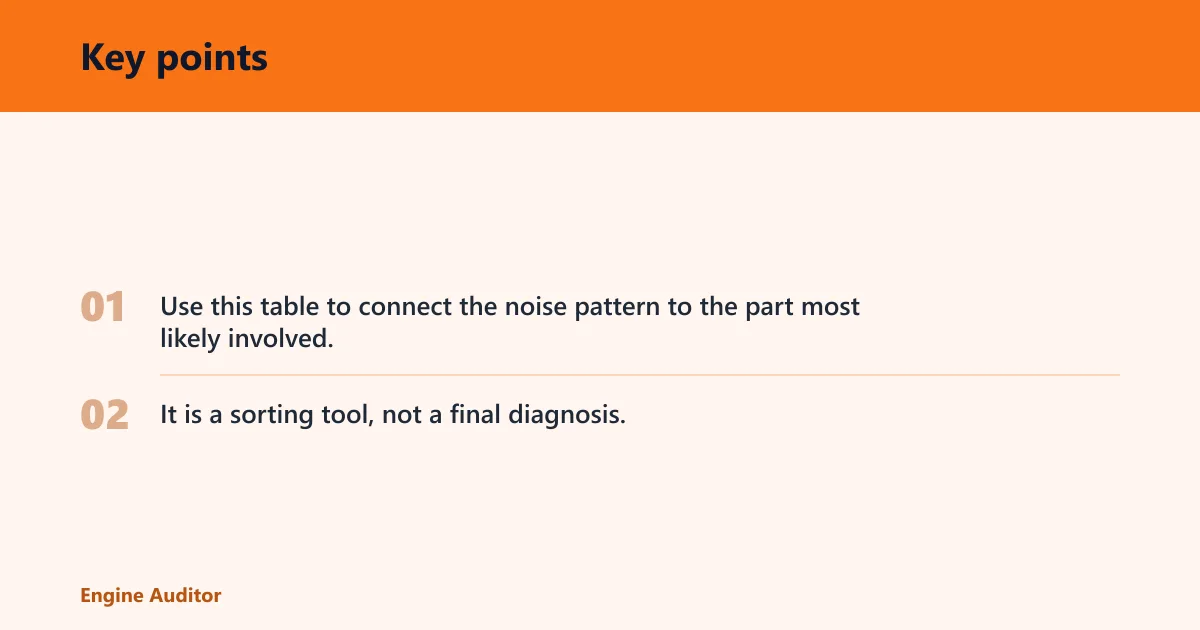
Use this table to connect the noise pattern to the part most likely involved. It is a sorting tool, not a final diagnosis, but it helps you decide whether to inspect at home or book a shop visit.
| When the scraping happens | Likely part involved | Likely severity | Stop driving now trigger | Quick driveway test | Usually safe to drive? | Next action |
|---|---|---|---|---|---|---|
| During braking | Brake pads, rotor, caliper, caliper slide pins, hardware, or backing plate | Moderate to high, depending on pad thickness and rotor damage | Grinding, pulling, pedal change, smoke, burning smell, or a hot wheel | Listen at low speed and brake lightly, then harder; look for worn pad material through the wheel | Maybe for a short trip if the noise is light | Inspect brakes at once; book a same-day repair if metal-on-metal is present |
| During turning | Tire rub, wheel well liner, CV joint, or wheel bearing | Moderate, but higher if the tire is contacting hard parts | Hard rubbing, steering change, vibration, or wheel looseness | Turn full left and right in a parking lot and note whether one direction makes it louder | Maybe, if the tire is not contacting hard parts | Check for scuff marks and torn boots; have the corner inspected if the sound repeats |
| Over bumps | Loose undertray, splash shield, exhaust heat shield, or liner | Usually low to moderate unless the panel is dragging on the road | Dragging under the car, sparks, or part hanging low enough to strike the pavement | Look under the front and center of the car for a hanging panel or shiny scrape marks | Sometimes, if nothing is dragging low | Secure or replace loose panels before the part tears free |
| During acceleration | CV axle or joint, tire rub under load, or rotor contact that shifts with weight transfer | Moderate, and often worsening with load | Rapid worsening, vibration, clicking, or a smell from a dragging brake | Compare light throttle and moderate throttle at the same speed | Usually not if the sound is getting worse | Get the axle, tire clearance, and brake area checked |
| At constant speed | Dust shield, wheel bearing, rotor, or a tire touching a liner | Low to high, depending on whether the contact is light or bearing-related | Heat at one wheel, growling that rises with speed, or looseness | Coast at the same speed with light braking avoided and note whether the noise stays with road speed | Only if the noise is light and unchanged | Inspect the wheel area first; stop driving if heat, looseness, or grinding appears |
| At startup only | Loose heat shield, splash shield, liner, or exhaust part that shifts as the engine settles | Usually low, unless the part is contacting a rotating component | Noise persists after startup, gets louder, or comes with smoke or smell | Listen for whether the sound fades after idle stabilizes and then inspect for a loose panel | Often yes for a short, cautious drive if nothing is dragging | Inspect shield fasteners and nearby clearances before the part loosens further |
| Only in reverse | Brake pad shift, backing plate contact, rotor rust lip, or tire rub at a different steering angle | Low to moderate | Noise becomes metallic, the wheel heats up, or the car pulls while reversing | Back up slowly and note whether the scrape happens only with reverse rotation | Maybe, if the sound is light and brief | Check brake hardware and shield clearance at the noisy corner |
| One wheel hot after driving | Dragging brake caliper, stuck slide pins, pad hardware drag, or bearing failure | High | Hot wheel, burning smell, smoke, or brake fade | Compare wheel temperatures carefully without touching hot metal | No | Stop driving and inspect the brake and bearing assembly immediately |
| After a curb strike | Bent dust shield, damaged wheel liner, tire sidewall rub, wheel damage, or suspension shift | Moderate to high | Tire bulge, steering pull, vibration, or visible wheel damage | Look for fresh scrape marks, bent sheet metal, and tire sidewall damage | Only if the tire and steering still look normal | Inspect the wheel, tire, and shield before more driving |
| After recent brake work | Backing plate bent during service, missing clip, pad hardware misfit, caliper slide pin issue, or rotor shield contact | Moderate | Noise grows after a few stops, wheel heats up, or braking feel changes | Confirm whether the noise began immediately after the repair and whether it changes when braking | Maybe for a short trip back to the shop if braking still feels normal | Have the brake hardware and shield clearance rechecked |
What should you inspect first?
Start with the parts you can see without removing major components. Look for a bent brake dust shield, also called a backing plate, near the rotor, a loose liner or undertray, or tire scuff marks in the wheel well. These checks often identify a rubbing part before you spend money on deeper diagnosis.
Brake dust shield and rotor contact
A brake dust shield, also called a backing plate, is thin metal behind the rotor. If it bends, it can rub the rotor and make a constant or speed-related scraping sound. You can often see the gap through the wheel, and a light bend may be visible as a shiny rub mark. A worn pad wear indicator can also scrape at the rotor or produce a steady high-pitched noise; that is different from a shield rub because it follows pad wear, not shield position. Major brake service references and OE-style service guidance treat shield clearance, pad wear, and rotor contact as separate checks because they point to different fixes.
Tire, liner, and wheel well rub
Check for scuff marks on the plastic liner, tire sidewall, or the inside of the wheel well. A loose liner or incorrect tire size can scrape only on turns, bumps, or at full steering lock. Fresh black marks, torn plastic, or exposed clips are useful clues. If the tire shows a one-sided rub pattern, inspect the suspension height and wheel offset as well as the liner itself.
Loose undertray, splash shield, or heat shield
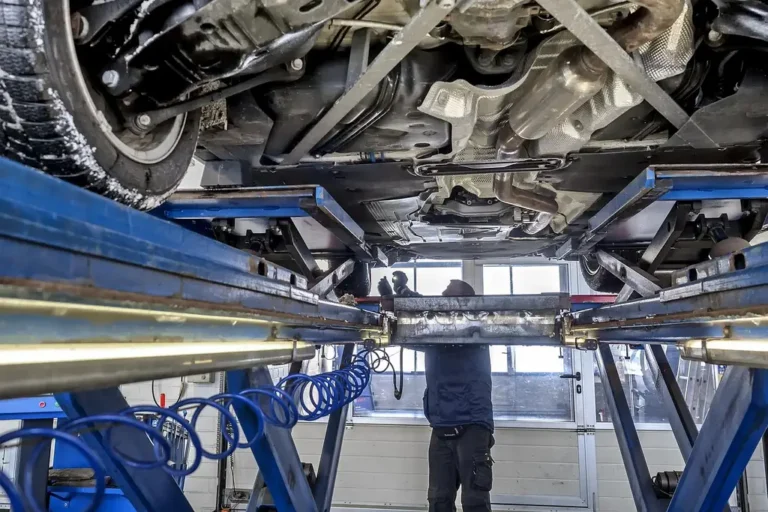
Crawl only far enough to look for a hanging panel or loose metal shield under the engine bay or along the exhaust. A splash shield can drag after curb contact or failed fasteners. An exhaust heat shield can rattle, scrape, or touch the exhaust tube when clamps loosen. A loose shield can also act like a noise amplifier, making a small contact sound seem much worse than it is.
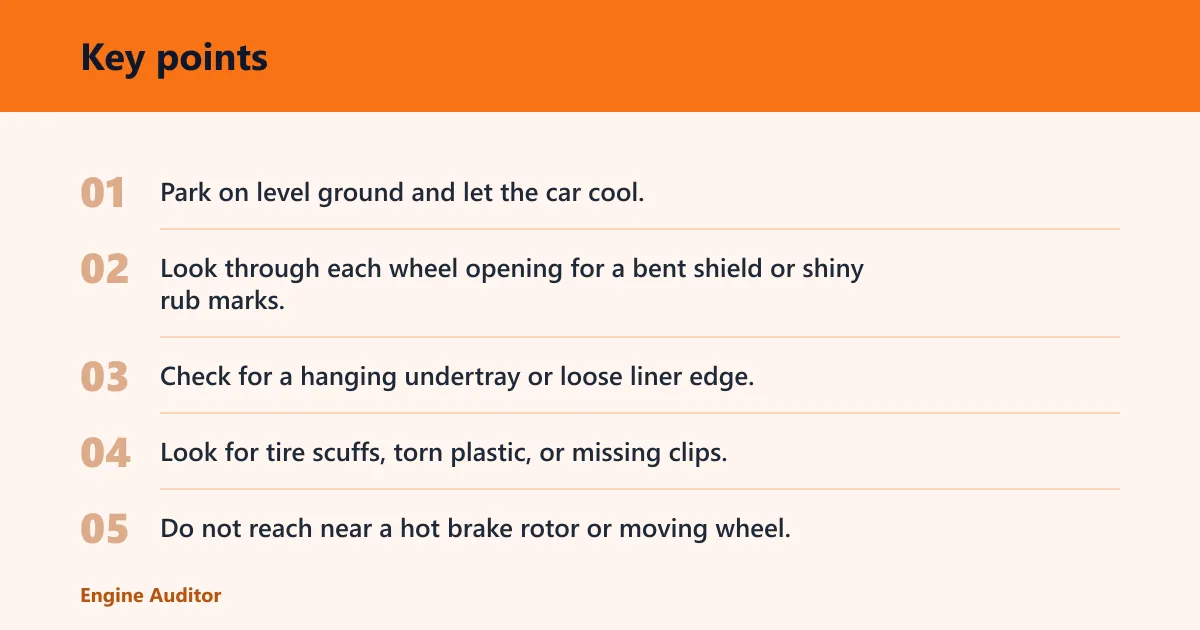
- Park on level ground and let the car cool.
- Look through each wheel opening for a bent shield or shiny rub marks.
- Check for a hanging undertray or loose liner edge.
- Look for tire scuffs, torn plastic, or missing clips.
- Do not reach near a hot brake rotor or moving wheel.
Say your front-right wheel makes a light scrape only when you turn left into a parking space. That pattern points more toward tire-to-liner contact or a bent liner edge than a bearing, because the noise appears with steering lock instead of straight-line speed.
Is it safe to keep driving?
Safety depends on the sound pattern and the signs that come with it. A light shield rub may allow a short trip to a shop. A hot wheel, burning smell, fluid leak, or any metal-on-metal grinding is a stop-driving problem. When in doubt, choose the more cautious answer. NHTSA’s consumer guidance on brake issues emphasizes prompt inspection when braking behavior changes, and wheel-bearing or brake drag symptoms should not be treated as normal.
Safe to monitor for a short trip
A faint scrape that stays steady, does not change much with speed, and comes from a visible shield or liner may be safe for a short, careful drive to a repair shop. Keep the route short, avoid highway speeds, and stop if the sound changes.
Needs same-day inspection
Book same-day inspection if the sound appears during braking, if one wheel is hotter than the others, or if the noise grows under load. Brake pad wear, rotor contact, or a sticking caliper can worsen quickly and can damage other parts if ignored. Caliper slide pin drag and missing hardware are common reasons a brake on one corner begins to scrape or run hot.
Stop driving now
Stop driving if the noise is constant metal-on-metal, the wheel feels loose, the car pulls hard, or smoke or a burning smell appears. A failing bearing, severe brake wear, or a dragging caliper can fail enough to leave the car unsafe before the next stop. If the scrape follows a curb strike or comes with tire damage, assume the wheel area needs immediate inspection.
What repairs usually fix it?
The repair depends on the part that is touching. Minor shield bending or a fastener fix can be cheap and quick. Brake, bearing, and CV repairs cost more because they involve labor, pressed parts, or related hardware. Rust, seized fasteners, and damaged rotors can raise the total. For parts behavior and replacement guidance, OE service procedures and major parts references usually separate brake hardware, bearing assemblies, and axle joints because the failure modes are different.
Shield bend, clip, or fastener repair
A bent dust shield, loose splash shield, or heat shield often needs bending back, a missing clip, or a new fastener. This is usually the least expensive path when the part is intact and the noise is only from contact or vibration.
Brake pad, rotor, caliper, or hardware repair
If pads are worn down, the rotor is scored, or caliper hardware is missing or sticking, the repair may involve pads, rotors, clips, pins, or a caliper. A sticking caliper can overheat and drag, and that can create a burning smell or pull while braking. Brake pad wear noise often starts as a lighter scrape or squeal before it becomes obvious grinding, so early repair is the safer path.
Wheel bearing, CV axle, or liner repair
A failing wheel bearing often needs replacement of the bearing or hub assembly, and the noise usually changes with speed and cornering load. A worn CV axle or joint can also make noise on turns or acceleration, especially on front-wheel-drive and all-wheel-drive vehicles. A damaged liner may only need reattachment or replacement, but the tire must still be checked for rub damage. For a deeper comparison of these patterns, see wheel bearing symptoms and CV axle failure signs. A heat shield or splash shield repair is usually simpler, but it still matters because a loose panel can wear through itself or catch on nearby components; see heat shield repair and splash shield replacement.
Picture a compact SUV that scrapes only over speed bumps and the center of the car sounds loose. That pattern fits a hanging splash shield or exhaust heat shield more than a brake problem, because the noise tracks with body movement instead of pedal input.
Frequently asked questions
Why is there a scraping sound under my car?
Most often, that sound comes from a bent brake dust shield, a loose splash shield, a tire rubbing the wheel well, or a brake part touching the rotor. The fastest clue is when it happens: braking, turning, bumps, or steady speed each point to different parts.
Why is there a scraping noise in my car?
If the noise seems inside the cabin, check whether it is actually coming from the wheel area or underbody and echoing upward. Interior trim usually rattles, while a true scrape often comes from brakes, a liner, or a shield outside the cabin.
Why is there a scraping noise when I start my car?
A scrape at startup can come from a loose heat shield, a hanging undertray, or a part that shifts as the engine starts and settles. If the sound fades after a moment, inspect for a panel touching the exhaust or a fastener that is barely holding.
Why do I hear a scraping noise when I drive?
Noise that appears only while driving usually points to rotating or speed-loaded parts such as brakes, a dust shield, a wheel bearing, or tire rub. If it changes with braking or steering, that clue matters more than the exact road speed.
Why does my car sound like it’s scraping?
The car likely has a part that is touching when it should not be touching. That may be a harmless shield rub, or it may be brake wear, a loose undertray, or a failing bearing. If the sound is constant or getting worse, inspect it promptly.
Why is my car making a scraping noise?
A scraping noise usually means contact somewhere under the car, and the best clue is when and how it happens. Braking points toward pads or rotors. Turning points toward a tire, liner, or CV issue. Bumps point toward loose shields or panels.
Sources
- NHTSA: Brakes
- AA1Car: Brake Noise Diagnosis
- AutoZone: What Is a Brake Pad Wear Indicator?
- SKF: Wheel Bearing Failure Symptoms
- Gates: CV Joint Symptoms
- Champion Auto Parts: Heat Shield Rattle
Products related to this article
Sponsored / affiliate links. As an Amazon Associate I earn from qualifying purchases. I may earn additional commission from eligible campaigns.