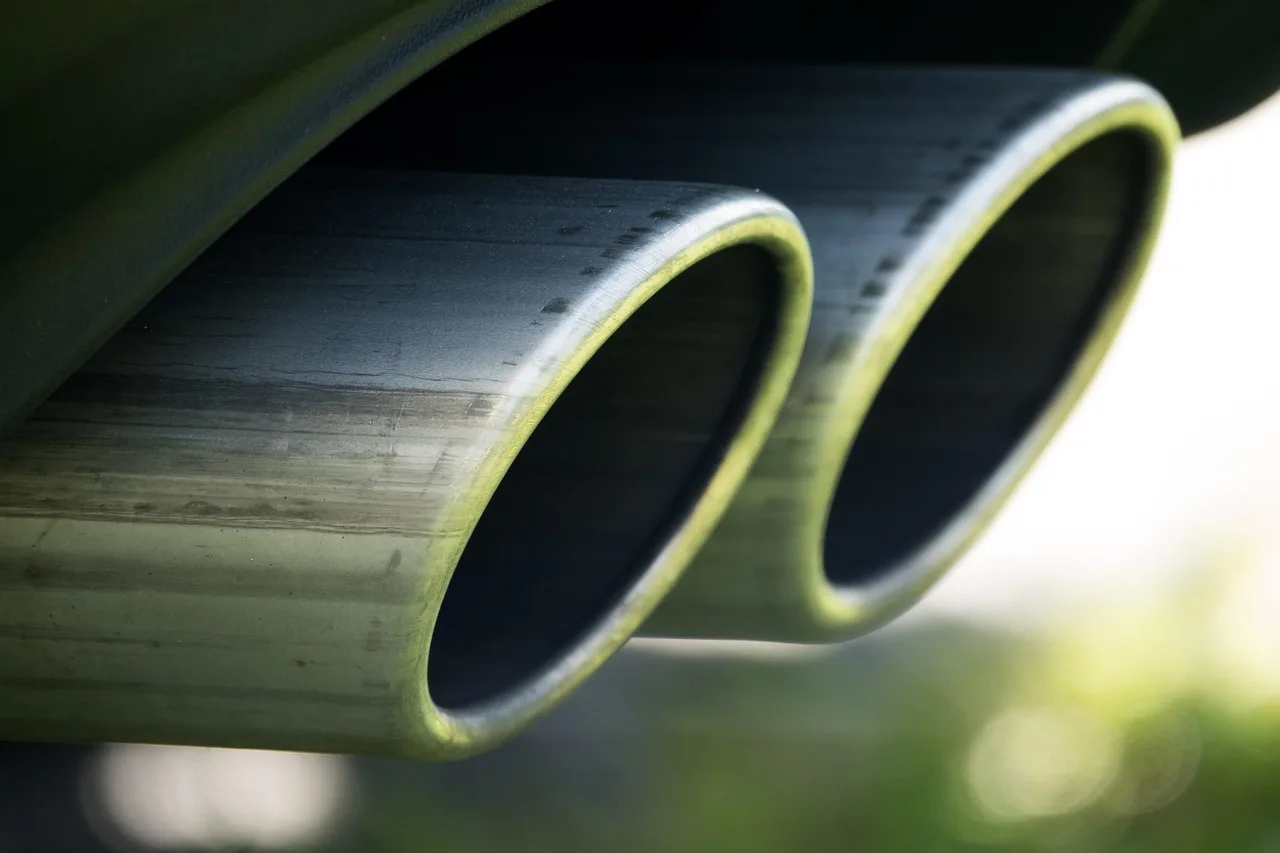
How the Exhaust System Connects to Engine Performance
Exhaust changes add power when the engine can use the extra flow. Gains usually appear above the rpm where the factory system starts to restrict flow, while oversized tubing often trims low-speed torque. Choose badly and you can lose throttle response, towing pull, or scavenging, then spend money for noise instead of horsepower. This article breaks down which pipes, mufflers, headers, cats, and diameter choices matter, and how to match them to street, tow, street/strip, road race, and track use.
Exhaust system basics


The exhaust path is part of the engine’s breathing loop. After combustion, pressure in the cylinder drops through blowdown, exhaust gas leaves the chamber, and the system has to move that pulse away fast enough that the next intake charge is not fighting leftover pressure. That is why exhaust layout can change torque, sound, emissions, and fitment at the same time.
The main conflict is simple. Freer flow helps once the factory system becomes the restriction, but quiet operation and clean exhaust often need restriction, volume, or both. A system that is quiet and emissions-compliant can still fit the engine well if the pipe size, catalyst choice, and muffler design match the intended rpm range.
How does exhaust flow affect power?
Exhaust flow affects power by changing how well each cylinder clears after combustion and how much fresh charge the next intake stroke can pull in. When pressure drops quickly and pulses are timed well, scavenging improves cylinder emptying, which can help cylinder filling and torque. If flow is too restricted, the engine works harder to push gas out.
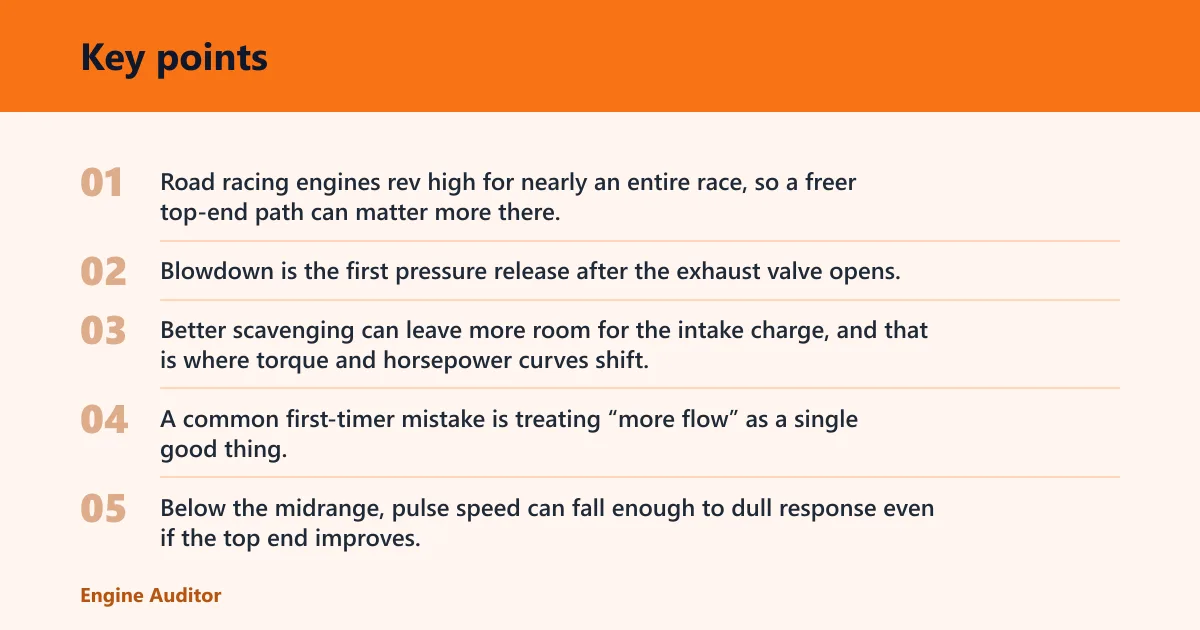
That effect is not flat across the rev range. Street engines typically do not rev high, and strong torque is often the goal, so a setup that helps midrange response can matter more than a peak-flow part that only pays off near redline. Road racing engines rev high for nearly an entire race, so a freer top-end path can matter more there.
Blowdown, scavenging, and cylinder filling
Blowdown is the first pressure release after the exhaust valve opens. If the manifold or header helps that pulse move cleanly into the pipe, the cylinder sheds pressure sooner, which can support scavenging when the next pulse follows. Better scavenging can leave more room for the intake charge, and that is where torque and horsepower curves shift.
A common first-timer mistake is treating “more flow” as a single good thing. A 5.0L street car fitted with a 3-inch system intended for a much higher-rpm build can feel less responsive below the midrange. Below the midrange, pulse speed can fall enough to dull response even if the top end improves.
Why torque changes by RPM range
At low rpm, exhaust pulses are farther apart. Pipe size that is too large can slow gas speed and weaken the pulse energy that helps scavenging. At higher rpm, the engine moves more gas, so the same larger pipe can reduce restriction and support more power.
That is why the right exhaust for a tow vehicle is not the same as the right exhaust for a track car. Tow-focused setups usually favor a broad torque curve and manageable noise. Track-only builds can accept more sound and less low-speed civility in exchange for top-end flow.
When freer flow helps and when it hurts
Freer flow helps when the stock system is the bottleneck and the engine spends time in the rpm band that benefits from lower restriction. It hurts when the engine is sized or tuned for stronger pulse energy than the new system provides. In that case, the change can move the torque peak upward and soften drivability below it.
The other tradeoff is noise and legal risk. Removing a catalyst or resonator may raise sound and reduce cabin comfort, but it can also create emissions-compliance issues and inspection problems.
Which exhaust parts matter most?
The parts that matter most are the first restriction point, the pipe path, the emissions device, and the noise-control pieces. The exhaust manifold or header bolts directly to the engine’s cylinder head, and the downpipe connects the exhaust manifold to the rest of the exhaust system. After that, the catalytic converter, resonator, and muffler shape both flow and sound.
Exhaust manifold or header
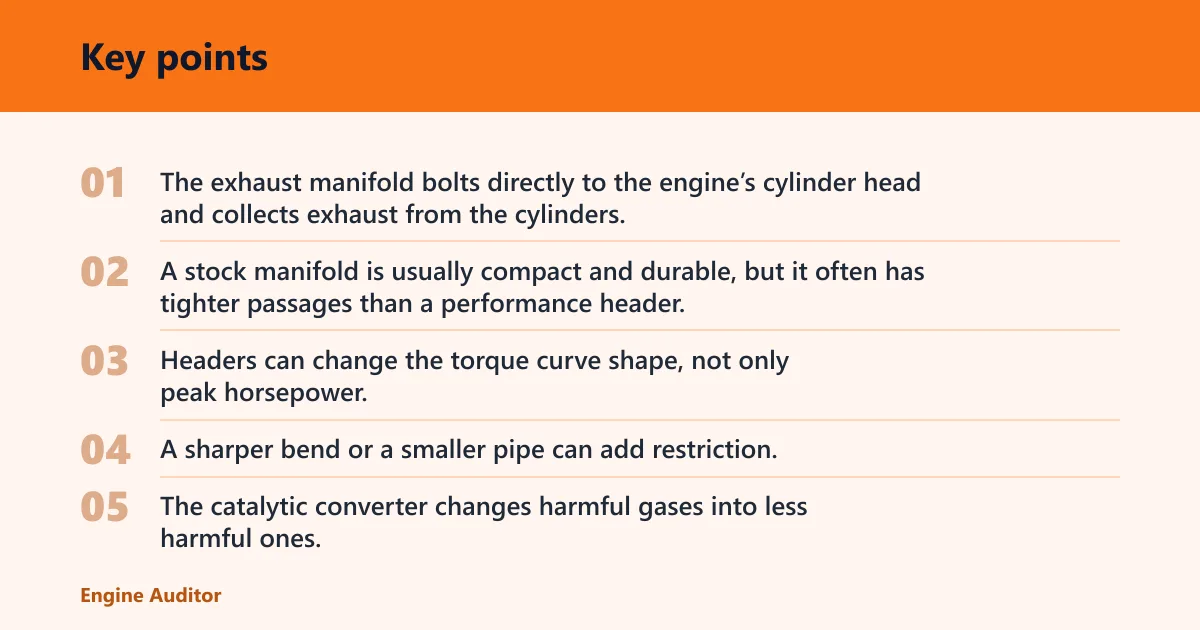
The exhaust manifold bolts directly to the engine’s cylinder head and collects exhaust from the cylinders. A stock manifold is usually compact and durable, but it often has tighter passages than a performance header. Short tube headers improve power more than stock manifolds, while long tube headers increase power at high engine speeds.
This is usually the largest single change for power, especially on an engine that was built around a restrictive factory manifold. Headers can change the torque curve shape, not only peak horsepower. That matters on engines that live in a narrow rpm band.
Downpipe and catalytic converter
The downpipe connects the exhaust manifold to the rest of the system, so its diameter and bend radius affect how quickly gas leaves the turbo or manifold area. A sharper bend or a smaller pipe can add restriction. On turbo engines, the downpipe often has a larger effect than the rear section because it sits so close to the turbine outlet.
The catalytic converter changes harmful gases into less harmful ones. Stock converters are built for emissions compliance and can be more restrictive than high-flow versions. High-flow cats can be a middle ground, while a delete variant raises emissions risk and can create inspection problems. That is a legal issue, not only a performance choice.
Resonator and muffler
A resonator is designed to cancel out certain sound frequencies. It is commonly reported to reduce drone and rasp more than it changes peak power, so its main job is tone control. Deleting it can make the exhaust louder, but louder does not mean faster.
The muffler reduces the noise produced by the engine. Chambered mufflers usually shape sound more aggressively, while straight-through designs tend to flow better and sound cleaner at higher load. The tradeoff is simple: a quieter muffler often uses more internal control, and more control usually means more restriction.
Pipe diameter and bends
Pipe diameter affects how fast exhaust gas moves and how much restriction the system creates. Larger diameter can reduce backpressure, but too large can weaken low-end response in some applications. Bend quality matters too, because tight, abrupt turns add resistance even when the pipe size looks correct on paper.
Use-case sizing is better than generic sizing. A street car that spends most of its time below 4,000 rpm usually does not benefit from the same exhaust diameter that suits a high-rpm drag build. Racing systems can accept more noise and more pipe size because the engine stays in its power band longer.
Single versus dual exhaust
Single exhaust systems are described as simple and cost-effective. They usually fit more easily and weigh less, which matters when packaging space is tight. Dual exhausts can reduce backpressure and often sound fuller, but they add cost, weight, and routing complexity.
On some vehicles, duals are limited more by floorpan, suspension, or fuel tank shape than by flow theory. A well-sized single system can outperform a badly packaged dual layout. Fitment matters as much as the pipe count.
How does backpressure affect engine performance?
Backpressure is resistance to exhaust leaving the engine. Too much restriction makes the engine work harder to push out spent gas, which reduces efficiency and can hurt power. But not every low-restriction setup is right for every engine, because exhaust velocity and pulse timing also matter.
Some backpressure can be a byproduct of good pulse control, especially on smaller or lower-rpm engines. The goal is not zero resistance. The goal is the right amount of resistance for the engine’s rpm range, load, and intended use.
Why restriction can hurt efficiency
When exhaust gas cannot leave fast enough, residual gas stays in the cylinder. That reduces room for the fresh intake charge and can soften combustion quality. The result is often weaker low-speed torque, worse throttle response, or both.
For a tow vehicle, the wrong exhaust can show up first under load, not at wide-open throttle. A small rise in backpressure may be invisible in daily commuting, then obvious on a long grade with a trailer attached.
How too-large pipes weaken street drivability
Oversized pipes can reduce exhaust gas speed. That can weaken scavenging and leave the engine feeling soft below the torque peak. On the street, that often shows up as slower throttle response and less pull in normal driving ranges.
Suppose a naturally aspirated V8 gets a track-sized exhaust meant for a high-rpm build. The top end may improve, but the first few thousand rpm can feel flatter because the system no longer supports the same pulse energy.
Headers vs mufflers
Headers usually change power more than a rear muffler swap because they sit at the first flow control point. A header changes how exhaust leaves the cylinder, so it can affect scavenging, torque, and horsepower curves. A muffler mostly changes noise, with only modest flow influence unless the original muffler is very restrictive.
That does not make mufflers unimportant. A good muffler can preserve flow while keeping cabin noise manageable. But if the goal is measurable power, the manifold or header is usually the larger lever.
Stock manifold versus performance header
Stock manifolds are often chosen for packaging, emissions, cost, and durability. Performance headers replace the factory cast path with tubing that can improve flow and pulse tuning. Short tube headers improve power more than stock manifolds, while long tube headers increase power at high engine speeds.
If the engine rarely sees high rpm, long tubes may not be the best match. A street setup that lives in the midrange can benefit more from a moderate header, a correct converter choice, and a pipe diameter that keeps gas speed up.
What a muffler change can and cannot do
A muffler change can alter tone, loudness, and drone. It can also trim some restriction if the original muffler was unusually tight. But on many stock engines, a muffler swap alone does not create the same power change as headers or a less restrictive downpipe.
If the main complaint is sound, start there. If the main complaint is power, look first at the parts closest to the engine and the converter placement before spending on a rear-section swap.
Exhaust setup decision matrix
Use this table to match the exhaust choice to the engine’s rpm range, power goal, and legal limits. The “likely gain/loss area” column points to where the change tends to matter most, not to a guaranteed horsepower number.
| Use case | RPM range | Likely gain/loss area | Noise change | Emissions risk | Fitment difficulty |
|---|---|---|---|---|---|
| Stock replacement | Idle to midrange | Restores factory flow and noise control; little power gain if the old system was healthy | Near stock | Low if catalysts stay in place | Low to moderate |
| Mild street upgrade | Midrange to upper midrange | Better throttle response and modest power where the stock system becomes restrictive | Slightly louder, possible drone if resonator is removed | Low to moderate if high-flow cats are used | Moderate |
| Tow-focused setup | Low to midrange | Helps under load if diameter stays conservative and scavenging stays strong | Small increase, usually better if drone is controlled | Low if emissions parts remain intact | Moderate, especially with clearance limits |
| Track-only build | High rpm | Top-end flow, stronger upper-range horsepower, possible low-rpm loss | High | High if catalyst is deleted | High |
What setup fits your use case?
The right setup depends on where the engine spends time. Daily drivers and tow rigs need usable torque, predictable noise, and legal compliance. Track and road-race builds can trade comfort for flow, but only if the engine actually lives in the rpm band that benefits from that trade.
-
Match the rpm band first. Choose a pipe, header, and muffler combination that supports the engine’s common operating range, not just peak horsepower. A street engine that rarely revs high usually benefits from restrained sizing and good scavenging.
-
Keep emissions needs in view. If the vehicle must pass inspection, keep the catalytic converter in place or choose a legal high-flow version. A delete can create legal and resale problems even when the sound is appealing.
-
Control noise before chasing volume. Use a resonator and a suitable muffler if drone or rasp matters. A straight-through muffler can flow well, but cabin comfort still depends on the rest of the system.
-
Size the pipe for the job. Keep diameter conservative for low-end torque and towing. Move larger only when the engine’s airflow demand and rpm range justify it.
-
Check fitment before buying. Compare ground clearance, axle routing, converter location, and clearance around suspension and fuel lines. A great flow path is not useful if it scrapes, rattles, or blocks service access.
For daily street driving, a mild upgrade with stock or high-flow catalysts, a resonator, and a moderate-diameter pipe is usually the safest balance. For tow-focused builds, keep the system quiet enough to hear load changes and avoid oversized tubing that dulls low-speed pull. For street/strip use, headers and a better downpipe usually matter more than a rear muffler swap. For road racing and drag racing, top-end flow matters more, and a track-oriented system can make sense if the engine stays in that range.
Frequently asked questions
How does the exhaust system affect engine performance?
The exhaust system affects performance by controlling how quickly spent gases leave the cylinder and how much fresh charge can enter next. Better scavenging can improve cylinder filling, which changes torque and horsepower curves. The effect is strongest where the factory system becomes restrictive and weakest where the system is already well matched.
Does a performance exhaust really add horsepower?
It can, but the gain depends on the engine, rpm range, and which part is changed. Headers and a restrictive downpipe usually matter more than a rear muffler swap. On a stock engine, a cat-back often changes sound more than output unless the factory system is a clear bottleneck.
What parts of the exhaust system matter most for power?
The manifold or header matters most because it is the first flow control point. After that, the downpipe and catalytic converter can have a large effect, especially on turbo engines. Resonators and mufflers shape tone and cabin noise, while pipe diameter and bend quality decide how much restriction remains.
Will a cat-back exhaust improve acceleration?
Sometimes, but usually only a little on a stock engine. A cat-back can reduce restriction and change sound, yet it often leaves the manifold, downpipe, and converter untouched. If those front-end parts are the main bottleneck, the acceleration change from a cat-back alone is usually modest.
Can headers make more difference than a muffler?
Yes. Headers usually make a larger difference because they change how exhaust exits the cylinder, which affects scavenging and the torque curve. A muffler mainly changes noise and tone, with smaller flow changes unless the original muffler is very restrictive.
Does changing the exhaust hurt fuel economy or emissions?
It can. A setup that improves flow in the right rpm range may help efficiency under some conditions, but oversized pipes, poor tuning, or catalyst deletion can raise fuel use and emissions. Keeping the catalytic converter in place and matching the system to the engine’s load range avoids most of the common problems.
Products related to this article
Sponsored / affiliate links. As an Amazon Associate I earn from qualifying purchases. I may earn additional commission from eligible campaigns.