How to Stop Your Foot From Slipping Off Pedals
Start by adjusting the seat so your heel stays planted and your knee remains slightly bent when you press the pedals. If your foot slips, braking and clutch control lose accuracy, and panic only makes it worse. This guide shows how to check seat position, footwear, pedal grip, and floor clearance before you add accessories or change technique.
Why does your foot slip off pedals?


Foot slip usually comes from poor contact, not bad reflexes. The usual causes are a seat that puts your leg at the wrong angle, shoes that slide on the pedal face, wet soles, worn pedal surfaces, or floor mats that block full travel. Fix the contact point first.
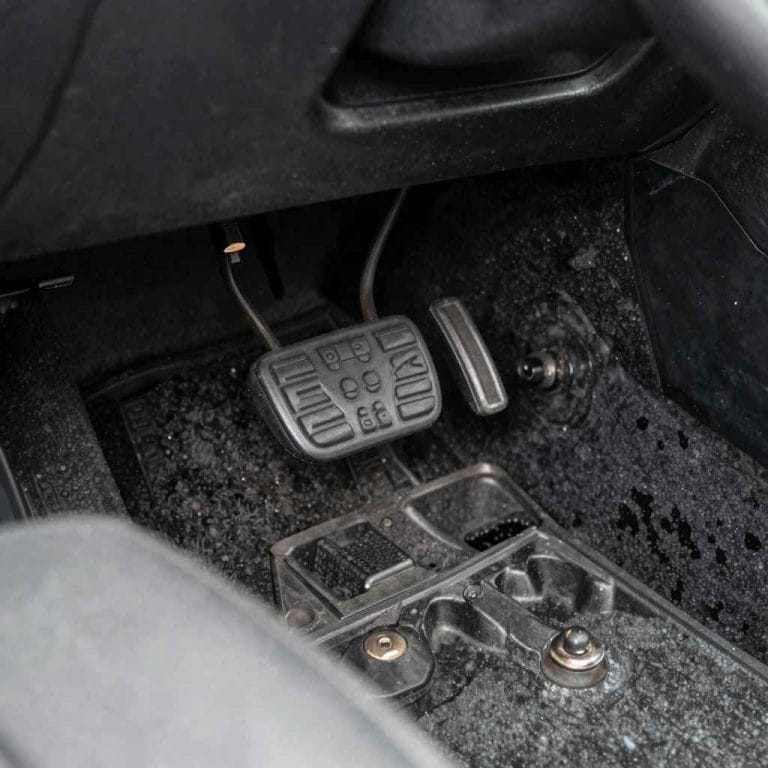
The three foot controls are the accelerator, brake, and clutch. The accelerator is the right-hand pedal and uses the right foot. The brake is the middle pedal and also uses the right foot. The clutch is the left-hand pedal and uses the left foot.
What you’ll need
- A dry towel or paper towel for the shoe sole
- Flat, thin-soled shoes or driving shoes
- A flashlight for checking pedal wear and debris
- Gloves if you need to remove a floor mat
- A clean brush or cloth for pedal faces and mat backing
Fix your seating position
- Set the seat back. Move the seat until your heel can stay on the floor while you press the brake fully, or fully press the clutch in a manual car. Too close can cause harsh braking; too far reduces control and reach.
- Check knee bend. A common rule of thumb is to keep a slight bend in the knee at rest, then recheck that the ankle can pivot without lifting the heel. That heel-on-floor setup gives you steadier movement between brake and accelerator.
- Test pedal reach. Press each pedal one at a time with normal force, not a stomp. If you must stretch, you are too far back. If your knee collapses sharply or your foot hits the pedals at a steep angle, move back a notch.
Say your right heel lifts every time you move from the accelerator to the brake. Moving the seat back one notch often changes the ankle angle enough to let the heel stay planted, which makes the transfer more controlled.
Use the heel as a pivot point
- Plant the heel. Put your heel on the floor near the brake area, then pivot the right foot between the brake and accelerator. This keeps the foot anchored while still letting you move fast.
- Cover the brake. Keep the ball of your right foot over the brake so it is the priority pedal and stays easy to reach. That helps for quick stops and reduces awkward overreach.
- Recheck floor clearance. Make sure the mat or carpet edge does not catch the heel or side of the shoe. Any snag can twist the foot during a transfer.
What shoes help stop your foot from sliding on pedals?
Thin-soled shoes help because they give better pedal feel and reduce sliding risk. A flat sole also lets you sense pressure changes on the brake and accelerator more clearly. Heavy treads, loose shoes, and wet soles can all make contact less stable.
Pedal spacing and position matter too. If the pedals sit close together, thick soles can make brake inputs too harsh. If they sit farther apart, a bulky shoe can make the transfer slower and less precise. The shoe and the pedal layout need to work together.
Choose footwear with better contact
- Pick a thin sole. Use flat, thin-soled footwear with a snug fit. That gives more pedal feel and lowers the chance of your foot rolling on the pedal face.
- Dry the sole. Wipe the shoe bottom if it is wet, muddy, or slick. A damp sole can sometimes slide even when the pedal surface is clean.
- Avoid bulky tread. Skip thick hiking soles, soft foam heels, and loose footwear that can shift on the foot. Those shapes can catch the floor mat or reduce pressure control.
Suppose a driver wears running shoes with a soft, rounded heel and the foot slips while covering the brake. Changing to a flatter shoe with a thinner sole often improves contact right away, without any change to seat position or technique.
Wet soles, pedal wear, and contamination
- Inspect the pedal face. Look for worn rubber, smooth spots, oil film, mud, or dust on the brake and accelerator. Worn or contaminated pedals can slip even with a good seat position.
- Clean the contact surface. Wipe the pedal faces with a dry cloth. If the surface stays greasy or glossy, have it inspected instead of relying on technique alone.
- Check for replacement wear. If the rubber pad is cracked, hard, or missing grip texture, treat that as a maintenance issue. A damaged pedal should not be ignored.
How should you move between pedals?
Keep the heel on the floor and move with the ankle, not the whole leg, for normal brake and accelerator work. For braking, use light progressive pressure instead of stomping. In a manual car, fully press the clutch to change gear; partial travel can make shifts rough or incomplete.
The brake is generally the priority pedal to reach quickly. For an emergency stop, press firmly and progressively. Anti-lock braking systems can reduce skidding risk, but they do not replace proper foot pressure. The goal is a controlled stop, not a jab at the pedal.
Brake and accelerator control
- Cover the brake. Rest the ball of your right foot so it can move straight onto the brake. That position reduces delay when you need to stop.
- Press progressively. Increase brake pressure in one smooth motion. A hard stab can unsettle the car, while steady pressure helps the tires keep grip.
- Return to throttle cleanly. When you move back to the accelerator, keep the heel planted and rotate the foot rather than lifting it high. That reduces slip on close pedal layouts.
Clutch pressure and full pedal travel
- Use the left foot only. Operate the clutch with the left foot and keep the right foot on the brake or accelerator as needed. Mixing feet can create delay and confusion.
- Press it fully down. When changing gear, press the clutch all the way to the floor. Partial depression can make gear changes rough and may increase the chance of the foot slipping off under pressure.
- Lift smoothly. Release the clutch in a controlled way after the gear change, then reposition your foot so the heel stays stable again.
When heel-and-toe matters
- Use it only when needed. Heel-and-toe is generally an advanced method for mixed brake and throttle control, not a daily requirement. It is more relevant to performance driving than to normal commuting.
- Rotate the right foot inward. Keep the brake covered with the ball of the right foot while the heel or side of the foot blips the accelerator. The aim is to keep brake pressure steady.
- Skip it if unstable. If the pedal layout feels cramped or the shoe slips, do not force the technique. Fit and contact come first.
Pedal slip matrix
This matrix helps you separate a one-off awkward feel from a repeated problem. Start with the symptom, then check the likely cause in the order shown. Treat seat position, shoe type, wet soles, pedal wear, and floor interference as different faults.
| Symptom | Likely cause | Pedal affected | Fix |
|---|---|---|---|
| Heel lifts when braking | Seat too far back | Brake | Move the seat forward one notch and retest heel-on-floor reach |
| Harsh braking on light input | Seat too close | Brake | Move the seat back one notch and keep the knee slightly bent |
| Foot slides on the pedal face | Wet sole | Brake or accelerator | Dry the shoe sole and retest with a flat, stable shoe |
| Toes catch the mat edge | Floor mat interference | Brake or accelerator | Re-seat or remove the mat and check that it cannot shift |
| Pedal feels slick even with good shoes | Pedal wear or contamination | Brake or accelerator | Clean the pedal and inspect for cracked or smooth rubber |
| Left foot loses contact during shifting | Clutch travel not fully used | Clutch | Press the clutch fully to the floor for each gear change |
| Brake gets missed in a quick transfer | Pedals too far apart for current shoe and seat setup | Brake and accelerator | Adjust seat position before changing shoes or add-ons |
| Right foot feels cramped | Seat too close | Brake and accelerator | Move back slightly and recheck knee bend |
| Foot drags across both pedals | Loose footwear | Brake and accelerator | Switch to a snug, flat shoe with better contact |
| Slip happens only on the first press | One-off anxiety or a dirty sole | Brake or accelerator | Dry the shoe, reset the heel, and repeat the press smoothly |
Common mistakes
Do not chase accessories before you check the seat and floor. A pedal cover can help if it fits well, but a poor cover can make contact worse or shift underfoot. Do not assume every slip is technique.
Do not keep your heel floating in normal driving. A floating foot removes the pivot point and makes quick transfers less stable. Do not sit so close that the brake feels sharp, or so far back that you must stretch to reach it.
Do not ignore repeated slip on the same pedal. If one pedal feels worn, glossy, or contaminated after cleaning, treat it as an inspection issue.
If that didn’t work
If seat position, shoes, and floor clearance do not solve the problem, move to the next likely fault. That means looking at the pedal surface itself, then the fit of any pedal cover, and finally any mechanical issue that changes pedal travel or return.
- Remove any cover. If a pedal cover is fitted, take it off and retest. A loose or badly sized cover can make the pedal more slippery or change the feel enough to confuse your foot.
- Inspect pedal travel. Press each pedal with the engine off and compare feel. A sticky return, uneven motion, or strange resistance needs attention before you rely on the car in traffic.
- Have the controls checked. If the pedal surface is worn or the pedal does not feel consistent, have the vehicle inspected by a qualified technician. A fault at the pedal is a safety issue, not a shoe issue.
Picture a driver who slides only on the brake, even after changing shoes. If the brake pad is worn smooth or coated with grime, the same slip will return until the pedal surface is cleaned or replaced.
Frequently asked questions
How do I position my foot so it doesn’t slip off the pedal?
Place the heel on the floor and pivot the right foot between brake and accelerator. For braking, cover the brake with the ball of the right foot. That position keeps the foot anchored and makes the transfer more controlled on close pedal layouts.
Should my heel stay on the floor when using car pedals?
Yes, for normal driving a planted heel is usually the most stable setup. It gives you a pivot for moving between brake and accelerator and helps keep pressure consistent. If the heel lifts, check seat distance first.
Can pedal covers make pedals safer or more slippery?
They can do either. A well-fitted cover may improve grip, but a loose, oversized, or worn cover can make contact worse. If the pedal feels slick or vague after installation, remove the cover and test the bare pedal again.
Products related to this article
Sponsored / affiliate links. As an Amazon Associate I earn from qualifying purchases. I may earn additional commission from eligible campaigns.