How Car Tire Sizes Work: Reading the Numbers Made Simple
Understanding the numbers printed on your car’s tires isn’t just for mechanics or car enthusiasts—it’s essential knowledge for any vehicle owner. Tire size impacts everything from your car’s handling and safety to fuel efficiency and ride comfort. Yet, for most people, the string of numbers and letters on a tire sidewall remains a cryptic code.
Decoding this information is simpler than you might think and can empower you to make smarter choices about maintenance, upgrades, and even purchasing your next set of tires.
In today’s world of highly engineered vehicles and rapidly evolving tire technology, knowing how to read and interpret tire size can save you money, enhance your driving experience, and even prevent accidents. Whether you’re replacing a worn-out set, considering a performance upgrade, or simply curious about what those sidewall markings mean, this guide will break down everything you need to know about car tire sizes—with clear explanations, real-world examples, and actionable advice.
Key Takeaways
- Tire size codes reveal vital info about width, aspect ratio, construction, and diameter.
- Correct tire sizing ensures optimal performance, safety, and fuel efficiency.
- Misreading tire sizes can lead to costly mistakes and safety risks.
- Understanding load and speed ratings is crucial for safe tire selection.
- Real-world examples and comparison tables in this guide make decoding easy.
- Regularly check and match tire size to your vehicle’s specifications for best results.
Credit: www.bridgestoneamericas.com
The Anatomy Of A Tire Size: Breaking Down The Code
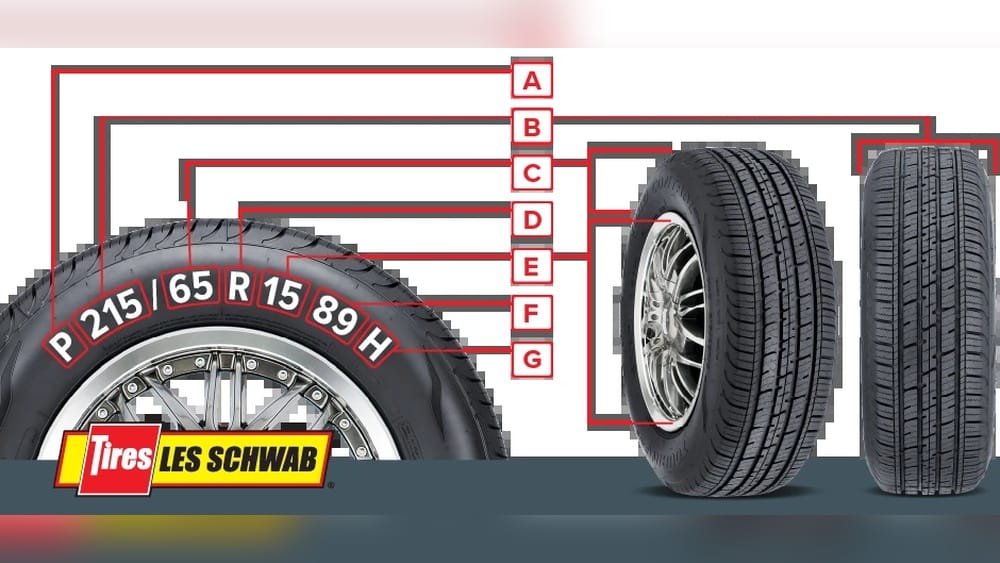
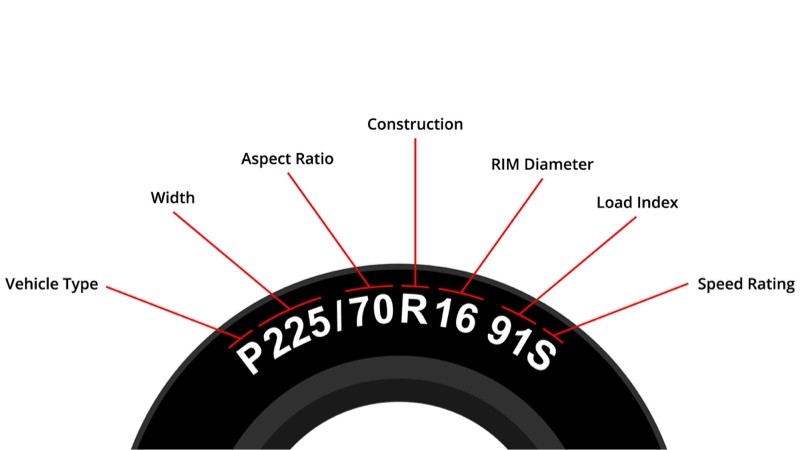
Every tire has a unique code on its sidewall, typically a combination of numbers and letters, such as P215/65R15 95H. Each segment of this code represents critical information about the tire’s size, construction, and performance capabilities.
Understanding The Tire Size Format
Most modern tires use the P-metric system, but you may also encounter Euro-metric or LT (Light Truck) designations. Here’s how a typical size code breaks down:
- P215/65R15 95H
Let’s dissect this example:
- Prefix Letter(s):
- P: Stands for Passenger vehicle.
- LT: Light Truck.
- No prefix: Euro-metric (common in Europe and some imports).
- Three-Digit Number (Width):
- Example: 215 indicates the tire’s width in millimeters from sidewall to sidewall.
- Two-Digit Number (Aspect Ratio):
- Example: 65 means the tire’s sidewall height is 65% of its width.
- Letter (Construction):
- R: Radial construction (over 98% of modern tires).
- D or B: Bias-ply or Belted bias (rare in passenger cars today).
- Two-Digit Number (Wheel Diameter):
- Example: 15 means the tire fits a 15-inch diameter wheel.
- Load Index and Speed Rating:
- 95H
- 95: Load index (maximum weight the tire can support).
- H: Speed rating (maximum safe speed).
Additional Sidewall Markings
Beyond the primary size code, the tire sidewall features other important information. You may notice markings such as DOT codes (Department of Transportation compliance), manufacturing date (e. g. , “2819” indicating the tire was made in the 28th week of 2019), and sometimes M+S (Mud and Snow) for all-season tires.
These details help you confirm the tire’s age, warranty eligibility, and suitability for various weather conditions.
The Importance Of Each Component
- Width affects contact with the road, impacting grip and hydroplaning resistance. Wider tires provide a larger contact patch, which can improve handling but may also increase rolling resistance and affect fuel economy. Narrower tires, meanwhile, are often better in snowy conditions as they cut through snow more efficiently.
- Aspect Ratio influences ride comfort and handling. A lower aspect ratio (shorter sidewall) means a stiffer tire with better cornering performance, but it can also make the ride harsher. Higher aspect ratios (taller sidewalls) absorb road imperfections and are preferred for comfort-oriented vehicles.
- Construction Type determines durability and flexibility. Radial tires are the standard due to their superior performance and longevity, while bias-ply tires are mainly used in specialty applications.
- Wheel Diameter must match your vehicle’s wheels exactly. Installing a tire with the wrong diameter can make mounting impossible and compromise safety.
- Load Index & Speed Rating ensure the tire is suitable for your vehicle’s weight and performance needs. These ratings are essential for maintaining safety, especially under heavy loads or high-speed conditions.
Real-world Example: Decoding A Tire Size
Suppose your car’s tire reads P225/50R17 94V.
- P: Passenger tire
- 225: 225mm wide
- 50: Sidewall height is 50% of 225mm = 112.5mm
- R: Radial construction
- 17: Fits a 17-inch wheel
- 94: Load index of 1477 lbs (see table below)
- V: Speed rated for up to 149 mph
This example demonstrates how each segment of the code delivers crucial information. When replacing tires, always verify the entire code—not just the width or diameter—to ensure compatibility.
Comparison Table: Tire Sidewall Code Breakdown
| Code Section | Example Value | Meaning |
|---|---|---|
| Prefix | P | Passenger Vehicle |
| Width | 215 | 215 mm (tread width) |
| Aspect Ratio | 65 | 65% of width (sidewall height) |
| Construction | R | Radial |
| Wheel Diameter | 15 | 15-inch wheel |
| Load Index | 95 | Max load capacity (see table below) |
| Speed Rating | H | Up to 130 mph |
Why Tire Size Matters
Choosing the wrong tire size affects:
- Safety: Improper fit can compromise traction and braking. For example, a tire that’s too wide may rub against the fender, while a tire that’s too narrow may reduce stability.
- Fuel Economy: Incorrect sizing may reduce efficiency. Larger tires can increase rolling resistance, requiring more energy to move the vehicle.
- Handling: The wrong size can alter steering response. A mismatch might cause unpredictable behavior during cornering or emergency maneuvers.
- Wear and Tear: Mismatched tires can cause uneven wear or even damage suspension components. In extreme cases, it can accelerate wear on brakes, bearings, and even the transmission.
Credit: www.lesschwab.com
Tire Sizing Systems: P-metric, Euro-metric, And Lt Explained
Not all tires follow the same sizing conventions. Understanding the differences is crucial for making informed decisions.
P-metric Vs. Euro-metric
- P-Metric: Developed for North America, indicated by a “P” prefix.
- Euro-Metric: Used globally, often lacks a prefix.
The main differences:
- Load Capacity: Euro-metric tires may carry slightly more weight at the same size. For example, a P215/65R15 tire might have a lower load capacity than a 215/65R15 Euro-metric tire.
- Inflation Pressure: May differ by region and manufacturer. Always check the recommended inflation for your specific tire model.
Example: Comparing P-metric And Euro-metric
A P215/60R16 tire and a 215/60R16 Euro-metric tire may look identical, but the P-metric version is designed for a lighter load and different inflation specs. This distinction is especially important for drivers who frequently carry heavy loads or tow trailers.
Light Truck (lt) Tires
LT tires are designed for vehicles carrying heavier loads or towing, such as SUVs, pickups, and vans.
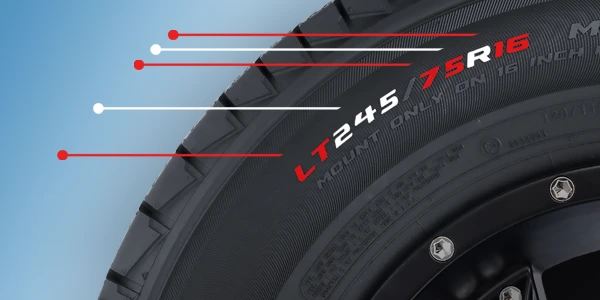
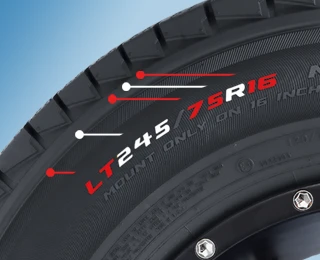
- Marked with an “LT” prefix or suffix (LT245/75R16 or 245/75R16LT).
- Built with reinforced sidewalls for extra strength.
- Require higher inflation pressures.
LT tires are also more robust, often featuring additional plies in their construction. This makes them ideal for off-road driving, commercial applications, or any scenario where durability is paramount.
Flotation Sizing
Some off-road and specialty tires use flotation sizing, such as 31×10.50R15LT:
- 31: Overall diameter in inches
- 10.50: Width in inches
- 15: Wheel diameter in inches
This system is common in North America for trucks and SUVs. Flotation sizing is particularly useful when ground clearance and tire footprint are priorities, such as in mud or sand.
Metric Vs. Flotation Comparison Table
| Metric Size | Flotation Size | Width (inches) | Diameter (inches) | Common Application |
|---|---|---|---|---|
| 265/75R16 | 31×10.50R16 | 10.4 | 31.6 | Trucks/SUVs |
| 225/70R15 | 27×8.50R15 | 8.9 | 27.4 | Light trucks |
Real-world Example: Truck Tire Upgrade
A pickup owner wants to switch from factory 245/75R16 tires to larger off-road 31×10. 50R15LT tires. Knowing the conversion and differences in load capacity is vital to ensure safe operation and avoid speedometer errors. Additionally, the owner must consider wheel compatibility, suspension clearance, and potential impacts on towing capacity.
When To Use Each Sizing System
- P-Metric: Most passenger cars, minivans, crossovers.
- Euro-Metric: Many imports, some domestic vehicles.
- LT/Flotation: Trucks, SUVs, vans, off-road vehicles.
Knowing which system applies to your vehicle helps prevent mistakes and ensures proper fitment. For instance, a family sedan will almost always use P-metric tires, while a heavy-duty work truck may require LT or flotation sizes for optimal performance.
Credit: www.lesschwab.com
Deciphering Load Index And Speed Ratings
Beyond size, every tire carries a load index and speed rating—critical for safety and performance.
Load Index: How Much Can Your Tire Carry?
The load index is a numerical code indicating the maximum weight a tire can safely support when properly inflated.
- Example: 94 = 1477 lbs per tire.
Refer to the load index table below to interpret these numbers. It’s important to remember that the total load capacity must accommodate the vehicle’s gross axle weight rating (GAWR), especially when carrying passengers or cargo.
Calculating Total Load Capacity
Multiply the load index (converted to pounds) by the number of tires. For example, four tires rated at 1477 lbs each = 5908 lbs total. However, always cross-reference this with your vehicle’s GAWR and never exceed manufacturer recommendations.
Speed Rating: How Fast Can You Go Safely?
The speed rating is a letter that tells you the maximum safe speed for a tire under optimal conditions.
- Example: H = 130 mph, V = 149 mph, W = 168 mph.
Speed ratings are tested under controlled conditions. In real-world situations, factors like load, inflation, and road conditions can affect actual safe speeds.
High-performance Tires
Sports cars and performance vehicles often require higher speed ratings (V, W, Y, Z). Using lower-rated tires can limit the vehicle’s capabilities and compromise safety during spirited driving.
Load Index And Speed Rating Table
| Load Index | Max Load (lbs) | Speed Rating | Max Speed (mph) |
|---|---|---|---|
| 91 | 1356 | S | 112 |
| 94 | 1477 | H | 130 |
| 97 | 1609 | V | 149 |
| 104 | 1984 | W | 168 |
Why These Ratings Matter
- Exceeding load index can result in tire failure, especially under heavy loads. In commercial and towing applications, this risk is heightened, making proper load index selection crucial.
- Under-rating speed can cause blowouts at high speeds. Even if you don’t routinely drive at maximum speed, choosing the correct rating ensures the tire can handle highway emergencies or unexpected situations.
Real-world Example: Summer Vs. All-season Tires
A sports sedan owner switching from all-season 225/45R17 91H to summer 225/45R17 94W tires gains higher speed tolerance and load capacity—but must ensure the new tires match vehicle requirements. The higher load index provides a safety margin, especially when carrying passengers or luggage.
Legal And Insurance Considerations
Installing tires with lower load or speed ratings than specified by the manufacturer can void warranties or insurance coverage. Always match or exceed OEM specifications. Some insurers may specifically ask for tire details during claims, and manufacturers may check tire specs before honoring warranty repairs.
How Tire Size Affects Vehicle Performance
The dimensions and ratings of your tires have a direct impact on how your vehicle behaves.
Handling And Ride Comfort
- Wider tires generally provide better grip, especially in dry conditions. However, they may be more prone to hydroplaning in heavy rain.
- Lower aspect ratios (shorter sidewalls) enhance cornering but may reduce comfort. This is why sports cars often have low-profile tires, while luxury sedans use taller sidewalls for a smoother ride.
- Taller sidewalls absorb bumps better, ideal for rough roads. This is particularly important for vehicles used in rural areas or on poorly maintained roads.
Example: Comfort Vs. Performance
An SUV owner wanting a softer ride might opt for higher aspect ratio tires, while a performance enthusiast might choose a lower ratio for better handling. The trade-off between comfort and sharpness is a personal choice, but should always be balanced with safety and practicality.
Fuel Efficiency
- Larger, heavier tires can decrease fuel economy due to increased rolling resistance. Aggressive tread patterns, common in off-road tires, may also negatively affect mpg.
- Properly sized tires maintain manufacturer-intended efficiency. Always consider the impact of tire changes on your vehicle’s EPA-rated fuel consumption.
Tire Pressure And Efficiency
Under-inflated tires, regardless of size, also reduce efficiency and increase wear. Regularly check tire pressure to maintain optimal performance and economy.
Speedometer Accuracy
Changing the overall diameter of your tire alters how your speedometer reads:
- Larger diameter = speedometer reads slower than actual speed.
- Smaller diameter = speedometer reads faster.
Speedometer errors can result in unintended speeding and affect mileage calculations. In some cases, electronic recalibration is required after changing tire sizes.
Impact On Advanced Driver Assistance Systems (adas)
Modern vehicles with ADAS features (lane keep assist, adaptive cruise control) may rely on wheel speed sensors. Incorrect tire sizes can disrupt these systems, leading to malfunction or reduced safety.
Braking And Traction
- Incorrect tire sizes can lengthen stopping distances and increase the risk of hydroplaning. This is especially dangerous during emergency stops or in wet conditions.
- Mismatched tires can also compromise traction control and ABS systems, reducing their effectiveness.
Wear And Tear On Vehicle
- Mismatched tire sizes can stress suspension, drivetrain, and ABS systems, leading to costly repairs. For AWD or 4WD vehicles, even small differences in diameter can strain the transfer case and differential.
Real-world Case Study: Fuel Economy Drop
A compact car owner upgrades from 195/65R15 to 215/55R17 for style. Result: observed fuel economy drops by 2 mpg, and the ride becomes noticeably firmer. This example highlights how even small changes in tire dimensions can influence daily driving costs and comfort.
Choosing The Right Tire Size: Step-by-step Guide
Selecting the correct tire size is about more than matching numbers—it’s about vehicle safety, performance, and legal compliance.
Step 1: Check Your Owner’s Manual
- Manufacturer recommendations are the gold standard.
- Look for the tire placard in the driver’s door jamb or fuel door.
- The placard often lists multiple approved tire sizes for different trims or driving conditions.
Step 2: Read Your Existing Tires
- Decode the sidewall code using the methods outlined earlier.
- Note load index and speed rating.
- Inspect for other relevant markings (e.g., run-flat, all-season, winter).
Step 3: Consider Your Needs
- Daily driving, towing, off-roading, performance?
- Climate: Snow, rain, heat?
- For winter driving, consider narrower tires for improved traction; for off-roading, wider tires may be advantageous.
Step 4: Consult A Tire Professional
- Tire shops and mechanics can advise on suitable alternatives or upgrades.
- Use online tire size calculators, such as the one at Tire Rack.
- Professionals can also check for potential issues like suspension clearance, brake compatibility, and wheel fitment.
Step 5: Never Mix And Match Incompatibly
- Avoid mixing tire sizes, types, or brands on the same axle.
- For AWD/4WD vehicles, mismatched diameters can damage the drivetrain.
- Always replace tires in pairs or sets to maintain balanced handling and wear.
Step 6: Factor In Load And Speed
- Always meet or exceed the original load and speed ratings.
- Consider future needs—if you plan to tow or carry heavier loads, opt for a higher load index.
Tire Size Conversion Example
A driver with a 205/55R16 tire wants to know if they can fit 225/45R17 tires:
- 205/55R16: Overall diameter ≈ 24.9″
- 225/45R17: Overall diameter ≈ 25.0″
- The difference is minimal (0.4%), so the upgrade is generally safe, but check with a professional for vehicle-specific advice.
- Also consider changes in width and aspect ratio, which can affect handling and comfort.
Visualizing Tire Size Changes
Many tire shops and online tools provide visual comparisons to help you see how new tires will look and fit. This is especially useful for avoiding issues like rubbing or clearance problems.
Common Tire Size Mistakes And How To Avoid Them
Even experienced drivers can make errors when selecting tires. Here are the most frequent pitfalls—and how to steer clear.
Choosing For Appearance, Not Function
- Oversized wheels/tires can lead to rubbing, slower acceleration, and damaged suspension.
- Undersized tires hurt handling and look awkward.
Ignoring Load And Speed Ratings
- Downgrading these can lead to blowouts or legal trouble.
- Always verify ratings with both the tire placard and the manufacturer.
Failing To Adjust For Seasonal Changes
- Some drivers use the same size for all seasons, ignoring special needs for winter tires (narrower tires cut through snow better).
- For summer performance, wider tires may improve grip but can reduce effectiveness in cold or wet conditions.
Not Recalibrating Speedometer/tpms
- Significant size changes can cause inaccurate readings and trigger warning lights.
- Tire Pressure Monitoring Systems (TPMS) may need recalibration or replacement sensors for new sizes.
Buying Based On Price Alone
- Cheap, off-brand tires may lack proper ratings or quality controls. Always buy from reputable sources like Consumer Reports.
- Low-quality tires can also wear prematurely, offsetting any savings from the initial purchase.
Real-world Example: All-season Tire Mix-up
A minivan owner buys tires based on a friend’s recommendation, ignoring the load rating. The result: premature tire wear and an insurance claim denied after a minor accident. This underscores the importance of consulting professionals and double-checking all specifications.
Real-world Applications: Case Studies And Scenarios
Seeing how tire sizes play out in real life can clarify why the details matter.
Case Study 1: Sports Car Performance Upgrade
A driver of a 2018 Subaru WRX wants better cornering and acceleration. The stock tire is 235/45R17 94W. After research, they upgrade to 245/40R18 97Y—wider, lower-profile, and higher speed/load ratings. The outcome: sharper handling, but a slightly harsher ride. The speedometer reads 1% slower, well within acceptable tolerance. The driver also needed to verify wheel compatibility and ensure the brake calipers had enough clearance.
Case Study 2: Family Suv And Winter Tires
A family living in Minnesota swaps their summer 255/55R18 tires for 235/60R18 winter tires. The narrower winter tire improves snow traction and meets the load rating for their SUV. No speedometer recalibration is needed, as the diameter difference is negligible. The choice also improves fuel efficiency during the winter months.
Case Study 3: Light Truck And Off-road Tires
A contractor switches from stock LT245/75R16 to off-road 31×10.50R15LT flotation tires. They consult a tire professional to ensure the load capacity matches and confirm that the speedometer will read about 3% slow—acceptable for their needs. The upgrade also required checking for suspension and steering modifications.
Data-driven Example: Tire Size And Stopping Distance
According to a study by the NHTSA, using tires with the wrong aspect ratio can increase stopping distance by up to 10% in emergency braking scenarios—emphasizing the importance of matching manufacturer specifications. This data supports the recommendation to always adhere to OEM tire size and aspect ratio.
Useful Tools For Tire Size Calculations
- Tire Size Calculator for quick comparisons.
- Michelin: How to Read Tire Sizes for detailed guides.
These resources help you visualize changes and avoid costly mistakes.
Tire Size And Legal Requirements
Understanding tire size isn’t just a matter of performance—it’s often a legal necessity.
State And National Regulations
- Many US states require tire sizes to be within a certain percentage (often 3%) of the manufacturer’s original specification.
- Oversized tires may require fender modifications or special permits.
- Some regions have specific requirements for winter tire sizing and tread depth.
Insurance Implications
- Installing non-approved tire sizes can void your insurance policy in some cases.
- Always consult your insurer before making significant changes.
- Some policies may require documentation or photos of new tires for coverage.
Vehicle Warranties
- Manufacturers may deny warranty claims if tires outside recommended sizes contribute to a failure.
- Always keep records and receipts for any tire changes.
Resources For Regulations
- Check state requirements at DMV.org.
- Review federal guidelines via the NHTSA Tire Safety page.
Tips For Staying Compliant
- Always keep a record of tire purchases and sizes.
- Ask tire professionals to document compliance with manufacturer specs.
- Photograph new tires and the placard for insurance purposes.
Frequently Asked Questions
How Do I Know Which Tire Size Is Right For My Car?
The best way to determine the correct tire size is to check your vehicle’s owner’s manual or the tire information placard, usually found on the driver’s door jamb. This placard lists the recommended tire size, load index, and speed rating for optimal safety and performance.
Can I Use A Different Tire Size Than What’s Recommended?
It’s possible to use an alternative tire size, but it must be carefully matched to your vehicle’s specifications to avoid issues with safety, handling, speedometer accuracy, and legal compliance. Consult a tire professional before making changes.
What Happens If I Install The Wrong Tire Size?
Installing the wrong tire size can lead to handling problems, increased wear, inaccurate speedometer readings, and even voided warranties or insurance claims. It can also affect braking distance and stability, especially in emergency maneuvers.
How Do Load Index And Speed Rating Affect My Choice?
The load index ensures your tires can safely support the vehicle’s weight, while the speed rating indicates the maximum speed the tire can handle. Never choose a tire with a lower load or speed rating than recommended by your vehicle’s manufacturer.
Do I Need To Replace All Four Tires At Once?
For best performance and safety, it’s recommended to replace all four tires at the same time, especially on all-wheel-drive (AWD) or four-wheel-drive (4WD) vehicles. Mismatched tires can cause drivetrain damage and uneven wear. If only two need replacing, install the new tires on the rear axle for better stability.
Getting to grips with how car tire sizes work isn’t just about reading numbers—it’s about making informed decisions that keep you safe and ensure your vehicle performs at its best. By understanding the codes on your tire’s sidewall and matching them to your driving needs, you’ll be able to buy, maintain, and upgrade tires with confidence.
Use the information, tables, and real-world examples in this guide as a reference whenever you’re faced with tire-related questions. Safe driving starts where the rubber meets the road—make sure your tires are up to the task.
Products related to this article
Sponsored / affiliate links. As an Amazon Associate I earn from qualifying purchases. I may earn additional commission from eligible campaigns.