Car Light And Dash Cam Installation In Oxford: What To Know
It can be super frustrating when you’re trying to get your car set up just right. You buy a new car light or a dash cam, excited to add that extra bit of safety or style. But then comes the installation.
Wires, connections, where does it all go? It feels like a puzzle you’re not sure how to solve. That’s where understanding the basics of car light and dash cam installation in Oxford comes in handy.
We’ll break down what you need to know, from the simple stuff to why you might call a pro.
Car light and dash cam installation in Oxford involves understanding vehicle electrical systems, mounting techniques, and power sourcing. Knowing whether to DIY or seek professional help is key to a safe and effective setup, ensuring compliance with local regulations and optimal device performance for drivers in the area.
Understanding Your Car’s Electrical System
Your car is like a tiny, mobile power grid. It has a battery that stores energy. This battery powers everything when the engine is off.
When the engine is running, the alternator takes over. It keeps the battery charged and powers the car’s systems. Most add-on devices need a connection to this power.
Some need constant power. Others only need it when the car is on.
Knowing this helps a lot. You can’t just connect anything anywhere. You could drain your battery.
Or you could even cause a short circuit. That’s a big problem. So, it’s vital to learn a little about where the power comes from.
It’s like understanding your home’s fuse box. You know which circuit does what. Your car has something similar.
The Role of the Fuse Box
The fuse box is a key player. It holds small fuses. Each fuse protects a specific circuit.
If too much power flows, the fuse blows. This stops damage to the car’s wiring or the device. It’s a safety net.
You’ll often find fuse taps. These let you connect a new device to an existing circuit safely. You just plug the tap into a fuse slot.
Then, the fuse tap adds your device’s wire.
It’s important to pick the right fuse slot. Some circuits are always on. Others only turn on with the ignition.
Your dash cam might need to record when parked. So, it needs a constant power source. A car light, like a fog light, usually needs to be on with the headlights.
You need to match the device’s needs to the circuit.
Fuse Box Basics
Location: Usually under the dashboard or in the engine bay.
Types of Circuits:
- Constant Power: Always on, even with the engine off. Good for devices needing to record when parked.
- Ignition Power: Only on when the key is in the ‘on’ or ‘accessory’ position. Powers devices when the car is running.
Fuse Taps: Tools to add a new circuit without cutting factory wires.
Wiring Considerations
When installing anything, good wiring is a must. You want clean, hidden wires. This looks better.
It’s also safer. Loose wires can get caught. They can short out.
Or they can just be annoying.
Most installers run wires along existing paths. This often means going under door sills or along dashboard edges. It takes patience.
You need to tuck wires neatly. Tools like trim removal tools help. They let you gently pry open panels without breaking them.
This makes it easier to hide wires.
Think about the type of wire too. Automotive-grade wire is best. It’s made to handle vibrations and temperature changes.
Using the right gauge wire is also important. Too thin a wire can overheat. It’s a fire risk.
Too thick might not fit easily. Professionals know the right gauge for the job.
Dash Cam Installation Steps
Dash cams are becoming very popular. They offer peace of mind. They can be vital in an accident.
Installing one is often a DIY job. But there are steps to get it right.
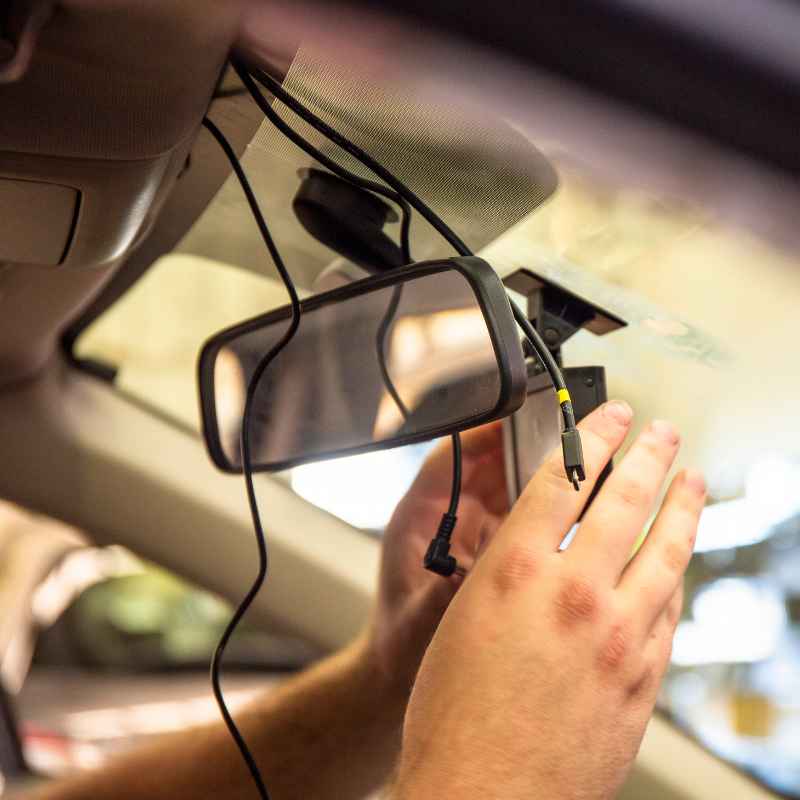
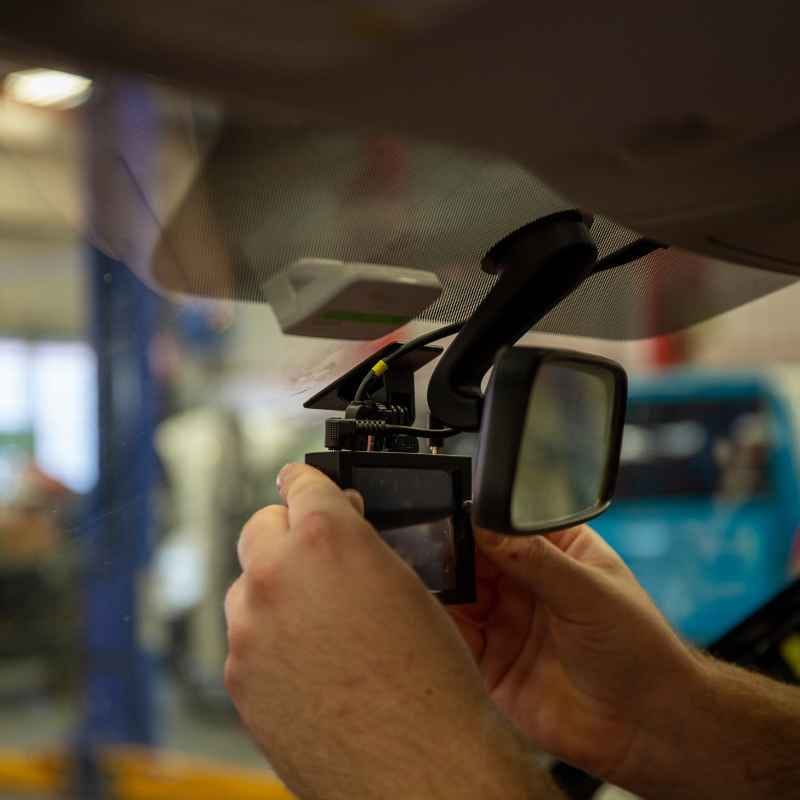
First, find the best spot. Most dash cams mount on the windshield. You want a clear view.
Avoid blocking your vision. You also don’t want the sun hitting the lens directly too much. Some cars have a black dotted area on the windshield.
This is a good place. It helps hide the mount.
Clean the windshield thoroughly. Use a glass cleaner. Then, stick the dash cam mount firmly.
Give it time to set. Most modern dash cams are small. They blend in well.
Dash Cam Mounting Tips
- Placement: Behind the rearview mirror is often ideal.
- Surface Prep: Clean the glass and dry it completely.
- Adhesive: Follow the manufacturer’s instructions for secure attachment.
- Angle: Test the angle before permanently sticking.
Powering Your Dash Cam
This is often the trickiest part for beginners. Dash cams need power. The easiest way is the 12V socket (cigarette lighter).
But this means the camera only works when the car is on. You can’t record if someone hits your car when parked.
For parking mode, you need a “hardwire kit.” This connects the dash cam directly to the car’s fuse box. You’ll use fuse taps here. You need to identify a constant power fuse.
You also need an ignition-switched fuse. This lets the camera turn off after a set time. This prevents battery drain.
Many hardwire kits have a low-voltage cut-off. This protects your car’s battery.
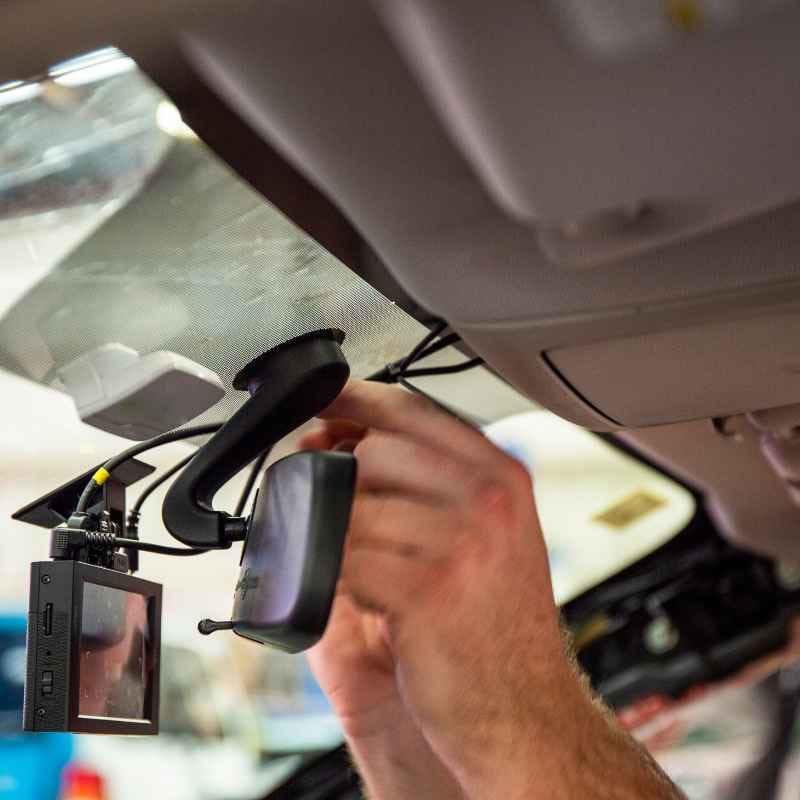
Running the wire from the fuse box to the camera is important. You usually tuck it along the headliner. Then down the A-pillar.
This is the pillar between the windshield and the side door. Be careful when working with car trim. It can be brittle.
I remember installing a dash cam in my old hatchback. I was so worried about messing up the wiring. I pulled on a trim piece too hard.
It made a scary cracking sound. Thankfully, it just popped out. But it taught me to be gentle.
Patience is really key with these jobs. It took me a few hours. But the clean look and the peace of mind were worth it.
Connecting to the Fuse Box
This is where many people pause. Connecting to the fuse box feels a bit daunting. You have different fuse types.
There are standard, mini, and micro fuses. Fuse taps come in the right size for your car. You need to know which fuse to tap into.
Look at your car’s manual. It shows the fuse layout.
For a dash cam that records when parked, you’ll want a “permanent” circuit. This is a fuse that is always hot. You’ll also need an “ignition” circuit.
This fuse only gets power when the car is turned on. The hardwire kit will have two wires for these connections. The kit will also have a ground wire.
This must connect to a bare metal part of the car body.
It’s crucial to insert the fuses correctly into the tap. The original fuse for the car’s circuit goes in one slot. The dash cam’s fuse goes in the other.
Make sure the tap is seated firmly. A loose connection can cause problems. It can even be a fire hazard.
Fuse Tap Connection Order
1. Identify Circuits: Find a constant power fuse and an ignition power fuse.
2. Insert Original Fuse: Place the car’s original fuse into the fuse tap slot closest to the wire.
3. Insert New Fuse: Place the fuse for your new device into the other slot on the fuse tap.
4. Connect to Fuse Box: Plug the fuse tap firmly into the chosen fuse slot.
5. Connect Ground: Attach the ground wire to a clean, bare metal surface on the car’s chassis.
Car Light Installation: Beyond Dash Cams
Car lights can mean many things. It could be upgrading headlights. It could be adding fog lights.
Or even interior ambient lighting. The principles are similar to dash cams. But the power needs and locations might differ.
Upgrading headlights often involves just swapping bulbs. This is usually simple. Just follow the car manual.
For adding new lights, like fog lights, it’s more involved. You’ll need to run wires from the light to a switch. You’ll also need to connect it to a power source.
Often, this is done via the fuse box or directly to the battery.
Adding Fog Lights
Fog lights are common additions. They help visibility in poor weather. Installation often requires drilling small holes.
You might need to remove the front bumper. Then you mount the lights. Running the wiring can be complex.
You’ll need to connect them to your car’s headlights or a separate switch.
A common method is to use a relay. A relay is an electrically operated switch. It allows a low-current circuit to control a high-current circuit.
You can use a small switch on your dash. This switch tells the relay to turn on the fog lights. The relay then handles the higher current from the battery.
This protects the switch and your car’s wiring.
You’ll need to connect the relay to the battery. You’ll also need to connect it to the fog lights. And to the switch.
Plus, you need a ground connection. This job often involves running wires through the firewall. This is the metal barrier between the engine bay and the cabin.
One time, I helped a friend add aftermarket fog lights. We spent hours. The manual said it was easy.
But finding a good place to run the wires through the firewall was tough. We ended up drilling a small hole. We used a rubber grommet to seal it.
It worked, but it was nerve-wracking. We double-checked everything. We didn’t want any leaks or shorts.
Interior Lighting
Interior lighting can be fun. Think about adding LED strips under the seats. Or in the footwells.
These are usually low-power. They often connect to the 12V socket. Or a switched fuse.
This means they only turn on when the car is on.
For more advanced setups, you might use a dedicated power source. Or even connect to the car’s interior light circuit. So, they turn on when you open the doors.
This can be done with specific modules. They sense when the interior lights come on. Then they power your LEDs.
Interior Lighting Power Options
- 12V Socket: Easy but only works when car is on.
- Switched Fuse: Powers up with ignition, cleaner look.
- Interior Light Trigger: Lights up with doors, dynamic effect.
- Direct Battery (with fuse): For high-power needs, needs careful setup.
DIY vs. Professional Installation in Oxford
This is a big question for anyone in Oxford looking to get a dash cam or new lights installed. There are pros and cons to both.
DIY:
- Pros: Saves money. You learn how your car works. Satisfaction of doing it yourself.
- Cons: Time-consuming. Risk of mistakes. Can void warranties if done wrong. May not look as neat.
Professional Installation:
- Pros: Done quickly and correctly. Uses proper tools and knowledge. Ensures warranty compliance. Neat, hidden wiring. Peace of mind.
- Cons: Costs money. You don’t learn the process yourself.
In Oxford, you have a few options for professional help. There are car audio shops. Many also do dash cam and accessory fitting.
Some dealerships offer installation services too. For specific lighting, a good auto electrician is your best bet.
When to Call the Professionals
If you’re not comfortable with car electrics, it’s best to get help. If your car is new or under warranty, check with the dealer first. Some cars have complex electrical systems.
Trying to add things can cause issues. This is especially true for modern cars with advanced driver-assistance systems (ADAS).
Tasks that are generally better left to pros include:
- Tapping into sensitive vehicle computer systems.
- Installing high-power lighting systems that require complex relays.
- Any job where you feel unsure or lack the right tools.
- When you want a factory-perfect finish.
I once saw a car where the DIY dash cam wiring was a mess. Wires were just hanging down. It looked terrible.
And I worried about it getting snagged. That’s when I decided for certain accessories, a professional is worth the money. They make it look clean and safe.
Choosing an Installer in Oxford
Look for installers with good reviews. Ask friends for recommendations. Check online forums for Oxford car enthusiasts.
See what shops they trust. A reputable installer will:
- Be clear about costs upfront.
- Show you where they plan to run wires.
- Offer a warranty on their work.
- Have experience with your car model if possible.
Don’t be afraid to ask questions. A good installer will explain everything. They will answer your concerns.
They want you to be happy with the result.
Professional Installation Checklist
Ask About:
- Experience with your vehicle type.
- Warranty on parts and labor.
- Installation time estimate.
- Total cost breakdown.
Check for:
- Cleanliness of the workspace.
- Professional appearance of the technicians.
- Positive customer reviews or testimonials.
Understanding Vehicle Power Requirements
Every electronic device needs a certain amount of power. This is measured in amps (A) or watts (W). Your car’s electrical system has limits.
You can’t just add dozens of high-power devices. You could overload the alternator or the wiring.
A typical dash cam might use 1-2 amps. A set of high-power LED headlights could use 5-10 amps each. You need to know these ratings.
Then you can check your car’s fuse box ratings. Most automotive fuses are 5A, 10A, 15A, or 20A. You need to ensure your new device doesn’t draw more power than the fuse protects.
Battery Drain and Parking Mode
This is a common worry with dash cams. If a dash cam is always drawing power, it will drain your car battery. Especially when parked for long periods.
That’s why parking mode is important. It’s designed to prevent this.
A good hardwire kit will have a low-voltage cut-off. This means it monitors the car’s battery voltage. When the voltage drops to a certain point, it turns off the dash cam.
This ensures there’s enough power left to start the car. You can usually set this cut-off voltage.
If you have a very old car battery, or park in very cold weather, you might need a battery monitor. Or even a dedicated dash cam battery pack. These store their own power.
They charge when the car is running. Then they power the dash cam when parked. This completely isolates the dash cam from your car’s battery.
Grounding Your Connections
A good ground connection is as important as the power connection. The ground wire provides a return path for the electricity. It completes the circuit.
Without a good ground, devices won’t work properly. Or they might cause electrical interference.
The best ground connection is to the car’s chassis. This is the metal frame of the car. You need to find a spot with clean, bare metal.
Remove any paint or rust. You can use a self-tapping screw. Or a pre-existing bolt hole.
Make sure the connection is tight and secure.
I learned this the hard way. I installed a new stereo once. I thought I had connected the ground wire well.
But it was just attached to some plastic. The stereo kept cutting out. It was so annoying.
When I finally found a proper metal ground point, it worked perfectly. Lesson learned: find real metal!
Grounding Best Practices
- Location: Use a clean, bare metal surface on the car’s chassis.
- Preparation: Remove paint, rust, or dirt from the contact area.
- Connection: Use a secure method like a screw or bolt.
- Wire Gauge: Ensure the ground wire is the same gauge as the power wire.
Regulations and Legal Considerations in the UK
It’s not just about fitting the device. You also need to think about UK laws. Especially regarding car lights.
For dash cams, there are generally no specific laws. As long as the driver can see clearly. And the camera isn’t used to harass or spy on people.
The footage can be used as evidence. But it must be obtained legally. Be mindful of data protection laws if you share footage.
Car lights are more regulated. Headlights must be the correct colour. Usually white or yellow.
They must be aimed correctly. They cannot dazzle other drivers. Adding lights like LED bars to the front can be illegal.
Unless they are specifically approved. Fog lights have rules too. They can only be used in fog.
Or when visibility is poor.
The DVLA and Road Safety
The Driver and Vehicle Licensing Agency (DVLA) sets the rules for vehicle equipment. All lights must comply with ECE Regulation 10. This ensures they don’t interfere with other car electrics.
And they function as intended for road safety.
Your insurance company also needs to be informed. About any significant modifications. Especially to lighting.
Failure to do so could invalidate your insurance. If you’re unsure about a light fitting, check with a professional installer. They will know the legal requirements.
UK Road Lighting Rules (Key Points)
- Headlights: Must be white or yellow. Correctly aimed. Not dazzling.
- Fog Lights: For use only in fog or poor visibility.
- Aftermarket LEDs: Must be ECE approved. Check manufacturer specs.
- Insurance: Always inform your insurer of lighting modifications.
Troubleshooting Common Installation Issues
Even with careful planning, things can go wrong. Here are some common problems and solutions.
Device not turning on:
- Check all connections. Power, ground, and ignition wires.
- Verify the fuse in the fuse tap is correct and seated properly.
- Test the fuse slot with a multimeter to ensure it’s getting power.
- Make sure the car’s ignition is on if it’s an ignition-powered device.
Dash cam not recording in parking mode:
- Ensure the hardwire kit is correctly wired to a permanent fuse and ignition fuse.
- Check the parking mode settings on the dash cam itself.
- Verify the low-voltage cut-off is set correctly.
- Check the ground connection.
Flickering lights or strange electrical behaviour:
- This often points to a poor ground connection.
- It could also be a loose wire connection somewhere.
- Try to isolate the new circuit from others.
- If it persists, seek professional help.
I once had a dash cam that would randomly reboot. It drove me mad. I checked all the wiring multiple times.
It turned out the SD card was faulty. The camera couldn’t write data. Replacing the card fixed it instantly.
It was a simple fix, but took me ages to figure out.
Quick Troubleshooting Guide
No Power: Check fuses, connections, and ground.
Intermittent Power: Look for loose wires or poor ground.
Parking Mode Issues: Verify hardwire kit connections and settings.
Warning Lights: Immediately disconnect and seek professional advice.
Future-Proofing Your Installation
When you install a dash cam or new lights, think about the future. Will you add more devices later? If so, consider running a spare wire.
Or using a fuse box with spare slots.
For dash cams, think about storage. Get a good quality SD card. One made for dash cams.
They handle constant writing better. Consider a larger capacity card. For longer recording times.
If you’re installing lighting, think about power management. If you plan many accessories, you might need a separate auxiliary battery. Or a more robust power distribution system.
This is advanced, but good for enthusiasts.
Conclusion: Drive with Confidence
Getting your car lights and dash cam installed correctly can make a big difference. It’s about more than just function. It’s about safety.
And peace of mind. Whether you’re a DIY hero or prefer to hand it over to the experts in Oxford, understanding the process is key. Take your time.
Do your research. And drive safe!
Frequently Asked Questions About Car Light and Dash Cam Installation
Can I install a dash cam myself in the UK?
Yes, many people install dash cams themselves. Key steps include finding a good mounting spot, connecting power via the 12V socket or hardwiring to the fuse box, and neatly routing the cables. For hardwiring, ensure you use appropriate fuse taps and understand your car’s electrical system to avoid damage.
Where is the fuse box usually located in my car?
The fuse box is most commonly found under the dashboard, on the driver’s side. Some vehicles also have a secondary fuse box located in the engine compartment. Consult your car’s owner’s manual for the exact location specific to your make and model.
What is a hardwire kit for a dash cam?
A hardwire kit allows your dash cam to connect directly to your car’s fuse box. This provides a cleaner installation without visible wires. It also enables features like parking mode, allowing the dash cam to record even when the engine is off, often with a low-voltage cut-off to protect your car’s battery.
Are aftermarket car lights legal in the UK?
Aftermarket car lights must comply with UK road safety regulations. This includes headlights, fog lights, and other auxiliary lighting. They must be approved, correctly aimed, and not dazzle other drivers.
Always check the specific regulations for the type of lights you intend to install and inform your insurance provider.
How can I hide dash cam wires effectively?
Effective wire hiding involves tucking cables along existing car trim. This often includes running them along the headliner, down the A-pillar (the pillar between the windshield and the front door), and under the dashboard trim. Using trim removal tools can help prevent damage to interior panels.
What happens if I connect a device to the wrong fuse?
Connecting a device to the wrong fuse can cause various issues. If you connect it to a circuit that’s always on when it should only be ignition-switched, you risk draining your battery. If you overload a circuit, you can blow the fuse, rendering that car function inoperable, or worse, damage the wiring.
Do I need a professional to install fog lights?
While some DIYers can install fog lights, it often involves more complex wiring, potentially drilling holes, and routing wires through the firewall. It’s recommended to have a professional auto electrician perform the installation to ensure it’s done safely, legally, and correctly, especially when using relays and connecting to your car’s electrical system.
See also why are car rear lights red the real reason explained. See also can auto idle light cause low coolant warning answered.