Brake Pad Replacement Mileage Calculator
A common rule of thumb is to replace brake pads at 3 mm or less, plan replacement soon at about 4–5 mm, and monitor at 6 mm or more, with earlier attention for city driving or front-axle wear. Thin pads can damage rotors, raise stopping distance, and turn a pad job into a larger brake repair. This guide shows how to convert pad thickness, mileage, axle position, and driving pattern into a practical replace-now, soon, or monitor decision.
How is this calculated?
Press Calculate to see the math with your numbers.
Brake pad mileage matrix
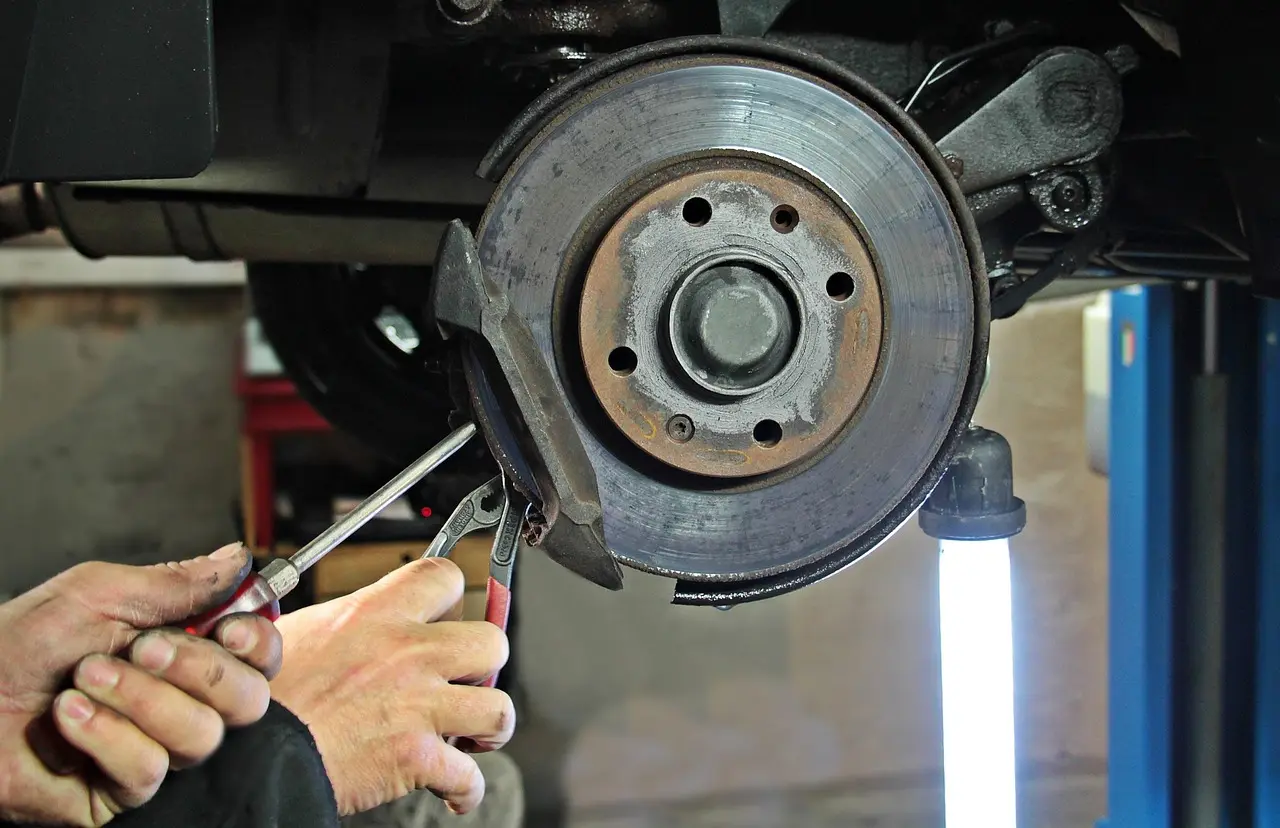


This matrix gives a practical mileage estimate from pad thickness, axle position, and driving pattern. Use it as a check, not as a substitute for measurement. Front pads usually need attention sooner than rear pads because they do more stopping work, and one wheel can wear faster than its mate on the same axle.
| Axle | Current thickness | Assumed new thickness | Wear rate per 1,000 miles | Estimated miles remaining | Action |
|---|---|---|---|---|---|
| Front | 2.0 mm | 12.0 mm | 0.30 mm | 0 to 3,000 | Replace now |
| Front | 3.0 mm | 12.0 mm | 0.25 mm | 0 to 4,000 | Replace now |
| Front | 4.5 mm | 12.0 mm | 0.20 mm | about 37,500 | Soon |
| Front | 6.0 mm | 12.0 mm | 0.15 mm | about 40,000 | Monitor |
| Rear | 2.0 mm | 10.0 mm | 0.18 mm | 0 to 2,000 | Replace now |
| Rear | 3.0 mm | 10.0 mm | 0.15 mm | about 20,000 | Soon |
| Rear | 4.5 mm | 10.0 mm | 0.12 mm | about 46,000 | Monitor |
| Rear | 6.0 mm | 10.0 mm | 0.10 mm | about 40,000 | Monitor |
How to read the table: the lower the current thickness, the less life remains. If the estimate is close to the low end of the range, use the more urgent action. If one pad is much thinner than the others, treat that corner as the limit, not the best-looking pad on the axle.
How many miles do brake pads last?
Brake pads can last 20,000 to 80,000 miles depending on vehicle, driver, and environment. City driving often lands around 25,000 to 40,000 miles, while highway commuting can reach 60,000 plus miles. Thickness matters more than the odometer, because two cars with the same mileage can have very different pad wear.
Why mileage ranges vary by axle
Front pads usually wear faster because they handle most stopping force. Front brakes do roughly 60 to 70 percent of the stopping force on most passenger vehicles. That means a front axle can need service while the rear pads still look usable. Rear pad life can be longer, but it is still limited by the same thickness checks.
Why thickness beats a guess from the odometer
Mileage tells you how much use the brake system has seen. Thickness tells you what is left. A driver who coasts on the highway may keep usable pads for many miles, while a stop-and-go commuter can wear through pads far sooner. If the pad is thin, the mileage guess does not matter.
How do you read pad thickness?
New brake pads usually start at about 10 to 14 mm. A common replacement threshold is around 3 mm, and below about 2 millimeters is often treated as a replace-now point. Around 1.5 mm is often used as an advisory threshold for very near-term service. Measure both pads on each axle, because in-board and out-board pads can wear at different rates.
Measuring in-board and out-board pads
Check the visible pad material, not the backing plate. The in-board pad can wear faster on some vehicles because it sits against the piston side of the caliper. The out-board pad may still look thicker, which can hide an uneven wear problem. If one side is much thinner, use the thinner measurement for your decision.
When 3 mm means plan a replacement
At 3 mm, the pad is not at the metal stage yet, but it is close enough that planning service makes sense. The wear tab on many pads may also begin to squeal near that point when the metal tab contacts the rotor. That warning is useful, but it should not be the first signal you wait for.
How the calculator works
The calculator turns thickness into miles remaining with a simple linear wear estimate. Start with assumed new thickness, subtract the current thickness, then divide by the wear rate per 1,000 miles. Use a front-axle or rear-axle wear rate, then tighten the estimate if the car is heavy, the route is hilly, or the commute is mostly stop-start.
- Measure pad thickness in millimetres on both sides of the axle.
- Use the thinner pad as the working number.
- Choose an assumed new thickness: often 10 to 14 mm.
- Pick a wear rate based on driving pattern and vehicle weight.
- Subtract current thickness from new thickness.
- Divide the result by wear rate to get estimated thousands of miles remaining.
- Label the result replace now, soon, or monitor.
Front axle and rear axle assumptions
For a normal passenger car, a front pad often wears faster than a rear pad because the front axle does more work under braking. A simple calculator may use a higher front wear rate and a lower rear wear rate. That split helps avoid a false sense of security when the rear pads still have more material left.
Wear-rate assumptions by driving pattern
Gentle highway use can be modeled with slower wear, normal mixed driving with midrange wear, aggressive braking with faster wear, and city driving with the fastest wear rate. City driving shortens pad life because of frequent stops. Towing, mountain driving, and stop-start commuting should push the estimate toward the faster side of the range.
What changes pad wear speed?
Driving style, vehicle weight, and route profile all change pad life. A light hatchback on a steady commute usually wears pads more slowly than an SUV on short urban trips. If the route includes hills, towing, or frequent hard stops, use a shorter remaining-mile estimate even when the measured thickness still looks fair.
Driving style and road use
Gentle braking leaves more pad material on the rotor. Aggressive braking removes material faster. City driving adds repeated heat cycles and repeated clamp events, so it usually shortens life more than highway use. Highway use is easier on pads because braking events are fewer and farther between.
Vehicle weight categories
Weight matters because more mass takes more force to slow down. A light hatchback usually asks less of the brakes than a medium family car. Heavy saloons and SUV or 4×4 models often need more brake work, especially in traffic or on hills. The heavier the vehicle, the more cautious the mileage estimate should be.
Common edge cases
EVs can wear pads slowly in normal driving because regenerative braking does part of the work, but the wear pattern can still be uneven if the friction brakes sit unused for long periods. Towing and mountain driving often create the opposite effect: faster wear and more heat. Stop-start commuting tends to age the front pads first.
Do front pads wear faster than rear?
Yes. On most passenger vehicles, front pads wear faster because the front axle does more stopping work and carries roughly 60 to 70 percent of the stopping force. Rear pads still wear, but usually at a slower rate. That is why a full brake check should list front and rear thickness separately.
How uneven wear shows up on one side
Uneven wear can show up as one front pad being much thinner than the other on the same axle, or one in-board pad wearing faster than the out-board pad. That can point to caliper guide issues, a sticking piston, or pad hardware that is not moving freely. Mileage alone will not catch that.
Say your front pads measure 4.5 mm on the outer side and 2.8 mm on the inner side. The car may still be driving normally, but the thinner inner pad is the one that controls the decision. That axle is already in the soon-to-replace range, even if the odometer does not look high.
Brake wear signs to check
Brake wear can announce itself with sound, feel, or stopping distance changes. Squeal from the wear tab often shows up when pads are low, commonly near 3 mm. Grinding usually means the pad material is gone and metal is contacting metal. A softer pedal or longer stopping distance also deserves immediate inspection.
Squeal from the wear tab
The wear indicator is often a small metal tab. When pad material gets low, the tab touches the rotor and makes a squeal. That sound is a warning, not a repair plan. If the pads are already near 3 mm, the squeal means service is due soon, not later.
Grinding and pedal feel
Grinding is more serious than squeal. It can mean the pad backing plate is contacting the rotor, which can damage the rotor surface and increase repair cost. If the brake pedal feels different, or if the vehicle needs more distance to stop, do not wait for the next mileage milestone.
Rotor thickness and pad replacement
Pad replacement is only part of the job if the rotors are still in usable shape. Rotors must stay above the stamped minimum thickness, and their condition matters too. Pads-only service is acceptable when the rotor surface and thickness remain within spec. If the rotor is below minimum or heavily damaged, it needs attention.
When pads-only service is acceptable
Pad-only service makes sense when the rotor is above its minimum thickness, not warped to the point of brake feel problems, and not deeply scored. A thin pad on a healthy rotor can be replaced on its own. The goal is safe braking, not a parts count.
When rotors need attention too
If the rotor is close to its minimum thickness, has deep grooves, or shows heat damage, replacing pads alone can leave a weak brake setup. A worn rotor also reduces the safety margin for the next set of pads. Always compare the measured rotor thickness with the stamped minimum before deciding.
Frequently asked questions
How many miles for brake pad replacement?
Brake pads can last 20,000 to 80,000 miles, but that range is too broad to use alone. Thickness and axle position should always override a simple odometer guess.
How many mm for brake pad replacement?
A practical replacement point is around 3 mm, with below 2 millimeters considered replace now. Around 1.5 mm is an advisory threshold for near-term service. If one wheel is much thinner than the other, follow the thinner reading rather than the average.
When should I replace brake pads at 3 mm?
At 3 mm, replacement should be planned soon rather than ignored. That thickness is close to the low end of normal service life, and the wear indicator may begin to squeal near that point. If the pads are 3 mm on the front axle, the decision should move faster.
How long do brake pads last in city driving?
City driving usually shortens pad life because of frequent braking and repeated heat cycles. A common mileage band is 25,000 to 40,000 miles, though vehicle weight and traffic pattern can shorten it further. If the route includes hills, traffic lights, or constant stop-start use, check thickness more often.
Do front brake pads wear faster than rear pads?
Yes. Front brakes do roughly 60 to 70 percent of the stopping force on most passenger vehicles, so front pads usually wear faster than rear pads. That difference is normal. If the rear pads are thinner than the front pads, inspect the calipers, hardware, and pad fitment.
How many miles between brake pad change
There is no single interval that fits every car. Many vehicles fall somewhere between 20,000 and 80,000 miles overall, but the better answer comes from measured thickness, wear pattern, and route type. Use the remaining-thickness estimate first, then compare it with the mileage band.
Products related to this article
Sponsored / affiliate links. As an Amazon Associate I earn from qualifying purchases. I may earn additional commission from eligible campaigns.