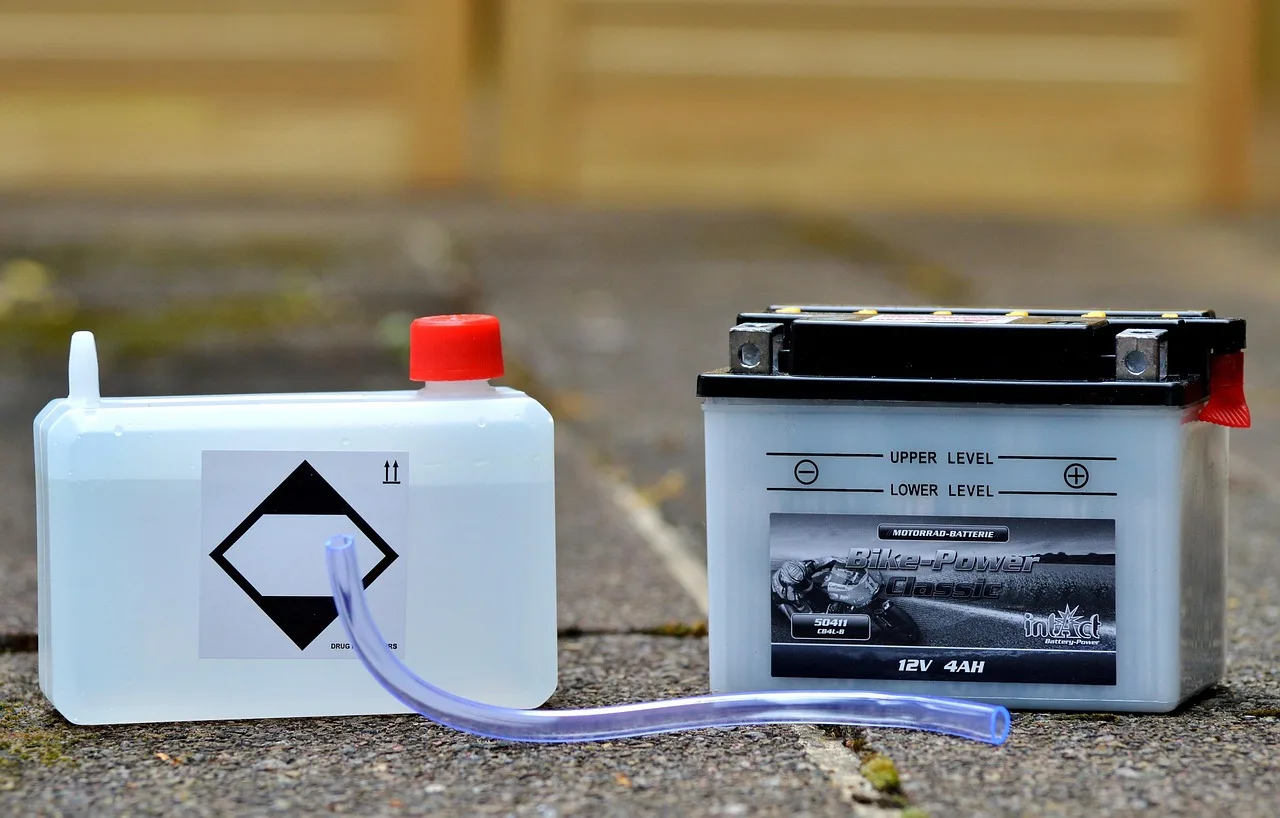
Alternator or Battery Problem: How to Tell the Difference
If running voltage stays under about 13.2V, suspect the alternator. Guessing at the wrong part wastes money and can leave you stranded again. This guide gives a symptom-to-test decision tree with voltage checks that separate battery, alternator, and wiring faults.
Battery and alternator basics


The battery stores electrical power for starting when the engine is off. The alternator supplies electricity to the battery and the vehicle’s electrical system once the engine runs. The charging system ties those parts together, with the voltage regulator controlling output and the serpentine belt driving the alternator.
Belt condition and connection quality matter because they can mimic a failed alternator. Loose battery terminals, corroded clamps, a slipping belt, or a bad ground can all lower charging voltage or create false warning lights. That is why a symptom list alone is not enough.
What the battery does
The car battery provides starting current before the engine is turning on its own. A weak battery usually shows itself most clearly when the vehicle is trying to start. Resting voltage gives you a first clue, but cranking voltage and load behavior matter too.
What the alternator does
The alternator charges the battery while the engine is running and powers vehicle systems while you drive. Alternators can typically last the lifetime of your vehicle, but when they fail, the problem often shows up after the engine has already started. Dim or overly bright lights are warning signs of a bad alternator. (Firestonecompleteautocare)
Where the voltage regulator and belt fit
The voltage regulator controls alternator output so the system does not undercharge or overcharge. The serpentine belt drives the alternator, so a loose or worn belt can create a charging problem that looks like alternator failure. That false positive matters because the repair is different.
What the symptoms point
Symptoms tell you where to look first. Startup trouble points more toward the battery. Trouble that appears after the engine is running points more toward the alternator or charging circuit. Repeated jump starts, dimming lights, and stalling while driving push the diagnosis toward charging-system testing rather than guessing.
Slow crank after sitting overnight
If the engine turns slowly after an overnight sit, the battery moves to the top of the list. A weak battery often struggles under starter load, especially in cold weather. Check terminals first, then measure resting voltage and cranking voltage before replacing anything.
Clicking with no crank
Clicking with no crank often means the starter is not getting enough current. That can happen with a weak battery, loose terminals, or a poor ground connection. A single click after a long sit is a battery-first clue, but a voltage test is the fastest way to separate low charge from a bad connection.
Starts then dies after a jump
If the vehicle starts with a jump but dies soon after, the alternator climbs higher on the list. That pattern means the battery had enough help to start the engine, but the charging system may not be sustaining the load. If it runs only a few minutes, test running voltage next.
Dimming lights, stalling, or warning light while driving
Lights that dim at idle and brighten when revved point to charging trouble. A battery-shaped warning light is a symptom of alternator problems, and the charging system warning light does not directly point to a failed alternator. A stall while driving is a strong alternator clue.
How do you tell battery from alternator trouble?
Use symptom location and voltage together. Battery trouble usually appears during starting, after the car has sat, or after a jump. Alternator trouble usually appears with the engine running, such as dimming lights, a warning light on the dash, or a stall. If both the battery is weak and the charging system is failing, both parts may need testing.
Startup symptoms versus running symptoms
Think in two phases. If the car struggles before it starts, focus on the battery, terminals, and cable connections. If the car starts normally and then develops electrical problems while driving, focus on the alternator, belt, and voltage regulator. That split keeps you from replacing the wrong part first.
What repeated jump starts mean
One jump start after a light left on can be a battery problem alone. Needing a jump again the next day is different. That pattern can mean a weak battery, a charging system that is not replenishing it, or a battery damaged by repeated undercharging. A battery and charging system test helps sort those cases out.
Say your sedan starts with a jump at 7 a.m., drives fine for 20 minutes, and then needs another jump after work. The second failure changes the odds. That is no longer just a cold-start battery complaint; it points toward a battery that is not holding charge, a charging fault, or both.
When both parts can be bad
A bad alternator can drain a good battery through repeated undercharging. After enough short trips or a failed alternator, the battery may no longer recover. In that case, replacing only one part can leave you with the same no-start problem a few days later.
Battery alternator test matrix
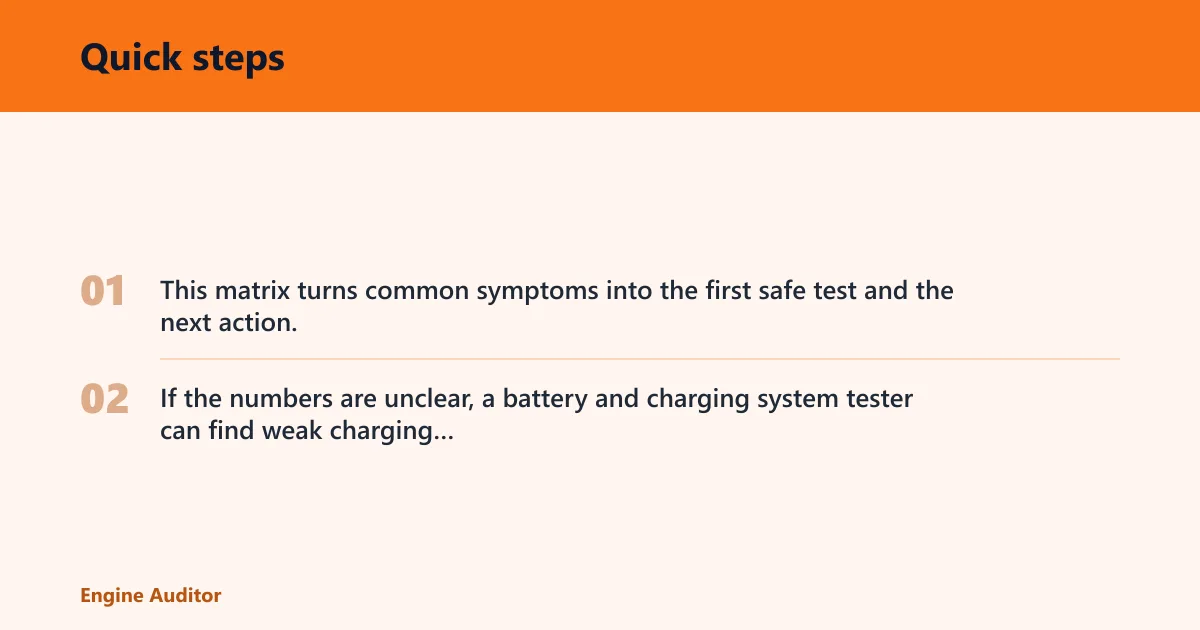
This matrix turns common symptoms into the first safe test and the next action. Use a multimeter if you have one. If the numbers are unclear, a battery and charging system tester can find weak charging output and failed alternator diodes. A shop test commonly costs from $30 to $50.
| Scenario | Most likely cause | First home test | Voltage clue | Next safe action |
|---|---|---|---|---|
| Slow crank after an overnight sit | Weak battery | Check resting battery voltage, then inspect terminals | Near 12.6V resting is expected; cranking below about 10V points to weakness | Charge and retest; replace if it will not hold charge |
| Rapid clicking with no crank | Weak battery or poor connection | Test battery voltage and cable tightness | Low resting voltage or a large drop while cranking | Clean/tighten connections, then charge-test the battery |
| Starts after a jump, then dies in a few minutes | Alternator or belt problem | Measure running voltage at the battery | Running voltage under 13.2V is a strong alternator clue | Stop driving and inspect the belt, alternator, and wiring |
| Battery light on while driving | Charging system fault | Check running voltage with the engine on | Light can mean charging trouble, not only a bad battery | Test the charging system before replacing the battery |
| Lights dim at idle, brighten when revved | Alternator output problem | Measure voltage at idle and at a raised idle | Low idle voltage with improvement when revved points to charging trouble | Inspect belt tension and schedule charging-system diagnosis |
| Headlights dim and dash lights flicker | Alternator or regulator | Check running voltage and belt condition | Outside the 13.5–14.8V running range needs attention | Use a battery and charging system tester |
| Cold morning no-start after a normal drive yesterday | Battery losing capacity | Test resting voltage before jump starting | Weak starting behavior is the main clue | Charge the battery, then retest after it sits |
| Jump start works once, but the car will not restart soon after | Battery not holding charge | Measure resting voltage after shutdown and again later | Rapid loss of charge after a full drive suggests battery trouble | Charge-test the battery before replacing the alternator |
| Battery keeps dying after a replacement | Charging fault or parasitic drain | Check running voltage and terminals | Undercharging can damage a good battery over time | Test the alternator, regulator, and vehicle draw |
| Car dies while driving on the highway | Alternator failure | Look for warning light and dimming lights before the stall | Running voltage drops below target before shutdown | Pull over safely and have it towed for charging-system diagnosis |
| New battery still reads low after driving | Alternator or wiring fault | Check charging voltage at the battery posts | Running voltage should increase to more than 13.5 Volts once started | Inspect belt, terminals, and alternator output |
| Warning light plus overly bright or flickering lamps | Voltage regulator or alternator problem | Measure voltage with the engine running | Readings above the normal running range can signal overcharge | Stop using the car until the charging system is checked |
What voltage should you see?
A healthy battery should read about 12.6V with the engine off. Once the engine starts, voltage should increase to more than 13.5 Volts. A running reading that stays under about 13.2V can point toward alternator trouble, while a weak battery often shows up during cranking rather than at rest.
Resting battery voltage
With the engine off and the car sitting, battery voltage gives a basic state-of-charge check. A battery that is near 12.6V is closer to full charge than one that sits well below that. If the battery loses charge quickly after driving, the charging system may be at fault or the battery may no longer hold energy.
Running voltage
With the engine running, the alternator should bring voltage above the resting level. The target is more than 13.5 Volts. If the number stays low, the alternator, regulator, belt, or wiring may be failing. If voltage is erratic, suspect the same group before replacing the battery again.
Picture a compact car that reads 12.6V off, then 12.9V running with the headlights on. That is too low for charging. If the same car jumps to 14.2V after a belt adjustment, the belt was the false positive, not the battery.
When the numbers point to charge, test, or replace
Use this simple cutoff logic. Charge the battery if it is low but still behaves normally once charged. Test both battery and charging system if the engine starts and then voltage stays abnormal. Replace a battery that will not hold charge after proper charging, or replace the failed alternator path when running voltage stays below target or the system overcharges.
What if the car clicks or needs a jump again?
A click on a cold morning usually starts with the battery and its connections. If the car needs a jump again the next day, do not stop at the jump result. Check resting voltage, inspect the terminals, and look for a charging fault if the battery keeps going flat after normal driving. That pattern often needs both battery and alternator testing.
Cold morning no-starts
Cold weather lowers battery output and makes weak batteries obvious. If the engine clicks or cranks slowly only after sitting overnight, start with the battery. Clean the posts, tighten the clamps, and measure resting voltage before replacing the alternator.
Jump-starts that work once
A jump that works once but not again suggests a battery that is not recovering, a charging system that is not replenishing it, or both. If the engine runs normally after the jump but the next start fails, the battery may be weak. If it starts and then dies while driving, the alternator becomes the stronger suspect.
Battery keeps dying after charging
If a battery charger restores the battery only for it to go flat again, look for charging-system failure or a damaged battery. Repeated undercharging can ruin a battery that was otherwise good. A battery and charging system tester can separate low capacity from low alternator output and failed diodes.
What if the car dies while driving?
If the car dies while driving, treat it as a charging-system problem until proven otherwise. A bad alternator often shows up once the engine is already running, and a stall while driving is a strong alternator clue. Dim lights, a battery warning light, or a sudden loss of accessories all support that direction.
Alternator failure signs on the road
Watch for dimming headlights, flickering dash lights, and accessories slowing down before the stall. Those are charging-system clues, not classic battery-only clues. If the serpentine belt is loose or damaged, the alternator may not be turning fast enough to keep up.
Battery light and dimming lights
A battery-shaped warning light can point to alternator trouble, and the charging-system light does not directly mean the alternator has failed. It means the system needs testing. If the lights brighten when revved, that is another sign the alternator output is not stable at idle.
Safe next step after a stall
Pull over safely and stop trying to restart it repeatedly. A stalled charging system can leave the battery too weak for another start. Check the belt and connections only after the engine is off and safe to inspect, then arrange a charging-system test before throwing parts at it.
Frequently asked questions
How do you distinguish between a battery problem and an alternator problem?
Use where the symptom appears. Battery trouble shows up during starting, after the car sits, or when it clicks instead of cranking. Alternator trouble shows up after startup, while driving, or when lights dim and the battery warning light appears. Voltage testing separates the two more reliably than symptom guessing.
What are the most reliable signs of an alternator vs battery problem?
Slow cranking, clicking, and a weak start point more toward the battery. Dimming lights, stalling while driving, and a warning light that appears after startup point more toward the alternator or charging system. If voltage stays under 13.2V while running, the alternator moves to the front of the list.
How do you know if it’s a battery or alternator problem when the car clicks?
Clicking usually means the starter is not getting enough current. Start with the battery, the terminals, and the ground connections. If the resting voltage is low or the cranking voltage falls below about 10V, the battery is weak. If the battery tests well, look harder at connections and the starter circuit.
How do you know if it’s a battery or alternator problem when the car dies while driving?
A car that starts fine but dies while driving is a strong alternator clue. Check whether the battery light came on first, whether the headlights dimmed, and whether the engine stumbled at idle before the stall. Those signs point to charging failure more than a bad battery alone.
What voltage should a car battery have with the engine off and running?
With the engine off, a healthy 12V battery reads about 12.6V. With the engine running, voltage should increase to more than 13.5 Volts and usually fall in the 13.5–14.8V range. If running voltage stays under 13.2V, suspect the alternator or another charging-system fault.
Can a bad alternator ruin a good battery?
Yes. A failing alternator can leave the battery undercharged again and again, and repeated undercharging can damage a battery that was otherwise good. That is why a battery that keeps dying after the alternator appears to be “fine” still needs the full charging system checked, not only the battery itself.
What should I test first if my car needs a jump start again the next day?
Test the battery first, then the charging system. A repeated next-day jump points to a battery that is weak, not holding charge, or being drained by a charging fault. Measure resting voltage, inspect the terminals, then check running voltage and belt condition before replacing parts.
Does a battery warning light always mean the battery is bad?
No. The battery-shaped warning light is often a symptom of alternator problems, and the charging system warning light does not directly point to a failed alternator. It means the charging system needs voltage testing. The battery may be fine, or it may already have been drained by the charging fault.
Diagnosing alternator vs battery
Use a multimeter, not a guess. Check resting battery voltage, then check charging voltage with the engine running. Add a belt and connection inspection because loose terminals and a slipping serpentine belt can mimic a failed alternator. If the numbers do not settle the question, move to a battery and charging system tester.
Products related to this article
Sponsored / affiliate links. As an Amazon Associate I earn from qualifying purchases. I may earn additional commission from eligible campaigns.