Best Vehicle Types for RWD (2026): research shows
Rear-wheel drive fits best when towing, rear-axle traction under load, or balanced handling matter more than space efficiency. Full-size pickups are the top RWD fit because they are built for payload and towing; sports cars and some performance sedans come next. A poor match is a commuter that needs the easiest winter setup.
Quick comparison
| Product | Badge | Best for | Price | ||
|---|---|---|---|---|---|
 |
Solido 1:43 Scale BMW M3 Competition Sedan Sao Paulo YellowSolido | Our pick | 1:43 scale · diecast metal · Sao Paulo Yellow | $34.99
Price as of 13 Oct 2026
|
View |
 |
Maxx Action Tow & Go Steel Pick Up Truck Toy – Heavy DutyMaxx Action | Also great | Steel off-road pickup · push-and-go · lights & sounds | $39.99
Price as of 13 Oct 2026
|
View |
RWD, FWD, AWD, and 4WD solve different problems. The right choice depends on body style, winter exposure, towing, and how much packaging space you want to give up for a driveshaft and rear differential.
If you want the simplest daily-driver fit, FWD usually wins. If you want traction help in mixed weather, AWD is often the middle ground. If towing, load transfer, or chassis balance matters most, RWD and 4WD body-on-frame vehicles belong on the shortlist.
How we chose
This guide ranks vehicle types by four practical questions: how they tow, how they behave in winter, how efficiently they package people and cargo, and how strongly the drivetrain fits the body style. Availability matters too, because some platforms are RWD by default while others only offer it on certain trims.
That means a drivetrain label is not enough. A pickup with RWD is a different answer from a sedan with RWD, and a van with RWD is a different compromise again.
Full-size pickup trucks: best for towing and payload

- Built from durable steel for rugged play
- Free-rolling push-to-go design
- Working winch with realistic lights and sounds
Full-size pickup trucks are often a natural fit for rear-wheel drive, since the rear axle can benefit from load transfer. RWD is the default on many of these trucks, and 4WD is often an option on the same body-on-frame platform when a buyer needs more traction.
That layout suits towing and heavy payload use. Weight shifts rearward during acceleration, and the drive wheels benefit from that shift. Towing can also favor RWD because the trailer weight sits closer to the drive wheels than it does in a front-drive layout.
The trade-off is obvious. If you routinely drive on packed snow, steep boat ramps, or muddy job sites, 4WD may be worth the added cost and complexity. If most miles are paved and the truck pulls or carries heavy loads, RWD often makes more sense than paying for 4WD you rarely use.
Sports cars: best for handling balance
- Accurate BMW M3 Competition Sedan replica
- Diecast metal body with detailed finish
- Collector-grade display model for ages 14+
Sports cars are one of the clearest RWD use cases because rear-wheel drive supports balanced chassis tuning and clean steering feel. In a RWD layout, the front wheels can focus on steering while the rear wheels put power down, which explains why RWD is common in sports cars and high-performance sedans.
That split also helps avoid torque steer, a pulling sensation that can appear when front wheels must both steer and drive under hard acceleration. For performance buyers, the appeal is direct. It is about steering precision, rear-axle traction under acceleration, and a chassis that can be tuned for rotation and control.
Still, AWD can make more sense if the car will see frequent rain, cold starts, or winter roads where traction off the line matters more than pure rear-drive feel. A common first-timer mistake is choosing a performance sedan for its handling badge, then discovering the commute includes untreated hills and slush half the year.
Luxury sedans and full-size sedans: best for comfort-first buyers who still want rear-drive manners
Luxury sedans often come with RWD or AWD because premium buyers may want dynamic handling without giving up highway comfort. Full-size sedans can also use RWD, but the case is weaker than it is for sports cars or pickups because these cars are usually judged more by ride quality, cabin packaging, and winter convenience.
RWD can still make sense here. It can improve handling by balancing front-to-rear weight, and the front wheels can focus on steering. But the packaging cost is real: a driveshaft running front to rear takes space, and RWD may reduce passenger space compared with an equivalent FWD model.
That is why some sedan buyers should avoid RWD. If rear seat room, trunk access, or the easiest snowy commute matters more than steering feel, FWD often wins on packaging and practicality. AWD becomes the better premium choice when the buyer wants a sedan body with more confidence in mixed weather.
Truck-based SUVs and vans: when RWD makes sense, and when it does not
Truck-based SUVs often start from an RWD platform and may offer 4WD as an option. That makes sense because these vehicles share body-on-frame packaging with pickups, and many are used for towing, family hauling, or light off-road work rather than maximum cabin efficiency.
Vans sit in a different place. RWD vans can handle load carry and towing well, but they are usually not bought for driver feel. They are bought for cargo volume, passenger capacity, or upfit flexibility, which means the packaging penalty of a rear-drive layout matters less than it does in a sedan.
For winter use, the fit depends on the mission. A family SUV or van that spends time on unplowed roads may be better served by AWD or 4WD, while a cargo van on plowed routes can stay perfectly sensible in RWD. Tires and traction control matter more here than a badge on the tailgate.
What is rear-wheel drive?
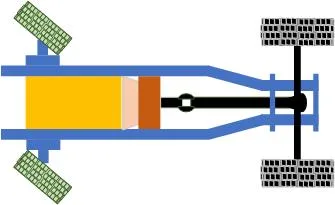
Rear-wheel drive sends engine power to the rear wheels only. The front wheels steer, while the rear wheels provide propulsion in a rear-wheel-drive setup. It is a 2WD drivetrain common on trucks, sports cars, and some sedans, and it is less common now because of cost and packaging reasons. (caranddriver.com)
Mechanically, RWD usually needs a driveshaft to run power from the engine to the rear axle, along with a rear differential. That hardware is part of why RWD can reduce passenger space in smaller bodies. The trade-off buys rear-axle traction under acceleration and cleaner steering duties up front.
Are most cars rear wheel drive?
No. Many passenger cars are no longer rear-wheel-drive-focused, and front-wheel drive is still a common space-efficient choice for many mainstream sedans, hatchbacks, and crossovers. RWD remains common in trucks, sports cars, and some sedans, but it is not the default layout for the average car shopper.
The reason is simple. FWD packages power more compactly, leaving more room for passengers and cargo. RWD can improve handling balance, but that benefit matters more in certain body styles than in the typical commute-focused compact or midsize car.
What vehicles are rear wheel drive?
Full-size pickup trucks, truck-based SUVs, sports cars, and some luxury or performance sedans are the main RWD categories. Many full-sized pickups and truck-based SUVs use RWD, and truck-based pickups and SUVs are often offered with optional 4WD when buyers need more traction.
You can also find RWD in vans and a smaller share of full-size sedans. Those cases are usually driven by packaging, towing, or platform sharing rather than a pure handling mission. If a vehicle’s job is heavy work or performance tuning, RWD becomes more likely.
Is rear wheel drive good?
Yes, but only for the right job. RWD is good when towing, acceleration balance, steering feel, or rear-axle traction under load matter more than maximum winter grip or the easiest cabin packaging. That is why pickups, sports cars, and some performance sedans often use it.
It is less attractive when the buyer wants a simple all-weather commuter or the most efficient interior layout. A RWD system asks for a driveshaft and rear differential, and that mechanical layout can take space that FWD would otherwise leave for people or cargo.
Are most trucks rear wheel drive?
Yes. Many trucks are rear-wheel drive by default, especially full-size pickups. Many also offer 4WD, which gives the buyer a traction step up for snow, dirt, or off-road use. That default makes sense because trucks are built for loads, towing, and rear-axle weight transfer.
For truck buyers, the real question is often not RWD versus FWD. It is RWD versus 4WD. If the truck will tow on pavement and see only occasional bad weather, RWD can be enough. If it will work in rough terrain or deep winter, 4WD usually earns its keep.
Is rear wheel drive bad in snow?
Not automatically. RWD is usually worse than FWD or AWD in slippery conditions without the right tires, but winter tires and traction control change the picture a lot. Since all passenger vehicles sold in the U.S. starting with 2012 have electronic stability control, the old RWD winter reputation is less absolute than it used to be. (consumerreports.org)
Winter tires matter because they improve stopping and turning, not just acceleration. That is a big deal. A RWD car on all-season tires may feel poor in snow, while the same car on winter tires can be far more manageable for careful drivers on plowed roads.
Say your driveway slopes up 40 feet and the neighborhood gets packed snow twice a week. A RWD sedan on worn all-seasons may spin its rear tires at the curb. Put winter tires on it, and the same car becomes a much more realistic winter commuter, though still not the easiest choice.
When should I choose RWD over FWD or AWD?
Choose RWD when towing, performance, or rear-drive chassis feel matter most. That usually means a full-size pickup, a body-on-frame SUV, a sports car, or a performance sedan. Choose AWD when you face regular snow, ice, or mixed weather and want traction help without moving to a truck-based platform.
Choose FWD when your priorities are commuting, simpler packaging, and efficient use of cabin space. FWD remains the cleanest fit for many mainstream cars because it is space-efficient and common in most passenger vehicles.
Suppose you are comparing two midsize sedans, one RWD and one FWD, for a 12-mile commute and occasional grocery runs. If winter is mild and you value steering feel, the RWD car may be fine. If rear-seat space and bad-weather ease matter more, FWD is the better bet.
Does rear wheel drive help with towing?
Yes. Towing can favor RWD because trailer weight is closer to the drive wheels, and rearward weight transfer under acceleration helps the driven axle. That is one reason trucks and truck-based SUVs often start with RWD before adding 4WD as an option.
RWD is not magic, though. A trailer still changes braking, stability, and cooling demands, so proper tow ratings and the right hitch setup matter more than drivetrain branding alone. For a tow vehicle, RWD is a strong base, not a free pass.
Which cars and trucks usually use rear-wheel drive?
Full-size pickups, truck-based SUVs, sports cars, and some luxury or high-performance sedans are the usual RWD groups. Those bodies benefit from the layout for towing, rear-axle traction, handling balance, or platform packaging. Vans can also use RWD, mainly for cargo and payload reasons.
By contrast, mainstream compact cars, many midsize crossovers, and most everyday commuter sedans usually lean toward FWD. That split reflects what each body style is trying to optimize: space and efficiency on one side, work capability or dynamic feel on the other.
Frequently asked questions
What is rear-wheel drive?
Rear-wheel drive is a drivetrain where the engine sends power to the rear wheels only. The front wheels steer, and the rear wheels propel the vehicle. It is common on trucks, sports cars, and some sedans, especially when towing or handling balance matters.
Are most cars rear wheel drive?
No. Most passenger cars are not rear-wheel drive. Front-wheel drive remains common because it is space-efficient and works well for everyday commuting. RWD still appears in trucks, sports cars, some luxury sedans, and a smaller number of full-size sedans.
What vehicles are rear wheel drive?
Full-size pickup trucks, truck-based SUVs, sports cars, and some luxury or performance sedans are the main RWD vehicles. Vans can also be rear-drive. In each case, the layout usually supports towing, handling balance, or body-on-frame packaging more than pure fuel economy.
Is rear wheel drive bad in snow?
It can be, but the real issue is tires and traction. RWD on all-season tires is usually poor on snow and ice. Add winter tires and standard stability control, and many RWD vehicles become workable for careful drivers on plowed roads.
Does rear wheel drive help with towing?
Yes. RWD can help towing because load transfer shifts weight rearward, which helps the drive wheels. That is one reason many pickups and truck-based SUVs use RWD by default and offer 4WD only when buyers need extra traction for off-road or winter use.
When should I choose RWD over FWD or AWD?
Choose RWD when towing, rear-drive handling, or truck-based packaging matters most. Choose AWD when winter traction is a regular concern. Choose FWD when you want the simplest, space-efficient commuter setup. Winter tires can matter more than the drivetrain label in snow.
Products related to this article
Sponsored / affiliate links. As an Amazon Associate I earn from qualifying purchases. I may earn additional commission from eligible campaigns.