Does an Engine Block Heater Reduce Oil Wear During Winter Starts?
Yes, a block heater can reduce wear during winter starts by warming the block and oil enough to shorten the first part of startup when oil is thick and circulation is slow, but the size of that benefit depends on temperature, parking conditions, engine design, and oil grade. In mild weather or easy-start conditions, the effect is much smaller. This guide explains when a block heater helps, when it mostly improves starting, and what limits its benefit.
Does a block heater reduce wear?
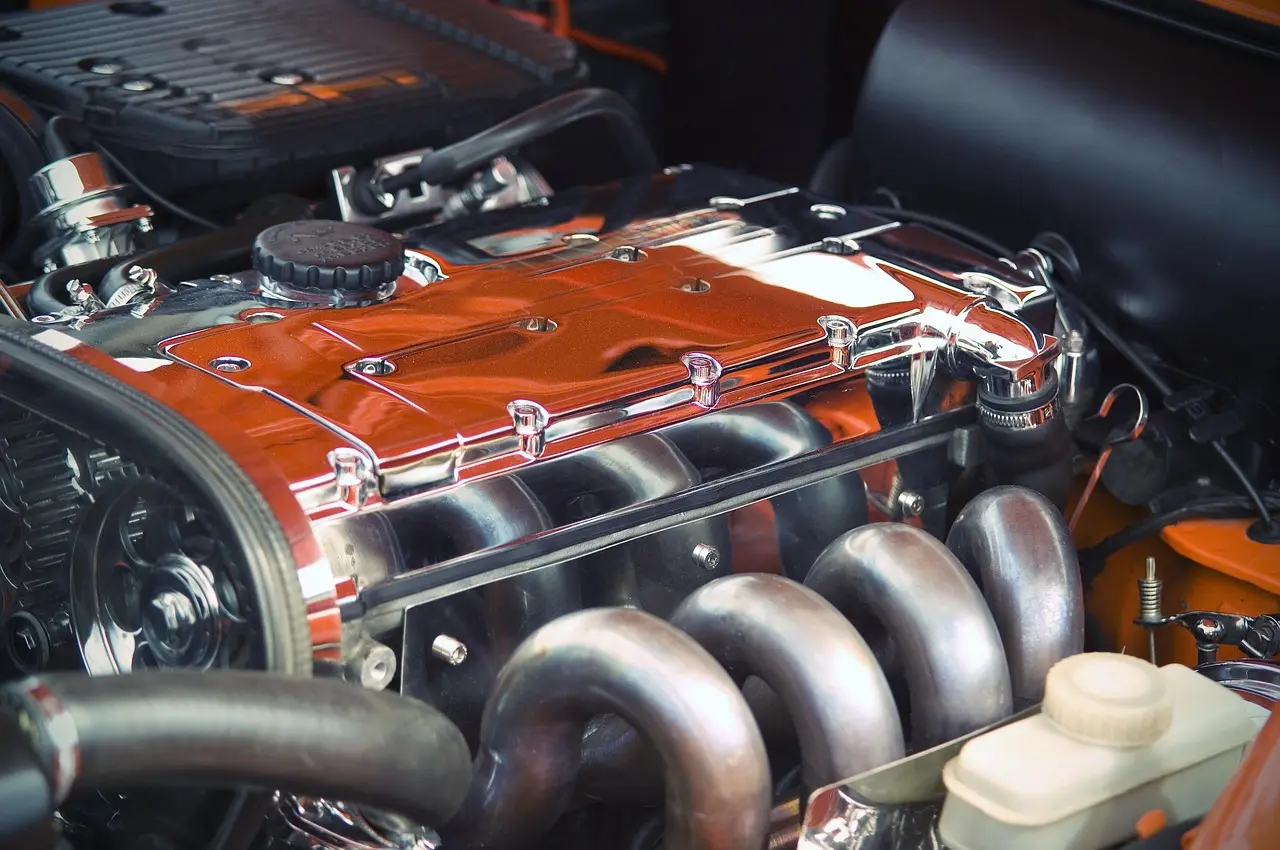


Yes, when cold weather makes the oil thick enough to slow circulation. A block heater pre-warms the engine block before startup, and in many designs it also warms coolant, which helps the engine reach a usable oil temperature sooner. That shortens the period when bearings, cam lobes, and cylinder walls see slower oil delivery.
The benefit is real, but conditional. A block heater does not eliminate cold-start wear; it reduces the worst part of the startup lubrication window. If the engine already starts cleanly in mild weather, or if the vehicle sits in a heated garage, the added wear reduction is usually modest. Its biggest value is in very cold overnight starts.
What the heater changes during startup
Cold oil thickens and moves more slowly through galleries, filter passages, and valvetrain oiling paths. That delay matters because oil temperature lags behind coolant and block temperature, so the first moments after cranking are when metal parts are least protected. A heater helps the oil reach the bearings sooner and shortens the time spent in the hardest part of the startup cycle.
When the wear benefit is small
Benefit falls off when the engine is parked in mild temperatures, when it is restarted after a short stop, or when the oil grade already flows well in the expected cold. In those cases, the heater may still help the engine start more smoothly, but it does less to change the wear pattern that matters most.
When the wear benefit is most likely
It matters most after long outdoor parking, especially overnight, in subfreezing weather. It also matters more on engines that are already slow to crank, vehicles that sit for days, and diesel engines that rely on several cold-start aids at once. If the starter spins slowly and oil pressure takes longer to build, the heater is doing useful work.
How cold starts wear engine oil
Cold temperatures make engine oil thicker and slower to flow, so the crankshaft, bearings, cam lobes, and cylinder walls get a thinner oil film during cranking and the first seconds after fire-up. That is the wear window a block heater tries to shorten. Battery output also drops in freezing temperatures, which lowers cranking speed and can stretch the cold-start period even more.
Cold oil and slow circulation
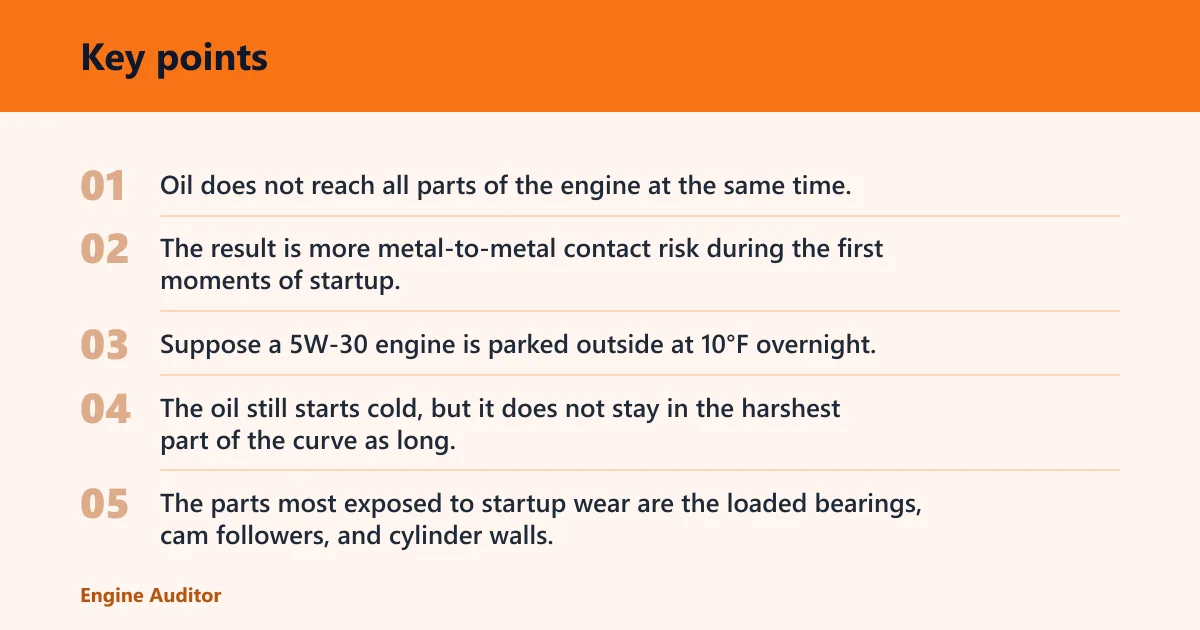
Oil does not reach all parts of the engine at the same time. Until pressure stabilizes, the film on loaded parts is thin, and thick cold oil takes longer to circulate through the pump, filter, and galleries. The result is more metal-to-metal contact risk during the first moments of startup.
Suppose a 5W-30 engine is parked outside at 10°F overnight. A block heater can raise block temperature enough that the oil is less stiff at cranking, so the pump moves it sooner and the engine reaches stable lubrication faster. The oil still starts cold, but it does not stay in the harshest part of the curve as long.
Bearing, cam, and cylinder wall protection
The parts most exposed to startup wear are the loaded bearings, cam followers, and cylinder walls. Those surfaces depend on quick oil delivery and good film strength, which cold oil delays. A heater helps by shortening the time until oil pressure, splash, and return flow are more normal.
Battery cranking power and starter speed
Cold weather cuts battery cranking power, so the starter turns the engine more slowly. Slower cranking means lower oil pump output and longer time before pressure builds. That is why a block heater can help even when the oil itself is not the only problem: it reduces engine drag and the starter does less work.
Block heaters, coolant heaters, and glow plugs
An engine block heater and a coolant heater are often grouped together because many designs warm coolant in the block or nearby passages before startup. Glow plugs solve a different problem. On diesels, they heat the combustion chamber so fuel ignites more readily; they do not pre-warm the block or oil in the same way.
Engine block heater and coolant heater overlap
Some block heaters are immersion-style units. Others warm coolant through a heater hose or a block-mounted element. Both aim to reduce cold-start strain, but the exact path of heat transfer differs. The practical result is similar: a warmer engine mass and faster heat spread after startup.
What’s the difference between a block heater and glow plugs?
A block heater warms the engine before cranking, which helps oil flow and lowers starter load. Glow plugs work inside a diesel engine’s combustion chamber to help ignition after the key is turned. They can overlap in winter use, but they solve different problems and do not replace each other.
Why diesels need a different cold-start plan
Diesels often need more than pre-heating. Winter fuel and anti-gel protection matter because fuel gelling can stop a diesel from running even when it starts. In cold climates, the full plan may include glow plugs, a block heater, winterized fuel, and a battery that still has enough reserve to crank hard.
Winter start decision table
This table gives a practical read on when a block heater is useful, very useful, or close to necessary. The answer changes with outside temperature, parking duration, exposure, and oil viscosity. Use it as a decision aid, not as a promise of a fixed wear reduction.
| Outside temperature | Vehicle type | Parking duration | Garage vs outdoor exposure | Oil viscosity | Suggested plug-in time | Expected block-heater benefit | When oil choice alone is enough |
|---|---|---|---|---|---|---|---|
| 32°F to 20°F | Gasoline | Overnight | Outdoor or unheated garage | 5W-30 or thinner winter-grade oil | Several hours before starting | Useful; mostly faster starting and somewhat shorter oil-thickening delay | Often enough if the vehicle is sheltered and starts easily |
| 20°F to 0°F | Gasoline | Overnight | Outdoor exposure | 10W-30 or 5W-30 | Several hours before starting | Very useful; stronger reduction in cold-start strain and starter load | Sometimes enough in a garage with the right oil and a healthy battery |
| 0°F to -20°F | Gasoline | Overnight or longer | Outdoor exposure | Appropriate winter-grade oil | Several hours before starting | Very useful; often close to necessary for easy cranking in exposed parking | Rarely enough by itself in exposed parking |
| 20°F to 0°F | Diesel | Overnight | Outdoor or unheated garage | Winter-grade diesel engine oil | Several hours before starting | Very useful; best used with glow plugs and winter fuel prep | Sometimes enough only when fuel, battery, and glow plugs are already in good shape |
| 0°F to -20°F | Diesel | Overnight or longer | Outdoor exposure | Winter-grade diesel engine oil | Several hours before starting | Close to necessary if reliable starting and lubrication are the goal | Unlikely; oil choice alone usually is not enough in exposed conditions |
| Above 32°F | Any | Short stop | Garage or outdoor | Any manufacturer-approved oil | Not usually needed | Small benefit; often not worth the hassle unless the vehicle is hard to start | Usually enough if the engine is otherwise healthy |
Quick checklist by scenario:
- If the vehicle sits outdoors overnight in colder weather, plug in the heater ahead of time and use the recommended oil grade for the climate.
- If the vehicle is parked in a garage and starts easily, the heater may be optional, especially if the oil is already suited to winter use.
- If cranking is still slow after pre-heating, check battery condition and cord power before assuming the heater is ineffective.
- If you drive a diesel, confirm glow plugs and winter fuel readiness as well as heater use.
- If the engine is only sitting for a short stop, the heater usually adds less than proper oil viscosity and battery health.
How much help does it give?
The answer depends on how cold it is, how long the vehicle sat, and how thick the oil is at startup. The colder the oil and the longer the parking interval, the more the heater can shorten the startup lubrication window. In mild weather, the same heater may change little beyond easier cranking.
What temperatures make a block heater useful?
Above freezing, a block heater is usually a convenience. Between 20°F and 0°F, it becomes a meaningful wear-reduction tool, especially for overnight parking. Below 0°F, the heater can change whether the engine starts quickly, cranks slowly, or struggles to build pressure before the first seconds of operation are over.
Parked overnight versus short stops
Overnight parking gives oil time to cool fully, so the heater has a larger gap to close. A short stop leaves the engine warmer, which means less thickening and a smaller cold-start period. That is why a heater matters much more at 6 a.m. after a driveway overnight than after a 30-minute errand.
Oil viscosity and heater benefit together
Oil grade and heater use work together. A winter-grade oil that flows better at low temperature can reduce the benefit of the heater, but it also lowers wear on its own. If the oil is already well matched to the climate, the heater’s job is to shave time off the hardest part of startup, not to rescue a poor oil choice.
What else should you change?
A block heater should be one part of the cold-start plan, not the whole plan. Winter-grade oil, battery condition, and fuel-system prep matter just as much in many cases. If any one of those is weak, the heater may improve startup yet still leave wear, slow cranking, or fuel problems on the table.
Winter-grade oil choice
Use the viscosity the manufacturer allows for the climate you face. The goal is faster circulation during cranking, especially in the first seconds after start. A heater and the right oil together are stronger than either one alone.
Diesel fuel and anti-gel protection
Diesel owners need winter fuel and anti-gel protection when temperatures drop far enough to thicken or gel fuel. That issue is separate from oil wear, but it affects whether the engine will start and stay running at all. Glow plugs and a block heater do not replace fuel preparation.
Warm-up before heavy load
Let the engine settle briefly before heavy throttle, towing, or high rpm. A block heater helps the engine start from a better place, but cold oil still needs a short time to reach full flow and normal operating temperature. Heavy load right away shortens the margin the heater just created.
How to tell when the heater is not helping enough
-
Check for power first. Make sure the outlet is live and the heater has been plugged in long enough. Many block heaters require connection to external power several hours before starting, and no power means no pre-warm benefit at all.
-
Inspect the cord and plug. Look for cuts, brittle insulation, loose prongs, or heat damage. A damaged cord can stop heat output or create a poor connection that makes the heater act weak even when the outlet is fine.
-
Match the oil to the cold. If the engine still cranks slowly after pre-heating, the oil may be too thick for the temperature or overdue for replacement. Cold oil that is wrong for the climate can overpower the benefit of the heater.
-
Confirm battery health. If starter speed is still low, the battery may be losing cranking power in the cold. A heater cannot fully make up for weak battery reserve, especially after a long night outdoors.
-
Check the parking setup. If the vehicle sits in wind, extreme exposure, or no-power parking, the heater may not be practical every night. In that case, the device can still help on the coldest mornings, but it will not change every start.
A common first-timer mistake is assuming the heater failed because the engine still feels cold after startup. The real issue may be that the heater only shortened the worst part of the lubrication window; it did not make the whole engine warm. If the oil still moves slowly and the battery is weak, some wear remains.
Can a block heater reduce battery strain in winter?
Yes. By warming the engine and thinning the oil slightly before cranking, a block heater lowers the load on the starter and the battery. That means the engine turns faster and reaches oil pressure sooner, which helps both starting reliability and the length of the startup lubrication window.
Frequently asked questions
Does an engine block heater reduce engine wear on cold starts?
Yes, when cold starts are a real problem. A block heater can reduce wear by warming the block and oil enough to shorten the first seconds after startup, when oil is thick and slow to circulate. It does not remove cold-start wear; it mainly trims the hardest part of it.
How much does a block heater help in winter?
Its help rises sharply as temperatures fall. In mild weather, it mostly improves starting comfort. In freezing conditions, it can shorten the cold-start period, reduce starter load, and make oil reach bearings sooner. The colder the overnight park, the more useful it becomes.
Is a block heater worth it if my car already starts fine?
If the car starts easily in the cold you face, the heater may be optional rather than necessary. It still can reduce stress on the starter and shorten oil-thickening time, but the gain is smaller. The value depends on how cold the mornings get and how long the vehicle sits.
How long should you plug in a block heater before starting?
Many block heaters require connection to external power several hours before starting. The exact time depends on heater design, outside temperature, and how cold the engine is. For overnight cold, plugging in ahead of time is the most reliable way to get a useful pre-warm.
Does a block heater warm the oil or just the coolant?
It depends on the design. Some heaters warm the block and coolant, and that indirect heat helps oil warm sooner too. Others mainly heat the block or coolant passage. Either way, the practical goal is faster oil circulation and less time spent in the harsh startup window.
Do block heaters help diesel engines more than gas engines?
Often yes, because diesels face more starting variables. Glow plugs heat the combustion chamber for ignition, but diesels still benefit from warmer oil, easier cranking, and winter fuel protection. Gas engines can benefit too, yet diesels usually have more to gain in severe cold.
What oil changes or oil choices matter most with a block heater?
Use a winter-appropriate viscosity that the manufacturer approves. A block heater and better cold-flow oil work together: the heater shortens the coldest phase, and the oil itself circulates faster. If the oil grade is wrong for the temperature, the heater cannot fully compensate.
Products related to this article
Sponsored / affiliate links. As an Amazon Associate I earn from qualifying purchases. I may earn additional commission from eligible campaigns.