Why Is My Car Tire Wobbling? Causes You Should Not Ignore
If you’re driving and suddenly notice a strange vibration, rhythmic thumping, or even a side-to-side movement from your steering wheel, you’re likely experiencing a wobbling tire. Far from being a minor nuisance, a wobbling tire can quickly escalate from an uncomfortable ride to a serious safety hazard. Many drivers ignore these early warning signs, hoping they’ll resolve themselves, but the truth is that tire wobble signals underlying issues that should never be overlooked.
Understanding why your car tire is wobbling isn’t just about improving comfort—it’s about protecting yourself, your passengers, and your investment. This comprehensive guide delves into the most common—and some often overlooked—causes of tire wobble, what they mean for your vehicle, and how to address them before they lead to costly repairs or dangerous situations.
Whether you’re a seasoned car owner or new to driving, arming yourself with this knowledge is essential for safe, confident travels.
Key Takeaways
- Tire wobble is usually a sign of underlying mechanical or tire-related issues that require immediate attention.
- The most common causes include wheel imbalance, bent rims, suspension problems, and worn bearings.
- Ignoring a wobbling tire can lead to dangerous driving conditions, increased repair costs, and accelerated tire wear.
- Early diagnosis and prompt repair not only enhance safety but also help maintain vehicle value.
- Routine maintenance checks can prevent most tire wobble issues before they start.
- Real-world cases show that swift action can make the difference between a minor fix and a major repair bill.

Credit: www.spinchill.com
Understanding Tire Wobble: What Is It And Why Does It Matter?
A tire wobble is more than just an uncomfortable sensation; it’s a warning sign that your vehicle’s stability and safety are compromised. Recognizing the symptoms and underlying mechanisms is the first step toward effective resolution.
What Is Tire Wobble?
Tire wobble refers to a noticeable side-to-side or up-and-down movement of a car’s wheels, often felt through the steering wheel or the seat. This oscillation typically becomes more pronounced at certain speeds—often between 30 and 60 mph—but can occur at any velocity depending on the underlying cause.
The sensation of tire wobble can sometimes be mistaken for other issues, such as engine vibration or transmission problems. However, tire-related wobbles generally synchronize with the rotation of the wheels, making them rhythmically timed with your speed. The severity of the wobble may vary based on factors such as road conditions, tire type, and vehicle load, and sometimes it can even disappear at certain speeds, only to return later.
How Tire Wobble Affects Vehicle Safety
A vehicle experiencing tire wobble is at increased risk for:
- Loss of vehicle control
- Premature tire and suspension wear
- Reduced braking effectiveness
- Potential for tire blowouts
According to the National Highway Traffic Safety Administration, tire-related issues contribute to thousands of accidents annually in the United States. Addressing wobble promptly is a critical step in accident prevention.
Wobbling also creates unpredictable handling characteristics. For example, during emergency maneuvers, even a slight oscillation can amplify steering corrections, leading to oversteer, understeer, or delayed response. This means that you may not be able to avoid obstacles or react as quickly as needed, particularly on wet or uneven roads.
Common Symptoms Of Tire Wobble
- Noticeable shaking in the steering wheel, especially at certain speeds
- Vehicle pulls to one side
- Unusual noises (thumping, humming, or squealing)
- Uneven or rapid tire wear patterns
- Vibrations in the floorboard or seat
Additional symptoms can include:
- A “wobble” sensation during acceleration or deceleration
- Difficulty maintaining a straight path without constant steering corrections
- Increased fatigue after driving due to constant vibration
Ignoring these signs can lead to more severe mechanical failures and increased repair costs. Even if the symptoms seem minor, they often point to hidden problems that can become catastrophic if left unchecked.
Most Common Causes Of Tire Wobble
Several mechanical and tire-related issues can cause a car tire to wobble. Understanding these helps in pinpointing the exact problem and determining the right course of action.
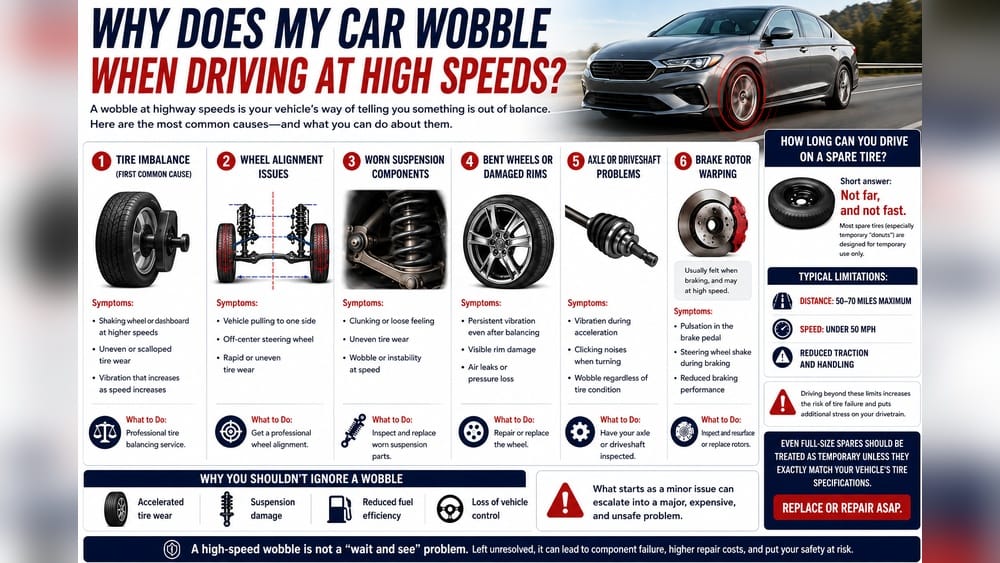
Wheel Imbalance
One of the most frequent culprits behind tire wobble is wheel imbalance. Even a small difference in weight distribution around the wheel can cause it to spin unevenly, leading to vibration.
- Symptoms: Vibrations increase with speed, especially noticeable between 50–70 mph.
- Diagnosis: A technician uses a balancing machine to detect and correct imbalances.
- Solution: Adding or adjusting wheel weights.
Wheel imbalance can develop gradually as tires wear or suddenly if wheel weights fall off. Factors like potholes, aggressive driving, or even minor impacts can disturb the delicate balance of your wheels. In some cases, changes in tire pressure or replacement of a single tire can also introduce imbalance.
Bent Or Damaged Rims
Bent rims often result from potholes, curbs, or road debris. A misshapen rim can cause the tire to seat improperly, leading to wobble and air leaks.
- Symptoms: Persistent wobble at all speeds, sometimes accompanied by air loss.
- Diagnosis: Visual inspection or specialized rim measurement tools.
- Solution: Rim repair or replacement.
Bent rims not only affect ride quality but can also compromise tire bead seating, leading to slow leaks or even sudden deflation. In severe cases, the rim’s structural integrity is compromised, posing a risk of catastrophic failure. Modern alloy wheels, while lighter and more attractive, are more susceptible to bends than traditional steel wheels.
Tire Issues: Out-of-round, Separations, And Defects
Tires themselves can be the source of the wobble due to manufacturing defects, impact damage, or internal separations.
- Out-of-round tires: Caused by manufacturing flaws or long-term parking.
- Tread/belt separations: Internal failures that create bulges or soft spots.
- Flat spots: Result from emergency braking or extended immobility.
Out-of-round tires may cause a rhythmic thumping that is most pronounced at low to moderate speeds. Tread or belt separation often presents as a sudden onset of vibration, sometimes accompanied by visible bulging on the tire’s surface. Flat spots are common after a vehicle has been parked for extended periods, especially in cold weather or with underinflated tires.
In rare cases, manufacturing defects—such as poorly cured rubber or misaligned belts—can lead to chronic vibration from the day the tire is installed. Always check for recalls and ensure your tires are from reputable brands.
Suspension And Steering Component Problems
Worn or damaged suspension and steering parts can cause or worsen tire wobble. Key components include:
- Tie rods
- Ball joints
- Control arms
- Wheel bearings
These parts are critical for maintaining wheel alignment and absorbing road shocks.
For example, a worn ball joint allows the wheel to move independently, creating a loose, wandering feeling or even a clunking sound. Similarly, bad tie rods can introduce play into the steering system, magnifying any vibration from the tires. Failing control arm bushings can also contribute to instability, especially during braking or sharp turns.
Worn wheel bearings, while often producing a growling or humming noise, can also cause the wheel to tilt slightly, producing a characteristic wobble that worsens with speed and cornering. If left unchecked, bearing failure can lead to wheel detachment.
Wheel Alignment Issues
When wheels are not aligned to manufacturer specifications, the tires may not make proper contact with the road, resulting in uneven wear and wobble.
- Symptoms: Pulling to one side, steering wheel off-center, rapid tire wear.
- Diagnosis: Alignment check using specialized equipment.
- Solution: Professional alignment service.
Misalignment can be caused by hitting a curb, pothole, or through normal wear and tear. Even a minor misalignment can dramatically reduce tire life and create steering instability. Regular alignment checks are especially important after any suspension work or following an impact.
Loose Or Damaged Lug Nuts
Improperly tightened or missing lug nuts can cause the wheel to move independently on the hub, leading to wobble and the risk of wheel detachment.
- Symptoms: Rhythmic thumping, severe wobble, metallic clanking noises.
- Solution: Immediate tightening or replacement of lug nuts.
It’s vital to use the correct torque specification for your vehicle when tightening lug nuts, as overtightening can damage the studs and undertightening can allow the wheel to come loose. After changing a tire, recheck lug nut tightness after 50–100 miles.
Real-world Example: Pothole-induced Rim Damage
In 2026, a driver in Chicago encountered a severe tire wobble after hitting a deep pothole. Inspection revealed a bent rim and a bulged tire sidewall. Prompt replacement of both prevented a potential blowout and costly suspension damage.
This example underscores the importance of not ignoring sudden changes in ride quality after an impact. Many cities experience seasonal potholes, and even seemingly minor impacts can damage wheels or suspension components.
Diagnosing Tire Wobble: Step-by-step Guide
Proper diagnosis is the key to resolving tire wobble efficiently. A systematic approach ensures that all potential causes are considered and addressed.
Step 1: Visual Inspection
Begin by examining the tires and wheels for:
- Visible damage (bulges, cracks, or missing chunks)
- Uneven tire wear
- Bent rims or missing lug nuts
Take your time with this process, as some issues—like small sidewall bulges or hairline cracks—can be easy to overlook. Use a flashlight to check both the tire tread and sidewall, and don’t forget to inspect the inner edge, which is often hidden from view.
If any immediate hazards are found, avoid driving until repairs are made.
Step 2: Tire Pressure Check
Incorrect tire pressure can exaggerate or even cause wobble. Ensure all tires are inflated to the manufacturer’s recommended levels.
Tire pressure should be checked when the tires are cold, as driving heats up the air inside, leading to inaccurate readings. Also, check the pressure of the spare tire during this process—having a properly inflated spare can be a lifesaver.
Step 3: Road Test
Take the vehicle for a controlled drive to identify:
- The speed range where wobble is most noticeable
- Whether the vibration is felt in the steering wheel (front tires) or seat/floor (rear tires)
- Any accompanying noises
Note if the vibration worsens during acceleration, braking, or turning, as this can help pinpoint whether the issue is tire, wheel, or suspension related. Try driving on different road surfaces to see if the symptoms change.
Step 4: Wheel Balancing And Alignment Check
A tire shop can use specialized equipment to:
- Check for wheel imbalance and add weights where necessary
- Measure and correct wheel alignment
Wheel balancing machines spin each wheel and identify the location and amount of imbalance. Alignment racks use lasers or cameras to precisely measure the angles of each wheel, ensuring they meet manufacturer specifications.
Step 5: Suspension And Bearing Inspection
A mechanic should inspect all suspension and steering components for wear or damage, including:
- Ball joints
- Tie rods
- Control arms
- Wheel bearings
During this inspection, the mechanic may also check for play in the wheel by rocking it side to side and top to bottom. Any looseness can indicate worn bearings or suspension joints.
Step 6: Tire Removal And Spin
In stubborn cases, removing the tire and spinning it on a balancer can reveal:
- Out-of-round conditions
- Internal separations
- Damaged rims
A high-speed tire balancer can detect issues not visible to the naked eye, such as slight deformities in the tire or rim. In extreme cases, the tire may need to be dismounted for further inspection.
Case Study: Professional Diagnosis Saves Money
A motorist in Atlanta experienced persistent wobble despite replacing two tires. A full inspection at a certified shop revealed a worn wheel bearing. Replacing it resolved the issue and prevented further damage to the suspension system.
This highlights the importance of comprehensive diagnostics. Addressing only the symptom—such as replacing tires—without finding the root cause can waste time and money.

Credit: www.easternshorehyundai.com
Consequences Of Ignoring Tire Wobble
Choosing to ignore a wobbling tire can quickly escalate into much bigger problems for both safety and finances.
Increased Risk Of Accidents
According to the FARS database, tire-related issues are a leading cause of vehicle accidents, particularly at highway speeds. A wobbling tire can lead to:
- Reduced steering control
- Delayed braking
- Higher blowout risk
Loss of control from a failed tire or wheel can have tragic consequences, especially in high-speed or high-traffic environments. Even minor accidents can lead to injuries, insurance claims, and increased premiums.
Accelerated Tire And Suspension Wear
Continued driving with a wobbling tire causes:
- Rapid, uneven tire wear
- Premature failure of suspension and steering components
- Increased risk of secondary failures (e.g., damaged wheel hubs)
Vibration from an imbalanced or misaligned wheel is transmitted through the entire suspension system. Over time, this can loosen bolts, wear out bushings, and shorten the lifespan of costly components. Even high-quality tires can be ruined by persistent wobble, requiring premature replacement.
Costly Repairs
Minor issues like wheel imbalance or alignment are inexpensive to fix. However, neglect can lead to:
- Complete tire or rim replacement
- Suspension overhauls
- Potential body damage from accidents
Repair costs escalate quickly if underlying problems are left unresolved. For example, a bent rim might initially be repairable, but continued driving can cause cracks, requiring full replacement. Similarly, worn bearings can damage the hub assembly, multiplying the cost.
Table: Estimated Cost Comparison Of Early Vs. Delayed Repairs
| Issue | Early Repair Cost | Delayed Repair Cost |
|---|---|---|
| Wheel Balancing | $20–$50 | $200+ (tire/suspension damage) |
| Bent Rim | $75–$150 (repair) | $350+ (replacement, alignment) |
| Wheel Bearing | $120–$300 | $800+ (hub, axle replacement) |
| Alignment | $80–$120 | $400+ (tire wear, suspension) |
Real-world Example: Ignored Wobble Leads To Accident
A driver in Los Angeles ignored a mild steering shake for weeks. The problem turned out to be a separating tire. Eventually, the tire failed at highway speed, resulting in a loss of control and a minor collision—an expensive lesson about the dangers of neglecting tire wobble.
This scenario is all too common, as busy drivers often delay repairs, not realizing the risk. Even a minor collision can lead to medical costs, legal headaches, and significant inconvenience.
Preventive Measures: How To Avoid Tire Wobble
Proactive maintenance is the best strategy for preventing tire wobble and ensuring a safe, smooth ride.
Regular Tire Inspections
Inspect tires monthly for:
- Uneven tread wear
- Sidewall bulges or cracks
- Embedded debris
Replace any tire showing signs of damage or advanced wear.
Regular inspections can be done at home or during routine oil changes. Look for nails, screws, or glass embedded in the tread, and check for slow leaks by monitoring air pressure over time.
Proper Tire Pressure Maintenance
Use a reliable gauge to check tire pressure at least once a month and before long trips. Always inflate tires to the manufacturer’s recommended PSI.
Improper tire pressure not only contributes to wobble but also affects fuel economy, braking distance, and tire life. Make it a habit to check pressure when the tires are cold for the most accurate reading.
Scheduled Wheel Balancing And Alignment
- Balance tires every 5,000–7,000 miles, or at every rotation.
- Check alignment at least annually or whenever you notice handling changes.
Even if you don’t notice vibration, routine balancing and alignment can catch small issues before they become noticeable problems. Many tire shops offer free lifetime balancing and rotation with tire purchase.
Suspension And Steering Checks
Have your suspension and steering components inspected during regular service intervals or whenever you hit a significant pothole or curb.
Ask your mechanic to check for play in the steering and suspension system during every oil change. Early detection of worn components can save hundreds in repair bills and prevent dangerous situations.
Immediate Response To Symptoms
At the first sign of vibration or wobble:
- Reduce speed and drive cautiously
- Schedule an inspection with a trusted mechanic
If possible, avoid highway driving or heavy loads until the issue is resolved. Taking action at the first sign of trouble can prevent accidents and keep repair costs low.
Table: Preventive Maintenance Schedule
| Maintenance Task | Recommended Frequency | Purpose |
|---|---|---|
| Tire Inspection | Monthly | Detect damage, wear, or defects |
| Tire Pressure Check | Monthly/Before Trips | Ensure safe inflation |
| Wheel Balancing | Every 5,000–7,000 miles | Prevent vibration and uneven wear |
| Wheel Alignment | Annually or as needed | Maintain proper handling |
| Suspension Inspection | Every oil change or 6 months | Detect component wear |
Real-world Example: Preventive Care Pays Off
A driver in Phoenix religiously followed a monthly maintenance routine. After noticing a slight vibration, he caught a developing wheel imbalance early, preventing uneven tire wear and saving hundreds in potential repairs.
This is a prime example of how small investments in time and attention can pay big dividends in safety and savings.
Professional Vs. Diy Solutions For Tire Wobble
While some wobble-related issues can be addressed by vehicle owners, others require professional expertise and equipment.
When Diy Is Appropriate
- Checking tire pressure and inflating to correct levels
- Visual inspection for obvious damage
- Retightening lug nuts with a torque wrench
For minor issues, such as checking tire pressure or ensuring lug nuts are tight, a knowledgeable DIYer can take immediate action. Rotating tires at home is also possible with the correct tools, but balancing and alignment require specialized equipment.
When To Seek Professional Help
- Wheel balancing: Requires specialized machinery
- Bent rims: Professional repair or replacement needed
- Alignment: Performed on an alignment rack
- Suspension/steering repairs: Safety-critical, best handled by experienced mechanics
Attempting complex repairs without proper tools or expertise can lead to further damage or create hazardous driving conditions. For example, incorrect alignment can make handling worse, and improper bearing installation can cause catastrophic failure.
Table: Diy Vs. Professional Repair Options
| Task | DIY Feasibility | Tools Required | Professional Needed? |
|---|---|---|---|
| Tire Pressure Check | Easy | Pressure gauge | No |
| Visual Inspection | Easy | Eyes, flashlight | No |
| Wheel Balancing | Difficult | Balancing machine | Yes |
| Bent Rim Repair | Difficult | Specialized tools | Yes |
| Suspension Replacement | Moderate/Difficult | Jack, wrenches | Yes, for most people |
Choosing The Right Mechanic
Opt for an ASE-certified technician or a shop with strong customer reviews. Online resources like the Better Business Bureau can help verify credibility.
Ask for detailed estimates before authorizing work, and don’t hesitate to seek a second opinion if a proposed repair seems excessive. Building a relationship with a trustworthy shop can save time and money over the life of your vehicle.
Case Study: Diy Gone Wrong
A Florida driver attempted to fix a wobble by simply rotating tires. The issue persisted. A professional shop diagnosed a failing ball joint, highlighting the importance of expert intervention when symptoms don’t resolve with simple fixes.
This case demonstrates that while DIY maintenance has its place, persistent or severe symptoms should always be evaluated by a professional.
The Role Of Tire Quality And Age In Wobble
Not all tires are created equal. The quality, brand, and age of your tires play a significant role in both the likelihood of developing a wobble and the severity of symptoms.
New Vs. Old Tires
- New tires: Less likely to wobble if properly installed and balanced.
- Old tires: More prone to developing flat spots, separations, and sidewall defects.
The NHTSA recommends replacing tires every six years, regardless of tread wear.
As tires age, rubber compounds degrade, leading to increased brittleness and susceptibility to cracks or separations. Even if the tread appears adequate, internal components can weaken, increasing the risk of sudden failure.
Tire Brand And Construction
Premium brands often offer better:
- Uniformity: Reduced risk of manufacturing defects.
- Durability: Longer lifespan before developing wobble-inducing issues.
Lower-cost tires can suffer from out-of-round conditions and internal separations sooner, increasing the risk of vibration and safety hazards.
When choosing new tires, consider not only the cost but also the brand’s reputation for quality and safety. Look for tires with strong customer reviews, extensive warranties, and positive ratings in independent tests. Investing in reputable tires can pay dividends in safety, performance, and long-term value.
Signs Your Tires Need Replacement
- Visible cracks, bulges, or exposed cords
- Tread depth below 2/32 inch
- Repeated balancing issues that don’t resolve
Other warning signs include persistent vibration even after balancing, or a tire that loses air pressure without an obvious puncture. If your tires are over six years old or show any of these signs, replacement is the safest option.
Real-world Example: Cheap Tires, Costly Problem
A rideshare driver in New York opted for budget tires. Within a year, persistent wobble developed due to belt separation. Upgrading to a reputable brand eliminated the issue and improved overall ride quality.
This scenario is a strong argument for investing in quality tires, especially if your livelihood depends on your vehicle.
Where To Find Reliable Tire Information
Consult resources like Tire Rack and Consumer Reports for unbiased reviews and tire ratings.
These platforms provide detailed information on performance, longevity, and real-world user experiences, helping you make informed decisions about your next tire purchase.
Frequently Asked Questions
What Should I Do Immediately If My Tire Starts To Wobble While Driving?
If you notice a sudden wobble, reduce your speed gradually and avoid abrupt movements. Pull over safely and inspect the tire and wheel for visible damage. If the problem persists or you suspect a serious issue, call for roadside assistance or have your vehicle towed to a repair shop.
If the wobble is severe or accompanied by noises (such as grinding or clanking), avoid driving further, as this may indicate imminent failure of a critical component.
Can Tire Wobble Damage Other Parts Of My Car?
Yes, driving with a wobbling tire can cause premature wear on suspension, steering, and wheel bearing components. It can also lead to uneven tire wear and, in severe cases, cause additional mechanical failures that are much more expensive to repair.
Ignoring tire wobble can lead to a cascade of damage throughout the vehicle’s chassis, resulting in repairs far more costly than addressing the original problem.
How Often Should I Have My Tires Balanced And Aligned?
For optimal safety and performance, have your tires balanced every 5,000–7,000 miles (typically with rotation) and your alignment checked at least once a year or whenever you hit a significant pothole or curb.
If you notice changes in handling, vibration, or uneven tire wear, schedule service sooner.
Is It Safe To Drive Short Distances With A Wobbling Tire?
While a very short drive to the nearest repair shop may be possible, it is not recommended. The underlying cause of the wobble could be severe, risking further damage or even a tire blowout. Always prioritize safety and professional inspection.
If you must drive, keep your speed low, avoid sudden maneuvers, and stop immediately if the symptoms worsen.
Do All Tire Wobbles Mean I Need New Tires?
Not always. While some causes—like tire separations or out-of-round conditions—require new tires, other issues (such as wheel imbalance or loose lug nuts) can often be resolved without replacement. A professional diagnosis is essential to determine the correct solution.
A balanced, well-maintained tire can deliver years of safe service, but chronic vibration or recurring issues are a sign that it’s time for expert intervention.
Ensuring your tires are free from wobble is a crucial step in maintaining your car’s safety, performance, and longevity. By understanding the causes, taking preventive measures, and acting promptly at the first sign of trouble, you protect not just your investment but also everyone on the road.
Don’t ignore the warning signs—address tire wobble head-on for a smoother, safer driving experience.
Products related to this article
Sponsored / affiliate links. As an Amazon Associate I earn from qualifying purchases. I may earn additional commission from eligible campaigns.