Why Is My Honda CR-V Rattling at Idle?
A Honda CR-V rattling at idle is often reported as an exhaust shield, heat shield, engine mount, or timing/VTC issue; if it changes in Neutral or fades above about 1,500 rpm, start with mounts and exhaust before engine internals. If you ignore it, brackets can break, vibration can get worse, and timing trouble can go unnoticed. This article shows how to read the symptom pattern by cold start, warm idle, and stopped-in-Drive noise.
Quick guide to identifying the source
| Symptom pattern | Most likely source category | Quick check | Urgency |
|---|---|---|---|
| Cold-start-only rattle for the first seconds | Timing chain tensioner, exhaust leak, heat shield | Listen from a cold start with the hood open and then from under the vehicle after a few minutes | Prompt if loud, sharp, or repeated |
| Idle-only underbody rattle at a stop | Heat shield, exhaust hanger, bracket, clamp | Lightly change engine speed and look for a metal buzz or movement under the floor | Usually moderate unless a part is loose enough to strike something |
| Stopped-in-Drive shake that eases in Park | Engine mount, transmission mount, rough idle | Compare Park, Neutral, and Drive with the brake held | Prompt if the cabin shake is obvious or getting worse |
| A/C-on rattle or shake that gets stronger | Idle load sensitivity, weak mounts, rough idle | Switch the A/C off and on at idle | Moderate unless the engine nearly stalls |
| Noise that fades as RPM rises | Loose shield, hanger, bracket, or idle quality issue | Hold 1,500 rpm briefly and note whether the sound disappears | Lower if it is only trim or shield noise; higher if warning lights appear |
What does the rattle sound like?
The sound pattern tells you more than the word rattle does. A metallic buzz under the floor points toward a heat shield or exhaust hardware, while a dull shake through the seat or steering wheel points more toward mounts or rough idle. If the noise disappears as RPM rises, that matters too.
On a Honda CR-V, a true engine-bay rattle often changes with load, temperature, or engine speed. A cabin vibration can feel like a rattle even when nothing is tapping metal-to-metal underneath. That split matters because a loose shield is a very different job from a misfire or mount issue.
Metallic buzz versus dull shake
A thin, metallic buzz usually comes from something sheet-like: a heat shield, clamp, bracket, or loose underbody fastener. A dull shake is different. It feels like the body is being driven by engine vibration, which points more toward engine mounts, transmission mounts, or rough idle.
Suppose the noise sounds like a coffee can tinging at the rear floor, then disappears at 1,500 rpm. That pattern fits exhaust hardware more than an internal engine problem. Suppose the sound is not loud at all, but the steering wheel trembles in Drive with the brake held. That points toward a vibration problem, not a loose panel.
Underbody noise versus engine-bay noise
Stand beside the CR-V with the hood open and listen near the engine, then crouch near the side and rear underbody. Heat shield and exhaust hanger noise often seems to come from below the cabin floor or rear half of the vehicle. Timing-related startup chatter is usually more noticeable near the front of the engine.
Model year matters here. CR-V generations can differ in mount design, idle control behavior, and the kinds of startup complaints owners report. That does not change the diagnostic order, but it does change which source category is more likely to produce a given symptom pattern.
Noise that disappears with RPM
If the sound fades as you rev the engine, the cause is often something that resonates at idle. Loose metal, an exhaust hanger with extra movement, or a mount that lets the powertrain sit in a bad position can all quiet down once engine speed changes. That pattern is common and useful.
Noise that vanishes with RPM does not automatically mean the part is harmless. A bracket that only rattles at idle can still crack farther, and a startup chatter that fades after a few seconds may still point to oil-pressure-related tensioner behavior.
Does it change in Park or Drive?
Yes, and that is one of the best tests on a Honda CR-V. If the vibration is much stronger in Drive or Reverse than in Park or Neutral, mounts move higher on the list. If the noise stays the same in every gear, exhaust hardware, engine idle quality, or a startup-specific issue becomes more likely.
Stopped in Drive versus Neutral
A stopped-in-Drive vibration can come from engine idle, engine mounts, transmission mounts, ignition performance, or how the engine responds under load. That is why gear selection matters. Drive loads the engine more than Park, so weak mounts or a rough idle often show up more clearly there.
Worn engine mounts can make vibration strongest in Drive or Reverse and less noticeable in Park or Neutral. Transmission mounts can add to the same feeling. Together, they can turn a small idle issue into a cabin shake that seems worse than the engine sound alone suggests.
Cabin vibration versus true rattle
Do not mix up a buzzing part under the vehicle with a vibration felt through the seat. A loose shield makes noise. A worn mount lets the powertrain shake, and the cabin carries that motion. Those symptoms can happen together, but they are not the same failure mode.
A common first-timer mistake is chasing the loudest sound first. The exhaust can clatter under the floor while the real complaint is a rough idle making the body shake. Check whether the CR-V is actually rattling, or whether the body is passing along engine vibration that feels like a rattle.
Why is it louder on cold start?
Cold starts matter because metal, oil pressure, and exhaust expansion all change quickly. A brief startup rattle can come from timing-related components before oil pressure stabilizes after startup. Cold exhaust parts can also buzz before they warm and expand into position.
Timing chain tensioner and startup chatter
A startup rattle that is loudest in the first seconds after a cold start deserves more urgency than trim noise or a loose shield. On CR-V models where owners commonly report cold-start chatter, the timing chain tensioner and VTC actuator are both worth checking early, because the complaint may sound similar even though the failure pattern is not the same. If the rattle is brief, sharp, and repeats on cold starts, do not ignore the pattern.
That is different from a heat shield buzz. A shield noise usually sits lower, sounds thin and metallic, and may change as the exhaust heats up. A tensioner or VTC-style complaint is tied to the front of the engine and the first moments after startup.
Exhaust leak behavior before warm-up
An exhaust leak can mimic ticking or rattling. It is often louder when cold, then changes as metal expands with heat. A leak near a flange or pipe connection can sound like a fast tick from the engine bay or a lighter rattle from below the vehicle.
Cold weather and winter driving can make undercarriage noises more noticeable because of road salt, potholes, cold weather, and rough pavement. Road salt can also contribute to corrosion on exposed metal components under the vehicle, which makes loose shields and hangers more likely to complain when the car is first started.
Heat shield and metal expansion
A loose heat shield can create a metallic rattling or buzzing sound, especially at idle or during acceleration. As the exhaust warms, the metal expands and the sound may change or disappear. Cracked fasteners and corrosion are common reasons a shield starts moving more than it should.
That is why temperature is a useful clue. Cold, metallic, and brief often points toward shield or exhaust hardware. Loud at first start, then gone after a minute, raises a different level of concern than a shield that only buzzes at idle.
Heat shield and exhaust checks
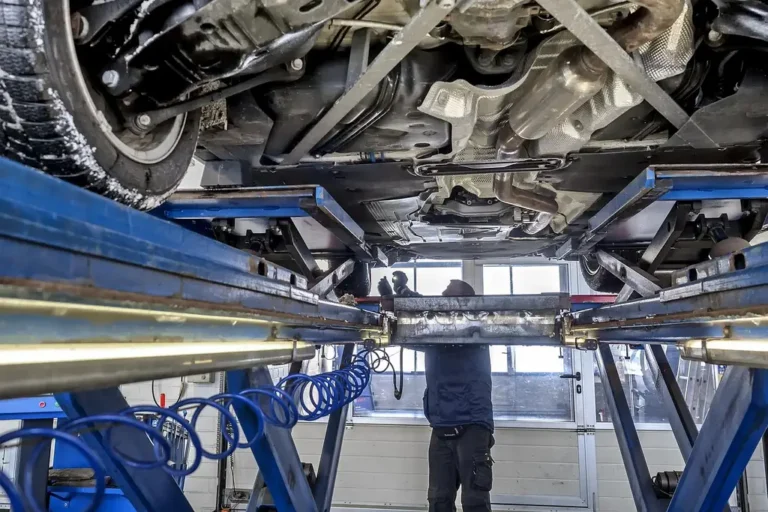
Heat shields are one of the most common idle-rattle sources, and often the cheapest fix. Exhaust hangers and brackets are next in the same family of problems. They support the exhaust, keep it positioned correctly, and can start clunking or rattling when corrosion or broken hardware lets the pipe move too much.
Loose heat shield
Check for a thin metal cover touching the exhaust pipe, catalytic converter area, or body. Look for looseness, rust, cracked fasteners, and shiny contact marks where two pieces have been rubbing. A heat shield rattle often changes if you gently increase engine speed or let the exhaust heat up.
Exhaust hanger or bracket movement
Exhaust hangers help support the exhaust system and keep it positioned correctly under the vehicle. A worn hanger can let the exhaust move more than it should and create clunking, rattling, or knocking sounds. That is common after winter roads, potholes, or corrosion near the rubber and brackets.
Exhaust leak clues
An exhaust inspection may check heat shields, exhaust hangers, brackets, clamps, pipe connections, undercarriage fasteners, and signs of exhaust leaks. If you hear ticking at cold start, smell exhaust, or notice soot near a joint, the noise may be from escaping gases rather than a loose panel.
Do not confuse a leak with a shield. The shield buzzes from vibration. A leak often ticks, hisses, or rattles more sharply and may become quieter as the engine and pipes expand.
Idle roughness and mount causes
If the CR-V is shaking rather than rattling, start with engine performance and mounts together. Rough idle can come from worn spark plugs, ignition coil problems, air intake issues, vacuum leaks, or throttle body buildup. Any of those can make the engine stumble just enough to shake the cabin.
Spark plugs and ignition coils
Worn spark plugs or ignition coil problems can create a rough idle that feels like a rattle in the seat or steering wheel. The engine may sound slightly uneven. The vehicle may also feel smoother once rpm rises, which is why people sometimes blame mounts first.
Vacuum leak or dirty throttle body
A vacuum leak can lean out the mixture and cause an unstable idle. Throttle body buildup can do the same by upsetting idle air control. These are engine-running concerns, not underbody noise problems, but they can create the same stopped-at-a-light complaint.
Engine mount and transmission mount wear
Engine mount and transmission mount wear matter because they separate sound from feel. A mount may be fine at speed but weak at idle, especially in Drive. The cabin then gets a low-frequency shake that sounds, to the driver, like a rattle coming from everywhere at once.
A/C compressor load
The CR-V’s A/C system adds load to the engine at idle. That extra load can expose borderline idle quality or weak mounts. If the rattle or shake grows when the compressor cycles on, the A/C may not be the root cause, but it is exposing a weak point.
Say your CR-V idles smoothly in Park with the A/C off, then the steering wheel trembles the moment the compressor kicks in. That pattern points more toward idle load sensitivity or mounts than a loose heat shield. The sound may be real, but the load is what brings it out.
When should you stop driving?
Stop driving or get prompt inspection if the rattle comes with warning lights, misfire, oil pressure issues, stalling, heavy smoke, or a strong exhaust smell. A startup chatter that is new and loud also deserves quick attention. Minor shield noise is one thing; engine or exhaust fault symptoms are another.
- Check whether the noise is cold-start only, idle only, or present in Drive.
- Compare Park, Neutral, and Drive with the brake held.
- Turn the A/C off and on to see whether the load changes the shake.
- Look for warning lights, rough running, smoke, or exhaust smell.
- Inspect visible shields, hangers, brackets, clamps, and fasteners if the sound is underbody metal noise.
- Arrange service quickly if the engine stumbles, stalls, or the startup rattle is loud and repeated.
If the noise is only a light metallic buzz and there are no other symptoms, that usually points to an exhaust shield or hanger issue rather than an emergency. If the vehicle shakes in Drive, starts missing, or produces a burning smell, the problem moves up the priority list fast.
Frequently asked questions
Why is my Honda CR-V rattling at idle?
Idle rattles on a Honda CR-V usually come from a heat shield, exhaust hanger, engine mount, transmission mount, or rough idle. The fastest clue is whether the noise is metallic and under the floor, or whether the whole cabin shakes. Temperature and gear position change the diagnosis.
Why does my Honda CR-V rattle when starting?
A start-up rattle often points to the timing chain tensioner, an exhaust leak, or loose exhaust hardware that changes as metal moves cold to hot. On CR-Vs known for cold-start rattle complaints, the VTC actuator can sound similar, so the model year and exact startup pattern matter. If the noise is loudest in the first seconds after startup and then fades, treat that as more urgent than a harmless trim buzz.
Is a Honda CR-V cold start rattle normal?
A brief cold-start rattle can happen, but it is not something to dismiss automatically. Light shield buzz or a short exhaust tick may be minor, while repeated startup chatter can signal timing chain tensioner behavior. If the sound gets louder, lasts longer, or returns often, have it checked.
Why does my Honda CR-V shake at idle?
A CR-V that shakes at idle often has a rough-running engine, weak engine mounts, or both. Worn spark plugs, ignition coil problems, vacuum leaks, throttle body buildup, and A/C load can all make idle feel unstable. Compare Park and Drive to see whether the shake is load-related.
Could the rattle be a heat shield or exhaust hanger?
Yes. A loose heat shield can make a metallic buzz, especially at idle or during acceleration. Exhaust hangers and brackets can also clunk or rattle, especially after winter roads, potholes, or corrosion. If the sound comes from under the vehicle and changes with heat, those parts are high on the list.
Should I worry if the rattle goes away when I rev it?
A noise that disappears with RPM often points to resonance, loose underbody hardware, or an idle-quality problem that changes under load. That makes the sound easier to narrow down, but it does not prove the problem is minor. If the engine runs rough, shakes, or shows warning lights, do not ignore it.
Products related to this article
Sponsored / affiliate links. As an Amazon Associate I earn from qualifying purchases. I may earn additional commission from eligible campaigns.