How To Know What Bike Pedals To Buy (Simple Buying Guide)
Picking the right bike pedals can feel like a puzzle. So many types exist! You want pedals that feel good.
They should work well with your shoes. You don’t want your feet slipping off. It’s frustrating when pedals don’t match your ride.
This guide makes it easy. We break down the choices. You’ll find the perfect pedals for your bike.
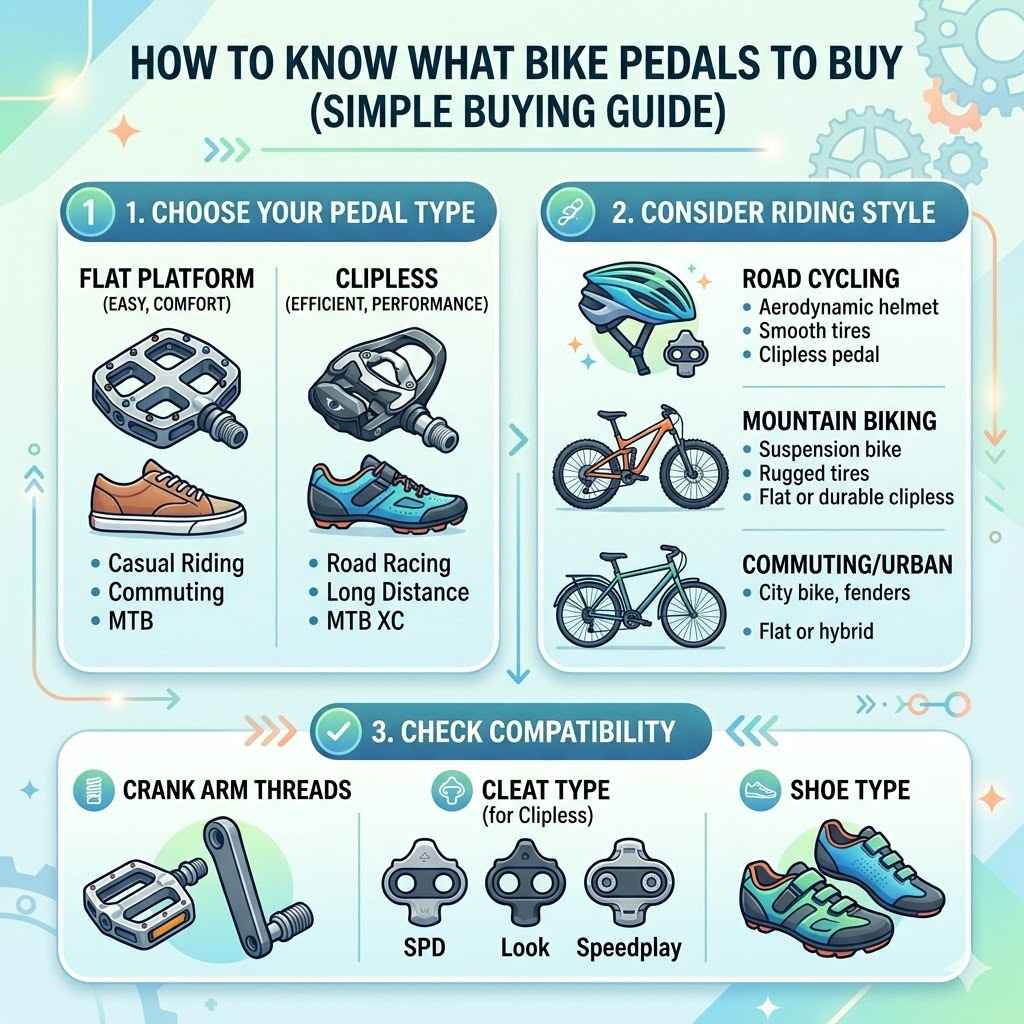
Bike pedals connect your feet to your bike. Choosing the right ones depends on your riding style and shoes. Common types include flat pedals for easy access and clipless pedals for better power transfer.
Consider grip, durability, and your cycling goals.
Understanding Bike Pedals: The Basics
Your bike pedals are where you meet your machine. They transfer your leg power. This makes your bike move forward.
Think of them as your bike’s feet. They need to be good feet. Good pedals help you ride better.
They can make your ride safer too.
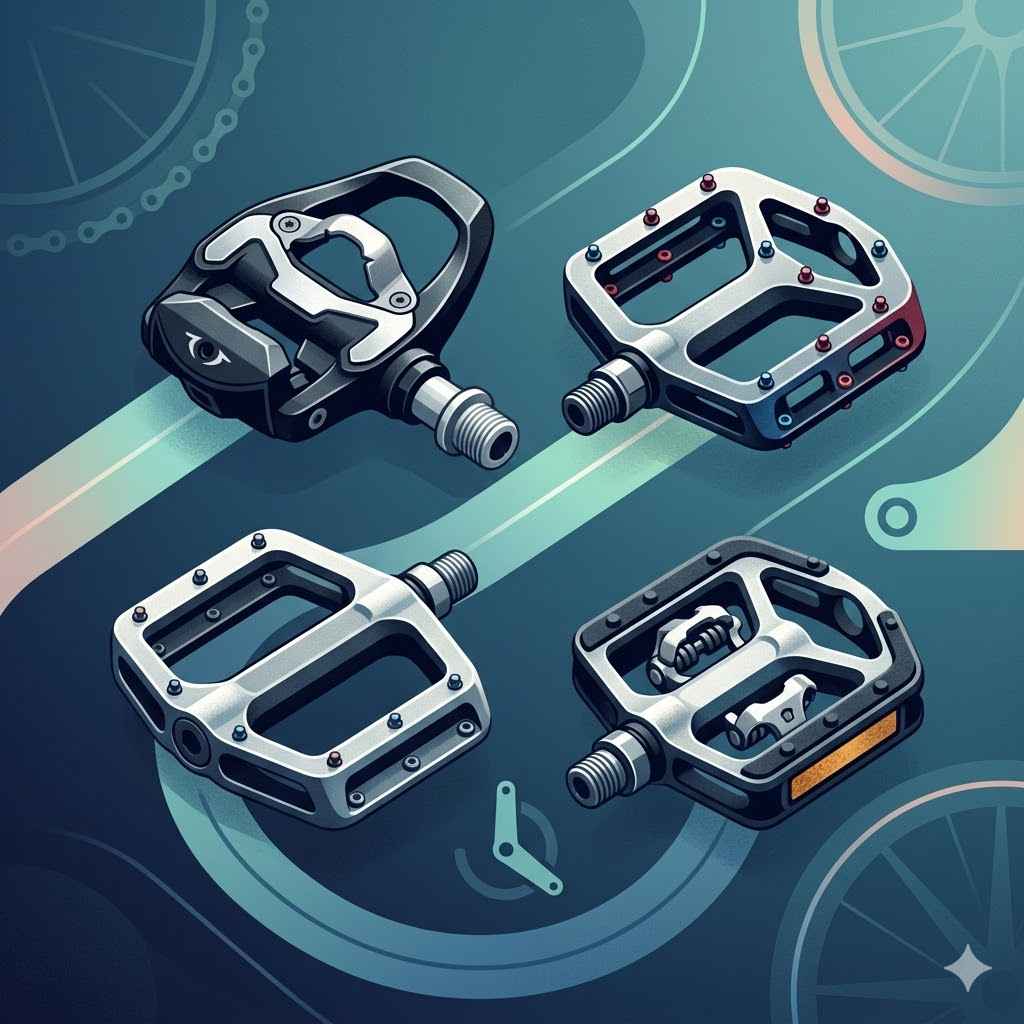
There are two main kinds of pedals. These are flat pedals and clipless pedals. Each has its own job.
They work best for different kinds of riding. Knowing the difference is key. It helps you pick what’s right for you.
Flat pedals are what most bikes start with. They look like a flat surface. You just put your foot on them.
There are no clips or special shoes needed. They are easy to use. You can take your foot off anytime.
This is good for quick stops or casual rides. They work with almost any shoe.
Clipless pedals are different. They use a cleat on your shoe. This cleat clicks into the pedal.
It’s like ski bindings. Your shoe is locked to the pedal. This lets you pull up on the pedal.
It’s not just pushing down. This means more power. It can make you ride faster.
But you need special shoes for them.
Many cyclists start with flat pedals. They learn the basics. Then they might try clipless pedals.
It’s a personal choice. It depends on what you like. It also depends on how you ride.
My First Pedals: A Slippery Slope
I remember my first real bike. It was a used mountain bike. I was so excited to ride it everywhere.
My parents got me some cool sneakers. I hopped on and started pedaling. But on my first real trail, I hit a bump.
My foot flew right off the pedal!
I almost fell over. It was a bit scary. The pedals were just basic metal things.
They had no grip at all. My sneakers were smooth. They just slid off.
I spent the whole ride worried about my feet. I was pushing down hard but not getting much power. It felt awkward.
I thought maybe I just wasn’t good at biking.
That’s when a friend told me about pedals with pins. They said I needed pedals with more bite. He let me try his bike.
Wow, what a difference! His pedals had little metal pins. They stuck into the bottom of my shoes.
My feet stayed put. I could push and pull. It felt so much more secure.
That simple change made biking so much more fun and less nerve-wracking.
Flat Pedals Explained
Flat pedals are simple and versatile. They are a great choice for many riders. Think of them as the workhorses of the pedal world.
They don’t require any special gear. You can wear almost any shoe you want. This makes them very easy to use.
There are a few types of flat pedals. The most basic ones are just smooth plastic. These often come on new bikes.
They are okay for short rides. But they don’t offer much grip. Your feet can slip off easily.
Especially if they get wet or muddy.
Better flat pedals have pins. These are small metal screws. They stick out from the pedal surface.
The pins dig into the sole of your shoe. This gives you much more grip. It keeps your feet from sliding off.
These are often called “platform pedals” or “pin pedals.” They are a favorite for mountain bikers and BMX riders.
The size of the pedal matters too. Larger pedals give you more surface area. This means more of your shoe can rest on the pedal.
It can feel more stable. Smaller pedals might feel less secure. But they can be lighter.
Some pedals are made of nylon or plastic. Others are made of metal, like aluminum. Metal pedals are usually stronger and last longer.
But they can be heavier.
When picking flat pedals, look at the pins. Are they replaceable? If one breaks, you can swap it out.
This is a nice feature. Also, check the bearing quality. Good bearings make the pedal spin smoothly.
Bad bearings can feel stiff. They might not last long.
Flat pedals are great for commuting. They are good for casual rides. They are excellent for learning.
You can put your foot down quickly. This is helpful if you are new to cycling. They are also good for downhill mountain biking.
Some riders prefer the freedom of not being clipped in.
Flat Pedal Features to Look For
Grip: The number and type of pins are crucial. More pins usually mean better grip.
Surface Area: A larger pedal platform offers more stability.
Material: Nylon/plastic is lighter and cheaper. Aluminum is stronger and more durable.
Bearings: Good bearings ensure smooth spinning and longevity.
Weight: Lighter pedals can feel nimbler, but often cost more.
Clipless Pedals: Locking In
Clipless pedals changed cycling for many people. The name “clipless” is a bit confusing. It means you don’t use toe clips anymore.
It’s the opposite of what it sounds like! These pedals use a cleat system. You attach a small metal or plastic piece called a cleat to your shoe.
This cleat then locks into the pedal. You “clip in” your shoe. When you are clipped in, your foot is attached to the pedal.
This might sound scary. But it offers big benefits. You can push down and pull up.
This is called a “pendaling motion.” It’s like having four points of contact instead of two.
This extra power transfer is why many cyclists use them. Road cyclists love them for speed. Mountain bikers use them for climbing and control.
Triathletes use them for efficiency.
There are different kinds of clipless systems. The most common are SPD (Shimano Pedaling Dynamics) and Look KEO. SPD pedals are often used for mountain biking and gravel riding.
They have a smaller cleat. It’s recessed into the shoe sole. This makes walking easier.
Look KEO pedals are popular for road cycling. They have a larger pedal body. The cleat is also larger.
This offers a very stable platform. But walking in these shoes can be tricky. The cleats stick out.
When you get clipless pedals, you also need clipless shoes. These shoes have a place to attach the cleat. The cleat fits into a recess in the sole.
This allows you to walk without damaging the cleat. Or at least, it makes it easier.
Clipless pedals have an adjustment for how hard they grip. You can set them to be easier or harder to clip into and out of. This is important, especially when you are learning.
Most systems allow you to adjust this tension. It’s a good idea to start with a lower tension.
Learning to use clipless pedals takes practice. Most people fall a few times at first. It usually happens when they forget they are clipped in.
Or they can’t unclip fast enough. But once you get used to it, it feels very natural.
Clipless Pedal Benefits
Increased Power: You can pull up as well as push down.
Better Control: Your feet stay on the pedals even on rough terrain.
Efficiency: More of your effort goes into forward motion.
Smooth Pedaling: Can help you develop a more consistent pedal stroke.
Choosing Pedals for Your Riding Style
What you do with your bike matters. Your pedal choice should match. There’s no one-size-fits-all answer.
Let’s look at common riding types.
Mountain Biking
Mountain biking is rough and varied. You go up hills, down trails, and over obstacles. Many mountain bikers use clipless pedals.
SPD style is very popular. Why? Because if you crash, or need to walk, the cleats are recessed.
You can still walk around.
Clipless pedals give you control on descents. Your feet won’t bounce off. They help you climb too.
You can pull up on the pedals for more power. This is great for steep climbs. Some downhill riders prefer flat pedals.
They like the ability to bail out quickly. They also want a big, grippy platform.
For mountain biking, look for pedals that are durable. They should handle mud and dirt. Pins are important on flat pedals.
They need to be strong. For clipless, ease of entry and exit is key.
Road Cycling
Road cycling is all about speed and efficiency. The pedals used here are almost always clipless. The systems are designed for maximum power transfer.
Look KEO and Speedplay are common. These pedals have large platforms. They offer a stable connection.
The cleats for road cycling are usually larger. They stick out from the shoe. This makes walking difficult.
But for pure road riding, that’s okay. You are usually on your bike. Or walking short distances at cafes.
Road pedals are usually very lightweight. They are made for performance. You want a smooth spin.
You want a solid connection.
Commuting and Casual Riding
If you use your bike for getting around town. Or for relaxed rides on paved paths. Flat pedals are usually the best choice.
You don’t need special shoes. You can wear your everyday shoes. This is super convenient.
You can hop off the bike easily.
Look for flat pedals with some grip. Even for casual riding, pins help. This stops your feet from slipping if it rains.
A decent platform size is good. It makes pedaling feel more comfortable. You don’t need the fanciest pedals here.
But a little quality goes a long way.
Gravel Riding
Gravel riding is a mix. It’s like road cycling but on dirt and gravel paths. It can be bumpy.
You might encounter loose surfaces. Many gravel riders use clipless pedals. The SPD system is very popular.
Why? It lets you clip in for speed on smooth sections. But it also lets you walk if needed.
The recessed cleats are a big plus. You can walk on gravel or dirt without slipping. Some gravel riders prefer flat pedals.
Especially if they ride very technical terrain. Or if they want the option to bail out easily.
Gravel pedals need to be durable. They should handle dirt and mud well. Good grip is essential for flat pedals.
Pedal Matchup: Riding Style Quick Guide
| Riding Style | Recommended Pedals | Why? |
| Mountain Biking | Clipless (SPD) or Flat Pedals | Control, climbing power (clipless). Freedom, bail-out option (flat). |
| Road Cycling | Clipless (Look, Speedplay) | Maximum power transfer, speed, efficiency. |
| Commuting / Casual | Flat Pedals | Convenience, use any shoe, easy to dismount. |
| Gravel Riding | Clipless (SPD) or Flat Pedals | Versatility for varied terrain and walking. |
When Did Pedals Get So Complicated?
I recall a time when pedals were just pedals. You bought them, screwed them in, and rode. Simple.
But as bikes got specialized, so did the parts. I remember seeing my first clipless pedals. It was like something from the future.
I thought, “Why would anyone need that?”
Then I tried a bike with them. The feeling of being connected was incredible. It was like the bike became an extension of my body.
My legs felt stronger. I could go faster. But then came the learning curve.
The first few times I tried to stop, I forgot to unclip. I went over like a sack of potatoes. It was embarrassing, but also a funny story later.
Now, with gravel bikes and all sorts of riding, pedals are a big choice. You see pedals with fancy bearings. You see pedals made of exotic materials.
It makes you wonder if you’re missing out. But the core idea is the same: connect you to the bike. The trick is finding the connection that feels best for you.
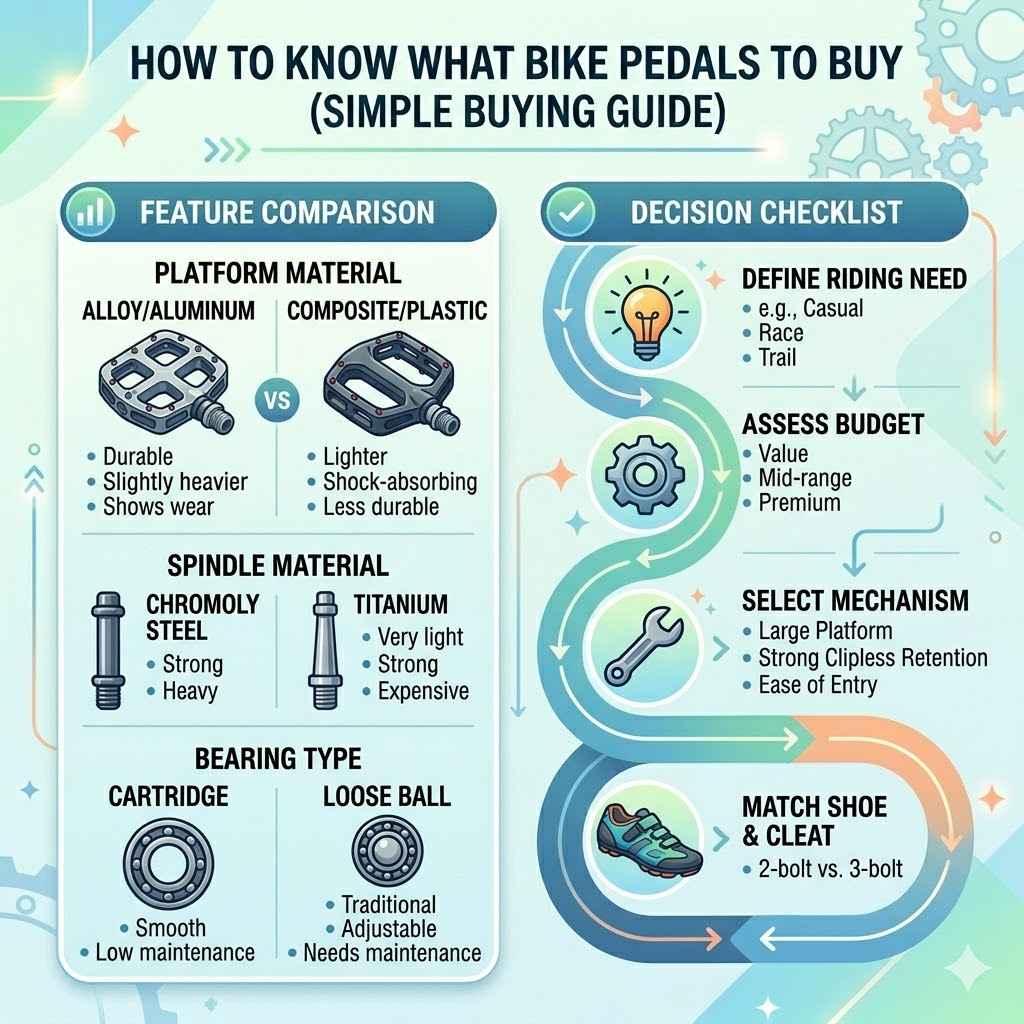
Material Matters: What Are Pedals Made Of?
The stuff your pedals are made of affects their weight, strength, and price. It’s good to know the common materials.
Nylon and Plastic
These are very common, especially for flat pedals. They are lightweight. They are also less expensive.
Many entry-level bikes come with plastic pedals. They are good for casual riders. Or for people testing the waters.
Nylon pedals can be quite strong. Some have reinforced fibers for extra durability. They often have molded-in pins.
These don’t offer the same grip as metal pins. But they are less likely to damage shoes. They can also be a bit slippery when wet.
Aluminum Alloy
This is a very popular choice for mid-range to high-end pedals. Aluminum is strong and relatively light. It allows for precise manufacturing.
This means pedals can have intricate designs. They can offer great grip and good bearing systems.
Aluminum pedals are more durable than plastic. They resist impacts better. They are common for both flat and clipless pedals.
Higher-grade aluminum can be even lighter. But this also increases the cost.
Magnesium Alloy
Magnesium is even lighter than aluminum. It’s also very strong. Pedals made from magnesium alloy are often found on race bikes.
Where every gram counts. They are usually more expensive. They might not be as common for everyday riders.
Steel
Steel is used mostly for pedal axles. The part that screws into your crank arm. Steel is very strong.
It can handle a lot of force. But it’s heavy. So, you won’t see whole pedals made of steel.
Except maybe on very old or very basic bikes.
Titanium
Titanium is a premium material. It’s very light and very strong. Titanium pedals are usually high-end.
They are expensive. They are for riders who want the lightest possible setup. They are also very durable.
When choosing, think about your budget and your needs. For most people, nylon or aluminum pedals are a great choice. They offer a good balance of performance and price.
Material Pros and Cons
Nylon/Plastic:
- Pros: Lightweight, affordable, less damaging to shoes.
- Cons: Can be less durable, less grippy than metal pins.
Aluminum Alloy:
- Pros: Strong, durable, good grip options, good value.
- Cons: Can be heavier than magnesium or titanium.
Magnesium Alloy:
- Pros: Very lightweight, strong.
- Cons: Expensive.
Titanium:
- Pros: Extremely lightweight, very strong, durable.
- Cons: Very expensive.
What About Pedals and Shoes? The Connection
Pedals and shoes work together. This is especially true for clipless systems. But it also matters for flat pedals.
For Clipless Pedals
You need special shoes. These shoes have a place to mount a cleat. The cleat attaches to the bottom of the shoe.
It then clicks into the pedal. The type of shoe depends on the pedal system.
Road shoes: These have large, three-bolt or four-bolt patterns. The cleats stick out. This makes them good for hard surfaces.
But they are hard to walk in. You need a stable platform for power.
Mountain bike shoes: These have a two-bolt cleat system. The cleat is recessed into the sole. This allows you to walk more easily.
They often have more tread on the sole. For grip when walking.
Gravel shoes: These are often similar to mountain bike shoes. They offer good walking ability. They are also durable enough for rough terrain.
They balance pedaling performance with walkability.
The cleat itself is important. Make sure it’s compatible with your pedals. Shimano makes SPD cleats.
Look makes KEO cleats. Speedplay has its own unique cleats.
When setting up clipless, cleat position matters. It affects how your foot feels. And how your body aligns.
Many bike shops can help with this. Getting the cleat position right can prevent knee pain.
For Flat Pedals
You don’t need special shoes. But wearing the right shoes makes a huge difference. Avoid smooth-soled shoes like dress shoes or casual sneakers with flat bottoms.
They will slip.
Skate shoes: Many mountain bikers like skate shoes. They have flat, grippy soles. They offer good board feel.
This means you can feel the pedal under your foot. They are often durable too.
Hiking shoes: Some people use hiking shoes. They offer good support. But they might be too stiff.
Or the sole might not grip pedals well.
Sticky rubber shoes: Some brands make shoes specifically for flat pedal mountain biking. These have special rubber compounds. They grip the pedal pins very well.
It’s like your feet are glued to the pedals.
The key is a sole that can grip the pedal pins. Or at least not slide off easily. A flat surface on the shoe also helps.
You want a good connection.
Shoe and Pedal Pairing
Clipless:
- Requires special cycling shoes with cleat mounts.
- Road shoes for speed, often with exposed cleats.
- MTB/Gravel shoes for walkability, with recessed cleats.
Flat Pedals:
- Works with most shoes but specific shoes offer best grip.
- Skate shoes are a popular choice for good grip.
- “Sticky rubber” shoes offer maximum hold.
- Avoid smooth-soled shoes.
Pedal Size and Shape
The size and shape of a pedal can affect comfort and control. This is especially true for flat pedals.
Platform Size
Larger pedals offer more foot support. This can make your ride feel more stable. It gives you more room to adjust your foot.
Larger platforms are common on downhill and enduro mountain bikes. Where stability is very important.
Smaller pedals can feel more nimble. They might be lighter too. Some riders prefer smaller pedals.
They might have smaller feet. Or they might ride a bike where they need good pedal clearance.
Think about your foot size. And how much support you want. If you are unsure, a medium-sized pedal is often a good start.
Pedal Shape and Profile
Some pedals are very thin. Others are thicker. A thinner pedal has a lower profile.
This means your foot is closer to the crank. It can feel more connected. It also means less chance of hitting rocks or roots.
Thicker pedals might offer more cushioning. Or they might have more space for bearings. Which can lead to better durability.
Some pedals are concave. This means the center of the pedal is lower than the edges. This can help cup your foot.
It makes you feel more secure.
For clipless pedals, the shape is more about the cleat system. The pedal body is there to guide the cleat in. It also provides a stable platform around the cleat.
Maintaining Your Pedals
Pedals are one of the few parts that move constantly. They need a little care. Taking care of them means they last longer.
And they work better.
Cleaning
After a muddy ride, clean your pedals. Use a brush and water. Get rid of any mud or dirt.
Pay attention to the pins on flat pedals. Make sure they are clear. For clipless pedals, keep the cleat area clean.
Lubrication
Pedals have bearings inside. These bearings allow them to spin. Most pedals use sealed bearings.
These are designed to keep water and dirt out. They usually don’t need regular greasing.
However, if you hear grinding noises. Or if the pedal feels stiff, the bearings might be worn out. Some pedals have grease ports.
You can add a bit of grease there. Check your pedal manual.
Checking for Wear
On flat pedals, check the pins. Are they worn down? Are any broken?
Many pedals have replaceable pins. You can unscrew old ones and screw in new ones.
For clipless pedals, check the cleats. Cleats wear down over time. Especially if you walk in them a lot.
Worn cleats can make it harder to clip in and out. Or they might not hold securely. It’s good to replace them when they look worn.
Tightening
Pedals screw into the crank arm. They need to be tight. But not too tight.
The drive side pedal (right side) is a normal thread (tightens clockwise). The non-drive side pedal (left side) is a reverse thread (tightens counter-clockwise). Always remember this!
If your pedals feel loose, tighten them. Use a pedal wrench. Or an Allen key if your pedals have that type of fitting.
If you’re unsure, a bike shop can do it for you.
Pedal Care Checklist
After Riding: Clean off mud and dirt.
Regularly: Check pins on flat pedals for wear. Inspect cleats on clipless pedals.
Listen: Any grinding or stiffness? Bearings might need service or replacement.
Tightness: Ensure pedals are securely fastened to crank arms.
Replacement: Worn pins, cleats, or bearings mean it’s time for new parts.
When is it Time for New Pedals?
Sometimes, pedals just wear out. It’s normal. How do you know when it’s time to buy new ones?
Grinding or Clicking Noises: If your pedals make noise when you pedal, it’s a bad sign. It often means the bearings are shot. They can’t be easily repaired.
New pedals are usually the best option.
Wobbly Pedals: If a pedal feels loose. And it’s not just the screw going into the crank arm. But the pedal itself wobbles side to side.
The bearings are likely damaged. This can be dangerous. It reduces your power transfer.
Broken Pins or Spindles: On flat pedals, if pins are missing or damaged. Or if the pedal body is cracked. It’s time for new ones.
The spindle is the metal rod that goes through the pedal. If it’s bent, you need new pedals.
Worn Cleats (Clipless): If your clipless pedals don’t engage well. Or they release too easily. Your cleats are probably worn out.
Replace the cleats first. If that doesn’t fix it, the pedals might be worn too.
You Want an Upgrade: Maybe your current pedals work fine. But you want more grip. Or you want lighter pedals.
Or you are switching to a new type of riding. That’s a perfectly good reason to get new pedals!
Common Mistakes When Buying Pedals
People often make small mistakes when buying pedals. These mistakes can be avoided. It saves you time and money.
Not Checking Compatibility: Make sure the pedals fit your crank arms. Most pedals use a standard thread size. But it’s always good to double-check.
For clipless, ensure the pedals and cleats match.
Buying the Cheapest Option: While budget is important, the cheapest pedals are often not the best. They might be flimsy. Or they might break quickly.
Investing a little more can save you hassle later.
Ignoring Shoe Needs: If you want clipless pedals, you need clipless shoes. Don’t buy clipless pedals and expect them to work with your sneakers. The two must go together.
Not Considering Riding Style: Buying road pedals for mountain biking, for example. Or vice-versa. This won’t work well.
Match the pedal to how you ride.
Forgetting About Pins (Flat Pedals): Just buying any flat pedal. Without checking the grip. Bad grip leads to slipping feet.
Which is frustrating and unsafe.
Not Understanding Thread Direction: Remember the left pedal is reverse threaded! It’s a common mistake to overtighten or undertighten them.
Frequently Asked Questions About Bike Pedals
What is the difference between flat and clipless pedals?
Flat pedals are a simple platform. You can use any shoe. Clipless pedals use a cleat on your shoe.
This locks your shoe to the pedal for more power and control.
Do I need special shoes for clipless pedals?
Yes, you need cycling shoes designed for clipless pedals. These shoes have a mounting point for a cleat that clicks into the pedal.
Are clipless pedals harder to use?
They have a learning curve. You need to practice clipping in and out. Most riders find them easier and more efficient once they are used to them.
What kind of pedals are best for commuting?
Flat pedals are usually best for commuting. They let you use any shoe and easily put your foot down.
How do I know if my pedals need replacing?
Listen for grinding noises, feel for wobbles, or notice broken parts. Worn cleats on clipless pedals also signal a need for replacement.
Can I use my regular sneakers on mountain bike pedals?
You can use sneakers on flat mountain bike pedals. But shoes with grippy soles, like skate shoes, work much better. Avoid smooth-soled shoes.
What does “SPD” mean for pedals?
SPD stands for Shimano Pedaling Dynamics. It’s a popular clipless pedal system. It’s known for its durability and ease of use, especially for mountain biking.
Final Thoughts on Choosing Your Pedals
Choosing the right bike pedals is important. It affects your comfort. It affects your performance.
And it affects your safety. Think about how you ride. Consider the shoes you wear.
Don’t be afraid to try different types. Your pedals are your connection. Make it a good one.
See also pros and cons of pedal commander is it really worth it .
Products related to this article
Sponsored / affiliate links. As an Amazon Associate I earn from qualifying purchases. I may earn additional commission from eligible campaigns.