Where Can I Get My Pedal Bike Serviced Near Me? Expert Guide
Finding the right place to service your pedal bike can make all the difference in how well it rides, how long it lasts, and how safe it is for you. Whether you use your bike for commuting, fitness, or fun, regular maintenance is important.
But with so many options out there, it can be confusing to know where to go, what to expect, and what matters most. This guide will help you understand where you can get your pedal bike serviced, what makes each option unique, and how to choose the best place for your needs.
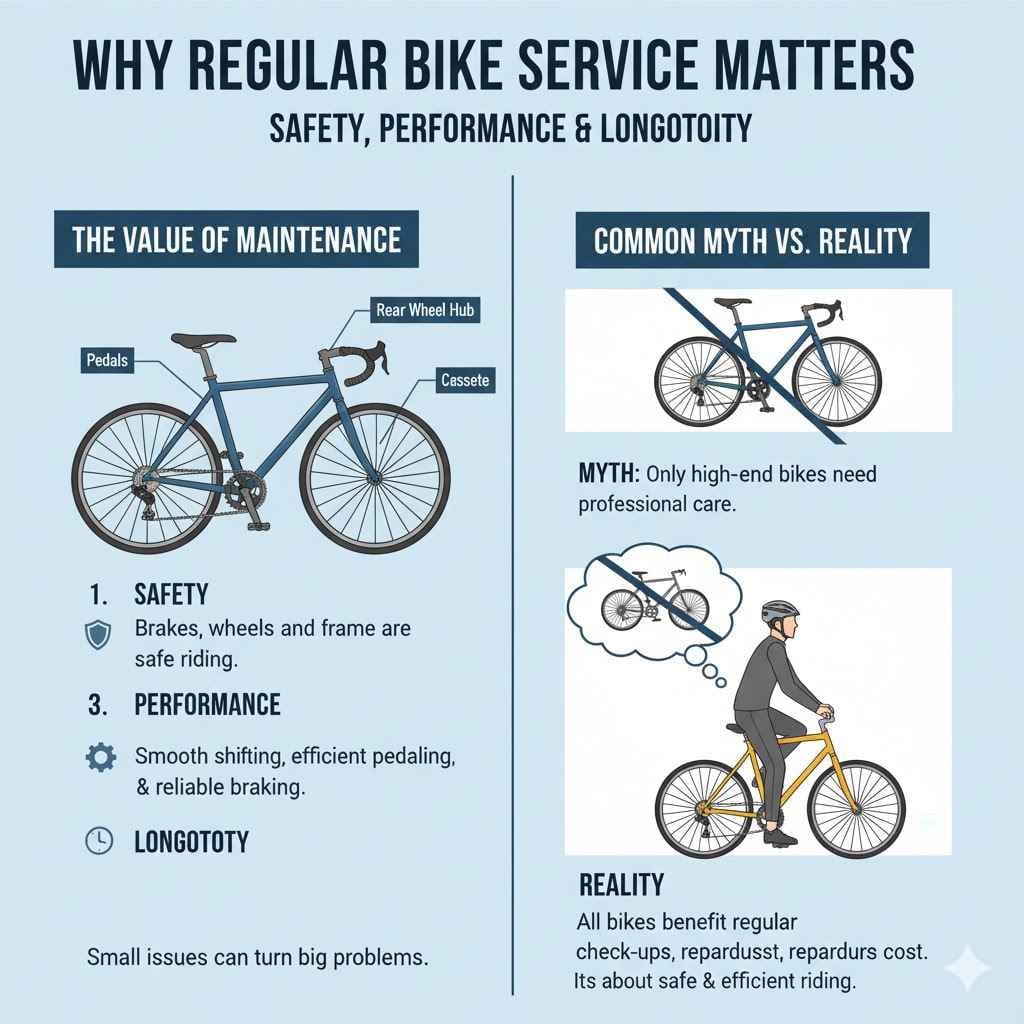
Why Regular Bike Service Matters
A well-serviced bike is more than just clean gears and inflated tires. Maintenance keeps your bike running smoothly and prevents unexpected breakdowns. If you ignore small issues, they can turn into big, expensive problems. Regular service ensures:
- Safety: Brakes, wheels, and frames are checked so you ride safely.
- Performance: Your bike shifts, pedals, and brakes efficiently.
- Longevity: Good care extends your bike’s life.
Many cyclists believe only expensive bikes need servicing, but every pedal bike benefits from regular attention—no matter the price or brand.
Where Can You Get Your Bike Serviced?
There are several places to get your pedal bike serviced. Each has advantages, drawbacks, and special features. Understanding these options can help you make the right choice.
Local Bike Shops
Local bike shops are often the first place people think of. These shops specialize in bicycle sales, repairs, and parts.
What Makes Local Bike Shops Special?
- Expert technicians: Staff are trained and experienced.
- Wide range of services: From basic tune-ups to full overhauls.
- Personalized advice: Recommendations based on your bike and riding style.
- Quick turnaround: Most repairs are completed within a few days.
What Services Do They Offer?
- Gear and brake adjustments
- Tire replacement and puncture repairs
- Chain cleaning and lubrication
- Wheel truing (making wheels straight)
- Full bike tune-ups
Pros And Cons
| Pros | Cons |
|---|---|
| High expertise | Can be expensive |
| Access to quality parts | May have longer wait times during busy seasons |
| Personal attention | Limited to shop hours and location |
Example
If you live in a city, you can usually find a local bike shop within a few kilometers. For instance, in New York City, there are over 120 bike shops, offering everything from simple repairs to custom builds.
Chain Stores And Sports Retailers
Large chain stores, like Decathlon or REI, also offer bike servicing.
What Makes Chain Stores Unique?
- Standardized pricing: Prices are fixed and usually displayed.
- Convenient locations: Often found in shopping centers.
- Extended hours: Open evenings and weekends.
What Services Do They Offer?
- Basic tune-ups
- Tire and tube replacement
- Brake and gear adjustments
- New bike assembly
Pros And Cons
| Pros | Cons |
|---|---|
| Consistent pricing | Less personalized service |
| Easy access | Staff may have less experience |
| Longer opening hours | Often busy, longer wait times |
Example
A store like Decathlon offers tune-ups starting at $25, and simple repairs can be done in under an hour. However, specialized repairs, like hydraulic brake bleeding, may not be available.
Mobile Bike Repair Services
Mobile bike repair is a newer option. Technicians come to your home, office, or even a park to fix your bike.
What Makes Mobile Services Stand Out?
- Convenience: No need to travel; service comes to you.
- Flexible scheduling: Appointments at your preferred time.
- Transparent pricing: Costs are often listed online.
What Services Do They Offer?
- On-site tune-ups
- Tire and tube replacement
- Brake and gear adjustments
- Minor repairs and part replacements
Pros And Cons
| Pros | Cons |
|---|---|
| Very convenient | Limited to certain areas |
| Flexible hours | May not handle complex repairs |
| Quick service | Sometimes higher prices |
Example
In London, companies like Bike Drop offer same-day repairs at your doorstep. You book online, select a time, and a mechanic arrives with tools and parts.
Community Bike Workshops
Some cities have community bike workshops or “bike kitchens.” These are run by volunteers and focus on teaching people to fix bikes themselves.
What Makes Community Workshops Special?
- Educational approach: Learn to fix your own bike.
- Low cost: Only pay for parts; labor is free or very cheap.
- Friendly atmosphere: Meet other cyclists and share tips.
What Services Do They Offer?
- Access to tools and workstations
- Guidance from experienced volunteers
- Workshops and classes
- Used parts and bikes for sale
Pros And Cons
| Pros | Cons |
|---|---|
| Very affordable | Limited opening hours |
| Learn valuable skills | May require DIY effort |
| Community support | Quality depends on volunteers |
Example
In San Francisco, Bike Kitchen offers access to tools for $5 per hour. Volunteers help you with repairs, but you do the work.
Independent Mechanics
Some mechanics work independently, either from a home workshop or as freelancers.
What Makes Independent Mechanics Unique?
- Personal service: One-on-one attention.
- Specialized skills: Some mechanics focus on certain bikes or repairs.
- Flexible pricing: Negotiable rates.
What Services Do They Offer?
- Custom repairs
- Specialized servicing (vintage bikes, racing bikes)
- Pickup and delivery
Pros And Cons
| Pros | Cons |
|---|---|
| Highly personalized | Harder to find |
| Flexible scheduling | No official guarantees |
| Expertise in niche areas | May lack parts in stock |
Example
A mechanic specializing in vintage bikes can restore old models that regular shops may not accept. You can usually find these mechanics through cycling groups or online forums.
Online Bike Service Platforms
Some websites connect you with local mechanics or shops. You search for services, book appointments, and pay online.
What Makes Online Platforms Special?
- Easy comparison: See prices and reviews.
- Booking convenience: Reserve your slot from your phone or computer.
- Wide network: Access to many service providers.
What Services Do They Offer?
- Listings for bike shops, mobile services, and independent mechanics
- Online booking
- Customer reviews
Pros And Cons
| Pros | Cons |
|---|---|
| Quick comparisons | Quality varies |
| Transparent pricing | May have booking fees |
| Wide selection | Reliability depends on provider |
Example
A site like BikeBook lets you compare local shops, see ratings, and book services directly.
How To Choose The Best Service Option
Choosing where to service your bike depends on your needs, location, budget, and the type of repairs you require. Here are important factors to consider:
1. Service Quality
Look for places with qualified mechanics. Ask if staff have certifications or years of experience. Quality matters most for safety-critical repairs, like brakes and wheels.
2. Cost And Value
Compare prices for common services like tune-ups, brake adjustments, and tire replacements. Don’t just pick the cheapest option—consider what’s included. Some shops offer free safety checks or minor adjustments with a full service.
3. Convenience
Think about how easy it is to get your bike serviced. Is the shop close to your home or work? Does the mobile service come at a time that suits you? Community workshops may be further away but worth the trip for learning and savings.
4. Special Needs
If you have a unique bike (e. g. , electric, vintage, racing), find a shop or mechanic with experience in that type. Not all places can handle special parts or advanced repairs.
5. Reviews And Reputation
Check online reviews, talk to other cyclists, and ask for recommendations. A shop with many happy customers is a good sign.
6. Warranty And Guarantees
Some shops offer warranties on their work or parts. Ask if repairs are guaranteed and for how long. This adds peace of mind.
What Does A Typical Bike Service Include?
Most places offer different levels of service. Here’s what you can expect:
| Service Level | What’s Included | Estimated Price |
|---|---|---|
| Basic Tune-Up | Brake and gear adjustment, tire inflation, chain lubrication | $20–$40 |
| Standard Service | Basic tune-up plus cleaning, minor part replacement | $40–$70 |
| Full Overhaul | Complete disassembly, deep cleaning, major repairs | $100–$200 |
Most shops will check your bike and give you a quote before starting work.
Common Bike Service Mistakes To Avoid
Getting your bike serviced is important, but there are mistakes many beginners make:
1. Skipping Regular Maintenance
Waiting until something breaks can mean bigger repairs. Even if your bike feels fine, small issues can build up.
2. Not Explaining The Problem Clearly
When you bring your bike in, describe what’s wrong as best you can. “It makes a clicking sound when I pedal” helps the mechanic find the issue faster.
3. Ignoring Shop Reputation
Don’t just go to the nearest place. Ask other riders, check reviews, and look for shops with good feedback.
4. Forgetting About Warranty
Some repairs come with a guarantee. Always ask if your service is covered, especially for expensive work.
5. Overlooking Specialized Needs
If you have a special bike, like a mountain bike or electric bike, make sure the shop can handle it. Not all places have the right tools or experience.
Practical Tips For Better Bike Service
Getting the best service isn’t just about where you go. Here are some tips to make the process smoother and more effective:
- Clean your bike before taking it in. Mechanics can work better on a clean frame.
- Write down issues: List noises, problems, or things that feel wrong.
- Ask for a written quote: Understand what’s included and what costs extra.
- Keep records: Note service dates, repairs, and parts replaced.
- Check after service: Test ride your bike to confirm repairs.
Extra Insights Most Beginners Miss
Many new cyclists don’t realize these important points:
- Seasonal rush: Bike shops get very busy in spring and early summer. Booking early can avoid delays.
- DIY-friendly shops: Some shops will show you basic maintenance for free or cheap, helping you learn simple fixes.
- Service packages: Some places offer discounted packages for multiple bikes or regular customers. Ask if there are deals.
Understanding Bike Service Costs
Bike service costs can vary based on location, bike type, and the shop. Here are some average prices to help you plan:
- Basic tune-up: $20–$40
- Brake adjustment: $10–$25
- Gear adjustment: $10–$25
- Tire replacement: $15–$30 per tire
- Full overhaul: $100–$200
Specialized repairs, like hydraulic brake bleeding or electric bike servicing, can cost more. Always ask for a quote.
How Often Should You Service Your Bike?
How often you need service depends on how much you ride, the conditions, and your bike’s age.
- Regular riders: Every 3–6 months
- Occasional riders: Once a year
- After heavy use: After long tours, races, or wet conditions
If you notice strange noises, poor shifting, or weak brakes, get your bike checked sooner.
What To Bring When You Get Your Bike Serviced
To make the process smooth, bring:
- Your bike
- Any special parts (if you have them)
- A list of issues or symptoms
- Proof of purchase or warranty (if needed)
- Payment method
Some shops may ask for ID or contact info for larger repairs.
Preparing Your Bike For Service
Making your bike ready for service helps mechanics work faster and more accurately.
- Remove accessories (lights, bags, computers)
- Clean mud or debris
- Inflate tires if possible
- Check that all parts are present
Mechanics appreciate a clean, ready bike. It also helps spot problems faster.
What Happens After Your Bike Is Serviced?
After service, you should:
- Test ride your bike
- Check brakes, gears, and tires
- Ask for maintenance tips
- Keep your receipt and any warranty info
If you notice any issues soon after, contact the shop. Good places will fix problems quickly.
DIY Vs. Professional Service
Some cyclists prefer to fix their own bikes. DIY can save money and teach valuable skills, but not all repairs are easy.
When Diy Works
- Simple fixes: Tire inflation, chain lubrication, brake adjustment.
- If you have tools and time.
- For minor repairs.
When To Use Professionals
- Complex repairs: Wheel truing, hydraulic brakes, frame issues.
- If you lack tools or confidence.
- For safety-critical parts.
Many shops offer classes or advice for beginners. Learning basic maintenance is always a good idea.
Comparing Service Options
Here’s a quick comparison of the main service places:
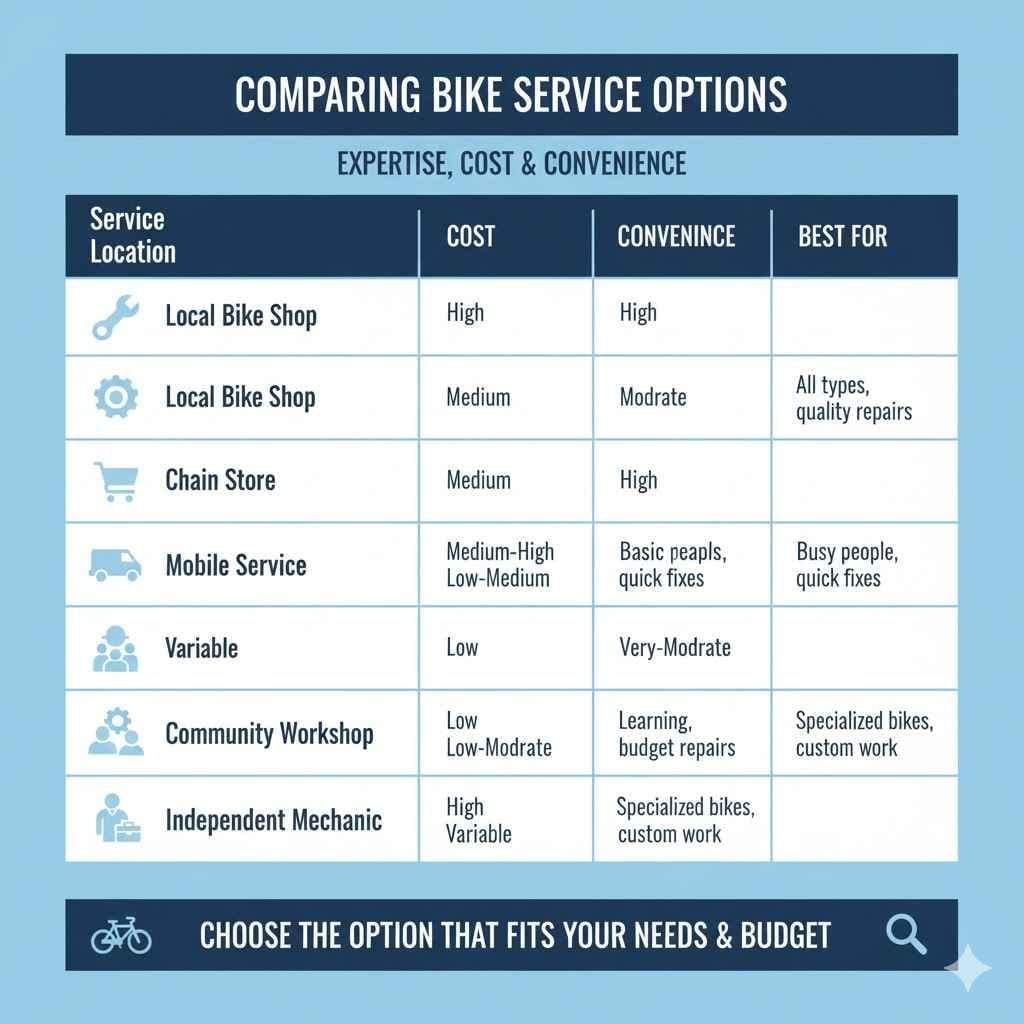
| Service Location | Expertise | Cost | Convenience | Best For |
|---|---|---|---|---|
| Local Bike Shop | High | Medium–High | Moderate | All types, quality repairs |
| Chain Store | Medium | Low–Medium | High | Basic repairs, new bikes |
| Mobile Service | Medium–High | Medium–High | Very High | Busy people, quick fixes |
| Community Workshop | Variable | Low | Low–Moderate | Learning, budget repairs |
| Independent Mechanic | High | Variable | Moderate–High | Specialized bikes, custom work |
| Online Platform | Variable | Variable | Very High | Easy comparison, booking |
Frequently Asked Questions
How Often Should I Service My Pedal Bike?
The answer depends on how much you ride. If you use your bike daily, aim for a check-up every 3–6 months. For occasional riders, once a year is enough. If you hear strange noises, feel weak brakes, or notice poor shifting, get your bike checked sooner.
Can I Service My Pedal Bike Myself?
Yes, you can handle basic tasks like cleaning, lubricating the chain, and adjusting brakes. For complex repairs, like wheel truing or hydraulic brakes, it’s best to use a professional. Many shops offer classes to teach simple maintenance.
What’s The Difference Between A Tune-up And A Full Service?
A tune-up includes minor adjustments—brakes, gears, tire inflation, and chain lubrication. Full service is more detailed: deep cleaning, parts replacement, and checking every component. Tune-ups are cheaper and faster, but full service is better for old or heavily used bikes.
Are Mobile Bike Repair Services Reliable?
Most mobile services are reliable and convenient, especially for simple repairs. Always check reviews and ask about warranties. For complicated issues, mobile mechanics may refer you to a shop.
How Can I Find The Best Bike Shop Near Me?
Ask other cyclists, check online reviews, and use websites like BikeBook to compare shops. Look for shops with experienced staff, good ratings, and clear pricing.
Getting your pedal bike serviced is a smart step for any cyclist. Whether you choose a local shop, chain store, mobile service, community workshop, or independent mechanic, the right place depends on your needs. Make your choice wisely, keep your bike in good shape, and enjoy safe, smooth rides every time.
Regular maintenance will save you money, prevent problems, and help you get the most from your bike. See also what to do if your pedal gets stuck safe steps to take .