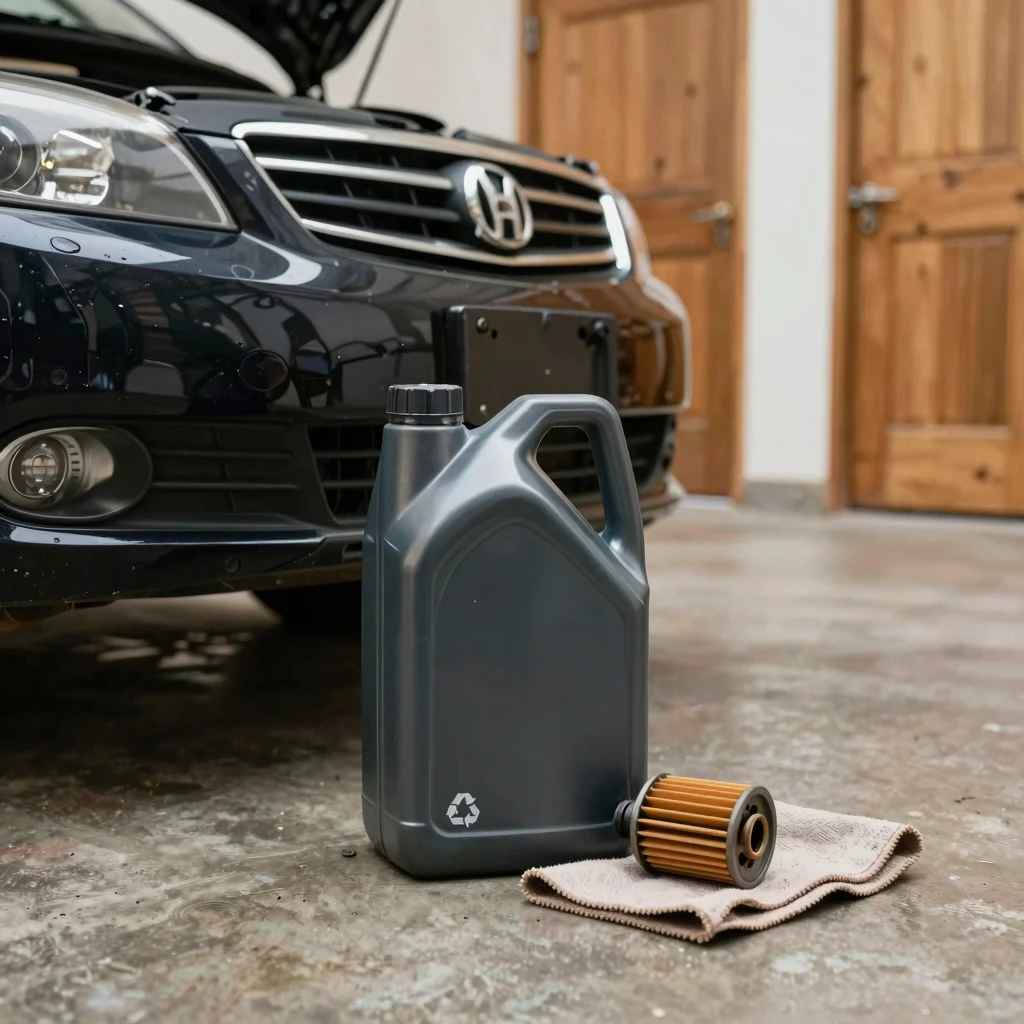
What to Do With Car Oil After an Oil Change
Changing your car’s oil is one of the most common maintenance jobs you can do at home. But after you finish, you’re left with a big question: what to do with car oil after oil change? This isn’t a small issue. Used motor oil is toxic. It can pollute water, harm animals, and even damage soil if you throw it away the wrong way. One gallon of used oil can ruin a million gallons of fresh water. Still, millions of people change their own oil every year—so what should they do with all that leftover oil?
Let used oil cool, pour it into a clean sealed container, and take it to an auto parts store, quick-lube shop, or municipal recycling center — most accept used oil free. Pouring it down a drain, into the ground, or into household trash is illegal in most places.
Below is the full process: how to collect it safely, where free drop-off points are, and the mistakes that get used oil rejected at recycling centers.
Let’s break down exactly what you should do with car oil after an oil change. This guide covers safe storage, recycling options, legal rules, what happens to recycled oil, and common mistakes to avoid. It will also answer some of the questions most people have, especially if you’re changing your own oil for the first time.
Understanding Used Motor Oil
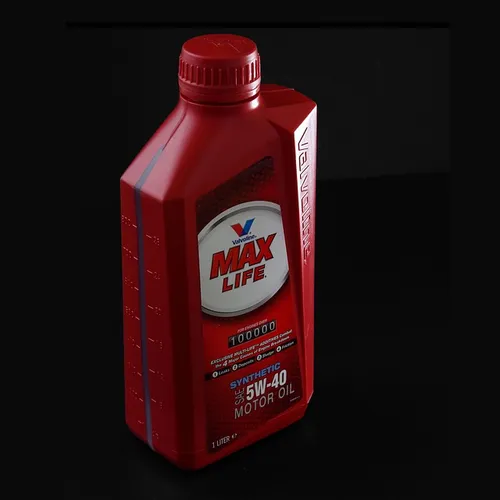
Sherman FloTool Dispos-Oil Recycle Jug
Best for: A purpose-built container to store used oil until you drop it off, instead of reusing a leak-prone old oil bottle.
Why we picked it: The screw-on cap and built-in funnel spout keep the oil sealed and mess-free between changes, and it’s sized to hold multiple oil changes before a recycling run.
Main drawback: Still label it clearly and store it away from kids and pets — the jug prevents leaks, not access.
Check Price on Amazon| Product | Best For | Price Range | Link |
|---|---|---|---|
 Dorman 15-Quart Drain Pan |
Catching the oil cleanly before it ever needs to go into a storage jug | $ | View |
 Automotive Oil Funnel |
Transferring drained oil from the pan into the recycling jug without spilling | $ | View |
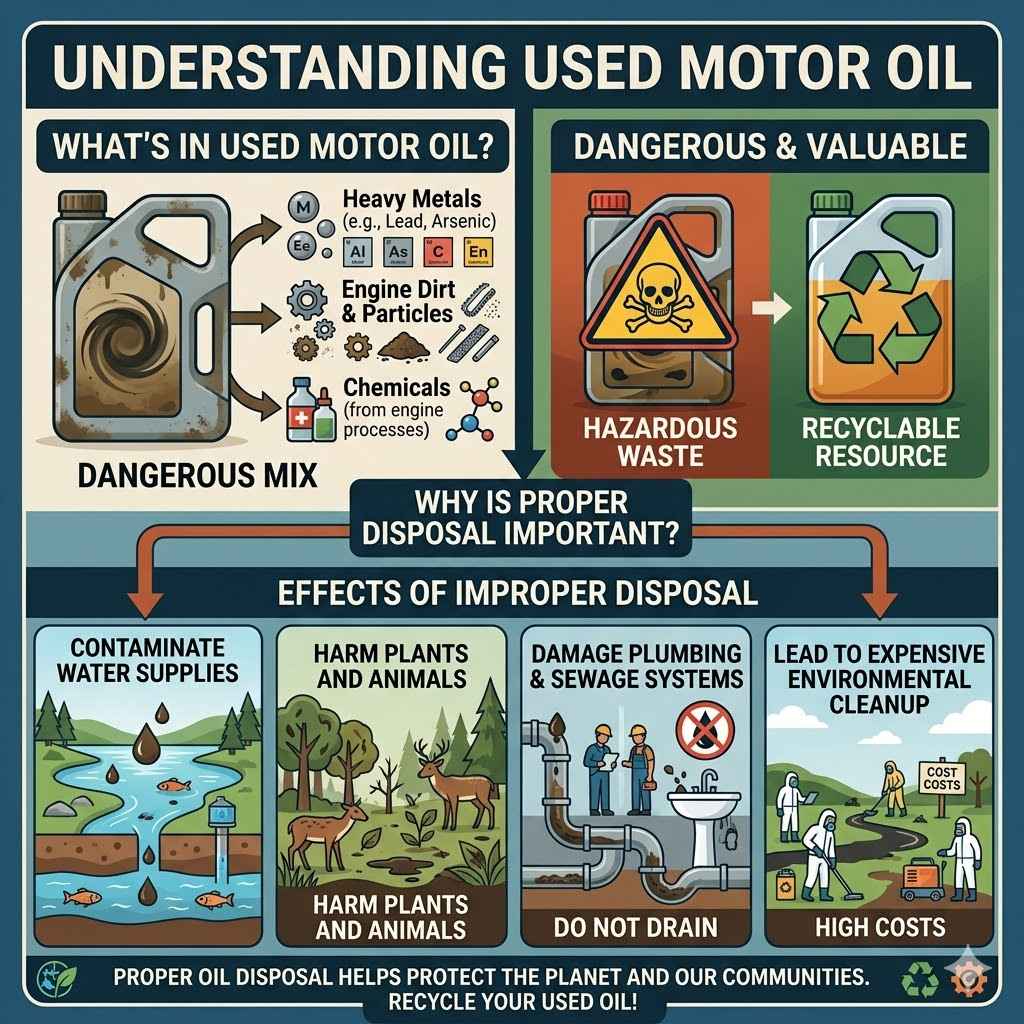
Used motor oil isn’t just old oil. When it leaves your car, it contains heavy metals, dirt, and chemicals picked up from the engine. This makes it both dangerous and valuable. On one hand, it’s a hazardous waste. On the other, it’s a recyclable resource.
Why is proper disposal important? Used oil dumped in the trash or poured on the ground can:
- Contaminate water supplies
- Harm plants and animals
- Damage plumbing and sewage systems
- Lead to expensive environmental cleanup
Most countries have laws about oil disposal for these reasons. In the US, for example, the Environmental Protection Agency (EPA) requires used oil to be recycled or disposed of at approved sites.
Step-by-step: What To Do With Car Oil After Oil Change
Handling used oil safely starts right after you drain it. Follow these steps to avoid mess, fines, and environmental harm.
1. Let The Oil Cool And Collect It Properly
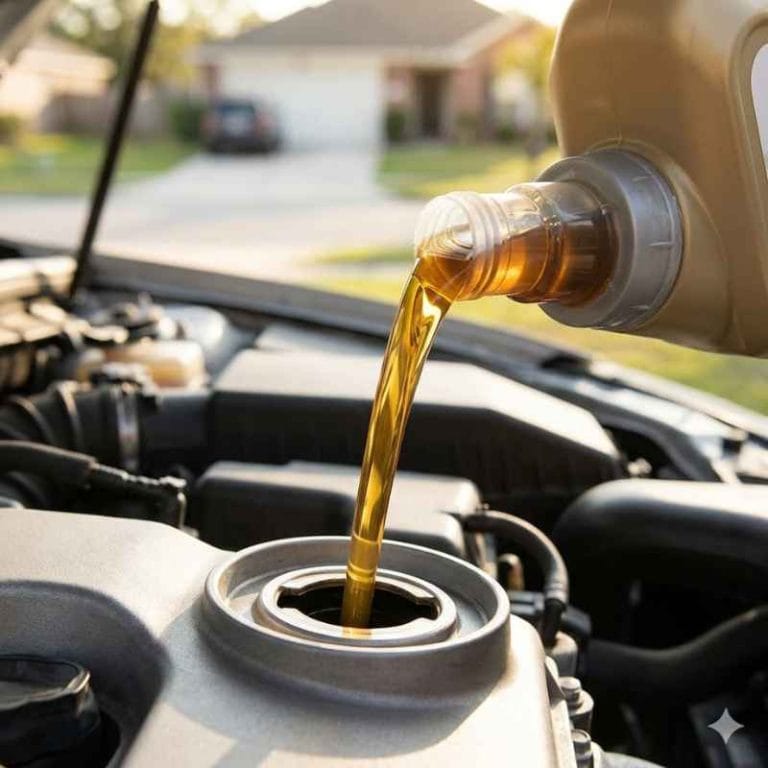
After draining the oil from your engine, let it cool completely. Hot oil can burn your skin. Once it’s cool, pour it into a clean, leak-proof container. The best choices are the bottles your new oil came in or dedicated oil recycling jugs sold at auto shops.
Tips for collection:
- Use a funnel to avoid spills.
- Never mix oil with other fluids (like coolant, brake fluid, or water). Mixing makes recycling impossible.
- Keep the container tightly closed.
2. Store The Used Oil Safely
Store your container in a cool, dry place, away from children and pets. Make sure it’s labeled “Used Motor Oil” so no one mistakes it for something else. Don’t keep used oil for a long time—plan to recycle it soon.
3. Don’t Forget The Oil Filter
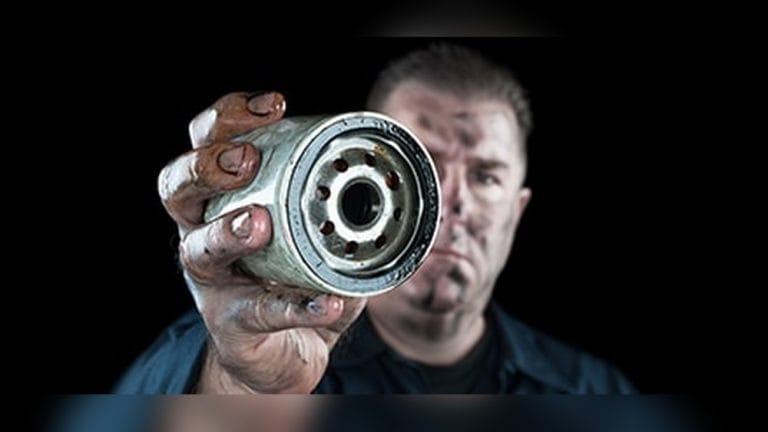
Your used oil filter also contains oil. Let it drain (upside down) for at least 12 hours into your oil collection pan. Place it in a sealed plastic bag or a coffee can with a lid. Many recycling centers accept oil filters, too.
4. Find A Recycling Location
Most towns and cities have places that accept used oil. Common options include:
- Auto parts stores (like AutoZone, Advance Auto Parts, O’Reilly)
- Service stations and repair shops
- Household hazardous waste collection centers
- Local recycling centers
You can find your nearest drop-off using your city website or searching “used oil recycling near me. ”
Here’s a quick comparison of popular recycling options:
| Location Type | Cost | Accepted Items | Hours |
|---|---|---|---|
| Auto Parts Store | Free | Oil, oil filters | Business hours |
| Service Station | Free or small fee | Oil, sometimes filters | Business hours |
| Household Hazardous Waste Center | Free | Oil, filters, chemicals | Limited (usually weekends) |
Always call first to confirm what they accept and if there are any limits (many places allow up to 5 gallons per drop-off).
5. Take The Oil To The Recycling Center
Transport your sealed container carefully to avoid spills. Hand it to the staff—they’ll usually pour it into a larger tank for recycling. If you have oil filters, hand those over too.
Some centers will give you back your container; others keep it. Ask if you’re unsure.
6. Record Your Drop-off
If you do oil changes regularly, keep a simple log. Note the date, amount of oil, and where you dropped it off. This helps if local laws require proof you’re not dumping oil illegally.
What Happens To Recycled Oil?
Many people don’t realize used motor oil can be cleaned and reused. Here’s how it works:
- Collection: Oil is gathered from drop-off sites.
- Transport: It’s taken to a recycling facility.
- Re-refining: The oil is filtered and treated to remove dirt, water, and chemicals.
- Testing: Quality is checked to meet safety standards.
- Reuse: The cleaned oil can be made into new motor oil, lubricants, or even used as industrial fuel.
Re-refining uses less energy than making new oil from crude. It also reduces pollution and saves resources.
Legal Rules And Penalties
In most countries, improper disposal of used oil is illegal. For example, in the US, dumping oil can lead to fines up to $25,000 per day. Some states publish names of violators online. Other countries have similar or even stricter rules.
Common legal requirements:
- Don’t pour oil down drains or sewers.
- Don’t put oil in household trash.
- Don’t dump oil on the ground or in water.
Some areas require you to use only approved recycling centers. Check your local government’s website for details.
Common Mistakes To Avoid
Even careful car owners make mistakes with used oil. Here are some you should avoid:
- Mixing fluids: Pouring brake fluid, coolant, or transmission fluid into your oil container makes the oil impossible to recycle.
- Using the wrong container: Thin plastic bottles (like milk jugs) can crack or leak. Stick to sturdy, oil-proof bottles.
- Storing oil too long: Old oil containers can break down and leak. Try to recycle oil within a month of changing it.
- Ignoring the filter: Oil filters may hold up to half a quart of oil. Always drain and recycle them.
- Assuming all places accept oil: Not every auto shop or recycling center takes used oil—always call ahead.
- Pouring oil into the trash: This can contaminate entire truckloads of garbage, leading to more waste and higher costs.
How Used Oil Impacts The Environment
The environmental cost of mishandled oil is huge. According to the EPA, over 200 million gallons of used oil are improperly disposed of each year in the US alone. That’s enough to pollute billions of gallons of water.
Key facts:
- One oil change’s worth of oil can ruin the water supply for 50 people for a year.
- Wildlife can die from even small amounts of oil in water.
- Soil contaminated by oil may take decades to recover.
Recycling helps prevent these problems and keeps communities healthier.
Can You Reuse Old Motor Oil Yourself?
Some people ask if it’s safe to reuse used motor oil for things like oiling tools or burning in heaters. While it’s possible in rare cases, it’s not recommended for most people. Used oil contains heavy metals and chemicals that are dangerous if handled wrong.
Why it’s risky:
- Home filtering doesn’t remove all toxins.
- Burning used oil creates air pollution unless done in special furnaces.
- Oil applied to tools or hinges can spread contamination.
It’s safer and better for the environment to recycle through approved centers.
Creative But Safe Uses For Used Oil (and Why You Should Be Careful)
In the past, farmers sometimes used old oil for dust control or to treat fence posts. Today, this is illegal in most places and highly discouraged. Still, a few industrial uses exist, such as:
- Specially designed oil heaters (with filters)
- Manufacturing processes (in factories)
However, these require permits and safety controls. For the average car owner, recycling is always the best and safest choice.
How To Handle Oil-soaked Rags And Cleanup Materials
Don’t forget about the rags, paper towels, or absorbent pads you use during your oil change. These items can also be dangerous if thrown in the trash.
What to do:
- Place oily rags in a metal container with a tight lid.
- Take them to a hazardous waste center.
- Never toss oil-soaked materials in regular garbage—they can cause fires or leaks.
Safe Disposal Of Oil Containers
After pouring used oil into a recycling jug, you’ll have empty oil bottles. These often have oil residue inside. Here’s what to do:
- Let bottles drain upside down for several hours.
- If your recycling center accepts them, rinse with a small amount of used oil (not water).
- Drop them off with your used oil, or follow local plastic recycling rules.
Never rinse oil containers with water—this just washes oil into the sewer.
Used Oil In Numbers: The Impact Of Recycling
To see why recycling matters, let’s look at some data:
| Action | Environmental Impact | Resource Savings |
|---|---|---|
| Recycling 2 gallons of used oil | Can power the average home for 24 hours | Saves enough energy to refine 42 gallons of crude oil |
| Dumping 1 gallon of oil | Can pollute 1 million gallons of water | None (causes harm) |
| Re-refining oil instead of burning as fuel | Reduces greenhouse gas emissions by 50% | Saves up to 80% energy compared to crude oil refining |
Recycling isn’t just the law—it’s one of the easiest ways to help the planet, starting in your own garage.
How To Make Oil Changes And Disposal Easier
Changing your own oil and disposing of it properly doesn’t have to be a chore. Here are some tips to make the process smoother:
- Use a large drip pan to catch all the oil.
- Buy a purpose-built oil drain pan with a spout for easy pouring.
- Store a list of local recycling centers in your garage or on your phone.
- Change oil on a dry day to reduce the risk of slipping or spills.
- Wear gloves to avoid skin contact with dirty oil.
Pro tip: Some auto parts stores offer rewards points for recycling oil or filters with them. Ask about their programs.
What If You Can’t Get To A Recycling Center Right Away?
Sometimes, life gets busy. If you can’t drop off your used oil the same day, store it in a sealed, labeled container away from heat or sunlight. Don’t keep it for more than a month if possible. If you have more than five gallons, call your local center for advice—some places have limits or require appointments for large amounts.
How Businesses Handle Used Oil
It’s not just DIY car owners who must follow the rules. Businesses that change oil—like mechanics or car dealerships—face even stricter regulations. They must:
- Use special storage tanks
- Track every gallon of oil
- Arrange for certified waste haulers
If you run a small shop or change oil for friends and family, check your local laws. You may need a permit or to register as a small quantity generator.
The Future Of Used Oil Recycling
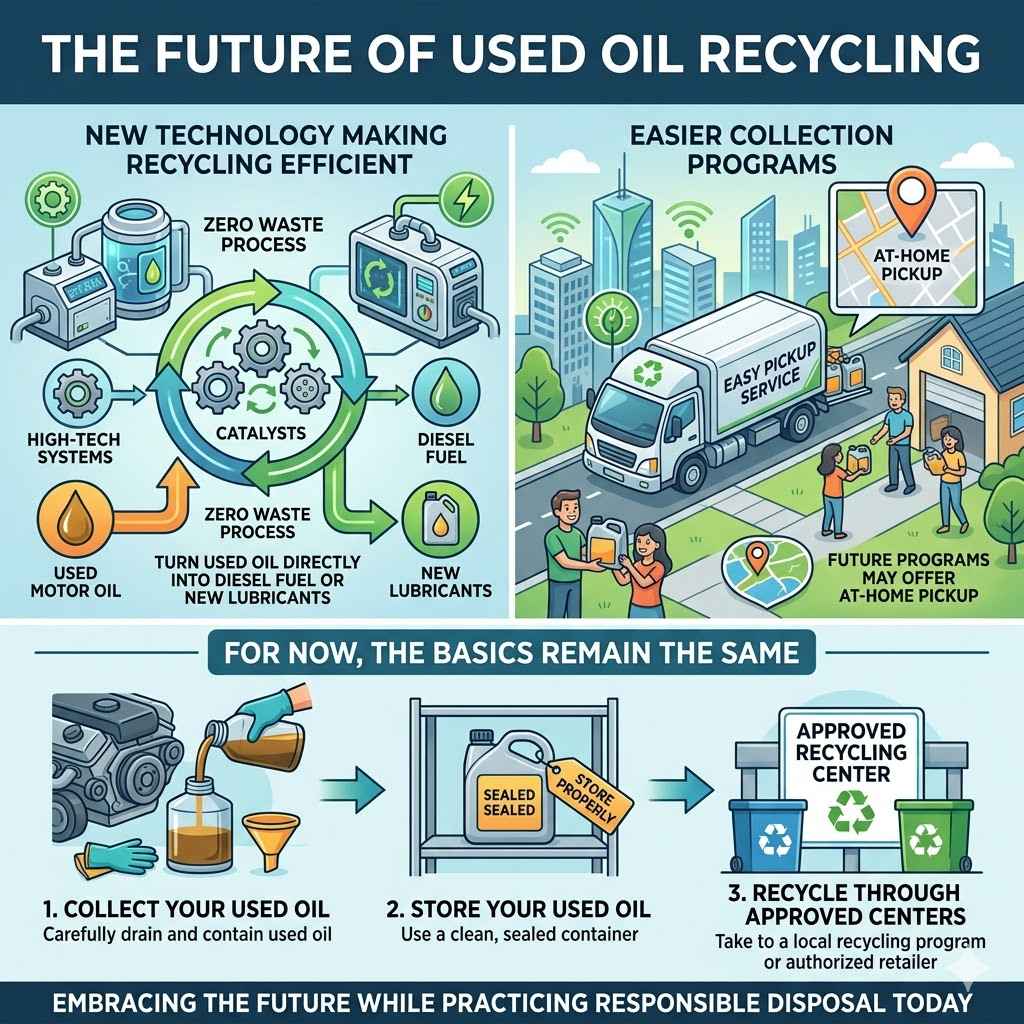
New technology is making oil recycling even more efficient. Some companies are testing ways to turn used oil directly into diesel fuel or new lubricants, with almost zero waste. In the future, you may even see collection programs that pick up used oil from your home, making recycling even easier.
For now, the basics remain the same: collect, store, and recycle your used oil through approved centers.
Frequently Asked Questions
What Happens If I Accidentally Mix Oil With Another Fluid?
If you accidentally mix motor oil with another fluid (like coolant or transmission fluid), don’t take it to a regular recycling center. Most centers will refuse mixed fluids. Contact your local hazardous waste disposal service for instructions. Never pour mixed fluids down the drain or on the ground.
Can Used Motor Oil Be Cleaned At Home?
No, home cleaning isn’t effective or safe. Used oil contains toxic chemicals that require special equipment to remove. Home methods can spread contamination. Always recycle used oil at an approved center.
What Do I Do With Old Oil That’s Been Stored For Years?
If you find old bottles of used oil in your garage, don’t pour them out. Old oil can still be recycled. Take it to a hazardous waste center or call your local recycling authority for help. Even thick, sludgy oil can often be processed.
Can Used Oil Filters Go In The Trash?
Oil filters can hold up to 10 ounces of oil inside. In most places, throwing them in the trash is illegal. Drain them well and take them to a recycling center. Many auto parts stores accept used filters.
Is There A Penalty For Dumping Oil Illegally?
Yes. Illegal dumping can result in fines (sometimes thousands of dollars), community service, and even jail time. It also causes long-term environmental damage. Always recycle or dispose of oil at approved centers.
Taking care of used motor oil is easier than you might think. With just a few simple steps, you can protect your health, your community, and the planet. Choose recycling every time, and you’ll keep your car—and the world around you—running clean.
For more details on oil recycling programs, check the official EPA resource: EPA: Managing and Recycling Used Oil.
Products related to this article
Sponsored / affiliate links. As an Amazon Associate I earn from qualifying purchases. I may earn additional commission from eligible campaigns.