Vehicle Types on a Title: What the Code Usually Means
The vehicle type on a title is usually a legal classification, not a body-style label, and a mismatch with the VIN or registration should be checked before transfer or sale. Ignoring it can delay registration, trigger DMV corrections, or raise red flags for insurers and buyers. This guide explains what common title vehicle type codes mean, how to compare them with VIN and registration data, and when a mismatch is harmless versus fixable.
Title codes reflect state rules, not consumer labels
A vehicle type code on a title tells a DMV or title authority how the vehicle is classified in its record system. It may point to passenger use, commercial use, or a special category such as truck, van, motorcycle, or SUV. It is not always the same thing as the marketing body style printed on a window sticker or brochure.
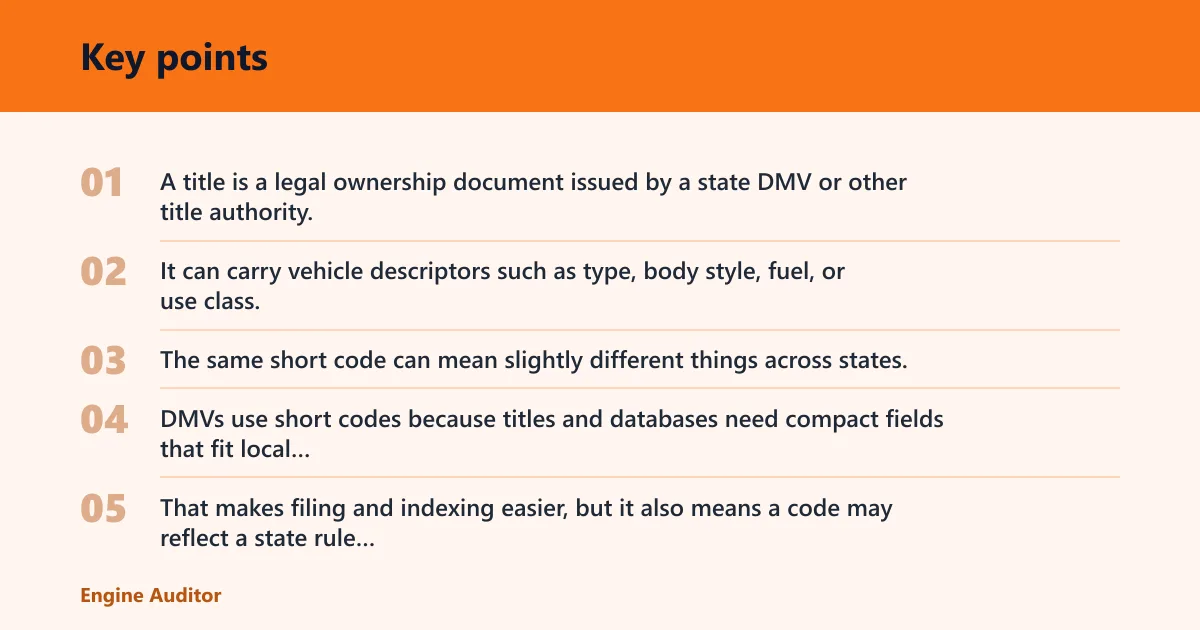
A title is a legal ownership document issued by a state DMV or other title authority. It can carry vehicle descriptors such as type, body style, fuel, or use class, depending on the state. The same short code can mean slightly different things across states, so read the title with the VIN and registration record beside it.
Why states use short codes
DMVs use short codes because titles and databases need compact fields that fit local record systems. That makes filing and indexing easier, but it also means a code may reflect a state rule rather than a consumer-facing description. One state may use a code for “passenger,” while another may sort the same vehicle under a broader “sedan” or “auto” category.
Where do you find the code on a title?
The code is usually printed in a labeled field on the paper title, often near make, model, year, body type, or vehicle class. On some titles it appears as an abbreviation, a two- or three-letter code, or a plain-language label. If the title is electronic or recently reissued, the same field may appear on the registration record instead.
Registration card cross-check
Your registration card often repeats the same classification used in the DMV title record. If the title says one thing and the registration says another, compare both against the VIN record before you treat either one as correct. A blank field can also be meaningful if that state does not print a body-style field on every title.
What to do if the field is blank or abbreviated
If the field is blank, abbreviated beyond recognition, or coded in a way you cannot decode from the title alone, use the VIN as the anchor and ask the issuing DMV for the title record format used in that state. Do not guess from the vehicle’s shape alone. A two-door SUV, a cargo van, and a passenger van can be classified very differently.
Vehicle type codes and meanings
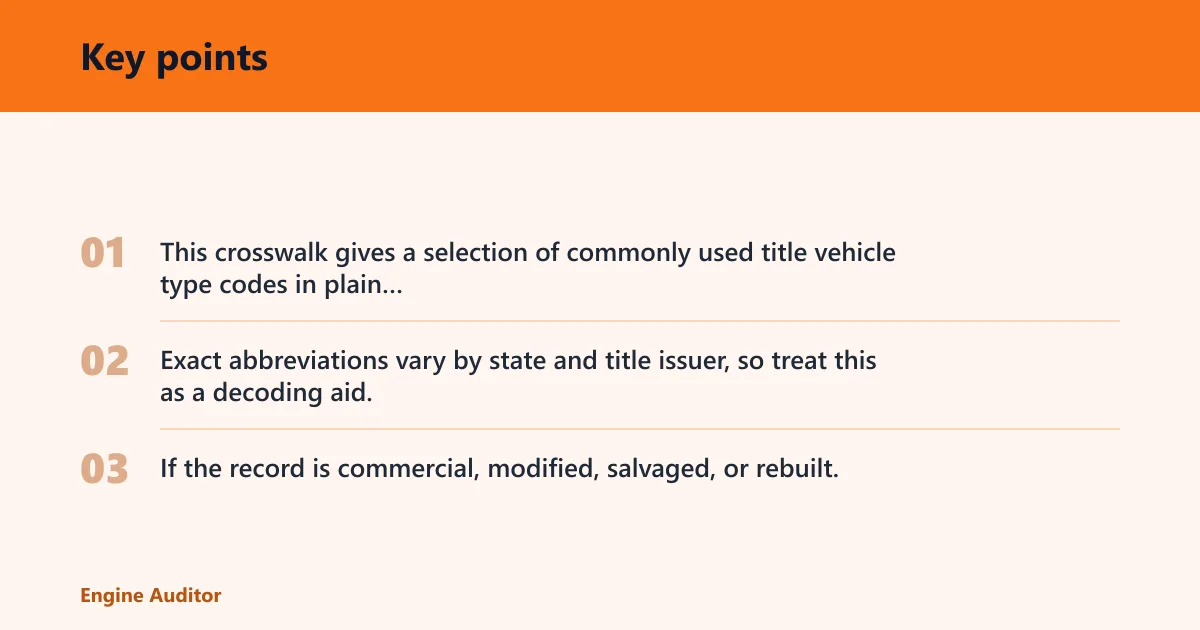
This crosswalk gives a selection of commonly used title vehicle type codes in plain English. Exact abbreviations vary by state and title issuer, so treat this as a decoding aid, not a universal list. If the record is commercial, modified, salvaged, or rebuilt, the best match may come from the title record and manufacturer data rather than the visible body shape.
| Common title code | Plain-English meaning | Likely body style match | Common mismatch cases | Best verification source | Escalate to DMV for correction when |
|---|---|---|---|---|---|
| PASS / P | Passenger vehicle | Sedan, hatchback, coupe, wagon, small SUV | Pickup registered as passenger; SUV listed as passenger use; converted van | VIN decoder and registration card | The title class blocks registration or insurance setup, or the state record is clearly inconsistent |
| CAR / AUTO | Passenger car class | Sedan, coupe, hatchback, wagon | Sports utility vehicle coded as car; older titles using legacy shorthand | VIN build data and DMV title record | The record affects tax, inspection, or title transfer and the VIN points to a different class |
| TRK / TRUCK | Truck class | Pickup, chassis cab, cargo truck | Pickup titled as SUV; commercial cab-chassis listed as passenger | VIN, body type plate, and manufacturer build sheet | The truck class is missing on a commercial vehicle or the registration category is wrong |
| VAN | Van class | Passenger van, cargo van, minivan in some states | Cargo van titled as passenger van; minivan classified as truck in some records | VIN decoder and seating or cargo configuration on the title record | The title and registration disagree on passenger versus commercial use |
| SUV / UT | Sport-utility or utility vehicle | SUV, crossover, utility body | Marketing SUV name not matched by a title that uses car or truck class | VIN decoder and manufacturer data | The state requires a corrected class for registration or sale disclosure |
| MOTORCYCLE / MC | Two- or three-wheel motor vehicle | Motorcycle, trike | Sidecar attachment, conversion kit, or specialty build | VIN and manufacturer classification | The VIN or title shows a different vehicle type than the actual registered unit |
| COMM / C | Commercial use or commercial class | Cargo van, box truck, chassis cab | Fleet vehicle retired to private use; passenger van still coded commercial | Registration record and state use category | Commercial classification is stale or creates weight, tax, or permit problems |
| SPC / SPEC | Special-purpose vehicle | Ambulance, fire unit, motorhome, utility body | Converted SUV, service body, or chassis cab after upfit | Title history, conversion records, and DMV record | The special-purpose code conflicts with the present build and affects titling or insurance |
Why does the code differ from the body style?
The code can differ from the body style because title systems classify legal use, not just shape. A vehicle may look like an SUV but be titled as a truck, passenger vehicle, or utility unit depending on how it was built, sold, or later altered. That difference is normal when the title reflects the state’s filing rule rather than the marketing name.
Marketing name versus legal classification
Marketing terms are designed to sell the vehicle. Legal classification is designed to file it. A crossover may be marketed as an SUV, yet a DMV record may sort it with passenger cars. A cargo van may be described by the brand as a “van,” but the title may place it in a commercial or utility class.
Suppose a 2021 cargo van has side windows added after purchase and is later used for family travel. The outside shape may look more like a passenger van, but the VIN and title history may still classify it as a commercial van unless the state record is amended. The visual change alone does not rewrite the title.
Factory build data versus later conversion
VIN decoding often points to the factory configuration, not later changes. If a truck was converted into a camper, or an SUV was upfitted with commercial shelving, the title may still show the original class until the owner updates the DMV record. That is one of the most common mismatch sources.
How do you verify the code with VIN data?
Use the 17-character VIN as the anchor, then compare the title, registration card, and manufacturer build data. The VIN ties the vehicle to factory records and is the best way to check whether the title code fits the build. If the title code and VIN data disagree, the next step is to determine whether the difference comes from a state coding rule or a true record error. (Nhtsa)
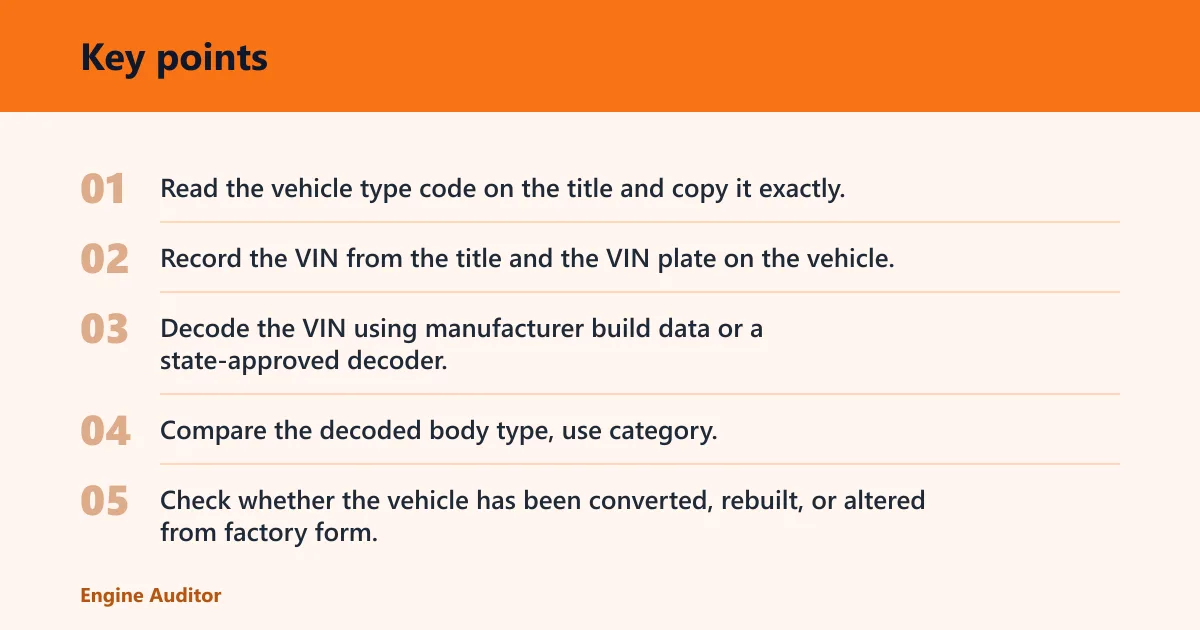
- Read the vehicle type code on the title and copy it exactly.
- Record the VIN from the title and the VIN plate on the vehicle.
- Decode the VIN using manufacturer build data or a state-approved decoder.
- Compare the decoded body type, use category, and class with the title and registration card.
- Check whether the vehicle has been converted, rebuilt, or altered from factory form.
- If the records still conflict, ask the DMV title office what document it needs to review the class.
Check all four sources
A common comparison set is the title, registration card, VIN plate, and manufacturer data or decoder results. One record alone is not enough. A DMV database can carry a legacy code, a title clerk can inherit an old shorthand, and a decoder can show factory build data that does not reflect later conversion. The match has to make sense across all four.
A common first-timer mistake is to trust the body shape seen from the curb and ignore the title code. A boxy SUV may be titled as a truck in one state and as a passenger vehicle in another, depending on how the vehicle was classified when it first entered the record system. Shape alone does not settle the issue.
When does a mismatch matter?
A mismatch matters when it changes a DMV form, affects registration, alters insurance classification, or creates a problem at sale. Small wording differences are often harmless. A wrong class, wrong use category, or outdated commercial designation is more serious when it blocks a transaction or makes the record inconsistent with the VIN history.
Registration, tax, and insurance
DMV forms can ask for vehicle class, body type, or use category, and those fields can control fees, emissions rules, or inspection requirements. Insurers may also sort vehicles differently for passenger versus commercial use. If the title says one thing and the registration or policy application says another, fix it before renewal or transfer.
Private sale and title transfer risk
Buyers compare the title to the VIN and registration. A mismatch can look like a clerical error, a modified vehicle, or an uncorrected salvage history. Even when there is no fraud, the inconsistency can slow the sale because the next owner may be asked to provide extra documentation.
When to ask the DMV for correction
Ask for a correction when the title code appears to conflict with the VIN, the state record is outdated after a conversion, or the error affects registration, tax, or ownership transfer. The office to use is the issuing DMV or title authority, usually through its title correction or amended title process. Bring the current title, registration card, VIN photos, and any build or conversion documents the state accepts. State rules and document formats vary, so follow the issuing DMV’s instructions for that title record.
Frequently asked questions
What does the vehicle type code on a title mean?
It is a classification field used by the title authority to sort the vehicle in a legal record system. The code may describe passenger use, commercial use, or a special category. It is not always the same as the body style buyers use in everyday conversation.
Where do I find the vehicle type on my title?
Look for a field labeled vehicle type, class, body type, use, or a short code near the VIN, make, and model. If the paper title is sparse, check the registration card. Some states place the same information in a different field or leave it abbreviated.
Why does the title code not match the car body style?
The title may reflect legal class or use, while the body style reflects shape. A vehicle can look like an SUV and still be coded as a truck, passenger vehicle, or utility unit. That is common when state rules, factory build data, or later conversion history drive the classification.
What is the difference between vehicle type, body type, and class?
Vehicle type is the record label on the title. Body type describes the physical shape, such as sedan, coupe, SUV, truck, or van. Class is the broader legal category used for registration, tax, or use rules, such as passenger, commercial, recreational, or special-purpose.
Can the vehicle type code affect DMV forms or registration?
Yes. The code can change which form you fill out, which fee applies, and whether the vehicle is treated as passenger or commercial for registration. If the code is wrong, the DMV may reject the paperwork or place the vehicle in the wrong category until the record is corrected.
How do I know if the title code is wrong or outdated?
Compare the title with the VIN plate, registration card, and manufacturer build data. If the VIN points to one class and the title shows another, or the vehicle was converted after the original title was issued, the record may be outdated. If the mismatch affects sale or registration, ask the DMV for an amended title review.
Products related to this article
Sponsored / affiliate links. As an Amazon Associate I earn from qualifying purchases. I may earn additional commission from eligible campaigns.