Vehicle Types for Beginners: Easiest Choices to Drive
For many beginners, a small automatic hatchback or compact sedan with a backup camera and parking sensors is among the easiest vehicle types. Choose the smallest model you can park with confidence. Pick the wrong size or poor visibility, and every merge, turn, and parking job adds stress and mistakes. This guide compares the easiest vehicle types by visibility, parking ease, controls, and safety tech.
Which vehicle type is easiest for beginners?
The easiest vehicle for a beginner is usually a small automatic car with good outward visibility, short overhangs, and a rearview camera. That often means a sedan or hatchback before a crossover or SUV. The right choice depends less on body style alone and more on how calmly it handles parking, lane changes, and tight turns.
Why easy driving is about visibility and control
New drivers do better in a car that feels predictable at low speed. Visibility affects lane changes, merges, parking, and judging curb distance. Control matters because light steering, a short hood, and clear pedal response reduce small mistakes that can snowball in traffic.
Seat height changes what you can see. A lower car often gives a better view of the road directly ahead and makes it easier to judge the corners of the vehicle. A higher seat can help you see over traffic, but it can also make the vehicle feel larger than it is.
The beginner tradeoff: confidence versus size
Smaller vehicles are usually easier to park and maneuver, but not every small car feels equally easy. A compact car with a long hood, poor rear visibility, or a wide turning circle can feel more demanding than a slightly larger model with better cameras and clearer sightlines.
Vehicle size class matters too. Subcompact cars are often easiest to park. Compact models often balance confidence and room better than midsize vehicles. Midsize vehicles can feel calmer on open roads, but they usually demand more space in parking lots and tighter streets.
Best starting point for most new drivers
For most new drivers, a compact hatchback or compact sedan is the safest starting point for day-to-day ease. If most driving will happen in city traffic, those two body styles usually reduce parking stress and make curbside maneuvers simpler than a larger SUV.
Suppose a beginner is choosing between a compact sedan and a small SUV for weekday errands. The sedan may be easier to place in a parking spot and easier to judge at the front corners. The small SUV may feel easier to enter and exit, but it usually adds width, height, and parking stress.
Beginner vehicle decision table
| Vehicle type | Visibility | Parking ease | Turning radius | Seat height | Cargo space | Learning curve | Avoid if |
|---|---|---|---|---|---|---|---|
| Sedan | 4/5 | 4/5 | 4/5 | 2/5 | 3/5 | 4/5 | You need frequent upright loading or want the tallest seating position. |
| Hatchback | 4/5 | 5/5 | 5/5 | 2/5 | 4/5 | 5/5 | You want the higher seat of an SUV or often carry tall cargo. |
| Compact crossover | 3/5 | 3/5 | 3/5 | 4/5 | 4/5 | 3/5 | You mainly drive in dense city parking or want the simplest low-speed handling. |
| Small SUV | 3/5 | 2/5 | 2/5 | 5/5 | 5/5 | 2/5 | Parking stress matters more than ride height, cargo room, or easier entry. |
Sedan scorecard
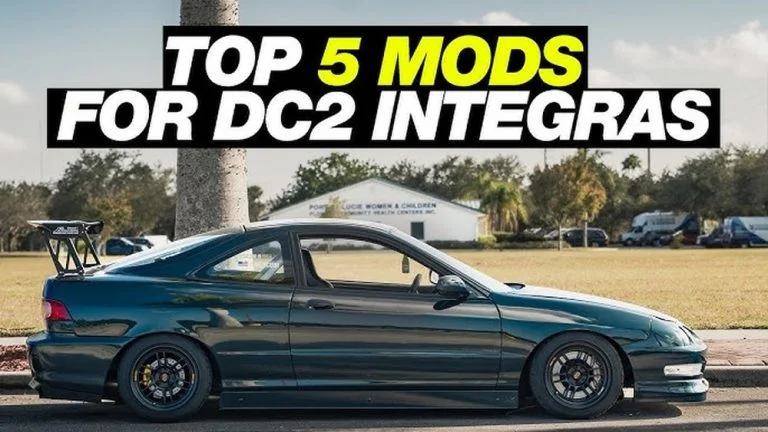
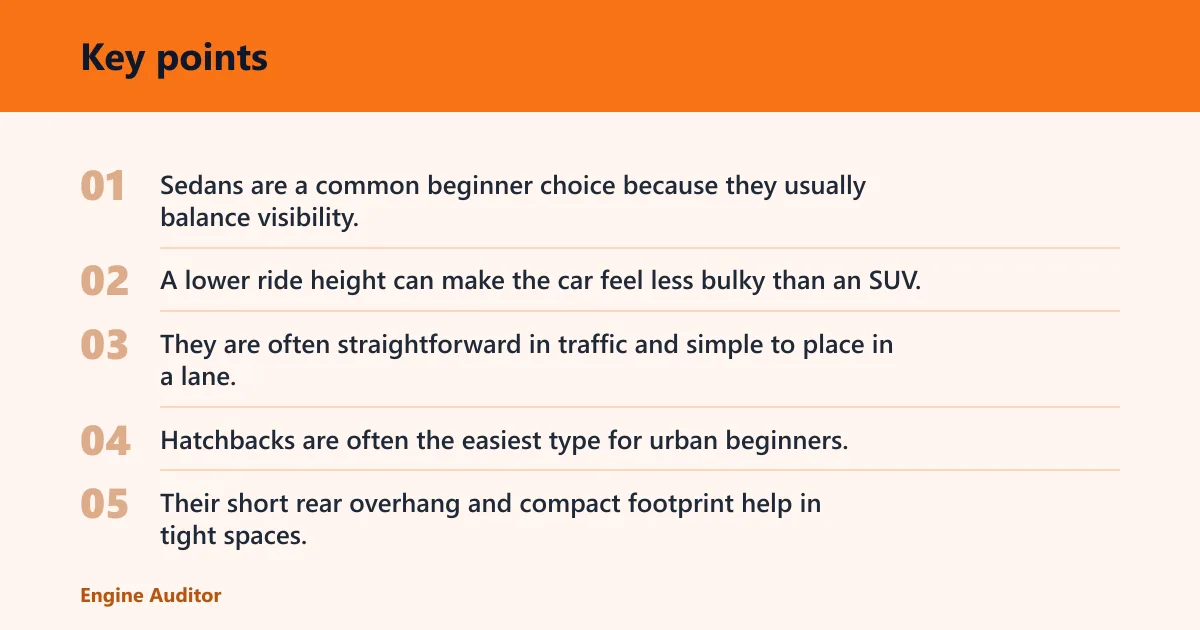
Sedans are a common beginner choice because they usually balance visibility, easy parking, and a familiar driving feel. A lower ride height can make the car feel less bulky than an SUV, and many sedans have lighter steering at low speeds. They are often straightforward in traffic and simple to place in a lane.
Hatchback scorecard
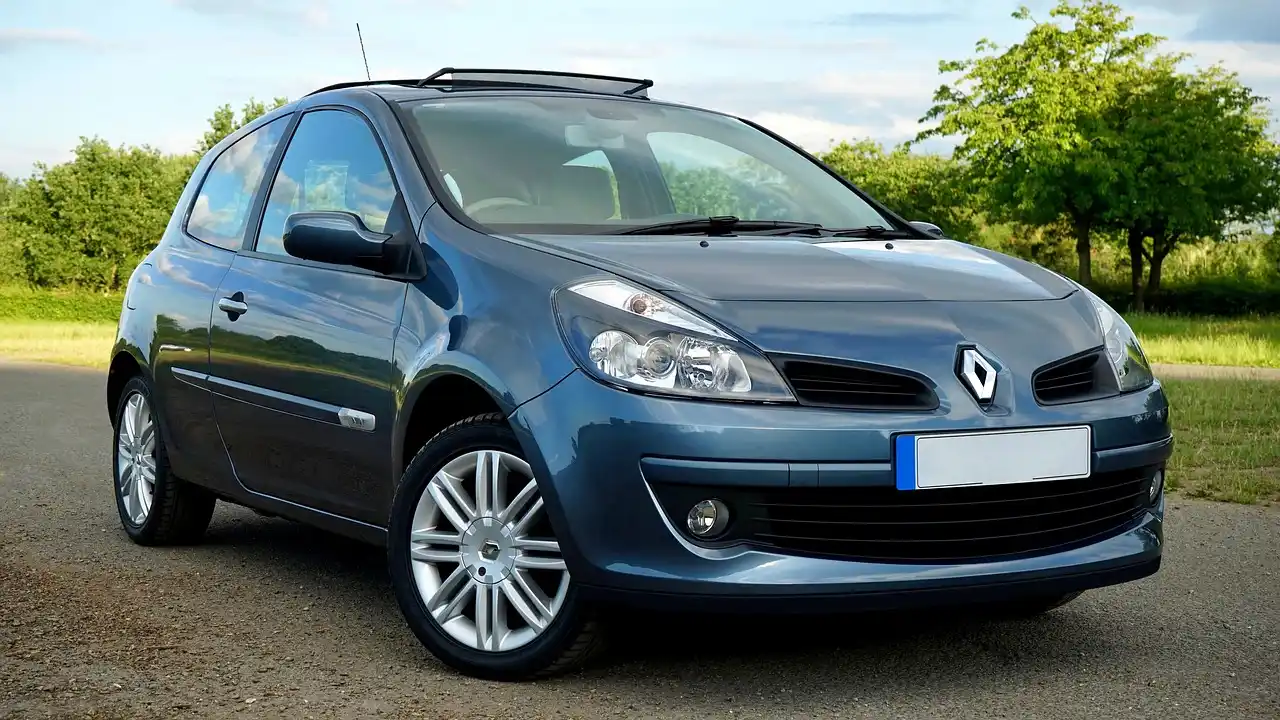
Hatchbacks are often the easiest type for urban beginners. Their short rear overhang and compact footprint help in tight spaces, and the rear cargo opening makes them useful for groceries, bags, and small move-day loads. They often cost less to run than larger vehicles, which can matter for a first car.
Vehicle types scorecard
Compact crossovers sit between cars and SUVs. They usually give a higher seating position and more ground clearance than a sedan, which can help with entry, exit, and rough pavement. The tradeoff is a larger footprint than a hatchback, so parking and tight turns can take more effort.
Vehicle types scorecard
Small SUVs can feel easier for drivers who want a higher seat and a larger view over nearby traffic. That said, they often have more blind spots, a longer body, and more parking stress than sedans or hatchbacks. For beginners, that extra height is useful only when it solves a real problem.
Are small cars easier to drive than SUVs?
Usually yes, because small cars are easier to park, easier to swing through tight turns, and less stressful in crowded lots. SUVs can feel better for outward sightlines from the driver’s seat, but they usually bring a larger footprint and more effort when backing, turning, or squeezing into a space.
Parking and turning in tight spaces
Turning radius matters more than many first-time buyers expect. A tighter turning circle makes U-turns easier, helps in parking lots, and reduces the number of corrections needed when backing into a space. Vehicle length also matters: a longer hood or rear end can make the car feel less forgiving at low speed.
A common first-timer mistake is choosing a higher vehicle for confidence and then discovering that parking ramps, narrow lanes, and angled spots feel harder than expected. The added height does not remove the need to judge corners and clearance.
Seat height and sightlines
Seat height changes the driving experience, but it is not the same as visibility. Higher seating can help some drivers see over traffic, yet blind spots may still be larger, and the hood can be harder to judge. Wide windows, slim pillars, and a good camera matter more than height alone.
Where SUVs feel easier, and where they do not
Small SUVs often feel easier for drivers who want easier entry and exit or who drive on rough roads more often. They are less helpful when the route includes dense street parking, narrow garages, or frequent U-turns. For beginners, the question is whether the higher seat is worth the extra size.
Sedan, hatchback, or crossover: what should you choose?
Choose a sedan if you want a balanced mix of visibility, parking ease, and predictable handling. Choose a hatchback if you want the easiest city manners and the simplest low-speed control. Choose a compact crossover only if the higher seat or extra ground clearance solves a real need. A small SUV makes sense when entry height or cargo space matters more than parking ease.
Sedan: balanced visibility and easy parking
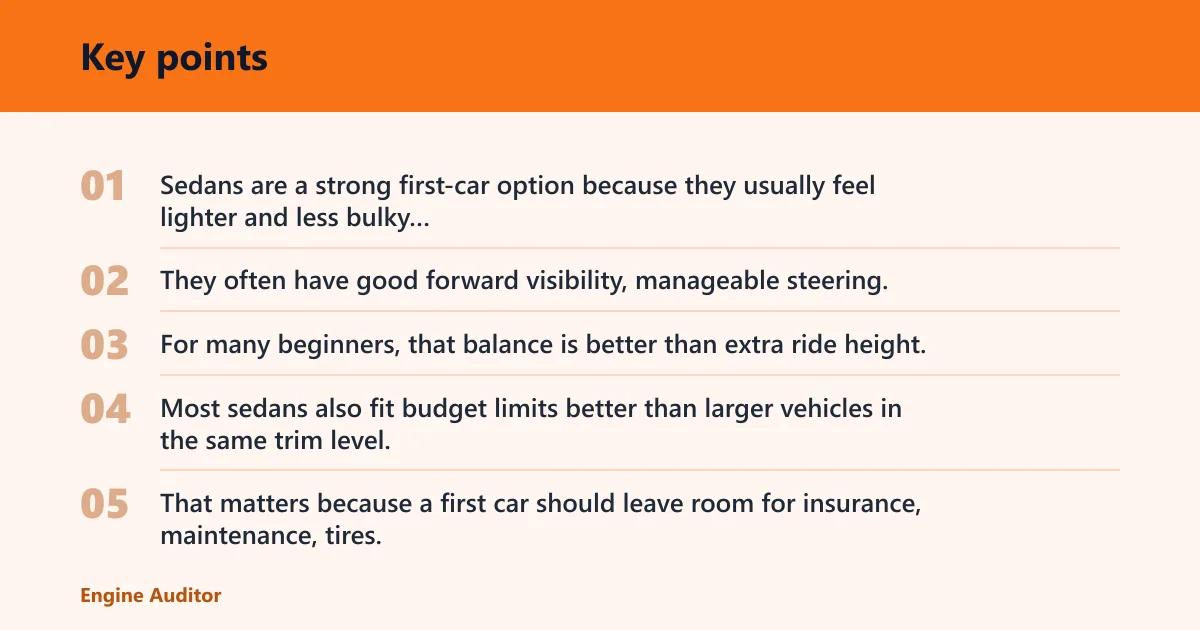
Sedans are a strong first-car option because they usually feel lighter and less bulky than SUVs. They often have good forward visibility, manageable steering, and fewer parking surprises than taller vehicles. For many beginners, that balance is better than extra ride height.
Most sedans also fit budget limits better than larger vehicles in the same trim level. That matters because a first car should leave room for insurance, maintenance, tires, and fuel, not only the purchase price.
Hatchback: compact and city-friendly
Hatchbacks are especially useful for city beginners. The rear hatch gives usable cargo space without making the car long, and the short body helps in tight parking. If your driving is mostly commuting, errands, and street parking, a hatchback is often the easiest type to live with.
Compact crossover: higher seat, bigger footprint
Compact crossovers are popular because they split the difference between a car and an SUV. They are easier to enter and exit than lower cars, and they sit up higher than sedans. The downside is that they are usually wider and taller than hatchbacks, so parking and lane placement can feel less relaxed.
Small SUV: when the extra height is worth it
Small SUVs make sense for beginners who routinely deal with rough driveways, snow, or a need to load passengers and gear more often. They are less ideal if the main concern is simple maneuvering. If you do not need the extra height, a sedan or hatchback usually feels easier.
What features make a car easier for new drivers?
The most useful beginner features are a rearview camera, parking sensors, automatic emergency braking, blind-spot monitoring, and lane keeping assistance. These features reduce stress where beginners make the most errors: backing up, judging distance, staying centered, and noticing nearby traffic in blind spots.
Rearview camera and parking sensors
A rearview camera is often a very helpful beginner feature because it can help when backing into spaces, reversing out of driveways, and spotting low obstacles. Parking sensors add an audible warning when the vehicle gets too close to an object. Together, they reduce guesswork at low speed.
Automatic emergency braking and blind-spot monitoring
Automatic emergency braking can help in sudden stop situations, especially in traffic where a new driver may misjudge following distance. Blind-spot monitoring matters during lane changes and merging, where a beginner may not yet have a steady head-check routine. These features do not replace attention, but they add a margin of help.
Lane keeping assistance for steady highway driving
Lane keeping assistance can help on straight roads and highways by nudging the vehicle back toward lane center. It is most useful for beginners who feel nervous about drift or long drives. It is less important than cameras and sensors for parking, but it can reduce fatigue on faster roads.
Should a beginner avoid manual transmission?
Yes, most beginners are often better off starting with an automatic transmission. Automatic cars are often easier to learn because they remove clutch control, reduce stall risk, and can make traffic less tiring. Manual transmission can still be a good skill to learn later, but it usually adds a steep learning curve at the exact moment a new driver needs fewer tasks.
Automatic versus manual learning curve
An automatic lets a beginner focus on steering, braking, mirrors, and traffic flow. A manual adds shifting, clutch timing, and the risk of rolling back on hills. That extra work can distract from basic road judgment, especially in stop-and-go traffic.
Traffic stress and stall risk
Manual transmission is less forgiving in crowded traffic, at busy intersections, and on hills. Stalling can turn a simple start into a stressful moment. For a first car, that stress usually outweighs the benefit of learning a manual right away.
When manual still makes sense
Manual can make sense if the buyer already knows how to drive one, has a specific use case, or plans to maintain a skill tied to a particular vehicle. Even then, it is usually not the easiest choice for a beginner who wants calm, low-stress driving.
What should a first-time driver look for in a used car?
Look for clear visibility, easy controls, a clean service history, and beginner-friendly safety features. Check that the seat adjusts high and low enough for a comfortable view, that mirrors cover blind spots well, and that the steering and brakes feel predictable. Budget for running costs, not only the sale price.
- Check the driver’s seat position and whether you can see the hood edges and mirrors clearly.
- Test parking in a marked space and backing out with the rear camera, if equipped.
- Look for warning lights, tire condition, brake feel, and evidence of regular maintenance.
- Confirm the vehicle has the features you will actually use: camera, sensors, and automatic emergency braking.
- Compare insurance, fuel use, tires, and repair costs before deciding.
Picture a beginner choosing a used compact sedan with a camera and no blind-spot monitoring versus a larger SUV without those features. The sedan may feel easier on the first week of ownership because it is simpler to place, cheaper to run, and less stressful to park.
How do I choose a beginner-friendly vehicle without overspending?
Start with the cheapest vehicle that still gives good visibility, a backup camera, and manageable size. Do not pay extra for height alone. Compare insurance, fuel, and tire costs, because larger vehicles often cost more to run even when the purchase price looks close. A modest sedan or hatchback often gives the best value.
Test-drive any candidate in a parking lot, a neighborhood street, and a road with real traffic. Check blind spots, turning comfort, brake feel, and how easy it is to place the car in a parking space. If the vehicle feels stressful in the test drive, it will not feel easier later.
Frequently asked questions
What is the easiest type of vehicle for a beginner to drive?
For most beginners, a small automatic hatchback or compact sedan is the easiest type to drive. Both tend to be simple to park, easy to place in traffic, and less tiring than larger vehicles. Add a rearview camera and parking sensors, and low-speed confidence usually improves right away.
Are small cars easier to drive than SUVs for new drivers?
Usually, small cars are easier to park, turn, and judge in tight spaces than SUVs. Small cars are easier to park, turn, and judge in tight spaces, while SUVs bring a taller seat and often more blind spots. An SUV can feel easier for entry and road view, but the extra size usually increases parking stress for beginners.
Is a sedan or hatchback better for first-time drivers?
A hatchback is often better for city beginners because it has a short body, easy maneuvering, and useful cargo space. A sedan is also a strong choice if you want a more traditional driving feel and slightly better balance on the highway. Both are easier than most SUVs.
What vehicle size is best for parking and visibility as a beginner?
Subcompact and compact vehicles are usually best for parking and visibility because they are easier to place in a space and less stressful to turn in tight areas. Size alone is not enough, though. Window shape, blind spots, and camera support can matter more than exterior dimensions.
Are crossovers easier than trucks for beginners?
Yes, crossovers are usually easier than trucks for beginners. They are shorter, easier to park, and less demanding in tight turns. Trucks often have longer hoods, larger blind spots, and a bigger footprint, which makes them harder to place accurately for a new driver.
Products related to this article
Sponsored / affiliate links. As an Amazon Associate I earn from qualifying purchases. I may earn additional commission from eligible campaigns.
 Anpher Rear View Backup Camera Parking Assist Camera Compatible with Ford Fusion 2013 2014 2015 2016 ES7T-19G490-AA ES7Z-19G490-A DS7Z-19G490-A DS7T-19G490-DD E1GT-19G490-BB Rear Park Assist Camera
 Car Rear View Camera 720p HD Night Vision Backup Camera with Fisheye Lens for Vehicles Parking Monitor Compatible with Cars and Trucks Black