P0750 Code: Shift Solenoid a Problems
P0750 means the transmission control system sees a fault in shift solenoid A circuit or operation. Begin with fluid level, then verify power and ground at the transmission connector, then test the solenoid and wiring before replacing the module. Ignoring the code can lead to harsh shifts, limp mode, and wasted parts. This guide shows the most likely causes, how to separate solenoid, wiring, fluid, and TCM faults, and when the transmission itself is the problem.
What P0750 means


P0750 is a generic transmission-related OBD-II code that usually points to shift solenoid A circuit or performance problems. Codes in the P0750-P0770 range usually point to a specific solenoid circuit, but the exact meaning can change by vehicle, so service information matters before any repair choice.
How shift solenoid A fits the transmission control system
Shift solenoid A is an electrically controlled hydraulic valve. It directs pressurized fluid to the exact clutch pack needed to engage a gear, and most automatic transmissions have several shift solenoids. On some vehicles it is external, on others case-mounted, and on some it sits inside the valve body.
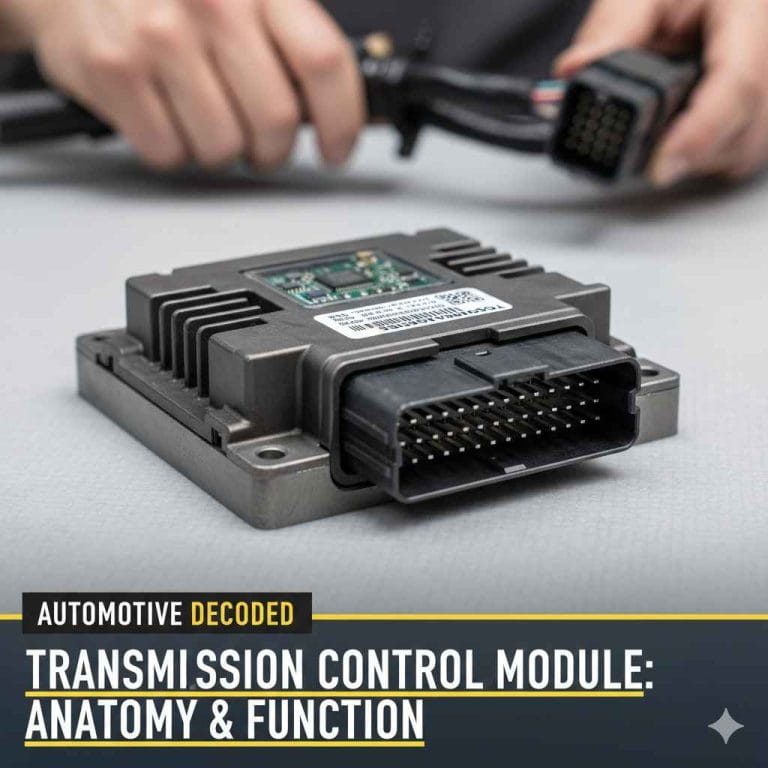
The transmission control module sends the solenoid command and stores transmission faults and freeze frame data. A P0750 fault can also push the transmission into limp mode or fail-safe operation, which is why the code should be read as a control-system problem first, not as a solenoid verdict by itself.
Why vehicle-specific data matters
Vehicle-specific service data can change the meaning of P0750, the solenoid location, and the test values. A scan tool code in the P07xx range is the most reliable way to confirm a solenoid issue, but the next step still depends on the wiring layout, module pinout, and the exact transmission used in that model.
What symptoms should you look for?
P0750 often shows up as a shift complaint that clusters around one gear change, not every gear. A single failed solenoid usually causes a problem concentrated around one specific shift, though the pattern can widen if the circuit, the module, or shared power and ground lines are involved.
Harsh, delayed, or flare shifts
Harsh shifts, delayed shifts, and flare are common clues. Flare means engine speed rises during a shift before the gear catches. That pattern can point to a solenoid that is sticking, not being commanded correctly, or losing electrical control at the wrong moment.
Picture a vehicle that leaves first gear normally, then bangs into second with a noticeable pause before the shift. That kind of pattern is more useful than a generic “transmission problem” complaint because it points to a specific shift event and narrows the branch of diagnosis.
Limp mode and fixed-gear behavior
Fail-safe or limp mode is a more urgent sign. The transmission may limit gears or lock into one fixed ratio to protect itself. P0970 severity is described as moderate-high, with harsh shifts or fail-safe operation possible, and P0750 can behave in a similar way when the control system sees a circuit fault.
Reverse or upshift changes that point to a control fault
Changes in reverse engagement, no-upshift, or a shift that comes and goes with road vibration point toward a control fault branch. Dirty transmission fluid can clog small internal solenoid passages, but fluid condition alone does not prove an electrical failure. Use the symptom pattern to separate hydraulic sticking from an open, short, or command issue.
P0750 decision table
Use this table to sort the symptom pattern before parts are replaced. The first test should match the pattern you see, because immediate-return codes and intermittent codes do not usually have the same root cause.
| Symptom pattern | Likely fault branch | First test | Expected meter result | Next action |
|---|---|---|---|---|
| Code returns on the next key cycle or during the same drive | Open, short, or failed solenoid coil | Inspect connector and measure solenoid circuit at the case connector | Open circuit, short to power, or short to ground instead of the vehicle spec | Repair wiring fault or replace the solenoid only after the circuit fails the spec |
| Code appears after bumps, rain, or heat soak | Intermittent wiring or connector fault | Wiggle test wiring and inspect for water intrusion or pin damage | Voltage or continuity drops in and out during movement | Repair corrosion, loose pins, chafing, or broken wire before any part swap |
| Multiple transmission codes with one shared feed or ground complaint | Shared power, shared ground, or module command issue | Check common feed and ground at the transmission connector and TCM | Battery voltage missing on feed, or high resistance on ground path | Repair the shared circuit, then clear and retest before condemning the module |
| Shift complaint only in one gear, fluid looks dirty | Hydraulic sticking or valve-body issue | Check fluid level, condition, and service history | No electrical fault found; fluid may be dark, low, or contaminated | Service fluid and filter if the transmission spec allows it, then reassess |
How do you test shift solenoid A?
Start with the scan tool, then move to the connector, then the multimeter. That order matters because it separates stored data, visible damage, and actual circuit behavior before parts are removed. Skip the clear-code button until freeze frame and related codes are saved.
-
Save scan data first.
Record stored codes, freeze frame, related codes, and transmission module data if the scan tool can read it. Note engine load, gear, speed, fluid temperature, and the exact symptom. Those values help show whether the fault is immediate, intermittent, or linked to one operating condition. -
Inspect the connector and wiring.
Check the transmission wiring and case connector for corrosion, bent pins, water intrusion, backed-out terminals, and rubbed insulation. These are common failure points and should be inspected before replacing the solenoid, because an open or short in the wiring can create an immediate return code. -
Check power and ground.
With the key on and the circuit identified from the service data, verify the feed and ground paths at the connector. A multimeter should show battery voltage on the feed where specified, and low resistance on the ground path. Shared power or ground faults often affect more than one transmission code. -
Test solenoid resistance.
Measure the solenoid coil only against the vehicle-specific specification. Do not use a universal resistance number. An open circuit, a short, or a value outside spec points to a failed coil or a broken path through the assembly. -
Check continuity end to end.
If the coil test passes, check continuity between the TCM command path and the solenoid connector. Look for shorts to ground and shorts to power as well. A wire can read fine at rest and still fail under movement or heat.
A common mistake is replacing the shift solenoid A before checking whether a corroded transmission connector is causing the P0750 code. If P0750 returns immediately, that is a different branch from a code that appears after a rough road or a hot restart. The return pattern often tells you whether the fault is electrical, intermittent, or shared.
Could fluid or filter problems trigger it?
Yes, low or dirty fluid can contribute to a P0750 complaint, but it does not prove the solenoid is bad. Dirty transmission fluid can clog small internal solenoid passages, and a restricted filter can upset hydraulic flow enough to mimic a control fault. That is why fluid condition belongs in the diagnosis, not at the end of it.
When hydraulic sticking looks like an electrical fault
If the solenoid coil tests within spec but the shift still hangs, flares, or engages late, the problem may be hydraulic. Sticking can come from varnish, debris, or a valve-body issue. In that case the electrical circuit may be fine, while the fluid path is slow or blocked.
Suppose the code appears after a long highway drive and the transmission then starts shifting oddly only when hot. That points away from a simple open wire and toward a condition that changes with temperature, such as fluid breakdown, a sticky valve, or an intermittent connector.
Why fluid condition does not prove the solenoid is bad
Fluid condition is useful, but it is not proof. A transmission can have dark fluid and still have a failed connector, and it can have clean fluid and still have a dead solenoid coil. Use the fluid check to guide the next test, not to end the diagnosis.
What parts usually fail?
The most common failure branches are the solenoid itself, the transmission wiring and case connector, the transmission control module or shared circuits, and internal hydraulic parts such as the filter or valve body. The right repair depends on which branch the evidence supports.
Shift solenoid
Shift solenoid A can fail electrically or mechanically. Electrical failure usually shows up as an open or shorted coil. Mechanical failure can show up as a sticking valve that does not route fluid correctly even if the coil still measures within spec.
Transmission wiring and case connector
The transmission wiring and case connector are common trouble spots. Pin damage, loose terminals, and water intrusion can interrupt the command signal or feed circuit. That is why they should be checked before the solenoid is replaced, especially when the code returns as soon as the key is cycled.
Transmission control module and shared circuits
The TCM sends the solenoid command and stores transmission faults and freeze frame data. If several transmission codes show up together, a shared feed or ground problem may be more likely than a single bad solenoid. A module issue is less common than a wiring issue, so it should be diagnosed after power and ground are verified.
Filter, fluid, or valve-body issues
Filter restriction, dirty fluid, or a valve-body fault can create a hydraulic problem that looks electrical from the driver’s seat. Most automatic transmissions have several shift solenoids, so a fault in one circuit may also reveal a worn valve or passage that needs attention once the circuit test is complete.
How urgent is a P0750 code?
Urgency depends on how the code behaves and what the transmission is doing. A code that returns immediately, with limp mode or a no-upshift condition, deserves faster action than a code that appears once and then disappears. Shared power or ground faults raise the priority because they can affect more than one circuit.
Immediate-return code behavior
An immediate-return code usually points to a hard electrical fault. Think open circuit, short, damaged connector, or a failed coil. That branch should be checked before any part replacement, because the same code can come back as soon as the vehicle is started if the fault is still present.
Intermittent code behavior
An intermittent code often means the fault appears with vibration, heat, or movement. That pattern fits a wiring break, loose pin, or water intrusion better than a dead solenoid. The next test should focus on flexing the wiring and watching for a change in meter readings.
Multi-code and shared-power faults
Multiple transmission codes with one shared-feed or shared-ground complaint point to a wider electrical issue. Save the code set before clearing anything, because the other codes can show which circuit family is affected. A module command fault is possible, but shared wiring usually comes first in the test sequence.
Frequently asked questions
What does P0750 code mean?
P0750 means the transmission control system has detected a fault in shift solenoid A circuit or operation. Vehicle-specific service data can change the exact meaning, so the code should be read with the transmission type, related codes, and freeze frame data in view.
Is P0750 a bad shift solenoid A or a wiring problem?
It can be either one, and it can also be a shared power, shared ground, or TCM command issue. A bad solenoid is only one branch. Start with the wiring, case connector, and power and ground checks before condemning the solenoid or module.
Can I keep driving with a P0750 code?
That depends on the symptom pattern. If the transmission is in limp mode, slipping, or refusing shifts, driving can risk more damage. If the code is intermittent and the vehicle still shifts normally, drive time should be limited until the circuit is tested and the fault returns are understood.
What symptoms does a bad shift solenoid A cause?
A bad shift solenoid A can cause harsh shifts, delayed shifts, flare, no-upshift, or changes in reverse or gear engagement. The fault may stay concentrated around one shift if the solenoid is the main problem, while broader symptoms often point to wiring, module, or hydraulic issues.
How do I test a shift solenoid A circuit?
Use a scan tool first, then inspect the connector and wiring, then test resistance, voltage, and continuity with a multimeter. Compare every reading to vehicle-specific specifications. Do not use universal resistance numbers, and do not clear codes until freeze frame and related codes are saved.
Can dirty transmission fluid trigger a P0750 code?
Yes. Dirty transmission fluid can clog small internal solenoid passages and create sticking that looks like a circuit fault. But fluid condition does not prove the solenoid is bad. The electrical circuit still needs to be tested before parts are replaced.
How much does it cost to fix a P0750 code?
Cost depends on the actual fault. Fluid and filter service is usually cheaper than wiring repair, solenoid replacement, valve-body work, or module diagnosis. Because the causes vary so much, a scan-tool diagnosis and circuit test should come before any price estimate that matters.
Will clearing the code fix shift solenoid A problems?
No. Clearing the code may erase the light for a short time, but it does not repair an open wire, a stuck valve, a bad coil, or a shared ground fault. If the cause is still present, the code usually returns, sometimes right away.
Products related to this article
Sponsored / affiliate links. As an Amazon Associate I earn from qualifying purchases. I may earn additional commission from eligible campaigns.