Why Brake Pedal Travel Changes After New Pads
A slightly longer pedal after new pads can be normal for about 1 to 3 stops, but if travel stays low, soft, or keeps changing after a short bleed and pad reset, suspect air, caliper slide or piston issues, hose swell, rotor runout, or EPB setup. Ignoring it can mean less braking margin and a pedal that sinks farther during panic stops. This guide shows how to tell normal pad-to-rotor clearance from a real hydraulic or hardware fault.
Normal first-pump travel and signs of brake system faults
What normal first-pump travel feels like
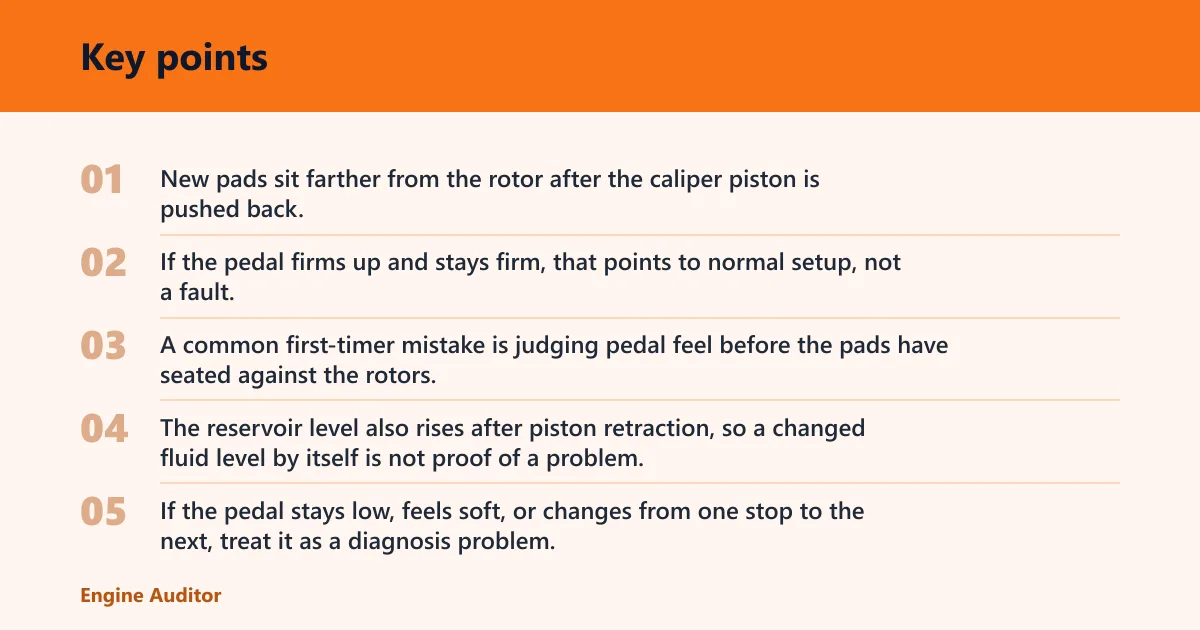
New pads sit farther from the rotor after the caliper piston is pushed back. That extra clearance can make the first pedal stroke longer than usual, and it should improve after about 1 to 3 pumps as the pads move into position. If the pedal firms up and stays firm, that points to normal setup, not a fault.
A common first-timer mistake is judging pedal feel before the pads have seated against the rotors. The reservoir level also rises after piston retraction, so a changed fluid level by itself is not proof of a problem.
When pedal change points to a fault
If the pedal stays low, feels soft, or changes from one stop to the next, treat it as a diagnosis problem. Air in the system, a sticky caliper, a swollen hose, a rotor issue, or incorrect rear piston setup can all keep pedal travel excessive after pad replacement.
Thin pads can also contribute to a soft or unusually low pedal, so pad wear that was missed before service may still matter after the job is done.
Low pedal, spongy pedal, or stuck pedal?
Low pedal versus spongy pedal
A low pedal feels like the pedal moves too far before the car slows. A spongy pedal feels springy or compressible, often because air may be trapped in the hydraulic system. That difference matters because the first points toward clearance, piston, rotor, or wear issues, while the second points more directly to bleeding or fluid problems.
Picture a car that stops only when the pedal is halfway to the floor, yet the pedal feels firm. That is different from a pedal that sinks with a soft, elastic feel. The first is a travel problem; the second is a hydraulic feel problem.
Pedal stays down or will not return
If the pedal stays down after you release it, or returns slowly, suspect a sticking caliper piston, hose fault, or pedal linkage issue before blaming the pads. A hose with internal collapse can also affect return and make the brake release poorly.
One-wheel symptoms
Problems on one corner usually point away from a system-wide bleed issue and toward a single caliper, hose, slide pin, or pad installation mistake. Uneven pad wear can point to a seized slide pin, sticking piston, hardware problem, or alignment issue.
Brake pedal travel diagnosis table
| Symptom | Most likely cause | Quick driveway check | Next action |
|---|---|---|---|
| Normal first-pump travel | Pad-to-rotor clearance after piston retraction | Pedal firms after 1 to 3 pumps and stays consistent | Recheck fluid level and road test at low speed |
| Persistent low pedal | Excess clearance, worn parts, or incorrect rear piston setup | Pedal remains low after pumping; inspect pad wear and rotor condition | Inspect calipers, slides, rotors, and rear service procedure |
| Spongy pedal | Air in the hydraulic system or old fluid | Pedal feels soft and compressible, then improves slightly after pumping | Bleed the brakes and confirm no leaks |
| Pedal stays down | Air leak, master cylinder issue, hose fault, or sticking caliper | Pedal does not rebound normally when released | Stop driving and inspect hydraulic parts immediately |
| Pedal not returning | Sticking piston, swollen hose, or pedal linkage problem | Release the pedal and watch for slow return or wheel drag | Inspect hose, caliper piston, and pedal linkage before driving |
| One-wheel issues | Slide pin seizure, hardware mistake, or caliper fault | One wheel runs hotter, wears faster, or feels different on braking | Remove the wheel and inspect that corner only |
| Stop driving now | Brake warning signs severe enough to risk loss of stopping power | Pedal goes near the floor, sinks, or braking is unpredictable | Do not continue driving; tow if needed |
| Likely bleed needed | Air entered during service or fluid is old or contaminated | Pedal is soft, travel changes after each pump, or caliper was opened | Bleed the system in the correct order and recheck pedal firmness |
What new pads can and cannot change
Pad thickness, orientation, and hardware
Brake pads must be in the correct inner and outer positions, with the right wear indicators and hardware in place. Wrong orientation can create odd contact, extra noise, or uneven wear that feeds back into pedal feel. Abutment clips and shims also matter because they control how the pad slides in the bracket.
-
Confirm pad placement. Check that the inner and outer pads match the caliper design and that any wear indicator sits in the intended location. A swapped pair can change pad movement and contact.
-
Inspect the hardware. Make sure clips, shims, and anti-rattle parts are seated correctly and not bent. Missing hardware can let the pad drag or tilt.
-
Verify friction surface condition. Look for contamination from grease, brake fluid, or assembly debris. A glazed or contaminated pad can reduce bite and lengthen stopping distance.
Wear indicators, glazing, and contamination
Brake pads that are glazed or contaminated may not grip the rotor well, even if they are new. That can feel like longer pedal travel because the car needs more pedal force to slow down. Brake pad life also varies with driving style, vehicle weight, and route conditions, so rapid wear can hide under a fresh installation.
Do not put grease on the rotor or pad friction surface. Keep lubricant only on approved contact points such as the pad ears, backing plate contact zones, and slide pin areas when the vehicle maker allows it.
Rotors, calipers, hoses, and slide pins
Rotor thickness, scoring, and heat spots
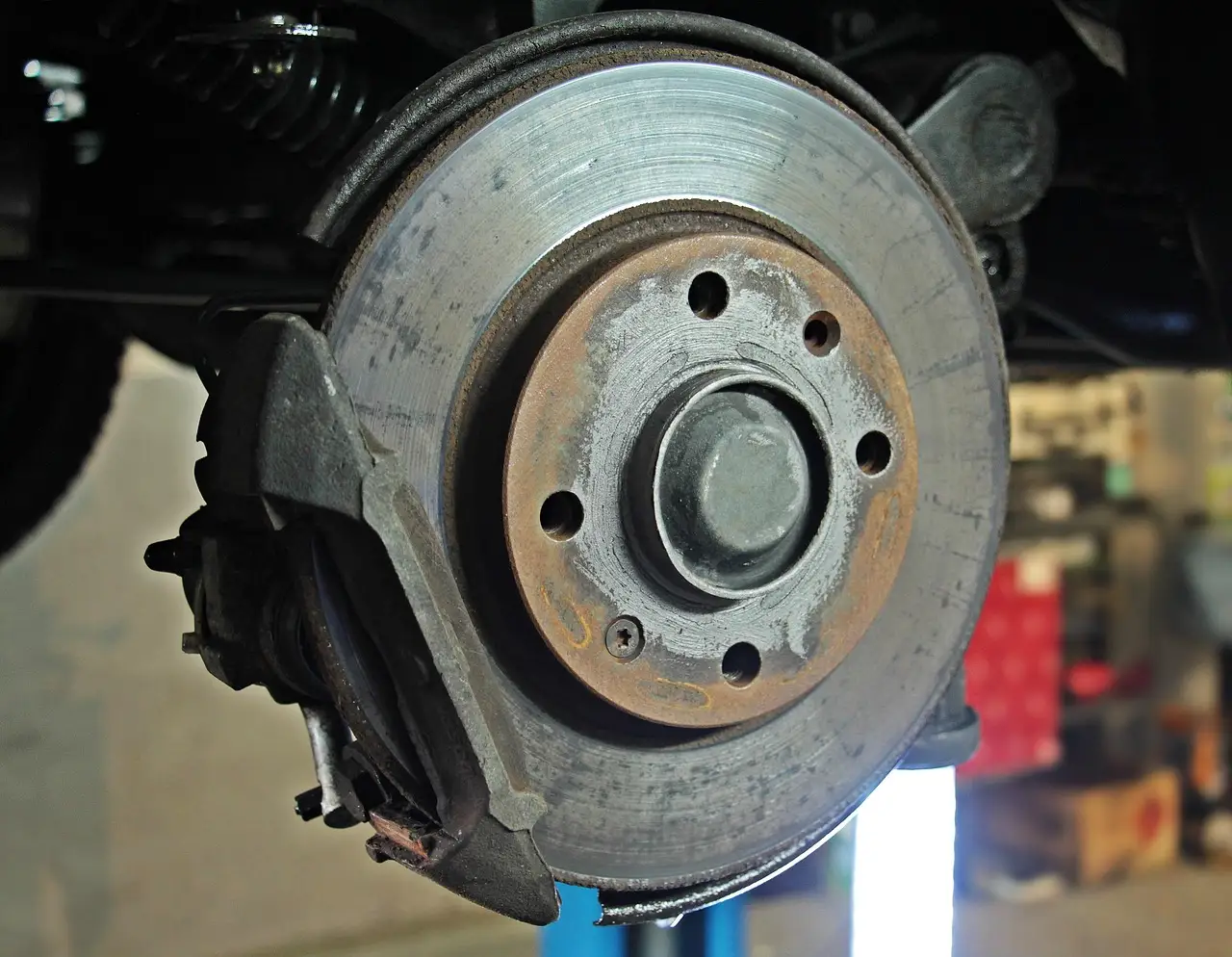
New pads do not erase rotor problems. Most manufacturers list a minimum rotor thickness, and a rotor below that limit should be replaced, not reused. Deep scoring, heat spots, and vibration during braking can point to rotor issues accelerated by worn pads.
If the rotor surface is uneven, the pads may not seat evenly, which can lengthen travel and trigger pulsing. Depending on thickness and surface condition, resurfacing may be acceptable, but replacement is the better call when the rotor is near minimum thickness or badly marked.
Caliper piston and slide pin faults
The caliper piston must retract the right way. Some systems need a straight push, while others use a rotating piston, especially on rear brakes. Some brake systems require a manufacturer service mode before piston retraction, and forcing the piston back the wrong way can damage the mechanism or confuse the rear brake setup.
Slide pins also need clean movement and correct lubrication at the approved points. Sticky slides can hold one pad away from the rotor or keep one pad dragging. That often shows up as uneven wear, pull, heat, or a pedal that feels inconsistent.
Hose leaks, swelling, and internal collapse
Brake hoses should be inspected if they are cracked, leaking, swollen, or damaged. A hose that swells can make the pedal feel soft. An internally collapsed hose can act like a check valve, which may keep pressure trapped and prevent the brake from returning normally.
Worn pads can require more pedal travel or pressure to stop, but a hose fault changes how the pedal behaves after release too. That is why a sticky return or one-wheel drag should move the hose high on the list.
Do you need to bleed the brakes?
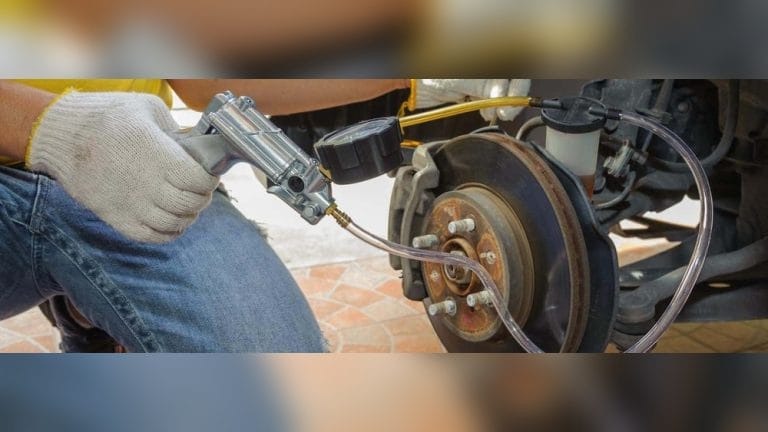
A bleed may be needed when air entered the hydraulic system, when fluid was opened to the atmosphere, or when the pedal remains spongy after the pads and calipers are installed correctly. Old or contaminated brake fluid can also contribute to a poor pedal, even if the pads are new. If the reservoir was low before service, inspect for leaks before topping it off and calling it done.
Air in the system after service
Air compresses, fluid does not. That is why a soft pedal after pad replacement often means the system needs bleeding, especially if a caliper hose was disconnected or a caliper piston was pushed back with an open bleeder or reservoir mistake. The pedal should become firm and repeatable after the air is removed.
Bleed order and pedal check
-
Check the reservoir first. Confirm fluid is at the proper mark before and after any piston retraction. Pushing pistons back can raise the level, and overfill can create other issues.
-
Bleed the correct corner order. Use the vehicle’s specified order, since some systems require a different sequence for best air removal. This helps keep air from moving back into a line you already cleared.
-
Test pedal firmness. After bleeding, pump the pedal several times and hold steady pressure; the pedal should feel firm and should not sink slowly. The pedal should feel firm and should not sink slowly.
EPB and rear brake service mistakes
Rear brakes with an electronic parking brake need extra care. Some systems require service mode before piston retraction, and rear pistons may rotate while retracting instead of pressing straight in. Forcing the piston back without the proper command can cause a lingering low pedal, poor rear brake setup, or a brake that will not return normally.
If the rear pads were replaced on a car with an EPB, a low pedal only after that job can point to a missed rear service mode. The front brakes may be fine. The likely miss is rear service mode, not a bad front bleed.
Service mode before piston retraction
Use the scan-tool command or manufacturer procedure before compressing the rear pistons on systems that require it. That keeps the EPB motor and screw mechanism from fighting the service action. Skipping this step can create a fault code or mechanical mispositioning that still feels like a brake problem.
Forcing the piston back
Do not turn a rear piston by force unless the design calls for it. Rotating piston designs can be damaged by the wrong tool or the wrong direction, and the caliper may not recover correctly afterward. If the rear brakes were serviced and the pedal is odd, inspect the procedure before replacing parts.
Frequently asked questions
Why is my brake pedal travel longer after changing pads?
That can be normal for 1 to 3 stops because piston retraction leaves extra clearance between the pad and rotor. If the pedal firms up after pumping and stays firm, the system may be fine. If it stays low, inspect for air, caliper issues, rotor problems, or EPB mistakes.
How long should brake pedal travel be after new pads?
Pedal travel should return close to normal after a few pumps. The exact feel depends on the vehicle, but the pedal should not keep sinking or feel unusually soft. If it does, do not assume the new pads are the only issue.
Why is my brake pedal spongy after changing pads?
A spongy pedal usually points to air in the hydraulic system or fluid that needs service. It can also happen if a hose is swollen or a connection leaked during the job. Bleeding and a leak check are the usual next steps.
Do I need to bleed brakes after changing pads?
Not always. If the hydraulic circuit was never opened, a full bleed may not be needed. But if the pedal is soft, calipers were disconnected, or the fluid condition is poor, bleeding becomes the right fix.
Why does my brake pedal stay down when pressed?
A pedal that stays down is a warning sign, not a pad issue. Air, master cylinder trouble, a hose fault, or a sticking caliper can cause it. Stop driving and inspect the brake system before using the car again.
What else should I inspect if new pads didn’t fix the pedal feel?
Check rotors, caliper pistons, slide pins, hoses, hardware, and brake fluid. That full list matters because a brake inspection should include pads, rotors, calipers, slides, hardware, hoses, and brake fluid. One bad part can undo the effect of new pads.
Products related to this article
Sponsored / affiliate links. As an Amazon Associate I earn from qualifying purchases. I may earn additional commission from eligible campaigns.
 Brake Bleeder Kit Automotive,Brake Fluid Bleeder Exchanger Machines,Brake Oil Fluid Extractor Pump,Professional Pulsating Brake Oil Fluid Bleeding Tool,Automatic Vacuum Brake Bleeder One Person
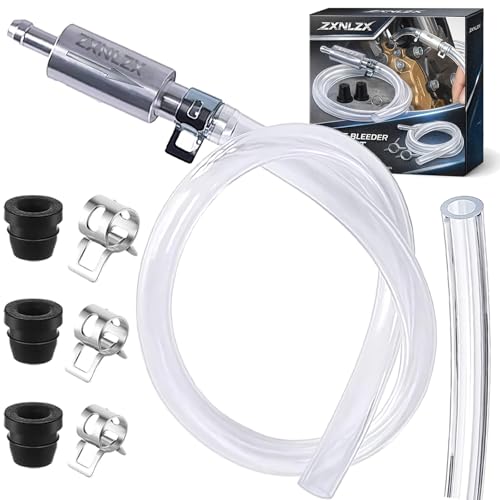 Brake Bleeder Hose - One Way Check Valve Tube Bleeding Tool Kit for Hydraulic System Bleeding for Car Motorcyle Clutch (1PCS)