Car Pedal Position Guide: Which Foot Goes Where?
In both automatic and manual cars, your right foot operates the accelerator and brake; your left foot works the clutch in a manual, and stays clear in an automatic. Wrong foot placement raises the risk of brake mistakes, jerky starts, and slower reactions. This guide covers pedal layout, driving posture, and simple habits that cut wrong-pedal errors. (Wikipedia)
Pedal position checklist
Use this as a quick setup check before moving off. The point is not only to know which foot touches which pedal, but to keep each foot on one task so your body does not search for the wrong control under stress.
| Scenario | Active foot | Resting foot | Most common beginner error |
|---|---|---|---|
| Automatic | Right foot uses both brake and accelerator | Left foot rests on the dead pedal or floor area if no rest is fitted | Using the left foot for the brake or hovering both feet over the pedals |
| Manual | Right foot uses brake and accelerator; left foot uses clutch only | Left foot comes off the clutch and rests flat when the car is moving straight | Riding the clutch or confusing the brake with the clutch in a hurry |
| Right-hand-drive | Same pedal use as any other layout | Same resting rule as any other layout | Thinking the pedal order changes because the driver sits on the right |
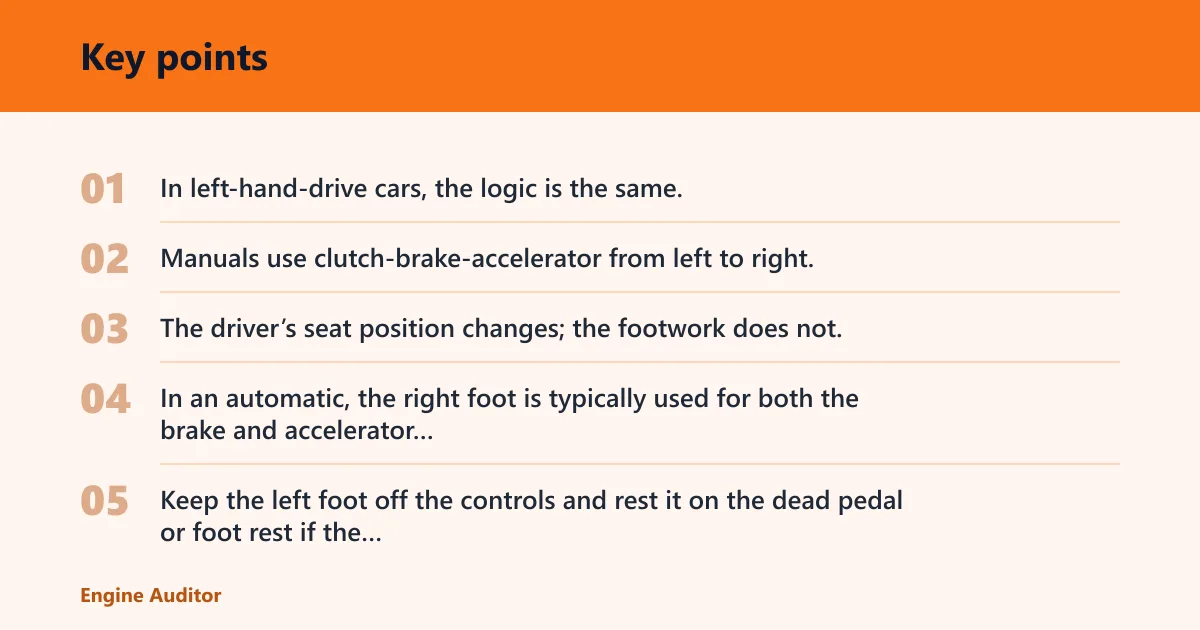
In left-hand-drive cars, the logic is the same. Manuals use clutch-brake-accelerator from left to right, and automatics use brake-accelerator. The driver’s seat position changes; the footwork does not.
Automatic car
In an automatic, the right foot is typically used for both the brake and accelerator pedals. Keep the left foot off the controls and rest it on the dead pedal or foot rest if the car has one. That split matters because the brake must be ready fast, with firm and steady pressure, not a rushed stab.
A common first-timer mistake is to keep the left foot active because it feels natural to “cover” a pedal. In an automatic, that habit can trigger unwanted left-foot braking or create a second braking input when the right foot is already slowing the car.
Manual car
In a manual, the left foot is typically used for the clutch, and the right foot handles the brake and accelerator. The clutch is used for starting, stopping, and shifting gears, then the left foot should come off the pedal. While driving straight in a gear, the left foot should not hold the clutch down.
That split keeps the transmission connected or disconnected only when needed. If the left foot stays on the clutch, the driver may slip the clutch, waste control, and add wear. The right foot still needs to move cleanly between brake and accelerator.
Right-hand-drive car
Right-hand-drive changes the driver’s position, not the pedal logic. The pedal order still follows the same pattern for the transmission type, and the right foot still operates the brake and accelerator. The left foot still handles the clutch only in a manual.
Do not let cabin layout change your foot plan. Whether the driver sits on the right or left, the safety rule stays the same: one foot for the service pedals in an automatic, and a separate left-foot clutch role only in a manual.
Which foot goes on the brake and accelerator?
Your right foot goes on the brake and accelerator in most cars. In an automatic, it is the only foot that should work those pedals. In a manual, the right foot still works both pedals while the left foot takes care of the clutch during starts, shifts, and stops.
Right foot control in automatics
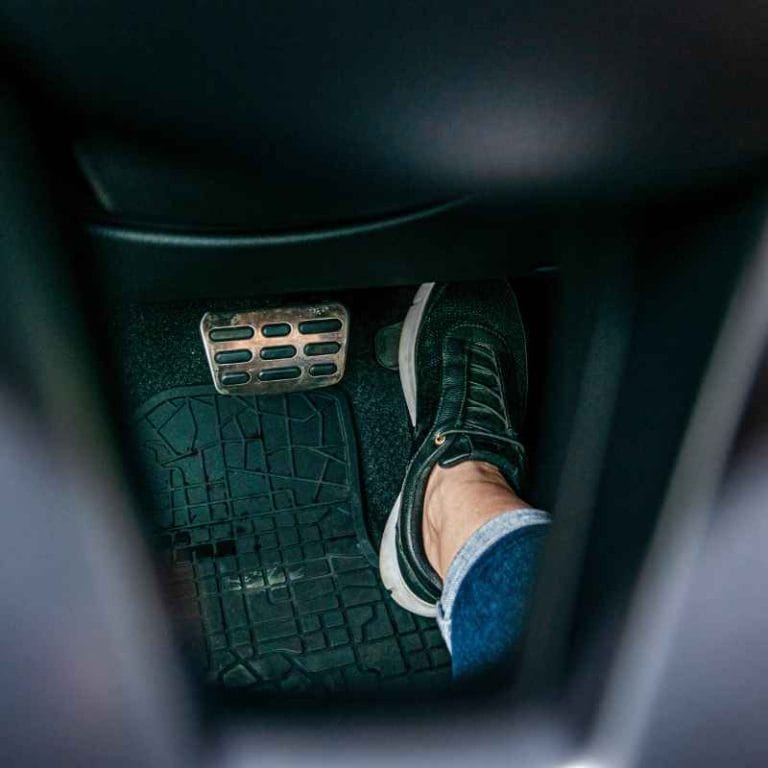
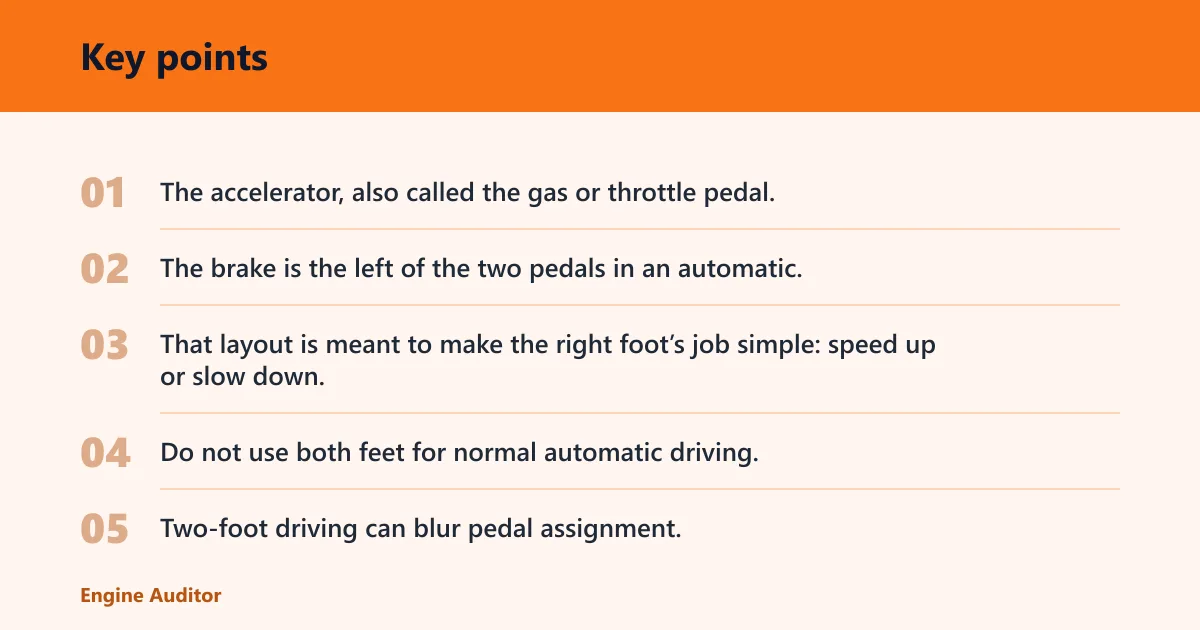
The accelerator, also called the gas or throttle pedal, sits to the right of the brake in left-hand-drive cars. The brake is the left of the two pedals in an automatic. That layout is meant to make the right foot’s job simple: speed up or slow down, one pedal at a time.
Do not use both feet for normal automatic driving. Two-foot driving can blur pedal assignment, especially in urgent stops or when you move between cars with different pedal feel. A stable right-foot-only pattern reduces the chance of a wrong-pedal press.
Right foot control in manuals while driving straight
In a manual, the right foot still controls the brake and accelerator while the car is rolling in gear. The left foot is reserved for the clutch. Once the gear change is complete, the left foot should come off the clutch so the right foot can keep full control of speed and stopping.
Suppose you are creeping through a parking lot in a manual and the car feels jerky. The fix is usually not more left-foot pressure. It is smoother right-foot throttle control, cleaner clutch release, and a lower, steadier seat position that lets the heel stay planted.
When heel pivoting makes sense
Heel pivoting can help when the pedals are close enough that the foot can stay anchored while the ankle moves from brake to accelerator. The idea is to keep the heel or lower leg stable so pedal changes are deliberate, not a full leg lift that slows the reaction.
That technique only works if the seat distance is right. If you must lift the heel hard, stretch, or twist the ankle sharply to reach either pedal, the setup is wrong. Adjust the seat before you drive, not after the car is already moving.
What foot do you use with a clutch pedal?
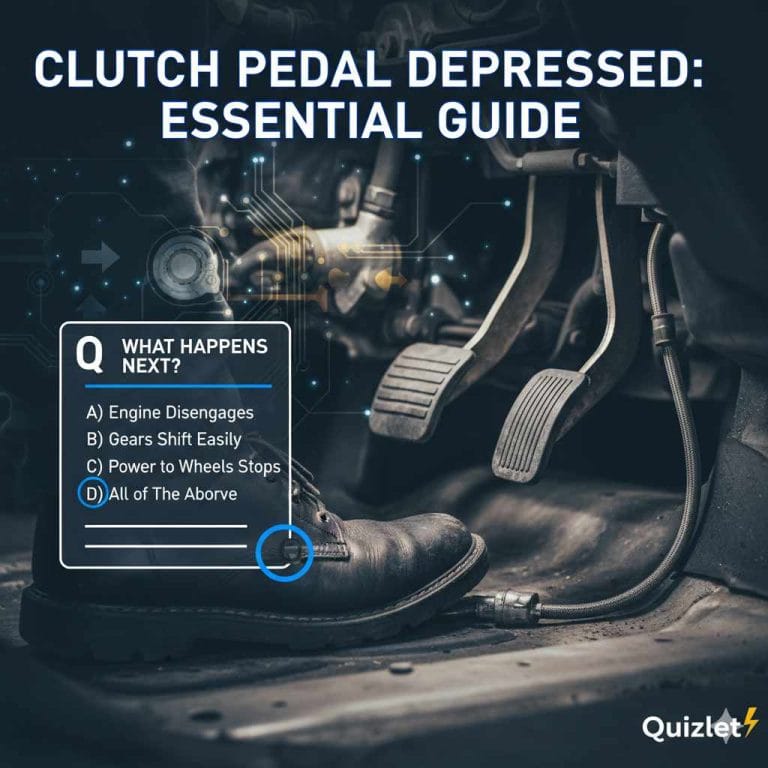
The clutch pedal is typically operated with the left foot in manual transmission vehicles. It is used in manual transmissions and is not used in automatics. Its job is to disengage engine power from the transmission so you can start, stop, and shift without grinding or stalling.
Left-foot clutch control
The clutch sits far left in a three-pedal layout. Use the left foot to press it fully when starting the car, changing gears, or coming to a stop that requires disengaging the drivetrain. Use smooth, deliberate movement rather than fast stabbing or partial pressure.
One useful rule is simple: if you are not starting off, shifting, or stopping in a way that needs the clutch, the left foot should not be on it. Resting on the pedal creates drag and can keep the clutch partly engaged.
When to move the left foot off the clutch
Move the left foot off the clutch as soon as the shift or launch is complete. In normal cruising, the pedal should not be held down. That keeps the clutch from slipping and frees the driver to concentrate on steering, braking, and scanning traffic.
A common first-timer mistake is keeping the left foot hovering over the clutch because it feels ready. That habit is useful only for a short, specific maneuver. Outside that moment, it creates noise, wear, and sloppy pedal control.
Why the clutch is not used in automatics
Automatic transmissions do not use a clutch pedal for normal driving. They typically have two pedals: brake and accelerator. Because there is no clutch to operate, the left foot has no control job and should stay away from the pedals.
That is one reason automatic cars are often easier to learn in. The driver has fewer foot tasks to manage, but the setup still depends on discipline. If the left foot becomes active, it can cause confusion at the worst time.
Where should my left foot rest while driving an automatic?
In an automatic, your left foot should rest on the dead pedal or another fixed foot rest if the car has one. If there is no dedicated rest, place the left foot flat on the floor area where it stays clear of the pedals. It should not hover near the brake.
Dead pedal use
The dead pedal is not a control pedal. It is a resting point that helps stabilize your body so the right foot can move between brake and accelerator with better precision. It also reduces the urge to brace against the brake with the left foot.
That support matters on longer drives and in stop-and-go traffic. A stable left leg can make the right leg’s motion more controlled. The goal is calm posture, not extra pedal access.
What to do if there is no foot rest
If the car has no dead pedal, keep the left foot flat and clear of the pedals. Do not tuck it under the brake pedal or angle it toward the center stack. The left foot should be out of the control zone, not ready for a reflex press.
Make sure the seat is set so the right foot can reach both pedals without strain. If the body is twisted or the left knee is crowding the pedal area, the seating position needs attention before the car moves.
How to avoid left-foot braking habits
The simplest way is to give the left foot one resting place and one job: support, not control. If you catch yourself using the left foot to help on the brake in an automatic, stop and reset the habit in a safe, empty area before returning to traffic.
Do not try to train out a habit while driving in traffic. The correction should happen at low speed, with calm repetition and a fixed seat setup, so the right foot becomes the only active foot for brake and accelerator use.
Set up the seat before you move
Seat position is part of pedal control, not a comfort extra. You should be able to reach each pedal without stretching and without lifting the heel more than needed. Good setup keeps the ankle free enough to move cleanly between pedals.
Seat distance and pedal reach
Set the seat so the right foot can press the brake fully and then reach the accelerator without the knee locking straight. If you need to slide forward to brake or lean back to throttle, the distance is wrong. The foot should work from a stable base.
Think in simple terms: one pedal should not require a body lunge. The same rule applies to manual cars. The left foot must reach the clutch fully, and the right foot must reach brake and accelerator with controlled travel.
Seat height and line of sight to the pedals
Seat height should let you see enough of the pedal area to place your feet without guessing. You do not need a dramatic view of the footwell, but you should avoid a position that hides the pedals or forces awkward ankle angles.
People returning after a long break often underestimate this step. The pedals may feel “too close” or “too far” when the real problem is seat height or distance. Fix the seat first, then judge the pedals.
Foot angle and ankle movement
Keep the foot angle natural, with the ankle able to flex smoothly. Heel pivoting is useful only when the seating position allows it. If your leg shakes or your heel lifts sharply every time you change pedals, you are not set up well.
Say your right shoe has a thick sole and the brake feels vague at first press. That does not mean the car is faulty. It may mean the foot is too high or too far from the pedal, making the shoe feel less precise than it should.
How do you avoid the wrong pedal?
Avoiding the wrong pedal starts with a calm start, a fixed foot assignment, and a seat position that makes each pedal easy to reach. Wrong-pedal pressing risk rises when a driver is rushed, unfamiliar with the vehicle, or using sloppy foot habits.
Slow starts and deliberate foot movement
Begin every drive with a deliberate pedal check. Right foot on the brake or accelerator as needed, left foot parked away from the controls. Move one foot at a time, and do not rush the first few stops and starts.
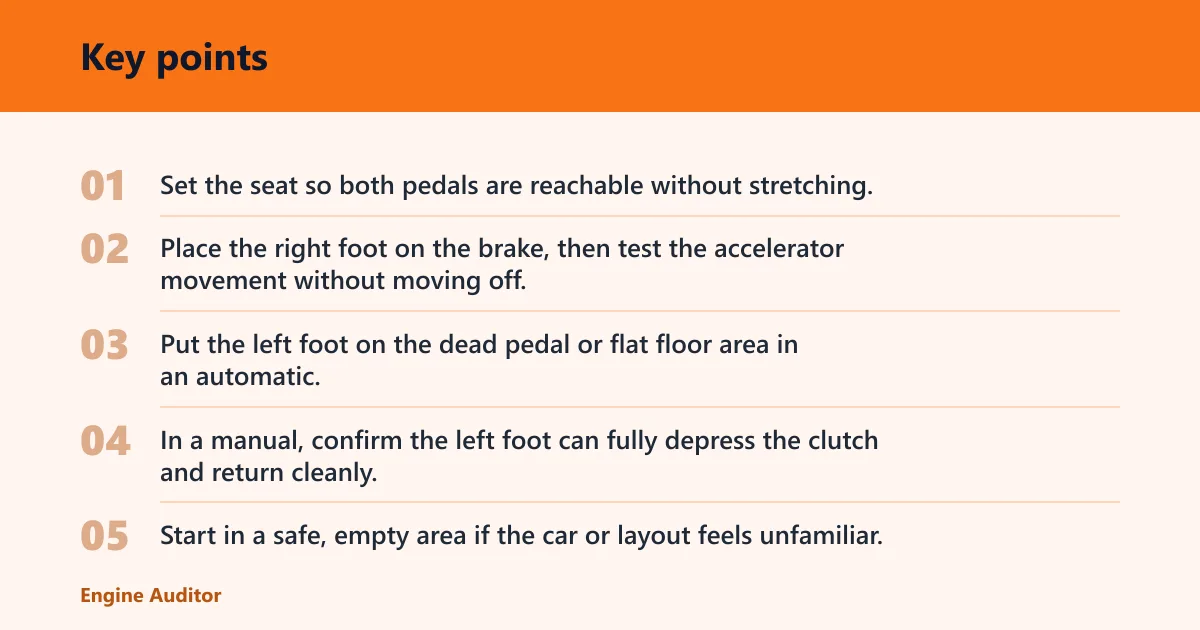
- Set the seat so both pedals are reachable without stretching.
- Place the right foot on the brake, then test the accelerator movement without moving off.
- Put the left foot on the dead pedal or flat floor area in an automatic.
- In a manual, confirm the left foot can fully depress the clutch and return cleanly.
- Start in a safe, empty area if the car or layout feels unfamiliar.
What to do when the pedals feel too close
If the pedals feel cramped, do not compensate by pointing both feet toward the controls. Move the seat, check the steering wheel position if needed, and reset your posture. Cramped footwork is a setup problem first and a skill problem second.
Bulky footwear can make the pedals feel even tighter. Thin, flexible soles usually give better pedal feel, but the shoe still has to allow full travel and quick release. A shoe that pinches, catches, or limits motion is a bad fit for driving.
Simple checks for new, borrowed, or unfamiliar cars
Before moving, identify the transmission, the pedal count, and the resting place for the left foot. Then press each pedal lightly with the car stationary so you know where the travel starts and ends. This matters even more after a long break from driving.
Do not assume every automatic or manual feels the same. Pedal spacing, height, and resistance can vary by vehicle type and market, and right-hand-drive cars keep the same foot logic even though the driver sits on the opposite side.
Frequently asked questions
Do you ever use both feet when driving an automatic?
For normal driving, no. The right foot should control both brake and accelerator, while the left foot rests away from the pedals. Two-foot driving in an automatic can increase wrong-pedal risk and make braking less predictable, especially for newer drivers or anyone returning after a break.
How do I avoid pressing the wrong pedal?
Set the seat first, then assign one foot to one job. Use the right foot for brake and accelerator, keep the left foot parked in an automatic, and start slowly in a safe area if the car feels unfamiliar. Rushed starts and cramped seating are common causes of wrong-pedal mistakes.
Can I drive with sandals or big shoes?
You can, but shoe choice affects feel. Thin, flexible soles usually give better pedal feedback than bulky footwear. The shoe still has to let you press fully and release quickly. If the footwear catches, limits ankle motion, or makes the pedals feel vague, choose something better.
What is the correct pedal order in a car?
In many left-hand-drive manuals, the usual order from left to right is clutch, brake, accelerator. In many automatics, it is brake, accelerator. Right-hand-drive cars usually keep the same pedal order; only the driver’s position changes. Always check the specific car before driving.
What should I do if I keep confusing the pedals?
Stop driving in traffic and reset the setup. Recheck seat distance, confirm which transmission you have, and practice the pedal sequence in a safe, empty area until the motion feels automatic. If the confusion continues, slow down the routine and remove anything that crowds the footwell.
Products related to this article
Sponsored / affiliate links. As an Amazon Associate I earn from qualifying purchases. I may earn additional commission from eligible campaigns.