How to Read Abnormal Tire Wear Before It Gets Dangerous
Check the wear pattern first: shoulder-only wear often points to alignment or pressure, center wear often points to overinflation, cupping or scalloping can signal suspension trouble, and any cord, bulge, or exposed belt usually means the tire should be replaced now. Keep driving and you can lose grip, trigger a blowout, or turn a simple repair into a roadside emergency. This guide shows how to read wear by pattern, location, and symptoms so you can decide what needs service, what needs replacement, and what cannot wait.
What abnormal tire wear means

Abnormal tire wear means the tread is leaving the tire unevenly enough that the pattern itself points to a fault. The split is simple: some wear is a maintenance issue, while some wear says the tire may be unsafe now because it has lost structure, lost tread depth, or is telling you the chassis has a problem.
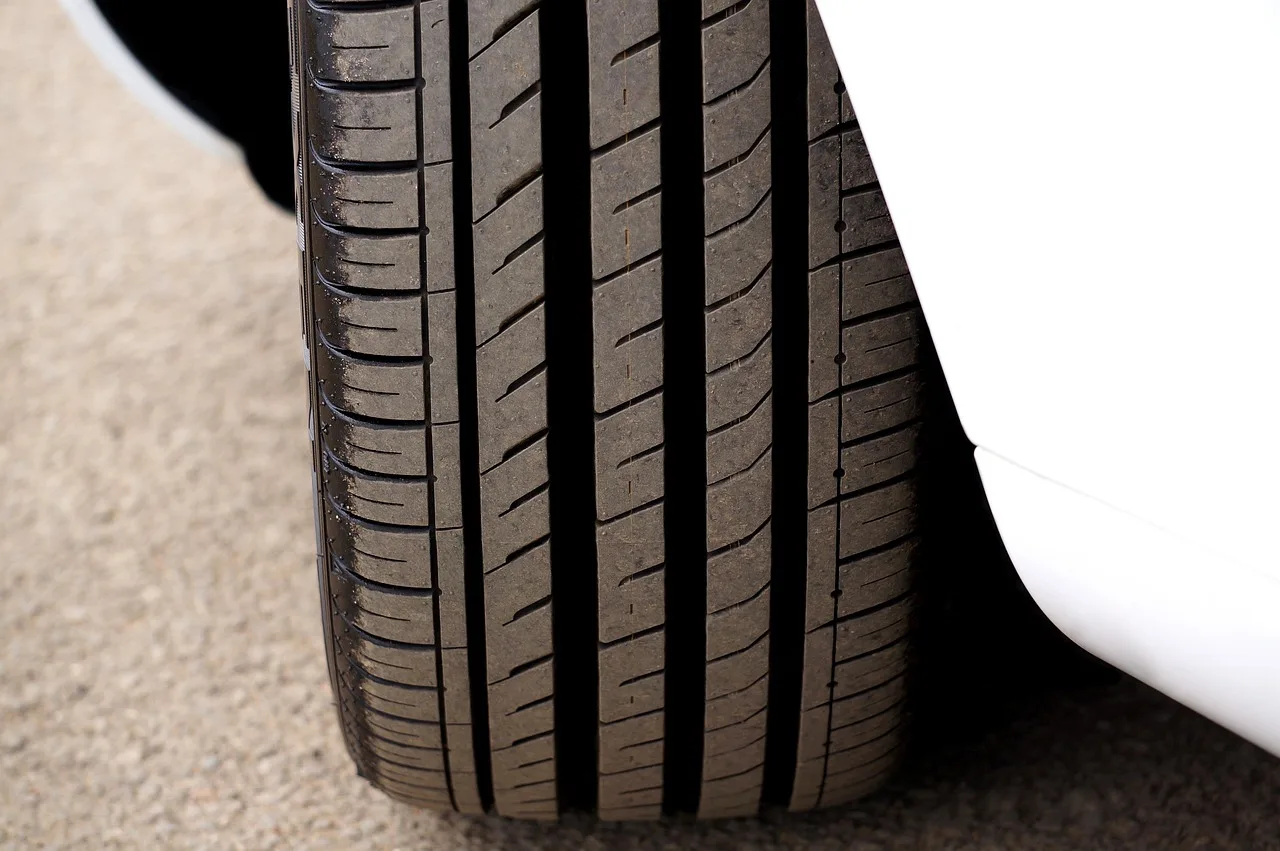
Use three checks together: tread depth, wear pattern, and driving symptoms. A tire can be worn low without being a danger this minute, but cords, a bulge, severe vibration, or one corner wearing far faster than the others moves the issue into immediate inspection territory.
Wear patterns that matter
- Inner-edge wear. Often points to camber or toe issues, though chronic underinflation can also hit both shoulders and make the inner edge look worse on one side.
- Outer-edge wear. Often tracks with the same alignment family, especially if the vehicle leans in turns or the front toe is off.
- Center wear. Commonly means overinflation, because the center of the tread carries more load than the shoulders.
- Cupping or scalloping. Raised and lowered patches around the tread usually suggest a bounce problem, imbalance, or worn suspension parts.
- Feathering. One tread rib feels smooth in one direction and sharp in the other. That often points to toe error.
- One-corner wear. A single tire, or one axle corner, wearing much faster than the rest can point to brake drag, a bad component on that corner, or a vehicle-specific setup issue.
Signs that make the tire unsafe
Replace the tire now if you see cords, exposed belt material, a bulge or bubble, or tread worn down to the wear bars. A tire that is shaking badly at speed, or one that looks visibly damaged on one corner while the others do not, needs prompt inspection before more driving.
How dangerous is this tire wear?
Danger depends on the pattern and the symptom that comes with it. Tread reaching the wear bars is a replacement problem, but cords, bulges, and severe vibration are safety problems that can justify parking the car until a tire shop or mechanic inspects it. One-sided wear with a pull or brake smell is more urgent than normal rotation wear.
Park-now signs
Park the vehicle and do not continue normal driving if you see visible cords, a bubble in the sidewall or tread, a cut that exposes internal material, or one wheel that is noticeably hotter than the others after a short drive. Heat, odor, and a tire that looks warped or distorted can point to a failing tire or a stuck brake.
Inspect-soon signs
Schedule an inspection soon if the tread is uneven across inner, center, and outer positions, if the car pulls, if steering feels loose, or if you feel vibration at highway speed. Those signs usually mean the root cause is still repairable, but the tire may continue to wear fast until the cause is found.
Maintenance-only signs
Light shoulder wear with no vibration, no pull, and no damage usually points to maintenance needs such as pressure correction, rotation, or alignment. The tire may still be usable if tread depth is above the wear bars and wear is even enough that the tire is not structurally compromised.
Tire wear triage chart
| Wear pattern | Likely causes | Urgency level | Quick roadside check | Next professional test |
|---|---|---|---|---|
| Inner-edge wear | Negative camber, toe error, chronic underinflation | Inspect soon | Compare inner tread depth with center and outer tread; look for a pull | Alignment check on a rack in degrees; suspension and steering inspection |
| Outer-edge wear | Camber or toe error, aggressive cornering, underinflation | Inspect soon | Measure outer tread against center tread; check for shoulder heat or feathering | Alignment measurement plus control arm and tie-rod inspection |
| Center wear | Overinflation | Routine service | Read the door-jamb placard and compare cold pressure; do not use sidewall max as a target | Pressure correction and tread-depth check across all three zones |
| Cupping or scalloping | Worn shocks or struts, imbalance, loose ball joints, bushings, or tie-rod ends | Inspect soon | Run a hand over the tread; look for a rhythmic high-low pattern and highway vibration | Suspension inspection and road-force balancing if vibration is present |
| Feathering | Toe error, alignment drift, worn steering parts | Inspect soon | Rub your hand across the tread blocks; one direction should not feel sharp and the other smooth | Alignment rack check and tie-rod end inspection |
| One-corner wear | Brake drag, stuck caliper, local suspension fault, uneven rotation history | Park now if hot or severe; otherwise inspect soon | Check for heat, odor, or one wheel that is much hotter than the others | Brake inspection, caliper slide check, and corner-by-corner suspension test |
How to inspect tread in five minutes
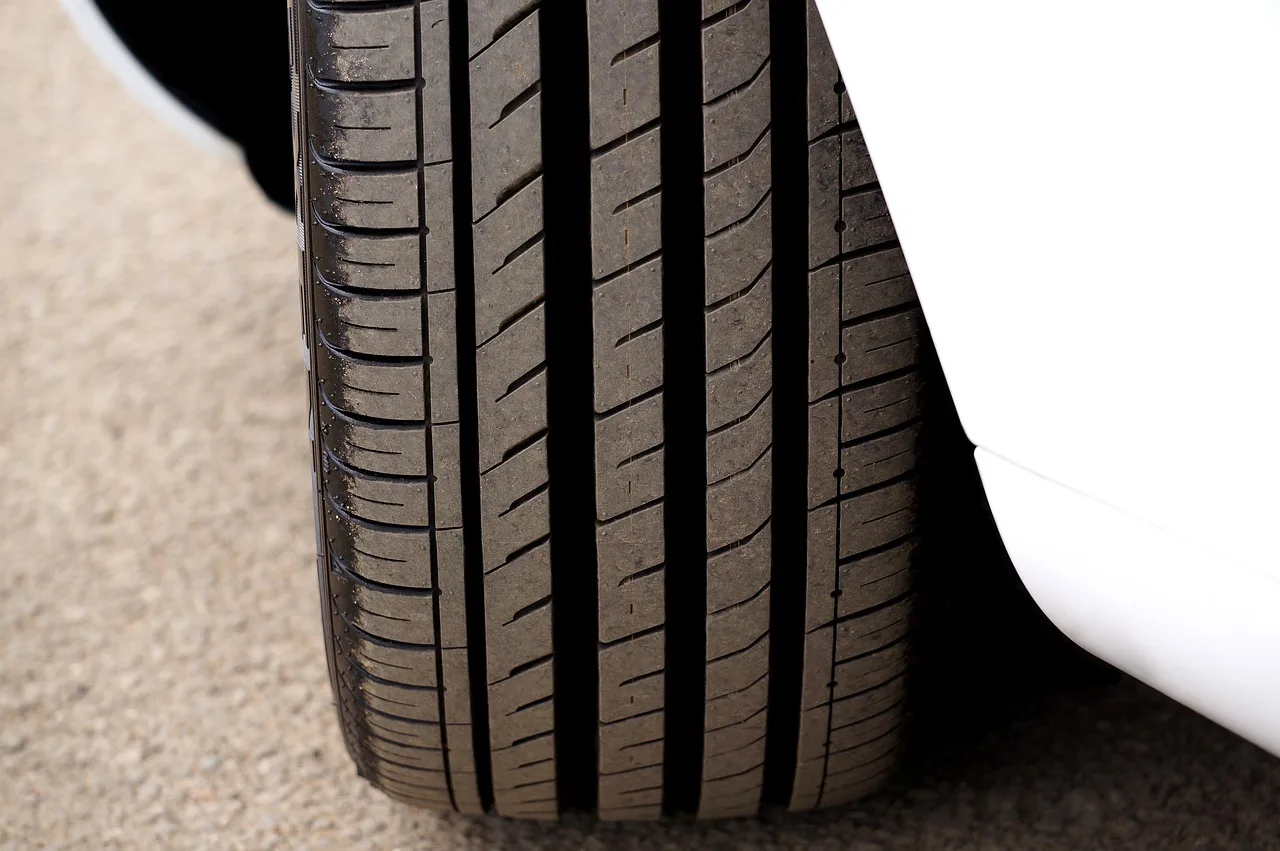
You can sort most tire wear in under five minutes with no tools. Start with the whole vehicle, then check each tire in the same order so you do not miss a corner or confuse one bad tire with a vehicle-wide pattern.
- Look at all four tires. Stand back and scan for one tire that looks lower, more worn, or visibly different from the others. That quick view catches one-corner wear before you focus on small tread details.
- Check tread depth. Measure across the inner, center, and outer tread if you have a gauge; use the penny test only as a quick screen. In the U.S., 2/32 inch is a common legal minimum used as a reference point, but a tire can be unsafe before it reaches that point if it is unevenly worn.
- Feel for shape changes. Run a hand lightly over the tread. A smooth, level surface suggests normal wear; sharp edges, sawtooth ribs, or a lumpy pattern suggest alignment, inflation, or suspension trouble.
- Check pressure clues. Compare the cold pressure to the door-jamb placard, not the sidewall maximum. Underinflation wears both shoulders faster, while overinflation wears the center faster.
- Note symptoms. Pay attention to pull, vibration, bounce, steering looseness, heat, or odor. Those symptoms tell you whether the wear is a service issue or a safety problem that needs faster action.
Say your front left tire is 4/32 inch on the outer edge, 6/32 inch in the center, and 7/32 inch on the inner edge, while the steering wheel also sits off-center. That pattern fits an alignment problem more than a worn-out tire, because the wear is directional rather than across the whole tread.
What causes inner-edge, outer-edge, and center wear?
Inner, outer, and center wear usually trace back to tire pressure or alignment. Pressure changes the shape of the tread as it rolls, while camber and toe change which part of the tire carries the load. The key is to match the wear location with the right cause instead of treating every uneven tire the same way.
Inflation pressure and tread shape
Underinflation lets the shoulders carry too much load, so both edges wear faster. Overinflation pushes more force into the center rib, which shortens center tread life first. The correct pressure is on the vehicle placard, usually on the driver door jamb or door edge, and it is the cold pressure that matters.
A common first-timer mistake is assuming a worn center strip means the whole tire is fine instead of checking whether overinflation is causing dangerous uneven wear. That is the maximum rated pressure for the tire, not the target pressure for your vehicle.
Alignment angles and one-sided wear
Alignment checks are done in degrees on a rack. Camber tilts the wheel in or out, toe points it slightly inward or outward, and caster affects steering return and stability. Toe error often shows up as feathering, while camber error often shows up as one-shoulder wear.
If the vehicle pulls, the steering wheel is off-center, or the same edge keeps wearing after a rotation, the alignment should be checked. Record the tire positions at each rotation so you can tell whether the wear follows a corner or stays with the tire.
Can cupping or scalloping mean bad suspension?
Yes. Cupping or scalloping often means the tire is bouncing or skipping instead of rolling smoothly, and that can come from worn shocks, struts, ball joints, control arm bushings, tie-rod ends, or from imbalance. If the tread pattern has repeating high and low spots, suspension and balance should both be checked.
Shocks and struts
Worn shocks or struts let the tire hop after bumps, which creates a cup-like wear pattern around the tread. The driver often feels this as repeated bounce, float, or vibration that gets worse at highway speed or after hitting rough pavement.
Ball joints, bushings, and tie-rod ends
Loose ball joints, worn control arm bushings, or worn tie-rod ends can let the wheel change angle as it rolls. That can mimic an alignment problem, but the tire may show uneven wear that is less regular and the steering may feel vague, delayed, or unstable.
Wheel balance and highway vibration
Imbalance can accelerate cupping and vibration, especially at highway speeds. A normal spin balance may miss some problems, while road-force balancing can reveal tire or wheel variation that a standard balance machine does not catch. If the vibration lives mainly at speed, balance deserves attention early.
Why is one tire wearing faster than the others?
One tire wearing faster than the others usually means a local problem, not a whole-vehicle one. The causes include missed rotation, a corner with bad brake drag, or a suspension issue that affects only one wheel. If the difference is large, one tire may not be safe to keep running with the others.
Rotation gaps and drivetrain patterns
Rotation intervals are commonly about 5,000 to 8,000 miles, depending on the vehicle and tire type. Front tires often wear faster on front-wheel-drive vehicles because they steer and drive, while rear tires may wear more evenly. Recording each tire’s position at rotation helps reveal repeat wear before it becomes severe.
Suppose an all-wheel-drive vehicle has one tire at 5/32 inch and the other three at 8/32 inch. That mismatch can matter even before the wear bars are reached, because AWD systems may not tolerate a large tread-depth difference well. In that case, paired replacement or a full set may be needed to keep the tread depth close enough.
Brake drag at one corner
A sticking caliper can wear one tire faster on the affected corner and can also make that wheel run hotter than the others. Look for heat, odor, or a wheel that is much hotter after a short drive. Brake drag can look like a tire problem at first, but the heat clue points to the brake system.
When replacement must be paired
One tire can sometimes be replaced alone if the others still have healthy tread and the difference is small. Pair replacement becomes more likely on AWD vehicles or when tread-depth mismatch is large. If the tire is near the wear bars, damaged, or part of a set with very uneven depth, replacing only one can create handling and drivetrain issues.
Frequently asked questions
How can I tell if tire wear is dangerous?
Tire wear is dangerous when it reaches cords, shows a bulge, creates severe vibration, or is so one-sided that the vehicle feels unstable. Tread at the wear bars is a replacement signal. If the wear also comes with heat, odor, or a pull, the car should be inspected right away.
What does abnormal tire wear look like on the inside edge?
Inside-edge wear looks like the inner shoulder is smooth and thin while the center or outer tread still has more depth. That pattern often points to camber or toe error, though chronic underinflation can worsen it. Check the inner tread with a depth gauge, not just a glance from the outside.
Why are my front tires wearing faster than the rear?
Front tires often wear faster because they steer, and on many vehicles they also carry more braking and drive load. Missing rotations can make the difference larger. If the front wear is much worse on one edge, alignment or pressure is usually part of the reason.
Can cupping or scalloping mean my suspension is bad?
Yes. Cupping or scalloping often points to worn shocks, struts, ball joints, bushings, or tie-rod ends, especially if the car bounces or vibrates at highway speed. Balance problems can add to the pattern, so the suspension and wheels should both be checked when the tread looks lumpy.
Is uneven tire wear a reason to replace tires immediately?
Not always. Mild uneven wear may call for pressure correction, rotation, or alignment. Replace the tire immediately if you see cords, a bulge, a cut that exposes material, or a wear pattern so severe that the tire is near failure. Safety comes before saving tread life.
How do I know if tire wear is from alignment or inflation?
Inflation problems usually affect the tread shape in a broader way: underinflation wears both shoulders, and overinflation wears the center. Alignment problems often show up as one-sided edge wear or feathering, and may come with pull or an off-center steering wheel. Measuring inner, center, and outer tread makes the split clearer.
Can one worn tire be replaced, or do I need two or four?
One tire can sometimes be replaced alone if the tread-depth difference is small and the drivetrain allows it. On AWD vehicles, or when one tire is much deeper or shallower than the others, paired replacement or a full set may be needed. Matching depth helps avoid handling and drivetrain problems.
Products related to this article
Sponsored / affiliate links. As an Amazon Associate I earn from qualifying purchases. I may earn additional commission from eligible campaigns.