How to Compare Cars for Tall Drivers and Passengers
Compare cars for tall drivers by checking usable headroom, seat travel, steering-wheel reach, roofline slope, and rear knee room. If the driver needs about 1 inch of headroom and passengers behind them need about 2 inches of knee room, keep looking. Poor fit leads to slouched posture, cramped rear seats, and trim-by-trim surprises that generic legroom numbers hide. This guide shows a repeatable way to measure front and rear space across sedans, SUVs, hatchbacks, coupes, and trims.
Tall-driver fit basics
Published legroom and headroom figures can mislead tall shoppers because they do not show how the seat cushion, roof shape, and track limits work together. A car can list decent space and still force a bad hip angle, a low seating point, or a sunroof penalty that steals the last inch that matters.
For this comparison, 6-foot-4-inch height is a useful benchmark. That height exposes problems that average-size drivers may miss, including a seat that will not go low enough, a wheel that sits too far away, or a roofline that hits on entry. (Thedrive)
The three body types that change fit
Long legs, a long torso, and broad shoulders create different problems. Long-legged drivers usually run out of knee room or seat-track travel first. Long-torso drivers usually need more headroom and a lower seat base. Broad-shouldered drivers may fit the cabin length but still feel pinched by the seat bolsters, center console, or door trim.
That is why a single brochure number is weak evidence. Two cars with the same listed legroom can feel very different if one has a thick seat cushion, a fixed sunroof cassette, or a wheel that cannot telescope far enough.
What to measure in the driver’s seat

Start with the driver’s seat because that fit sets the rest of the cabin. Measure usable headroom, legroom, seat height, and steering-wheel position with the seat at both ends of its adjustment range. Then check whether the driving position keeps your arms bent, your thighs supported, and your feet aligned with the pedals.
Headroom and seat height
Measure headroom from the top of the seat cushion to the headliner at the lowest and highest seat settings. A sunroof or panoramic roof often reduces usable space, sometimes enough to change a pass into a fail. If a helmet or high hair needs to fit, check that clearance too.
Seat height matters as much as the roof. A low seat base may leave your eyes too close to the dashboard top, while a high seat may push your head into the roof on bumps or while entering. Power adjustment helps only if it moves through a useful range; a power seat with a short travel window can still be poor for a tall driver.
Legroom, pedal reach, and thigh support
Legroom is the obvious downside for tall people, but the better test is whether the seat can move far enough back while still letting you reach the pedals without locking the knee. Check thigh support too. If the cushion ends too soon, the driver may slide forward or feel pressure under the thighs on longer trips.
Compare front legroom with rear-seat tradeoff. A seat that slides far back may help the driver but can leave no usable space behind them, which matters for families and road trips.
Steering wheel reach and arm bend
Check tilt and telescope together, then judge the wheel-to-seat relationship. The wheel should come to you without forcing straight arms or shoulders pressed forward. A safe bend at the elbows is the goal, not just “can reach the wheel.”
If the wheel tilts enough but does not telescope far enough, tall drivers often compensate by moving the seat too close or too upright. That can hurt thigh support or squeeze the knees against the wheel rim.
-
Set the seat low. Put the seat at its lowest setting first, then note headroom, hip point, and outward visibility. This shows the car’s minimum posture and whether the cushion still leaves you too high in the cabin.
-
Move the seat back. Slide the seat until the pedals can be pressed fully without stretching the knee or locking the leg. Record how many notches or inches of travel remain, because that is the space the next tall driver may need.
-
Adjust the wheel. Bring the steering wheel to a position that keeps a slight elbow bend and clear thigh clearance. If you must choose between wheel reach and pedal comfort, note that compromise in the worksheet.
-
Check thigh support. Press into the cushion and look for full support under the thighs. A seat that ends too early can feel acceptable for five minutes and wrong for a long drive.
How does the passenger seat compare?
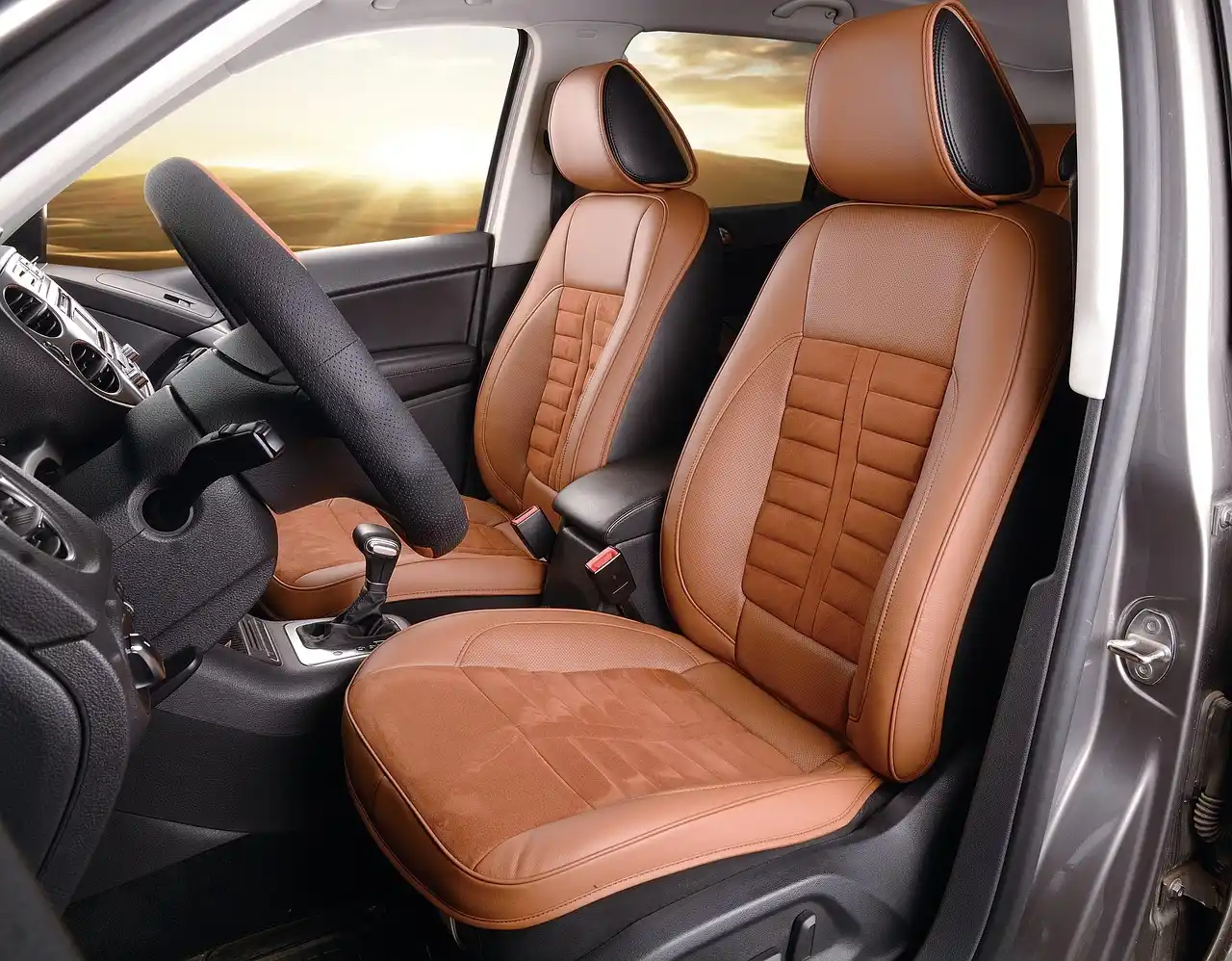
The passenger side matters because tall-driver fit is only half the story. A car that fits the driver well may still fail if nobody can sit behind that driver, or if the front passenger has to ride with knees splayed and feet trapped under the seat. Rear-seat fit should be part of every comparison.
Front-passenger comfort checks
Repeat the same seat-height, headroom, and legroom checks on the front passenger side. Some cars offer more room on one side because of console shape, dash width, or seat-track limits. A tall passenger should still be able to sit upright without the knees touching the glovebox or the head brushing the roofline.
Rear-seat space behind a tall driver
Measure knee room behind the driver with the driver’s seat set for a tall person, not with the seat pushed forward for show. Then check footroom under the front seat and the seatback angle. Rear comfort falls apart quickly when the front seat base is low, wide, or mounted far back on its track.
Child-seat compatibility matters when relevant. A rear-facing child seat behind a tall driver can force the front seat forward or upright, which changes the driver’s posture enough to matter on long trips.
Door opening and roofline clearance
Wide door apertures and taller roof openings make entry easier, but roofline shape still matters. A low or sloping roof can force a tall driver to duck sharply on entry and then lift the head on exit, which raises the chance of contact with the door frame or headliner.
Check head contact risk twice: once while stepping in, and once while standing up from the seat. Some cars are easy to sit in but awkward to get out of, especially if the seat base is low and the roofline slopes hard at the opening.
Say your driver seat fits well on paper, but the rear passenger behind it has less than 2 inches of knee room. That car may still work for a solo driver or a couple, yet it is a poor pick for family duty because the rear seat becomes a penalty box.
Which body style fits tall people best?
No body style guarantees a good fit. Sedans, SUVs, hatchbacks, and coupes each trade headroom, hip point, entry height, and cargo space differently. The right choice depends on whether you need easier entry, rear-seat usability, or a lower driving position that still leaves enough headroom.
Sedans
Sedans often give a good balance of seat comfort and road manners. A family sedan with a lively chassis and manual gearbox, such as the Honda Accord Sport, can suit tall drivers who want room without giving up a responsive feel. Some sedans also keep the driving position lower, which helps with roof clearance but can make entry lower and exit slower.
SUVs and crossovers
SUVs often help with step-in height and outward visibility, but they are not automatic winners. A taller roof does not guarantee a better seat base, and some crossovers still place the driver low relative to the roof. Check whether the extra height improves the hip point and door opening, or only adds body volume without better fit.
Hatchbacks and coupes
Boxy hatchbacks can surprise tall shoppers because the upright shape often leaves more usable headroom than the numbers suggest. The VW Golf/GTI two-door is a good example of easy entry and exit from a boxy design. Some coupes also work well if the seat drops low enough and the roofline stays friendly over the driver’s head.
Compact cars are not disqualified by size alone. The Mini Cooper fits tall people despite its small size, and the Cadillac ATS is surprisingly workable despite compact proportions. On the other end, large cars can still fit badly if the roof, seat, and wheel are poorly matched.
For long-limb drivers who want a low, spacious cockpit, the Lexus RC, the BMW M6, and the Mercedes-Benz S-Class Coupe are worth a close look. The Audi A8/S8 Plus is also noted for accommodating long-limbed drivers while preserving rear comfort, and the Dodge Challenger is a tall guy’s car in the simple sense that it gives tall occupants real room up front.
Picture a 6-foot-5 driver who fits in a coupe with room to spare but finds the rear seat nearly unusable because the front seat sits too far back. That car may be excellent for driver comfort and still be the wrong choice for anyone carrying passengers often.
Tall-driver comparison worksheet
Use this worksheet to compare any two cars without guessing. Mark each line pass or fail, then score it from 1 to 5 based on how well the car fits a tall driver and a rear passenger behind that driver. Record the driver’s height, inseam, and whether someone can still sit behind the driver.
| Check | Pass mark | Score 1-5 | Car A notes | Car B notes |
|---|---|---|---|---|
| Headroom | At least 1 inch at lowest and highest seat settings | Driver height: ___; inseam: ___ | Driver height: ___; inseam: ___ | |
| Legroom | Full pedal reach without locked knee | |||
| Seat-track travel | Enough rearward travel to leave a safe bend at the knee | |||
| Steering-wheel reach | Wheel tilts and telescopes to a slight elbow bend | |||
| Footwell width | Feet do not crowd the dead pedal or center tunnel | |||
| Door opening | Entry and exit without head contact risk | |||
| Rear-seat impact | Passenger behind driver still has at least 2 inches of knee room | Can passenger sit behind driver? yes / no | Can passenger sit behind driver? yes / no | |
| Sunroof penalty | No meaningful loss of headroom from roof hardware | |||
| Visibility | Clear view over hood, dash, and mirrors | |||
| Exit ease | Standing up without twisting the neck or hitting the roofline |
What should you check on trims and options?
Trim choice can change fit almost as much as body style. Seat options, roof options, and power-adjustment ranges can change headroom, cushion shape, and visibility. A car that fits in one trim may fail in another, so compare the exact version you plan to buy, not the base brochure.
Sunroof and panoramic-roof penalty
Do not treat a roof opening as a small detail. A sunroof cassette can cut headroom, push the head closer to the liner, and change the seat position that felt fine in a base model. Measure again with the roof option you actually want.
Power seats, lumbar, and cushion shape
Power adjustment is useful only if it changes height, tilt, and fore-aft movement enough to matter. Also check lumbar shape and cushion thickness. A thick seat base may help support, but it can also raise the hip point and reduce headroom for a long-torso driver.
Visibility, mirrors, and console intrusion
Make sure the dashboard, mirrors, and center console do not force an awkward posture. A wide console can crowd the right knee, and a high beltline can hide the hood corners. For tall drivers, visibility is part of fit because a good seating position should not force the chin down or the shoulders forward.
-
Compare the exact trim. Check the model with the same seat, roof, and wheel options you plan to buy. A different roof or seat package can change headroom and seat travel enough to alter the result.
-
Re-test rear space. Put the driver’s seat back where a tall driver needs it, then check the seat behind it. If the rear passenger cannot sit upright with knee room left, note the car as a poor family fit.
-
Record the tradeoff. Write down whether the car favors driver comfort, rear comfort, or easy entry. That note helps separate a fun-to-drive fit from a family-friendly fit, which are not always the same thing.
Frequently asked questions
What cars are good for tall drivers?
Good fits usually have strong seat travel, enough headroom at both seat extremes, and a wheel that telescopes far enough to keep the arms bent. Examples often mentioned for tall drivers include the Honda Accord Sport, Lexus RC, Dodge Challenger, Cadillac ATS, BMW M6, and Mini Cooper, but trim choice still matters.
What cars are good for tall passengers?
Look for cars with generous front passenger headroom, a seat that sits high enough for visibility, and a dash that does not crowd the knees. The rear seat matters too if the person will ride behind a tall driver. A good passenger car keeps both rows usable, not only the front seat.
How do I know if a car has enough headroom and legroom?
Measure headroom at the lowest and highest seat settings, then check legroom with the seat pushed to the position needed for full pedal reach. If you still have at least 1 inch of headroom and the knee is not locked at the pedals, the car is closer to a real fit than a brochure number suggests.
What SUVs are best for tall drivers and passengers?
The best SUV is the one that gives you usable headroom, a comfortable hip point, and enough rear space after the driver seat is set correctly. Do not assume a taller roof solves everything. Some SUVs still sit low inside, while others trade cargo and visibility for a better driving position.
How do I compare cars for knee room and seat travel?
Set the driver’s seat for a tall person, then check whether the knees clear the dash, whether the pedals are reachable, and how much track remains. Then move behind that seat and judge rear knee room and footroom. A car with more front travel may be worse for passengers behind it.
Which car body styles are easiest for tall people to get into and out of?
Often, boxy hatchbacks and some SUVs are easiest because the opening is taller and the roofline is less sloped. Sedans can be fine if the seat height is well judged. Coupes are the most shape-dependent; some work, but low rooflines and narrow openings can make entry and exit harder.
Products related to this article
Sponsored / affiliate links. As an Amazon Associate I earn from qualifying purchases. I may earn additional commission from eligible campaigns.