Temporary Ways to Stay Warm If Your Car Heater Fails on the Road
If your car heater fails, stay dry, add layers, run the engine only while parked in a safe, ventilated place, and leave the road if cabin temperature keeps dropping or visibility suffers for more than a few minutes. Ignoring the problem can lead to numb hands, poor driving control, fogged glass, and a real risk of cold stress. This guide covers immediate warmth steps, what to avoid, and when to stop and get help instead of trying to tough it out. For exhaust and ventilation concerns, follow EPA guidance and your vehicle owner’s manual. (EPA)
What to do first when the heater quits
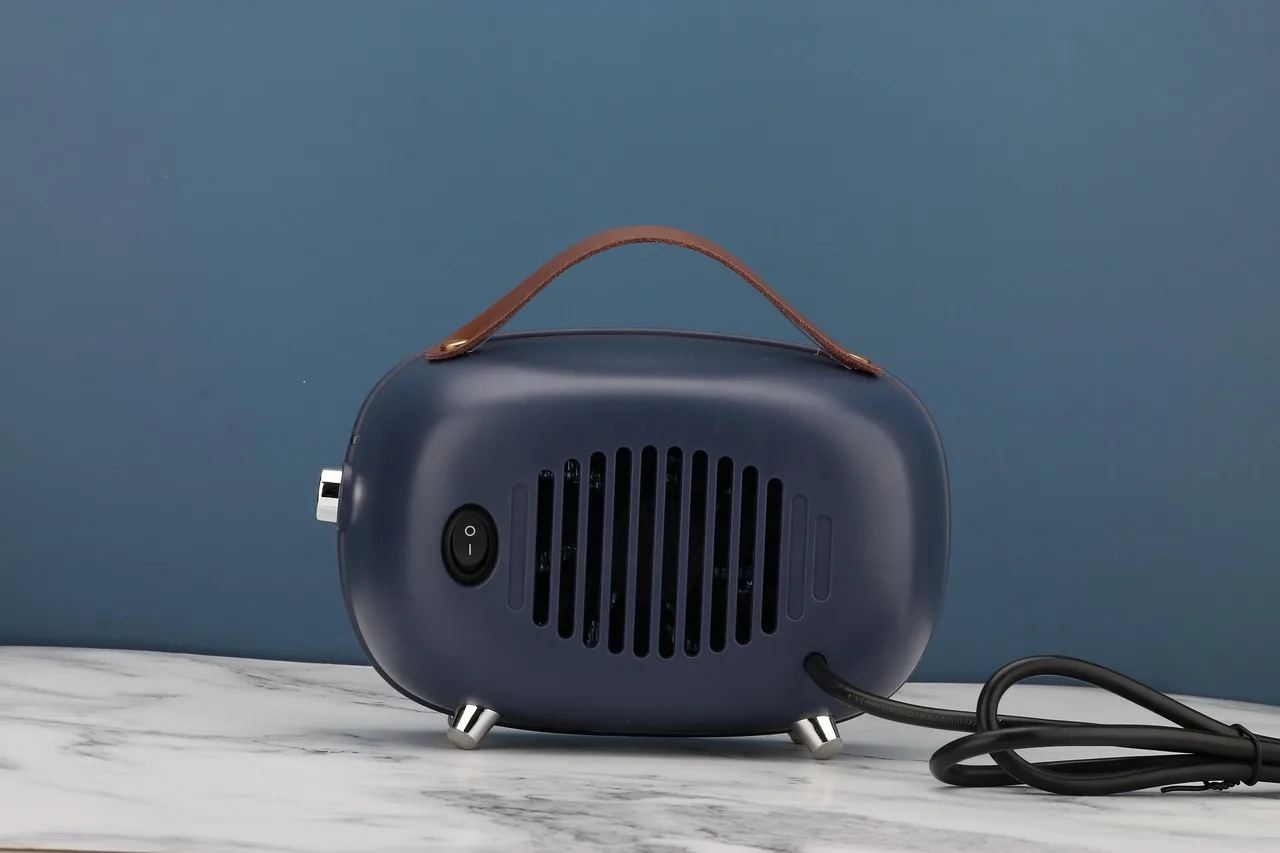

- Offers 2-in-1 heating and cooling for year-round use
- Acts as a windshield defroster and defogger for better visibility
- Features a 360-degree adjustable base for flexible airflow direction
Start with safety, not comfort. Check whether the engine is still running normally, whether the windshield is clearing, and whether you can pull over without making the situation worse. If the car is driving badly, windows are fogging fast, or the cabin keeps cooling, treat it as a stop-and-assess problem instead of a warm-up problem.
-
Pull over safely.
Get to a shoulder, parking lot, or other legal stopping point where you can see and be seen. Do not keep driving while you are trying to improvise warmth if the glass is fogging or you are getting distracted. -
Check the engine and vents.
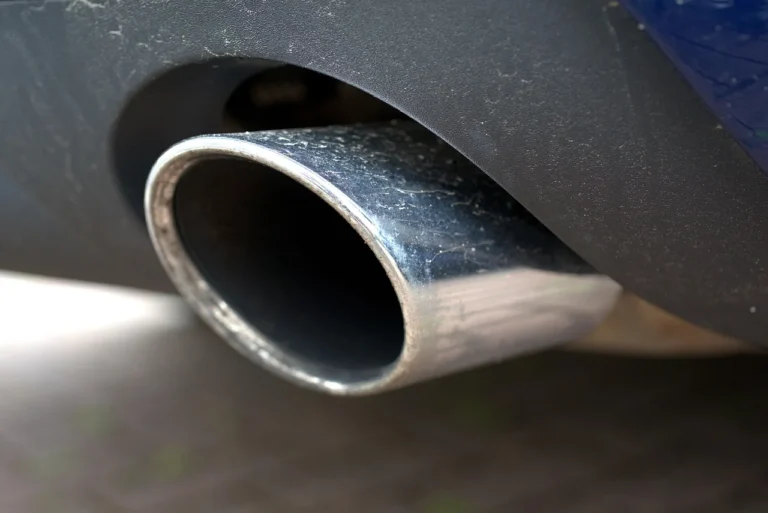
If the engine is on, confirm that exhaust can move away from the vehicle and that snow, slush, or debris is not blocking the tailpipe. Cabin heat comes from engine operation, so a dead engine means no heat from the car. -
Decide whether to continue.
If the car still drives normally and the road is clear, you may continue briefly while using the safest warming measures available. If visibility, fuel, or engine condition is questionable, stop and call for help instead.
Dry clothing matters more than bulky clothing. A damp shirt, socks, or gloves can pull heat away quickly, while a dry base layer and insulating mid-layer are generally better at holding warmth. Add a wind-blocking outer layer if you have one, and keep a spare pair of socks, a hat, and gloves in the vehicle before winter starts.
Cold stress can worsen quickly because the body loses heat faster when clothing is wet and the air around you is cold or windy. Wet fabric pulls heat from your skin, and once your body starts cooling, shivering, poor dexterity, and slower thinking can follow fast. That is why the first move is to stabilize the situation before trying to tough it out with the car moving, the cabin fogging, or the engine in doubt.
How to stay warm without the heater
Use insulation first, then small heat aids. Blankets, emergency blankets, and hand warmers can help, but none of them replaces a working heater when the car is moving. Keep your body dry, protect your core, and avoid anything that blocks your view or creates a burn risk.
Layer dry clothing the right way
Build warmth in layers: a dry base layer against the skin, an insulating mid-layer, and a wind-blocking outer layer. That approach works better than piling on one heavy coat if it makes you sweat, because moisture cools you down once the car stops or the temperature drops further.
Keep a spare pair of socks, a hat, and gloves in the vehicle. Hands, feet, and the head lose comfort quickly, and dry replacements can be more useful than one oversized garment that traps sweat.
Use blankets and emergency blankets
A regular blanket can help trap body heat. A compact reflective thermal blanket can add another barrier by reflecting heat back toward the body and blocking drafts. Keep one for each occupant so people do not have to share a single layer in a cold cabin.
Use the blanket as insulation, not as a way to seal the cabin tightly around a running engine. If you need the windows cracked for defogging or exhaust control, keep the blanket on the body and off the vents, pedals, and steering wheel.
Use hand warmers safely
Hand warmers help most in pockets, gloves, boots, or near the feet. They are useful for comfort and dexterity, but they are not a primary heat source for the whole cabin. Follow the package directions for placement, and keep them away from direct skin contact if the product warns about burn risk.
Suppose your gloves are damp and your fingers start going numb. Put a hand warmer inside a dry glove, or into a pocket, so it can restore enough dexterity for zippers, phone use, or a door handle. It should support your clothing layers, not replace them.
-
Warm the smallest areas first.
Put hand warmers where circulation is easiest to protect, such as pockets, socks, or gloves. That gives the quickest comfort without relying on them to heat the entire vehicle. -
Keep them ventilated.
Use the warmer as directed and do not bury it under heavy insulation that traps too much heat against skin or plastic trim. The goal is steady warmth, not a burn spot. -
Watch for skin irritation.
Check hands and feet for redness, numbness, or discomfort. If a warmer feels too hot, move it or remove it right away.
Is it safe to keep idling my car for heat in winter?
Idling can provide cabin heat, but only while the engine is running and only when the vehicle is in a safe, ventilated place. It also burns fuel and creates exhaust exposure. If you are in a snow-blocked, enclosed, or poorly ventilated area, idling becomes much more dangerous than uncomfortable cold. Follow your owner’s manual for any winter-idling guidance specific to your vehicle, and use EPA carbon monoxide precautions whenever the engine is running. (EPA)
Carbon monoxide and exhaust risk
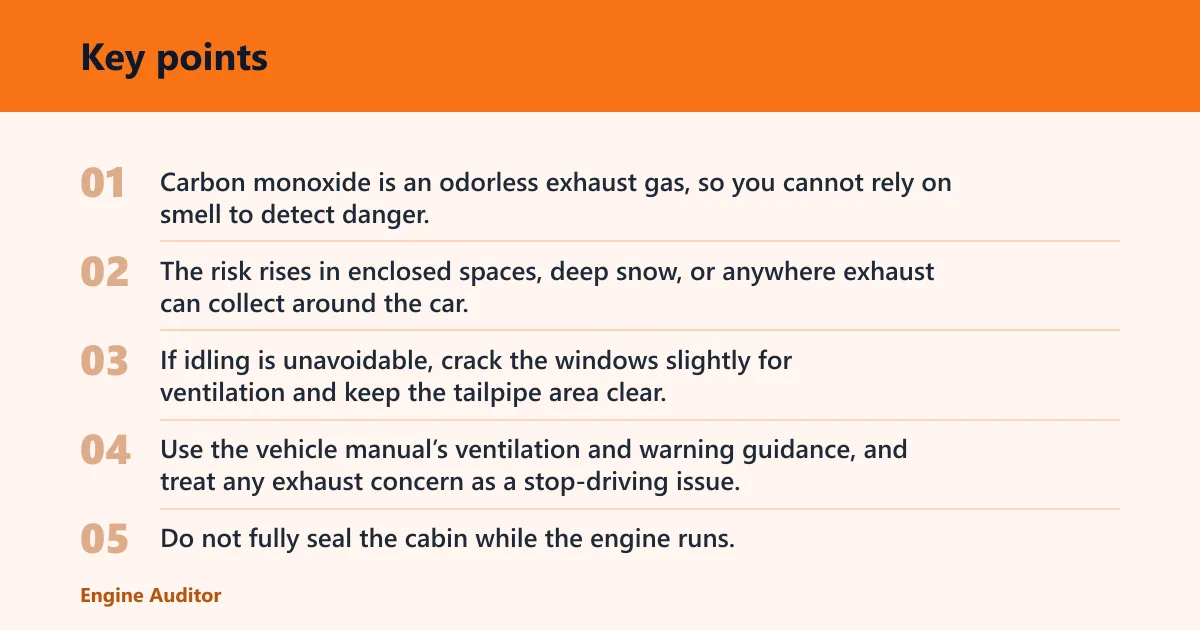
Carbon monoxide is an odorless exhaust gas, so you cannot rely on smell to detect danger. The risk rises in enclosed spaces, deep snow, or anywhere exhaust can collect around the car. If idling is unavoidable, crack the windows slightly for ventilation and keep the tailpipe area clear. Use the vehicle manual’s ventilation and warning guidance, and treat any exhaust concern as a stop-driving issue. (EPA)
Do not fully seal the cabin while the engine runs. You need enough airflow for exhaust control and enough open glass to manage fogging. Warm air that cannot move will eventually turn into poor visibility, which is a driving hazard of its own.
Fuel use, battery drain, and weather limits
Idling too long can drain fuel and may still leave you stranded if the weather worsens. A low tank also leaves less margin if you later need to drive to a shop or a safer location. If the engine sounds rough, the check engine light appears, or the car behaves oddly, stop relying on idle heat.
Children, older adults, and pets may need a lower threshold for stopping. If anyone in the car is getting shivery, sleepy, confused, or hard to keep comfortable, call for help sooner rather than stretching the drive. Those are signs the body is losing heat faster than the car can safely replace it, and the right move is to act before symptoms get worse. If you see confusion, excessive shivering, slurred speech, clumsiness, or unusual sleepiness, treat it as cold stress and stop waiting for things to improve on their own.
Window crack and defogging basics
Thermal window management matters because warmth is useless if you cannot see. Keep enough glass clear for the road, mirrors, and side traffic. If the windshield starts to fog or frost inside, increase safe defogging and adjust ventilation instead of sealing the cabin completely.
A common first-timer mistake is turning the car into a sealed box because it feels warmer. That can make the glass fog faster and increase exhaust risk if the engine is running. Visibility always outranks maximum heat.
How long can I stay warm in a car with the engine off?
The short answer is that it depends on temperature, wind, clothing, how many people are sharing the cabin, and how much insulation you have. A well-dressed adult in a dry car with blankets may stay reasonably comfortable for a short stop, but comfort can fade much faster if clothing is wet, the cabin is exposed to wind, or passengers are young, older, or already chilled. Do not wait for symptoms such as shivering, numbness, confusion, or sleepiness before you act.
What changes the limit fastest
Cold air alone is not the only factor. Wind leaks heat from the vehicle and from your clothing, wet fabric cools you much faster than dry fabric, and a crowded cabin may feel warmer at first but can become uncomfortable if people are damp or the glass keeps icing over. Insulation from blankets, seat covers, and layered clothing stretches the safe waiting time, but it does not make a dead car a long-term shelter.
How to think about the scenarios
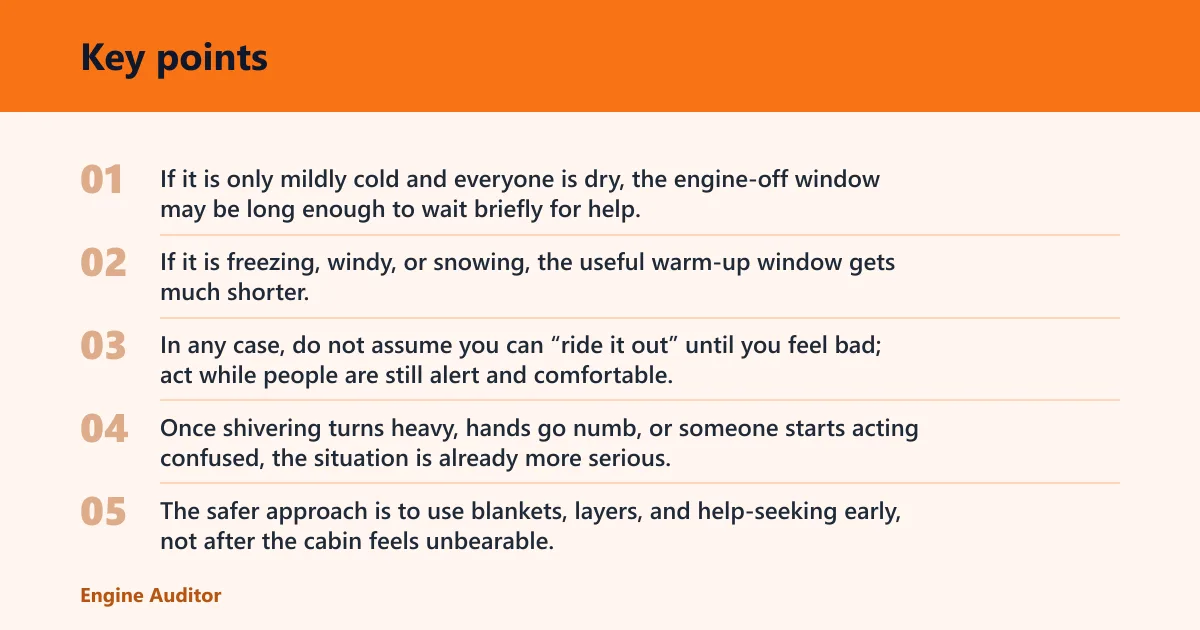
If it is only mildly cold and everyone is dry, the engine-off window may be long enough to wait briefly for help. If it is freezing, windy, or snowing, the useful warm-up window gets much shorter. If children, older adults, or pets are present, use a lower threshold and plan to move to a warmer place or call for help sooner. In any case, do not assume you can “ride it out” until you feel bad; act while people are still alert and comfortable.
Do not wait for symptoms
Once shivering turns heavy, hands go numb, or someone starts acting confused, the situation is already more serious. The safer approach is to use blankets, layers, and help-seeking early, not after the cabin feels unbearable. If the car is off and the temperature keeps falling, get assistance rather than trying to prove you can tolerate the cold.
Temporary ways stay warm decision table
This table gives a quick branch for engine-running and engine-off situations. If a row fits your situation, follow the next action rather than guessing.
| Engine running | Fuel level | Outside temperature | Passengers present | Recommended next action |
|---|---|---|---|---|
| Yes, engine runs normally | At least half a tank | Cold, but not forcing rapid fogging | 1-4 people, all alert | Stay parked or move only if needed, add layers, use blankets, and keep a slight window crack for ventilation. |
| Yes, engine runs normally | Low or uncertain | Cold to freezing | Any passengers | Limit idling, plan a short drive to a safe stop or service point, and call roadside assistance if fuel margin is too small. |
| No, engine stalls or will not start | Any level | Freezing or below | Any passengers | Use blankets and layered clothing, keep the cabin closed enough to retain heat, and call roadside assistance right away. |
| Yes, but windshield fogs or frosts quickly | Any level | Cold, wet, or snowy | Any passengers | Improve defogging and venting, then stop driving if you cannot keep enough glass clear for safe visibility. |
| Yes, but exhaust smell or CO concern | Any level | Any cold weather | Any passengers | Stop driving now. Get fresh air, move to a safer location if possible, and call roadside assistance or emergency help. |
| No, or engine trouble is present | Low, empty, or unknown | Any cold weather | Kids, older adults, or pets aboard | Call roadside assistance. Do not keep trying to tough it out; use a lower threshold for stopping and getting help. |
What to keep in a no-heat car kit
A winter emergency kit should live in the vehicle before the cold arrives. Build it around a blanket, water, snacks, a flashlight, a charger, gloves, and a scraper. Tailor the kit to the passengers, pets, and climate you actually drive in.
Core supplies for the driver
- One or more warm blankets
- Water in containers that will not leak easily
- Nonperishable snacks
- Flashlight with working batteries
- Phone charger or power bank
- Dry gloves
- Ice scraper and a small brush
Those items help with warmth, visibility, and communication. The scraper matters because a heater failure often overlaps with fog, frost, or sleet, and you need clear glass before you can drive safely again.
Supplies for passengers, kids, and pets
Add extra layers for children and older adults, because they may cool down faster or have a harder time telling you they are uncomfortable. For pets, bring water and any climate-specific supplies they need, and never assume they can wait as long as an adult can.
Picture a family car with two adults, a child, and a dog after the heater dies on a snowy road. A single blanket in the trunk is not enough. Separate layers, water, and a charger make it easier to stop early and wait for help without turning the cabin into a panic zone.
When should you call roadside assistance?
Call roadside assistance when you cannot safely continue, when the car is not clearing the windshield, when fuel is getting low, or when the engine seems unreliable. If you are fighting fog, smell exhaust, feel drowsy, or have vulnerable passengers, the safer move is to stop trying to force a drive.
Signs you should stop driving now
-
Visibility stays poor.
If fog or frost keeps returning faster than you can clear it, the road risk is too high. A warm cabin is no help if you cannot see lane lines, mirrors, or brake lights. -
Fuel margin gets thin.
If you do not have enough fuel to idle safely for a short period and still reach help, stop. Idling uses fuel, and you should not stretch the tank just to avoid a phone call. -
Engine trouble appears.
Rough running, warning lights, or a stall mean the car may be failing in more than one way. Do not keep driving to “see if it clears up.” -
Anyone becomes unwell.
Shivering, confusion, numbness, or sleepiness is a warning sign, especially for kids, older adults, and pets. Call for help before the situation becomes harder to manage.
What to tell dispatch
Give your exact location, whether the engine runs, how much fuel you have, and whether the windshield is clear enough to drive. Mention any passengers, children, older adults, or pets so the response matches the situation. If you suspect exhaust exposure, say that directly.
Roadside assistance can move the car to a shop or a safer location. That is often the better choice than trying to finish a trip with no heater, fogged glass, and a cold cabin.
Frequently asked questions
What can I do to stay warm if my car heater stops working while driving?
Start by pulling over safely, then use dry layers, blankets, and a slight window crack if the engine is running. Keep the windshield clear, avoid sweating, and stop driving if visibility drops or the winter breakdown and roadside assistance issue gets worse. Warmth should never come at the cost of control.
What should I put in my car emergency kit for no-heat situations?
Pack blankets, water, snacks, a flashlight, a charger, gloves, and a scraper before winter. Add extras for children, older adults, and pets. The goal is to cover warmth, visibility, and communication if the heater fails and you need to wait for help.
How do I stay warm in a car without risking carbon monoxide poisoning?
Keep the car out of enclosed spaces, never run it in a garage, and make sure the tailpipe is not buried in snow. If idling is necessary, crack the windows slightly and keep an eye on fogged glass. Exhaust risk is the issue you cannot smell, so treat it seriously. Follow EPA carbon monoxide precautions and the vehicle owner’s manual.
Can I use blankets or hand warmers safely in the car?
Yes, if you use them as support rather than as the main heat source. Blankets and emergency blankets help trap body heat, and hand warmers are best for hands and feet. Follow burn warnings, keep them away from direct skin when required, and do not let them block vents or driving controls.
What if the heater fails and I still need to drive to a repair shop?
Drive only if the car runs normally, the windshield stays clear, and fuel is sufficient for the trip. If visibility, engine behavior, or exhaust control is in doubt, call roadside assistance instead. A short tow is safer than continuing through fog, cold stress, or a possible engine problem.
Products related to this article
Sponsored / affiliate links. As an Amazon Associate I earn from qualifying purchases. I may earn additional commission from eligible campaigns.