How to Check Engine Oil is Good Or Bad: Easy Signs to Know
When was the last time you checked your car’s engine oil? If you’re like most drivers, you might not think about it until the oil warning light turns on or you hear strange noises from the engine. But understanding how to check if engine oil is good or bad is a skill every car owner should have. Regular oil checks can prevent engine damage, save you money, and keep your vehicle running smoothly. Whether you’re new to car maintenance or want to sharpen your skills, this guide will make the process simple and clear.
Why Engine Oil Matters
Your car’s engine has many moving parts. Engine oil acts like a shield between these parts, reducing friction and wear. It also helps cool the engine, keeps it clean by carrying dirt to the oil filter, and protects against rust and corrosion. Using bad oil or running with low oil can cause your engine to overheat, wear out faster, or even stop working.

As an Amazon Associate I earn from qualifying purchases.
According to the American Automobile Association (AAA), engine failure due to poor oil maintenance is one of the top reasons for roadside breakdowns. Oil-related engine problems can cost from $1,000 to over $4,000 to repair, much more than the price of regular oil changes.
The Main Signs Of Good Vs. Bad Engine Oil
Knowing whether your engine oil is in good or bad condition isn’t just about checking the level. There are several signs you can look for. Here’s what you need to check:
- Oil Level
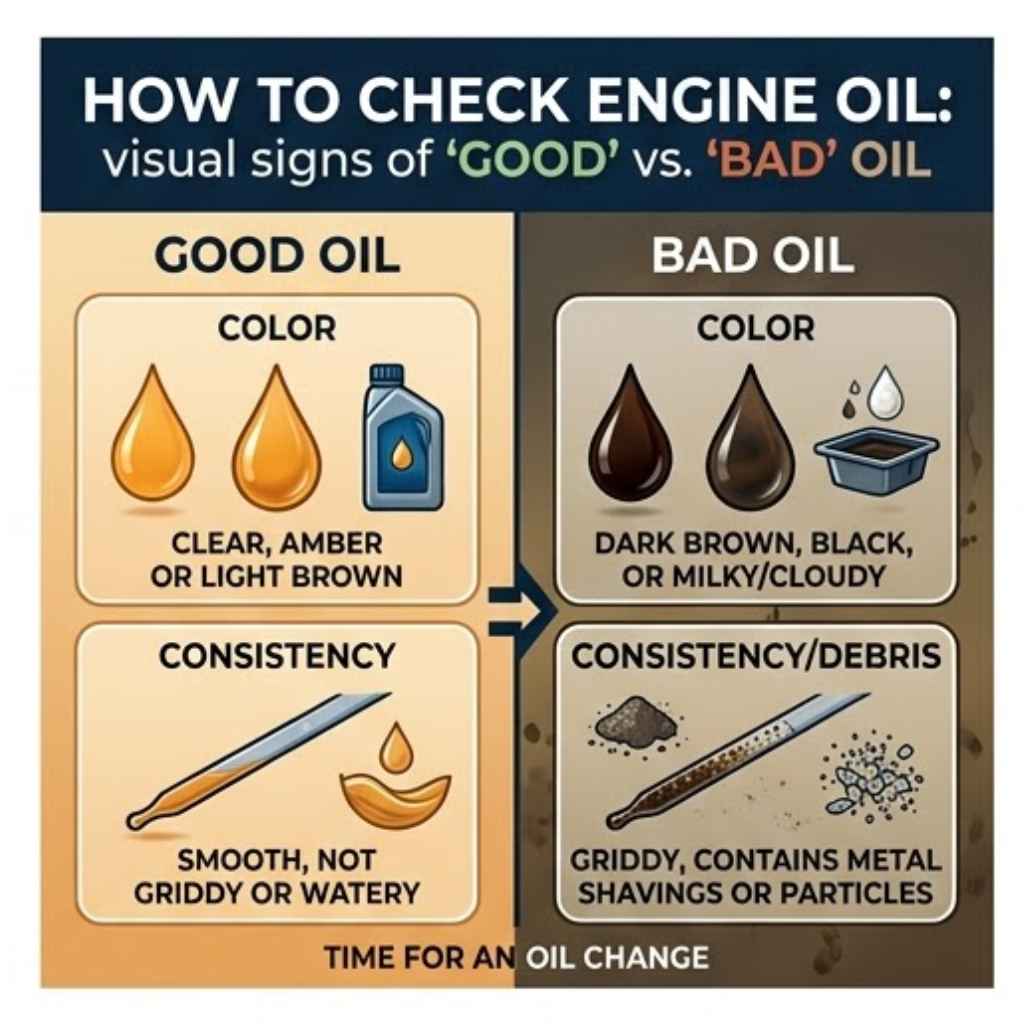
- Color and Clarity
- Smell
- Feel and Texture
- Presence of Particles
- Oil Change Interval
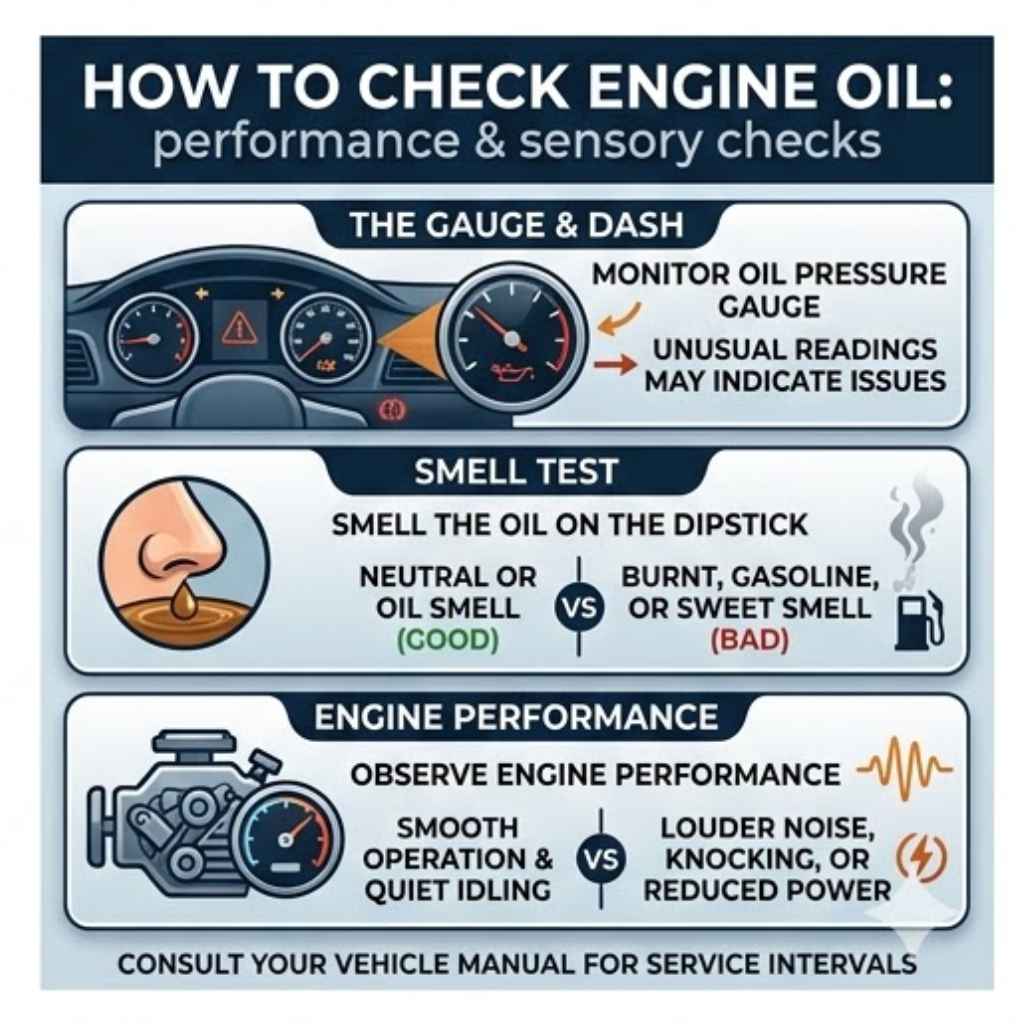
- Oil Pressure Warning Light
- Engine Noise and Performance
- Mileage Since Last Change
- Oil Consistency in Cold Weather
Let’s break these down so you know exactly what to look for.
How To Check Engine Oil: Step-by-step Guide
If you’ve never done this before, don’t worry. Checking engine oil is easy, takes less than 10 minutes, and you don’t need special tools. Follow these steps:
1. Park On A Level Surface
Make sure your car is parked on a flat surface. If it’s on a slope, the oil may not settle properly, and you’ll get an inaccurate reading.
2. Let The Engine Cool
Turn off the engine and wait at least 10 minutes. Hot oil can burn you, and waiting allows oil to drain back into the oil pan.
3. Find The Dipstick
Open the car’s hood and look for the oil dipstick. It usually has a yellow, orange, or red handle and is labeled “Engine Oil.”
4. Remove And Wipe The Dipstick
Pull out the dipstick, wipe it clean with a paper towel or cloth, and re-insert it fully.
5. Pull Out Again And Check Oil Level
Pull the dipstick out again. Look for two marks: “MIN” and “MAX” or two holes/lines. The oil should be between these marks.
6. Observe Oil Color And Clarity
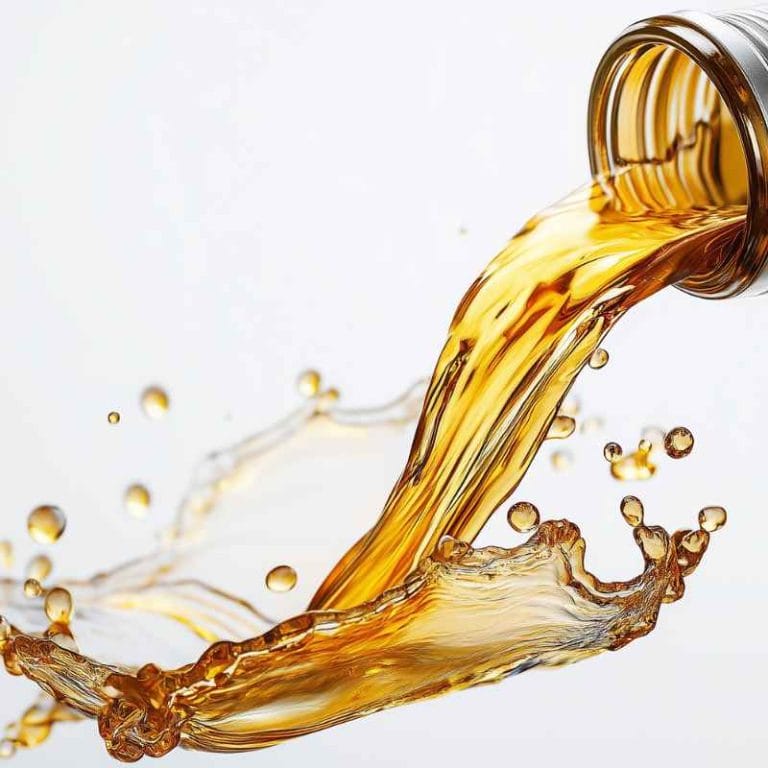
Look at the color and how clear the oil is. Fresh oil is usually amber or light brown. Old oil may look dark or dirty.
7. Feel The Oil
Rub some oil between your fingers. Good oil should feel smooth. If it feels gritty, it’s likely dirty.
8. Smell The Oil
Does the oil smell burnt or like gasoline? If yes, it’s a sign the oil is bad and needs changing.
9. Check For Particles
Look for metal shavings or dirt in the oil. These are signs of engine wear or contamination.
10. Record Your Findings
If you notice anything unusual, make a note. This helps you track oil changes and spot patterns.
Understanding Oil Color And What It Means
Oil color gives important clues about its health. But color isn’t everything—sometimes, oil can look dark but still work fine. Here’s how to read the signs:
| Oil Color | Possible Meaning | Action Needed |
|---|---|---|
| Amber/Light Brown | Fresh, good oil | No action |
| Medium Brown | Slightly used, still okay | Monitor, plan future change |
| Dark Brown/Black | Used oil, possible contamination | Check for smell/particles, change soon |
| Milky or Foamy | Coolant mixing with oil | See a mechanic immediately |
| Very Thin or Watery | Poor lubrication | Change oil, check for leaks |
Pro Tip
Some engines naturally darken oil faster. Diesel engines, for example, make oil look black quickly even when it’s still effective. Always check the owner’s manual for your car’s recommendations.
Oil Smell: What It Tells You
Engine oil should not have a strong odor. If you notice a burnt smell, it could mean the oil has overheated, lost its lubrication power, or the engine is running too hot. If it smells like gasoline, fuel may be leaking into the oil, which can damage the engine quickly.
If you notice either smell, change the oil as soon as possible and consider having your engine checked.
Feeling Oil Between Your Fingers
This test may seem simple, but it’s important. Take a drop of oil from the dipstick and rub it between your thumb and forefinger:
- Smooth feel: Oil is still in good condition.
- Gritty or sandy feel: Oil is dirty and needs changing.
You might also notice tiny metal particles. This is a sign of engine wear, and you should consult a mechanic.
Looking For Particles And Contaminants
Healthy engine oil should look mostly clear when wiped on a white cloth or tissue. If you see small black or metallic bits, the oil filter may be failing, or your engine could be wearing out inside.
Milky oil is a serious issue. It usually means coolant is leaking into the oil due to a cracked engine block or blown head gasket. Driving with milky oil can destroy an engine.
Checking Oil Consistency In Cold Weather
Oil thickens in cold weather, but if it becomes too thick, it cannot flow and lubricate parts well. If your oil turns to a gel or feels sticky after a cold night, it’s too old or the wrong type for winter.
Use oil that matches your car’s recommended viscosity for the season.
Oil Change Interval And Mileage
Modern cars often have oil life monitors or reminders, but you should also know the basics:
- For older cars using conventional oil: Change every 3,000–5,000 miles (4,800–8,000 km)
- For cars using synthetic oil: Change every 7,500–10,000 miles (12,000–16,000 km)
- Always check your owner’s manual for specifics.
If you drive in tough conditions (short trips, extreme heat/cold, dusty roads), change oil more often.
Comparing Good Vs. Bad Oil: A Quick Reference
Here’s a quick way to compare the signs of good and bad engine oil:
| Characteristic | Good Oil | Bad Oil |
|---|---|---|
| Color | Amber to light brown | Dark brown, black, or milky |
| Clarity | Clear, see-through | Cloudy, opaque |
| Smell | Neutral, slightly oily | Burnt or gasoline odor |
| Feel | Smooth, slick | Gritty, sandy, or sticky |
| Particles | None visible | Black specks, metal shavings |
| Consistency (cold) | Flows easily | Thick, gelled |
Understanding The Oil Pressure Light
Your dashboard’s oil pressure light is a warning that something is wrong. This light doesn’t just mean your oil is low—it could also mean the oil is too old, contaminated, or not circulating properly. If this light comes on, stop your car as soon as it’s safe and check the oil.
Uncommon Signs Beginners Often Miss
Many new drivers only check the oil’s level and color. Here are two less obvious, but important, signals:
- Oil Consumes Faster Than Normal: If you notice the oil level drops quickly between checks, there could be a leak or your engine is burning oil. This often means bad oil or engine wear.
- Engine Runs Louder or Feels Rough: Oil cushions moving parts. If your engine suddenly sounds noisier, it may be due to poor oil quality or low oil. Don’t wait for visible damage—investigate early.
Common Mistakes When Checking Engine Oil
Even experienced drivers sometimes make mistakes. Avoid these:
- Not waiting after turning off the engine: Hot oil gives a false high reading.
- Checking on a slope: Oil pools at one end, hiding the real level.
- Ignoring small changes: A little grit or a slight smell can be an early warning.
- Using the wrong oil type: Always use the type and viscosity recommended for your car.
What To Do If You Find Bad Engine Oil
If your inspection shows the oil is dirty, gritty, smells burnt, or looks odd, change the oil soon. Bad oil can damage your engine quickly. If you see metal shavings, milky color, or your oil level drops fast, visit a mechanic as soon as possible.
Changing Engine Oil: Quick Guide
If you decide to change the oil yourself, here’s a brief overview:
- Warm up the engine for a few minutes (helps oil flow out).
- Park safely and lift the car if needed.
- Place a drain pan under the oil pan plug.
- Remove the plug and let oil drain fully.
- Replace the oil filter.
- Install the plug and add new oil.
- Run the engine, then check the level and leaks.
Always dispose of old oil at a recycling center.
How Engine Oil Types Affect Checks
There are different engine oil types: conventional, synthetic, and blends. Synthetic oils last longer and resist breakdown better, but all oil types need regular checks. Using the wrong oil can shorten engine life and affect performance.
Comparing Oil Types
| Oil Type | Change Interval (Miles) | Best For | Cost |
|---|---|---|---|
| Conventional | 3,000–5,000 | Older cars, light driving | Low |
| Synthetic | 7,500–10,000 | Modern engines, tough conditions | High |
| Synthetic Blend | 5,000–7,500 | Mixed driving styles | Medium |
Engine Oil Myths You Should Ignore
There’s a lot of misinformation about engine oil. Here are common myths:
- “If oil is dark, it’s always bad.” Not true. Some oils turn dark quickly but still protect your engine.
- “You can ignore oil changes if you drive rarely.” Even if you drive little, oil breaks down over time and needs changing.
- “Any oil works for any car.” Each engine needs specific oil types. Using the wrong one can cause damage.
How Weather And Driving Habits Affect Oil
Your location and how you drive have a big impact:
- Hot climates: Oil breaks down faster in extreme heat.
- Cold climates: Oil thickens, making cold starts harder.
- Short trips: The engine doesn’t get hot enough to burn off moisture, so oil ages faster.
- Heavy loads or towing: Engine works harder, oil wears out sooner.
Adjust your oil check and change schedule based on these factors.
The Role Of The Oil Filter
Even the best oil cannot protect your engine if the oil filter is dirty or clogged. The filter removes dirt and metal particles. Always change the filter with the oil. A clogged filter means fresh oil will get dirty faster.
High-mileage Engines And Oil Checks
Cars with over 75,000 miles (120,000 km) need closer attention. Older engines can burn oil or develop leaks. Use high-mileage oil if your manufacturer recommends it. Check oil every month and after long trips.
Professional Vs. DIY Oil Checks
You can check oil at home, but sometimes a professional check is better. Mechanics use special tools to test oil quality, viscosity, and contamination. If you’re unsure or notice problems, have your oil checked at a service center.
For a detailed look at oil quality testing, you can read more at Wikipedia: Motor Oil.
Benefits Of Regular Oil Checks
- Longer engine life
- Better fuel economy
- Fewer breakdowns
- Lower repair costs
- Peace of mind
Regular checks and timely oil changes are among the best ways to care for your car.
Frequently Asked Questions
How Often Should I Check My Engine Oil?
It’s best to check your oil once a month or before long trips. High-mileage or older cars may need more frequent checks.
What If I Overfill My Engine Oil?
Too much oil can cause pressure to build up, leading to leaks or engine damage. If you overfill, drain the extra oil as soon as possible.
Can I Mix Different Types Or Brands Of Engine Oil?
Mixing small amounts is usually safe in an emergency, but it’s best to stick with the oil type and brand recommended by your car’s manufacturer for best performance.
Why Does My Oil Look Milky?
Milky oil means coolant is mixing with oil, often due to a head gasket problem. This is serious—see a mechanic immediately.
Is Synthetic Oil Better Than Conventional Oil?
Synthetic oil offers better protection, resists breakdown, and lasts longer, especially in extreme temperatures or tough driving. However, always use the oil type specified for your engine.
Taking care of your engine oil is one of the simplest, most powerful ways to protect your car. With just a little time and attention, you can keep your vehicle running smoothly for years to come. Don’t wait for warning lights—check your oil regularly, and you’ll drive with confidence every day.
Related pick: Check today's price on Amazon
Products related to this article
Sponsored / affiliate links. As an Amazon Associate I earn from qualifying purchases. I may earn additional commission from eligible campaigns.
 ECOGARD X10023 Cartridge Engine Oil Filter for Conventional Oil - Premium Replacement | Fits 2018-2023 Volkswagen Atlas 3.6L; 2020-2023 Atlas Cross Sport 3.6L
 ECOGARD X10040 Cartridge Engine Oil Filter for Conventional Oil - Premium Replacement | Fits 2011-2026 Jeep Grand Cherokee, Dodge Durango 3.6L; 2012-2026 Wrangler 3.6L; 2014-2022 Cherokee 3.2L