How Much Car Oil to Put In? Get the Right Amount Every Time
Knowing how much car oil to put in is essential for every driver who wants to keep their engine running smoothly and avoid costly repairs. This guide walks you through exactly how to determine the correct oil capacity for your vehicle, how to check the level, and what happens when you get it wrong.
Simply put, most passenger cars require between 4 and 6 quarts of engine oil, but the exact amount depends on your vehicle’s make, model, and engine size. Always check your owner’s manual for the precise oil capacity and use the dipstick to verify the level after adding oil.
Key Takeaways
- How much car oil to put in varies by vehicle — most engines hold 4 to 6 quarts, but always confirm with your owner’s manual.
- Checking the dipstick is the only reliable way to know if you have the correct oil level after adding or changing oil.
- Overfilling or underfilling your engine with oil can cause serious damage, including overheating, poor lubrication, and engine failure.
- Using the correct oil viscosity (like 5W-30 or 10W-40) is just as important as getting the right amount.
What You Need to Check and Add Oil
Before you add a single drop of oil, gather the right tools and supplies. Having everything ready makes the job faster and helps you avoid mistakes.
You don’t need a full mechanic’s toolkit — just a few basic items that most drivers already have at home.
- Your vehicle’s owner’s manual — this tells you the exact oil capacity and recommended oil type
- The correct grade of engine oil (for example, 5W-30, 10W-40, or 0W-20)
- A clean funnel to avoid spills when pouring oil into the engine
- Paper towels or a clean rag for wiping the dipstick
- Gloves (optional but recommended to keep your hands clean)
- A flashlight to see the dipstick clearly if the engine bay is dark
According to the Car Care Council, nearly 22% of vehicles on the road have low or dirty engine oil. Keeping a quart of the right oil in your trunk is a smart habit.
Tip: Always use the oil viscosity recommended by your vehicle manufacturer. Using the wrong grade can reduce fuel economy and engine life.
How to Check Your Oil Level Properly
Checking your oil level correctly is the first step to knowing how much car oil to put in. A quick glance at the dipstick tells you exactly where you stand.
Many drivers check the oil right after turning off the engine, which gives a false reading. For an accurate measurement, follow this simple process.
- Park your car on a level surface and turn off the engine. Wait 5 to 10 minutes to allow the oil to settle back into the oil pan.
- Open the hood and locate the dipstick — it usually has a bright yellow or orange handle labeled “Engine Oil.”
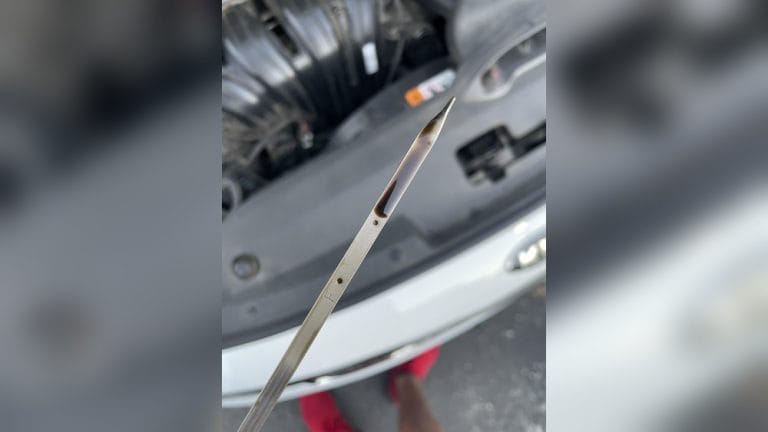
- Pull the dipstick out completely and wipe it clean with a rag or paper towel.
- Insert the dipstick back into the tube all the way, then pull it out again.
- Look at where the oil film ends on the dipstick. There are two marks — a lower “Add” mark and an upper “Full” mark.
- If the oil level is between the two marks, you’re fine. If it’s at or below the lower mark, you need to add oil.
The American Automobile Association (AAA) reports that low oil levels are one of the most common preventable causes of engine wear. Checking your oil once a month takes less than two minutes.
Important: Always check your oil when the engine is cold or has been off for at least 5 minutes. Hot oil expands and can give a falsely high reading.
How Much Oil Does Your Car Engine Need?
The exact amount of oil your engine needs depends on several factors. Most standard passenger vehicles require between 4 and 6 quarts, but there is wide variation.
Smaller engines with 4 cylinders typically need less oil, while larger V6 and V8 engines require more. Turbocharged engines also often hold more oil to help with cooling and lubrication.
Here is a general reference table for common engine types and their typical oil capacities.
| Engine Type | Typical Oil Capacity | Example Vehicles |
|---|---|---|
| 4-Cylinder | 4 to 5 quarts | Honda Civic, Toyota Corolla, Ford Focus |
| V6 Engine | 5 to 6 quarts | Toyota Camry V6, Honda Accord V6, Ford Explorer |
| V8 Engine | 6 to 8 quarts | Chevrolet Silverado, Ford F-150, Dodge Charger |
| Turbocharged 4-Cyl | 5 to 6 quarts | Subaru WRX, VW GTI, Mazda CX-5 Turbo |
| Diesel Engine | 6 to 10 quarts | Ram 2500, Ford Super Duty, VW TDI |
These numbers are general estimates. The only reliable source for your specific vehicle’s oil capacity is the owner’s manual. You can also find this information online through resources like the National Institute for Automotive Service Excellence (ASE) or manufacturer websites.
According to a survey by the ASE, nearly 40% of drivers do not know how to check their oil level or determine the correct oil capacity for their car.
How to Add the Right Amount of Oil Step by Step
Once you know your engine’s oil capacity and have the correct oil grade, adding oil is straightforward. The key is to add slowly and check frequently.
Adding too much oil at once is the most common mistake. Follow these steps to get the level exactly right.
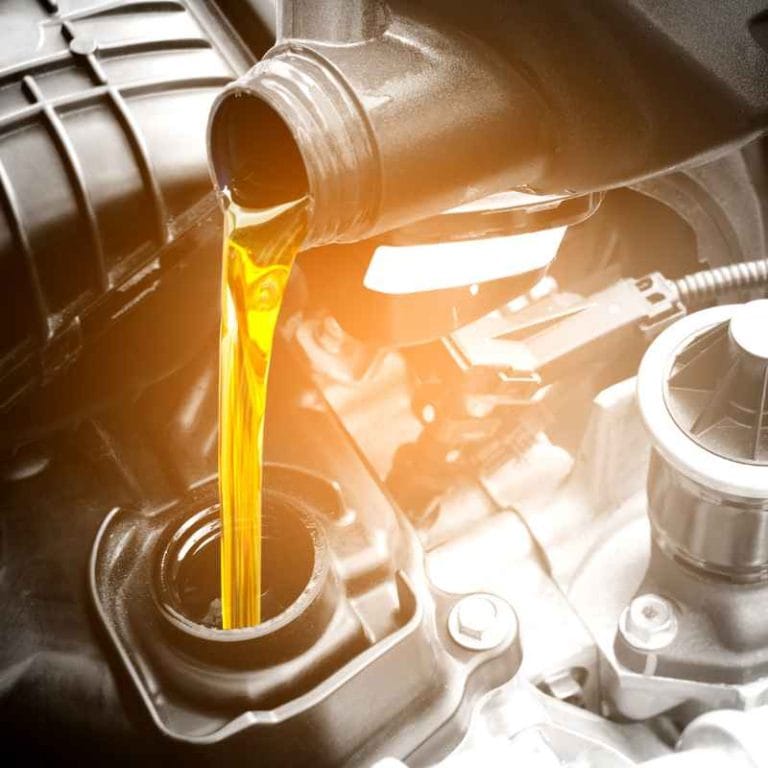
- Find the oil filler cap on top of the engine. It is usually marked with an oil can symbol or the word “Oil.”
- Remove the cap and place it somewhere safe where it won’t get dirty.
- Insert a clean funnel into the filler opening to prevent spills.
- Add oil slowly — pour in about half a quart (or half a liter) at a time. Do not dump the entire bottle at once.
- Wait 30 seconds for the oil to drain down into the oil pan.
- Check the dipstick again. Wipe it, reinsert it, and pull it out to see the level.
- Repeat until the oil level reaches the “Full” mark on the dipstick. Do not overfill.
- Replace the oil filler cap securely and wipe up any spills.
Warning: Never add more than one quart at a time without rechecking the dipstick. Overfilling by even one quart can cause foaming, pressure buildup, and oil leaks.
If you are doing a full oil change (draining the old oil and replacing the filter), you will add the full capacity listed in your manual. After a full change, start with about 80% of the listed capacity, then check and top off as needed.
What Happens If You Put Too Much Oil in Your Car?
Overfilling the engine with oil can be just as damaging as running it low. Many drivers think “a little extra can’t hurt,” but that is not true.
When you put too much oil, the crankshaft can dip into the oil as it spins. This whips the oil into a foam, similar to a milkshake. Foamy oil does not lubricate engine parts properly because air bubbles cannot carry heat or reduce friction effectively.
Here are the most common symptoms and consequences of overfilling your engine with oil.
- Oil foaming: The crankshaft aerates the oil, turning it into a frothy mixture that loses lubricating properties.
- Increased pressure: Too much oil raises internal pressure, which can blow out seals and gaskets, causing leaks.
- Engine overheating: Foamy oil cannot transfer heat away from moving parts, leading to higher operating temperatures.
- Oil leaks: Excess oil can force its way past seals and gaskets, leaving puddles under your car.
- Damaged catalytic converter: Burning excess oil can clog and ruin the catalytic converter, a costly repair.
- Engine misfire or rough idle: Oil can contaminate spark plugs and sensors if it reaches the combustion chamber.
According to data from the Car Care Council, overfilled engines account for a significant percentage of oil-related breakdowns. If you suspect you have added too much oil, stop driving and have the excess drained by a professional or using a suction tool.
Important: If the oil level on your dipstick is above the “Full” mark by more than half an inch, you need to remove the excess oil before driving.
What Happens If You Put Too Little Oil in Your Car?
Running your engine with too little oil is one of the fastest ways to cause permanent damage. Oil is the lifeblood of your engine — it lubricates, cleans, cools, and protects every moving part.
When the oil level drops too low, the oil pump may not be able to pick up enough oil to circulate through the engine. This leads to metal-on-metal contact, which generates heat and friction rapidly.
Here are the warning signs and consequences of low oil levels.
- Dashboard warning light: The oil pressure light or low oil level light will illuminate as a first warning.
- Knocking or tapping sounds: Low oil causes valve train noise, which sounds like a rhythmic tapping or knocking from the engine.
- Engine overheating: Without enough oil to carry heat away, engine temperatures rise quickly.
- Increased engine wear: Pistons, rings, bearings, and camshafts wear out faster without proper lubrication.
- Engine seizure: In extreme cases, the engine can lock up completely, requiring a full replacement.
A study by the AAA found that low oil levels are a contributing factor in over 10% of roadside breakdowns. Checking your oil regularly and topping off when needed is the simplest way to avoid these expensive problems.
Tip: If your oil pressure light comes on while driving, pull over and turn off the engine immediately. Check the oil level and add oil if needed before restarting.
Common Mistakes When Adding Oil to Your Car
Even experienced drivers make mistakes when adding oil. Knowing the most common errors helps you avoid them.
Here are the top mistakes people make when figuring out how much car oil to put in and how to avoid each one.
| Common Mistake | Why It’s a Problem | How to Fix It |
|---|---|---|
| Not checking the dipstick | You have no idea if you added enough or too much | Always check after every half quart added |
| Using the wrong oil viscosity | Poor lubrication and reduced fuel economy | Match the grade in your owner’s manual exactly |
| Adding oil when the engine is hot | Risk of burns and inaccurate dipstick reading | Wait 5-10 minutes after turning off the engine |
| Pouring too fast | Spills and overfilling because you can’t gauge the amount | Add slowly, pause, and check frequently |
| Mixing different oil types | Can affect viscosity and additive performance | Stick with one brand and type when possible |
Another common mistake is forgetting to replace the oil filler cap after adding oil. This can cause oil to splatter all over the engine bay and lead to a mess and potential fire hazard. Always double-check that the cap is tight.
Warning: Never mix synthetic and conventional oil unless it is an emergency. While they are compatible in a pinch, it dilutes the performance properties of the synthetic oil.
When Should You Check Your Oil Level for Best Results?
Timing matters when it comes to getting an accurate oil reading. Checking at the wrong time can lead to a false sense of security or unnecessary worry.
The best practice is to check your oil when the engine is cold and the car has been sitting for at least 30 minutes. This allows all the oil to drain back into the oil pan, giving you the most accurate reading.
Here are the recommended times and frequencies for checking your oil.
- Once a month: Make it a habit to check your oil at least once every month, regardless of how much you drive.
- Before long trips: Check the oil level before any road trip or extended drive over 100 miles.
- After an oil change: Verify the level a day after a professional oil change to ensure it was filled correctly.
- If you notice any warning signs: Dashboard lights, unusual engine noises, or visible leaks mean you should check immediately.
- When topping off: If you add oil between changes, always check the dipstick before and after adding.
According to the National Institute for Automotive Service Excellence (ASE), regular oil checks are one of the most effective preventive maintenance tasks a driver can perform. It takes less than two minutes and can save you thousands in engine repairs.
Frequently Asked Questions
How do I know exactly how much oil my car needs?
The most accurate source is your owner’s manual. Look for the section on “Capacities and Specifications” or “Lubrication.” You can also find this information on the manufacturer’s website or by calling a dealership with your VIN number.
Can I use any brand of oil as long as the viscosity is correct?
Yes, any reputable brand that meets the API (American Petroleum Institute) certification standard and has the correct viscosity rating is safe to use. However, sticking with one brand helps maintain consistent additive performance.
How often should I check my oil level?
You should check your oil level at least once a month and before any long road trip. If you notice oil leaks, dashboard warning lights, or unusual engine sounds, check it immediately.
What does it mean if my oil level is between the two dipstick marks?
If the oil level is anywhere between the “Add” mark and the “Full” mark, it is within the acceptable range. You do not need to add oil unless it reaches or falls below the lower mark.
Is it bad to drive with the oil level slightly above the full mark?
Yes, even a small amount above the full mark can cause oil foaming and increased pressure. If the level is above the full mark, you should drain the excess oil before driving to avoid potential damage to seals and engine components.
Final Thoughts
Getting the how much car oil to put in question right is simple once you know where to look. Always check your owner’s manual for the exact capacity and recommended oil grade. Use the dipstick as your guide every time you add oil — add slowly, check often, and never overfill.
A few minutes of preventive care keeps your engine running smoothly for tens of thousands of miles.