What Happens If an Engine Has No Oil? (It’s Serious)
What happens if an engine has no oil is a nightmare scenario for any driver. Without lubrication, metal parts grind together, leading to catastrophic failure within minutes.
Simply put, an engine with no oil will overheat, seize, and suffer irreversible damage. You risk destroying the entire engine in less than 30 seconds of running. Immediate action is critical.
Key Takeaways
- Engine has no oil leads to metal-to-metal contact, causing severe wear and heat buildup.
- Running without oil can seize the engine in under a minute, often requiring complete replacement.
- Regular oil checks and timely changes prevent costly repairs and extend engine life.
- Warning signs like knocking sounds and dashboard lights indicate low oil levels.
- If you suspect no oil, stop the engine immediately to avoid total destruction.
1. The Role of Engine Oil in Your Vehicle
Engine oil is the lifeblood of your vehicle. It circulates through the engine to lubricate moving parts, reduce friction, and dissipate heat. Without it, the engine would destroy itself in seconds.
Oil also cleans internal components by suspending dirt and debris. It neutralizes acids and prevents corrosion, ensuring your engine runs smoothly. According to the American Petroleum Institute, proper oil maintenance can improve engine life by up to 30%.
This highlights why engine has no oil is a crisis you must avoid.
Key Functions of Engine Oil
- Lubrication: Reduces friction between pistons, bearings, and camshafts.
- Cooling: Absorbs and carries away heat from combustion chambers.
- Cleaning: Suspends sludge and varnish for removal during oil changes.
- Sealing: Fills gaps between piston rings and cylinder walls to maintain compression.
- Protection: Prevents rust and corrosion on metal surfaces.
- Hydraulic function: Powers variable valve timing and lifters in many engines.
- Cushioning: Dampens noise and vibration from moving parts.
Important: Most manufacturers recommend oil changes every 5,000 to 7,500 miles, but severe driving conditions may require more frequent intervals.
2. What Happens Immediately When Oil Is Low or Missing
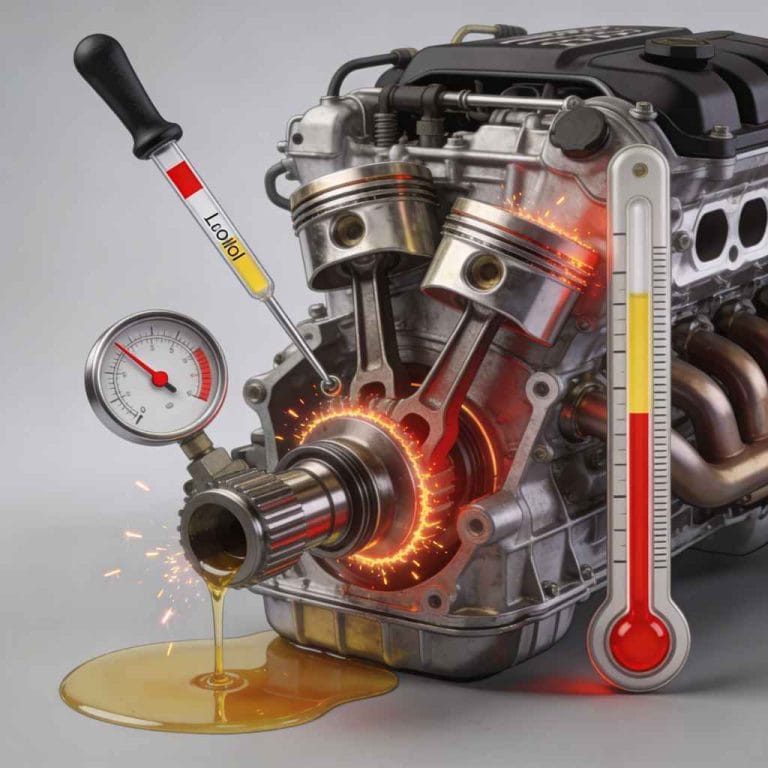
When oil pressure drops, the protective film between metal parts vanishes. Friction skyrockets, generating intense heat. Within seconds, bearings and pistons begin to weld themselves to adjacent surfaces.
The oil pressure warning light often illuminates first, but by then damage may already occur. The engine may knock, smoke, or stall. The National Institute for Automotive Service Excellence states that running an engine without oil for just 15 seconds can cause bearing damage.
Here’s what unfolds step by step:
- Oil pressure drops to zero instantly.
- Dashboard warning lights illuminate.
- Metal surfaces make direct contact, causing wear.
- Temperatures rises rapidly, expanding components.
- Pistons seize inside cylinders, locking the engine.
Without oil, the engine cannot cool itself normally. Coolant fails to offset the heat from friction. This thermal runaway accelerates damage, often within 30 seconds.
Warning: Never ignore the oil pressure light. Pull over and shut off the engine immediately to prevent total failure.
3. How Long Can an Engine Run Without Oil?
The exact time varies by engine design, load, and speed. A modern engine under moderate load may fail in less than 30 seconds. Older or robust engines might survive a minute, but damage still occurs from the moment oil pressure drops.
A study from the Society of Automotive Engineers found that critical wear begins within 5 seconds of oil starvation.
The table below shows typical damage progression:
| Time Without Oil | Effect on Engine |
|---|---|
| 0–5 seconds | Oil pressure drops; bearing surfaces start touching |
| 5–30 seconds | Bearings and rods experience scoring; temperature spikes |
| 30–60 seconds | Pistons expand, cylinder walls get damaged; knocking intensifies |
| 1–2 minutes | Engine seizes; connecting rods may break through the block |
As the table shows, even a few seconds without oil cause irreversible harm. The accelerating timeline means you cannot “drive to the nearest shop” safely.
4. Common Causes of Oil Loss or Empty Oil Pan
Low oil can sneak up due to leaks, consumption, or neglect. External leaks from gaskets and seals are the most common culprits. Internal burning from worn piston rings also depletes oil rapidly.
A Consumer Reports survey found that 1 in 10 vehicles has an oil leak serious enough to affect levels between changes.
Here are the primary causes:
- Oil leaks: Worn valve cover gaskets, oil pan seals, or rear main seals allow oil to escape.
- Burning oil: Smoke from the exhaust indicates oil is being consumed in the combustion chamber.
- Neglected changes: Overdue oil changes create sludge that blocks passages and causes starvation.
- Drain plug issues: Loose or improperly tightened drain plugs can leak or fall out.
- Manufacturing defects: Some engines have known oil consumption problems, like certain V8 models from the 2010s.
- Accidental draining: Human error during servicing, like skipping the refill.
- Oil filter failure: A loose or defective oil filter can dump oil quickly.
Tip: Check your oil level every time you fill up gas. A quick glance at the dipstick takes 30 seconds and could save your engine.
5. Signs Your Engine Is Running Low on Oil
Early detection is key to preventing full failure. Your car gives several warning signals before the oil runs dry. The oil pressure light is the most obvious, but physical symptoms also occur.
According to AAA, ignoring these signs leads to engine failure in 20% of breakdowns.
Common Warning Signs
- Oil pressure warning light: Illuminates as a red oil can symbol on the dashboard.
- Loud knocking or ticking: Metal parts slap together due to inadequate lubrication.
- Smoke from exhaust or engine: Blue or gray smoke indicates burning oil.
- Overheating engine: Oil helps cool, so no oil leads to high temperatures.
- Reduced performance: Loss of power, rough idling, or stalling.
- Burning smell: Hot metal and oil aroma from the engine bay.
- Oil level low on dipstick: The physical check confirms the problem.
Warning: If the oil light comes on, pull over safely and shut off the engine. Driving even a quarter mile can cause catastrophic damage.
6. How to Prevent Engine Damage from No Oil
Prevention is simple and far cheaper than repair. Regular oil checks and changes are the foundation of engine health. Follow your owner’s manual for recommended intervals, but adapt for severe conditions like towing or extreme weather.
Preventive Steps
- Check oil level monthly using the dipstick.
- Change oil at the manufacturer’s recommended interval (typically 5,000–7,500 miles).
- Use the correct oil viscosity (e.g., 5W-30) to ensure proper flow.
- Fix oil leaks immediately—don’t wait for the next service.
- Inspect the oil filter during every change for damage or looseness.
- Keep a log of oil changes and levels.
- Watch for fluid spots under your parked car and address them promptly.
Modern cars with oil life monitors help, but they are not foolproof. A 2022 study by Car Care Council showed that 30% of vehicles have low or dirty oil at any given time. Proactive checks close this gap.
7. What to Do If You Suspect No Oil in Your Engine
If you suspect your engine has no oil, act fast. Every second counts. The following steps minimize damage and give you the best chance of saving the engine.
- Kill the ignition immediately: Turn off the engine as soon as you notice a warning or noise.
- Check the dipstick: Confirm the oil level. If it shows dry or below the add mark, do not restart.
- Add oil if possible: If you have oil on hand, fill to the proper level. Use the correct grade for your vehicle.
- Do not restart: Even after adding oil, driving may cause further damage if bearings are already worn.
- Call for a tow: Have your vehicle transported to a mechanic for inspection and pressure testing.
Tip: Keep an extra quart of oil in your trunk. It can get you to a shop in an emergency.
8. Cost of Repairing an Engine Damaged by No Oil
Repair costs vary widely based on damage severity. Minor surface wear may only require parts cleaning and a fresh oil change. But severe damage often means a total engine replacement.
According to RepairPal, the average engine replacement costs between $4,000 and $10,000, plus labor.
The table below outlines typical repair scenarios:
| Damage Type | Estimated Cost | Common Repairs |
|---|---|---|
| Minor bearing wear | $500–$1,500 | Replace bearings, flush oil system |
| Piston or cylinder scoring | $2,000–$5,000 | Hone cylinders, replace pistons and rings |
| Complete engine seizure | $4,000–$10,000+ | Full engine replacement or rebuild |
| Broken connecting rod | $6,000–$12,000 | Replace short block or entire engine |
Prevention costs just a few dollars per quart of oil. Regular maintenance is a fraction of these repair bills and ensures your engine stays reliable.
Frequently Asked Questions
Can an engine run with no oil at all?
Technically, yes, but only for a few seconds before damage starts. Without lubrication, metal parts grind together, causing rapid wear and overheating. Most engines seize within one minute of oil starvation.
What sound does an engine make when low on oil?
You may hear a loud knocking or ticking noise. This comes from metal parts like pistons and bearings slapping together due to insufficient oil film. The sound often gets worse as the damage progresses.
Will the oil light come on before damage occurs?
The oil pressure light indicates low pressure, which happens as soon as oil is insufficient. However, by the time the light comes on, some wear may already be happening. That’s why regular dipstick checks are crucial.
How often should I check my engine oil?
Check your oil level at least once a month and before long trips. Many drivers prefer to check it at every fuel fill-up. This habit catches leaks or consumption early before they become critical.
Can adding oil fix an engine that ran without oil?
Adding oil can stop further damage if the engine is still running and only operated briefly without oil. However, existing wear is permanent. A mechanic must inspect for bearing, piston, and cylinder damage to ensure safety.
Final Thoughts
Engine has no oil is a fast-track to disaster, with failure occurring in seconds. Regular checks, timely changes, and immediate action at warning signs are your best defenses. Stay proactive, and your engine will reward you with years of reliable service.