Can You Make Engine Oil at Home? Here’s the Honest Truth
Making engine oil at home sounds like a clever way to save money, but the honest answer is no — you cannot produce safe, effective engine oil in your kitchen or garage. Modern engine oil is a complex blend of base oils and advanced additives engineered under strict industrial conditions. This post explains exactly why homemade oil fails, what real engine oil contains, and what you should do instead to protect your engine.
Simply put, you cannot make safe, effective engine oil at home. Automotive oil requires precise chemical engineering, controlled blending, and rigorous testing that home setups cannot replicate. Attempting to mix your own oil risks severe engine damage, voided warranties, and costly repairs.
Key Takeaways
- Making engine oil at home is not possible because modern oil requires synthetic base stocks and additive packages you cannot source or blend accurately.
- Commercial engine oil contains detergents, dispersants, anti-wear agents, and viscosity modifiers that work together in precise ratios — home mixing cannot replicate this balance.
- Using homemade oil voids your vehicle warranty and can lead to sludge buildup, overheating, and complete engine failure within a few hundred miles.
- The cheapest and safest alternative is buying quality budget-friendly oil from reputable brands rather than attempting DIY blends.
- Professional oil manufacturing involves vacuum distillation, hydroprocessing, and多达 20 percent additive content — processes impossible to recreate at home.
What Does Engine Oil Actually Do in Your Car?
Engine oil is the lifeblood of your vehicle. It performs far more than simple lubrication. The American Petroleum Institute (API) defines five critical functions that any engine oil must fulfill to protect modern engines.
- Lubrication: Reduces friction between moving metal parts like pistons, bearings, and camshafts to prevent wear and heat buildup.
- Cooling: Carries heat away from combustion chambers and high-friction areas to help regulate engine temperature.
- Cleaning: Suspends combustion byproducts, carbon deposits, and dirt particles so they do not accumulate on internal surfaces.
- Protection: Forms a protective film on metal surfaces to prevent rust, corrosion, and chemical attack from acidic combustion gases.
- Sealing: Helps seal the gap between piston rings and cylinder walls to maintain compression and reduce blow-by gases.
Each of these jobs demands specific chemical properties. A single oil must stay fluid at subzero temperatures for cold starts yet thick enough at 200°F to maintain a protective film. Achieving this requires carefully engineered base oils and additive chemistry.
Important: Without proper oil, engine metal parts can contact each other at high speed, generating temperatures above 400°F. This causes rapid wear, seizing, and permanent damage within minutes.
What Is Engine Oil Made Of — The Real Recipe
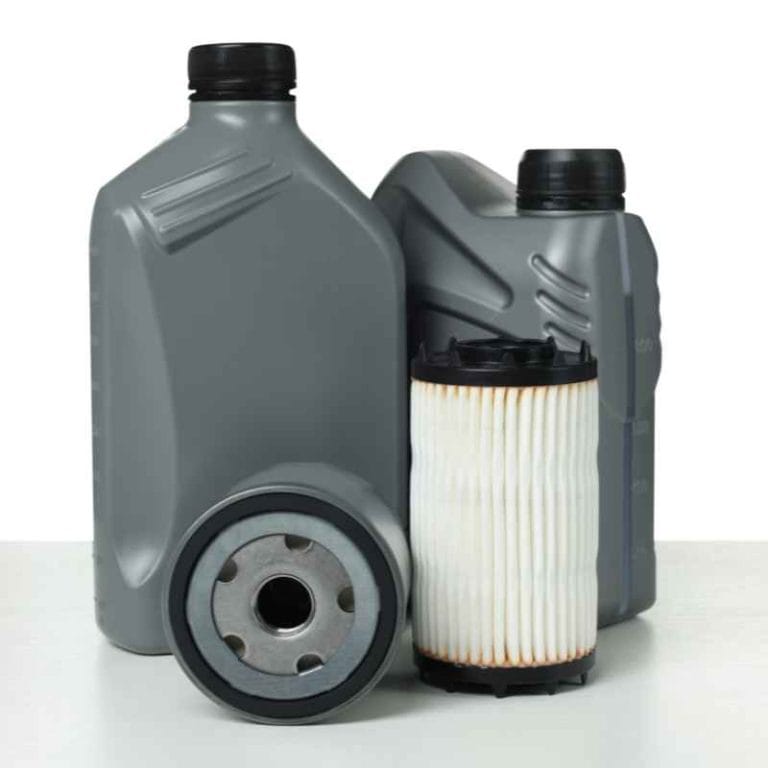
Commercial engine oil is not just refined crude oil. It is a precision blend of base oils and additives. The Society of Automotive Engineers (SAE) classifies oils by viscosity grade, but the actual composition involves multiple components working in concert.
Base oils make up 75 to 85 percent of the finished product. They come from two sources:
- Conventional base oils: Refined from crude petroleum through distillation and hydrotreating to remove impurities like sulfur and aromatics.
- Synthetic base oils: Chemically engineered from pure compounds like polyalphaolefins (PAO) or esters. These offer superior thermal stability, lower friction, and better low-temperature flow.
The remaining 15 to 25 percent is the additive package. This is where the magic happens. Additives determine how the oil performs under real driving conditions.
| Additive Type | Function | ||||||||||||||||||||||||||||||||||||||||||
|---|---|---|---|---|---|---|---|---|---|---|---|---|---|---|---|---|---|---|---|---|---|---|---|---|---|---|---|---|---|---|---|---|---|---|---|---|---|---|---|---|---|---|---|
| Detergents | Dispersants | Anti-wear agents (ZDDP) | Viscosity modifiers | Antioxidants | Friction modifiers | So, Can You Make Engine Oil at Home? The direct answer is no. You cannot produce safe, effective engine oil in a home environment. This applies whether you are considering blending used cooking oil, mixing household lubricants, or attempting to distill crude oil yourself. Here is why home production fails across every front:
What Happens If You Use Homemade Oil in Your Engine?Using homemade engine oil leads to predictable and expensive problems. Without proper viscosity control and additive protection, the oil degrades rapidly inside the engine. The consequences appear quickly.
According to data from the Engine Manufacturers Association, engines operated with improper lubricant formulation can suffer permanent damage in as few as 50 to 100 miles. Repair costs for a seized engine typically range from $4,000 to $8,000 — far exceeding any savings from homemade oil. How Is Engine Oil Professionally Manufactured?Understanding professional manufacturing makes clear why home production is impossible. Modern engine oil production involves multiple sophisticated stages.
Synthetic oil production is even more complex. It starts with pure chemical feedstocks like decene which are polymerized into uniform molecular chains. This process creates oils with no impurities and precisely controlled properties.
The table above highlights the stark differences. Professional oils are tested against strict industry standards. Homemade oil cannot meet any of them. What Are the Risks of Making Engine Oil at Home?Beyond engine damage, attempting to make engine oil at home carries real personal and legal risks that many DIYers overlook.
The Environmental Protection Agency (EPA) reports that improperly disposed home-refined oil contributes to groundwater contamination and soil pollution. Fines for illegal disposal can reach $37,500 per day under the Clean Water Act. What Should You Do Instead of Making Engine Oil at Home?If you want to save money on oil changes, there are safe, effective alternatives that do not risk your engine or your safety. Focus on buying smart rather than making your own.
According to the Car Care Council, the average DIY oil change costs $28 to $40 for conventional oil and $45 to $65 for full synthetic. This is far cheaper than the thousands needed for engine repairs caused by homemade oil.
How to Choose the Right Oil for Your CarChoosing the correct oil is simpler than making your own and far more effective. Follow these four steps to get the right product every time.
Buying the right oil from a store shelf is cheap insurance. It costs a few dollars per quart and guarantees your engine gets the protection engineers designed it to have. Frequently Asked QuestionsCan I mix vegetable oil with engine oil to save money?No. Vegetable oil lacks the thermal stability and additive protection required for internal combustion engines. It oxidizes rapidly, forms sticky deposits, and will clog oil passages within hours. Never mix cooking oils with motor oil. Is it legal to make your own engine oil?There are no federal laws explicitly prohibiting making oil for personal use. However, using homemade oil in a vehicle with an active warranty voids the warranty if the oil causes damage. Selling homemade oil without proper certifications is illegal under FTC regulations. What about using used motor oil filtered at home?Filtering used motor oil removes some solid particles but does not restore depleted additives or remove combustion byproducts. Used oil contains acids, soot, and fuel dilution that accelerate engine wear. Reusing filtered oil is not recommended and can damage your engine. Can you make synthetic oil at home from scratch?No. Synthetic oil production requires chemical polymerization of alpha-olefin feedstocks in industrial reactors at high pressure and temperature. The process also requires catalyst systems and distillation columns that are impossible to replicate at home. What is the cheapest way to get quality engine oil?The cheapest way is to buy store-brand conventional oil (like Super Tech or AmazonBasics) during a sale or rebate event. A 5-quart jug often costs $12 to $18. Combine that with a DIY oil change to save the most money while protecting your engine. Final ThoughtsMaking engine oil at home is not possible with current technology, materials, or safety standards. The chemistry involved is far more complex than most people realize. Your best move is to buy quality oil from a reputable brand, change it yourself, and follow your owner’s manual recommendations. This approach saves money without risking your engine. Stick with proven products and leave the chemistry to the professionals. Similar Posts |