Honda Civic maintenance on a budget: cut service costs
Cut Civic maintenance costs by handling simple items like cabin air filters, engine air filters, and wiper blades yourself, using an independent shop for fluids and brake work, and keeping the dealer for recalls and warranty work. Skip wear items and minor leaks, and a cheap service can turn into a timing belt, brake, or coolant repair worth hundreds. This guide separates DIY jobs, shop jobs, and must-not-skip maintenance so you can spend less without creating repair bills.
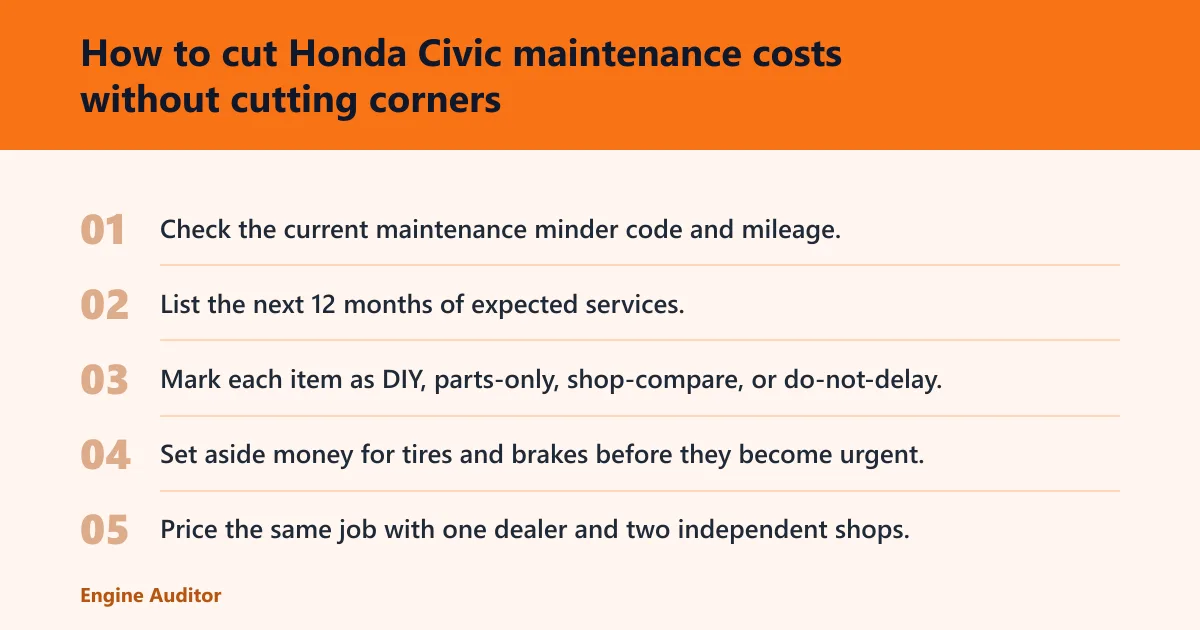
How to cut Honda Civic maintenance costs without cutting corners

![CARORY AF151 [NOT for Hybrid/NOT for Turbo] Engine Air Filter for Honda Civic L4-2.0L (2016–2025), HRV (2023–2025), OE#](https://m.media-amazon.com/images/I/41Y43y4rtpL._SL500_.jpg)

Start by separating maintenance into three buckets: routine service, wear items, and repair risk. That split keeps you from overpaying for easy jobs while also keeping you from delaying fluid service or brake work that protects expensive components. For most Civic owners, the annual plan lands in the $450-$900 band for routine maintenance and normal wear.
Use a three-bucket budget: routine, wear, and repair
Routine service is the predictable part: oil changes, rotations, filters, and fluid changes tied to the maintenance minder or mileage. Wear items are tires, brake friction material, alignment checks, battery life, and corrosion-related fixes. Repair reserve covers the surprise bill that starts as a leak, vibration, warning light, or neglected service.
A gas Civic sedan can sit near the lower half of the annual maintenance band. The hybrid can be similar or slightly lower on brake wear. A high-mileage hatchback can move above the typical range when wear items stack up.
Set a service plan before the next visit
- Check the current maintenance minder code and mileage.
- List the next 12 months of expected services.
- Mark each item as DIY, parts-only, shop-compare, or do-not-delay.
- Set aside money for tires and brakes before they become urgent.
- Price the same job with one dealer and two independent shops.
Say your Civic is a 2019 sedan used for a 12-mile commute and weekend errands. Code A may be due now, but code 2 and a brake fluid change may wait. That owner can save money by doing filters and rotations on schedule, then shopping fluid and brake work before any warning light or noise appears.
📊 Honda says the 2027 Civic Sedan starts at $24,995. Source: Honda.
What Honda Civic maintenance minder codes mean for your wallet
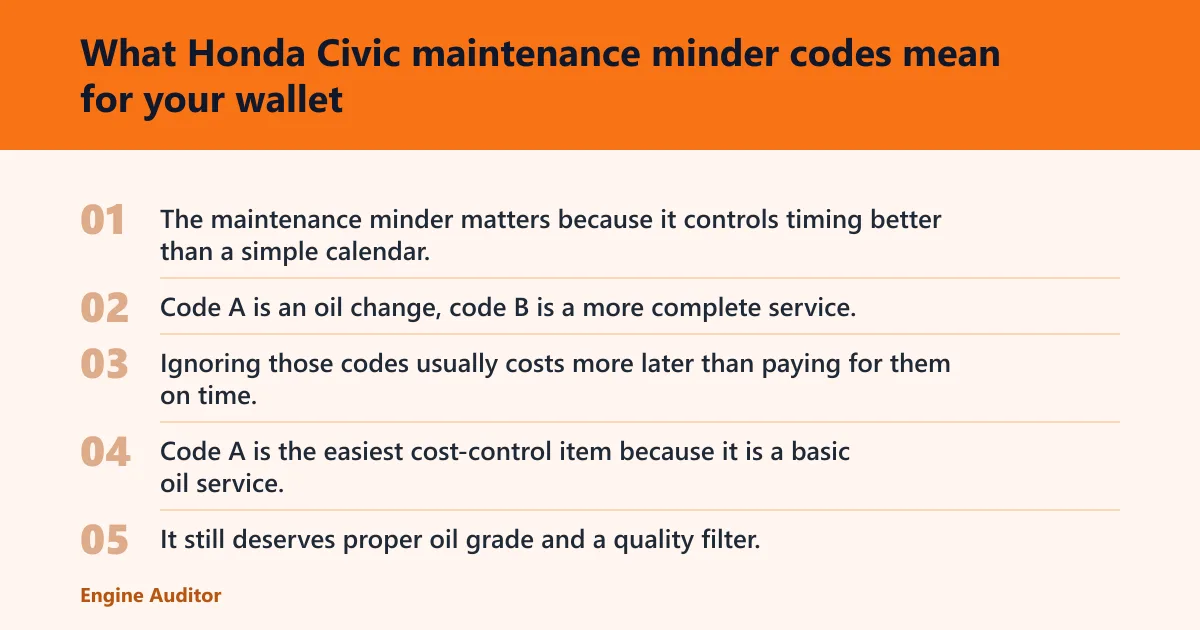
The maintenance minder matters because it controls timing better than a simple calendar. Code A is an oil change, code B is a more complete service, code 1 usually points to tire rotation, code 2 often brings air and cabin filter work, and code 3 usually signals transmission fluid service. Ignoring those codes usually costs more later than paying for them on time.
Code A oil change
Code A is the easiest cost-control item because it is a basic oil service. It still deserves proper oil grade and a quality filter, because cheap oil changes can become leaks, sludge risk, or poor service intervals. This is a good shop-compare item if you do not want to DIY.
Code B more complete service
Code B usually includes more than oil. It is the point where inspections, brake checks, fluid checks, and other mileage-based items matter. A low quote on code B can look good until it excludes the inspection items that tell you whether brakes, tires, and fluids are still in range.
Code 1, code 2, and code 3
Code 1 is usually a tire rotation, which is one of the best places to save without much downside if done correctly. Code 2 often means air and cabin filter work, which is a strong DIY target. Code 3 usually signals transmission fluid service, and that is a pay-for-quality job because the fluid and procedure matter.

What services on a Honda Civic are worth doing yourself?
DIY makes the most sense for low-risk, repeatable tasks that do not depend on special bleeding tools or exact fill procedures. Filters, wipers, and some rotations are the clearest savings. Brake fluid, transmission fluid, and any job that may hide a leak or calibration issue belong with a shop unless you already have the correct tools and procedure.
DIY-friendly jobs with low downside
- Cabin air filter replacement
- Engine air filter replacement
- Wiper blade replacement
- Bulb replacement where access is simple
- Tire pressure checks and topping off to the door-jamb spec
These jobs save labor immediately. They also reduce the chance that a shop bundles them into a larger ticket. Parts-only savings are often strongest here, because the labor charge can exceed the part cost by a wide margin.
Tasks better left to a shop
- Brake fluid service
- Transmission fluid service
- Brake pad and rotor work if a proper inspection is needed
- Alignment checks after tire wear or steering pull
- Battery testing when charging behavior looks weak
A common first-timer mistake is buying the cheapest brake pads and skipping the inspection that finds a sticking caliper or uneven rotor wear. That can create repeat noise, short pad life, and a larger invoice later. Cheap parts do not save money if the real issue stays hidden.
Parts-only savings without risking the service
Parts-only savings work best when the service itself stays simple but the part markup is high. Cabin filters, engine filters, and wipers are the clearest examples. Buy the correct Civic-specific part number, then keep the job simple. Do not cut corners on oil filter quality or fluid spec just to save a few dollars.
Should you use a dealer or an independent shop for Civic service?
Dealer pricing usually runs higher because labor rates are higher and service menus often include branded inspections and bundled maintenance packages. Independent shops often save money on labor, especially for routine items like brakes, fluids, and rotations. The best choice depends on the job, the labor time, and whether warranty or recall work is involved.
Where dealer pricing usually runs higher
Dealers are often strongest for warranty repairs, recalls, software updates, and model-specific service questions. They also tend to price routine maintenance higher, especially when the visit includes a multipoint inspection and a long list of add-ons. That inspection can help if you need a full health check, but it can also make a cheap visit more expensive.
When independent-shop labor can save money
Independent shops can be a better value for brakes, fluid changes, battery testing, and alignment checks. The labor rate difference matters most on jobs with more hands-on time. For Civic owners trying to control yearly spend, that is where price shopping usually pays off.
How bundled inspections can help or hurt the bill
A bundled inspection can catch wear before it becomes a repair. That is good value when the shop documents tire depth, brake thickness, leaks, and battery health. It becomes poor value when the bundle forces you into services you do not need yet. Ask what is included before agreeing to the package.
What maintenance on a Civic should never be delayed?
Do not delay fluid services that protect expensive parts, and do not delay brake or tire issues that can snowball quickly. Corrosion and weak batteries also deserve fast attention because they can leave you with a no-start condition, damaged connectors, or repair costs that exceed the original service by a wide margin.
Fluid services that protect expensive components
Code 3 transmission fluid service matters because transmission damage is far more costly than the service itself. Brake fluid also matters because moisture contamination affects braking feel and can lead to internal corrosion. If the maintenance minder calls for it, treat the service as a cost saver, not a cost add-on.
Brake and tire issues that can snowball quickly
Noise, vibration, uneven wear, and pulling are not minor annoyances. They often point to pads, rotors, alignment, or inflation problems. Delay those items and you may buy tires early, need additional suspension work, or pay for rotor damage that a timely brake service could have avoided.
Corrosion and battery problems that can create larger bills
Cold-climate use can raise corrosion risk on underbody hardware, brake components, and electrical connections. Short-trip driving can also shorten battery life because the charging system gets less time to recover. If starting gets slow or terminals look dirty, address it early instead of waiting for a tow.
A Civic maintenance cost-saver matrix
This matrix shows where each common Civic service belongs. The goal is not to make everything DIY. The goal is to cut cost at the lowest-risk point, then avoid false economy on services that protect major parts.
| Service | Lowest-risk way to reduce cost | What not to cheap out on | Expected savings tier |
|---|---|---|---|
| Oil change | Independent shop or approved DIY with correct oil spec | Correct viscosity and proper filter | DIY or parts-only |
| Tire rotation | Do it with code 1 or bundle with another visit | Torque spec and tire pressure check | DIY or low-cost shop |
| Engine air filter | Buy the correct part and replace it yourself | Fit and seal | DIY |
| Cabin air filter | DIY or parts-only purchase | Correct orientation and clean housing | DIY |
| Brake fluid | Shop-compare independent labor | Fluid spec and full bleed procedure | Independent-shop |
| Transmission fluid service | Price shop at independent shops first | Exact service procedure and fluid | Independent-shop |
| Brake pads and rotors | Compare labor and part quality side by side | Inspection for caliper or rotor issues | Independent-shop |
| Tires | Shop seasonal prices and ask for mounting package | Load rating, wet grip, and alignment check | Shop-compare |
| Battery | Test before replacing; price compare by spec | Reserve capacity and fitment | Shop-compare |
| Alignment | Bundle with tire work or steering concern | Correct diagnosis before adjustment | Independent-shop |
How driving style and powertrain change your Civic budget
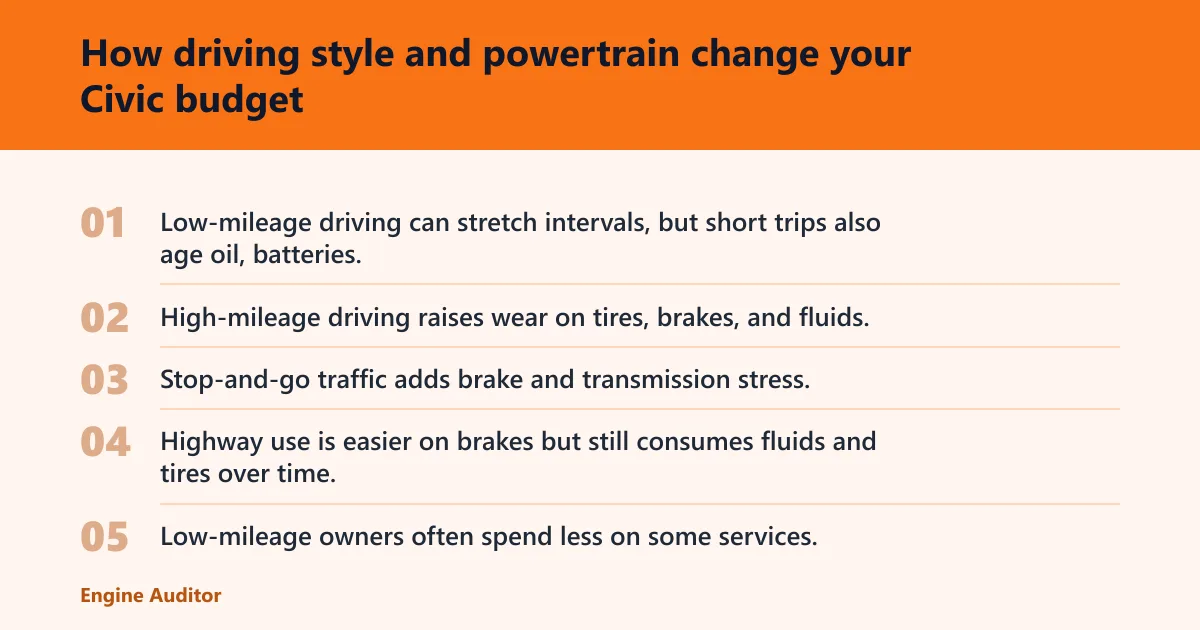
Low-mileage driving can stretch intervals, but short trips also age oil, batteries, and exhaust parts in a different way. High-mileage driving raises wear on tires, brakes, and fluids. Stop-and-go traffic adds brake and transmission stress. Highway use is easier on brakes but still consumes fluids and tires over time.
Low-mileage versus high-mileage driving
Low-mileage owners often spend less on some services, but they should still follow the maintenance minder. High-mileage owners should expect more frequent wear-item spending and more rotation discipline. A high-mileage Civic is more likely to drift above the normal annual range when tires, brakes, and fluids all land in the same year.
Stop-and-go traffic versus highway use
Stop-and-go driving pushes brakes harder and can shorten the life of friction material. Highway use tends to be gentler on brakes and can help fuel economy, but it does not remove the need for oil, filter, and fluid service. Traffic pattern changes timing; it does not eliminate maintenance.
Cold-climate wear and corrosion exposure
Cold climates bring salt, moisture, and corrosion risk. That can affect brake hardware, fasteners, underbody parts, and battery life. If you live where roads are salted, budget more for inspections and corrosion-related repairs.
Picture a Civic hatchback with relatively high mileage in a snowy state. Tires are near replacement, the battery is weak, and code 3 is due. That owner is facing a stacked year, not a cheap one, so the best savings come from comparing shop quotes early instead of waiting for a breakdown.
Gas sedan, hybrid, and hatchback differences
Gas sedans often land near the lower half of the maintenance band because they are straightforward to service. Hybrids can be similar or slightly lower on brake wear because regenerative braking reduces friction use. High-mileage hatchbacks can cost more when cargo use, mileage, and wear items pile up together.
How much should you budget each year for a Civic?
Start with $450-$900 per year for routine maintenance and normal wear, then split that into three reserves. Use a routine service reserve for oil, filters, rotations, and scheduled fluids. Add a wear-item reserve for tires, brakes, and batteries. Keep a repair reserve for leaks, sensors, and age-related surprises.
Routine service reserve
This is the money for code A, code 1, code 2, and mileage-based fluid work. A low-mileage gas sedan usually needs less routine-service reserve than a high-mileage hatchback. If you do your own filters and simple items, this reserve can stay near the bottom of the range.
Wear-item reserve
This reserve matters most when tires and brakes are close to the edge. It should also cover alignment checks and battery replacement. Hybrids may see somewhat lower brake wear, but they still need tires, fluid service, and battery planning.
Repair reserve
Keep a repair reserve because delayed maintenance often turns into a repair. Even a modest leak, noisy bearing, or ignored warning light can push a normal service year over budget. This reserve protects you from using credit for a predictable car bill.
Frequently asked questions
How can I keep Honda Civic maintenance cheap without skipping important service?
Use the maintenance minder, not guesswork. Do easy work yourself, compare independent shops for fluid and brake jobs, and keep a separate reserve for tires and batteries. The cheapest plan is the one that avoids missed fluid changes, since those are the items most likely to protect larger components.
What services on a Honda Civic are worth doing myself to save money?
Cabin filters, engine air filters, and wiper blades are the clearest DIY wins. Tire pressure checks are also worth doing often. These jobs save labor with little downside, as long as you use the correct parts and install them correctly.
Is it cheaper to use a dealer or an independent shop for Civic maintenance?
Independent shops usually cost less for routine maintenance, brakes, fluid service, and alignment checks because labor rates are often lower. Dealers make more sense for recalls, warranty work, and model-specific issues. For routine service, price shopping among independents usually finds the better bill.
Which Honda Civic maintenance minder codes are the most expensive to ignore?
Code 3 and code B are the ones that can hurt the most if delayed. Code 3 points to transmission fluid service, and code B usually means a broader service with inspection items. Ignoring either can lead to larger component wear, especially on higher-mileage Civics.
How much should I budget per year for Honda Civic maintenance on a budget?
Plan on $450-$900 per year for routine maintenance and normal wear. Put the money into routine service, wear items, and a repair reserve instead of treating every bill as a surprise. A gas sedan may sit lower, while a high-mileage hatchback can sit higher.
Are hybrid Civic maintenance costs lower than gas models?
They can be similar or slightly lower on brake wear because regenerative braking reduces friction use. That does not remove the need for oil, filters, tires, fluids, and battery planning. A hybrid can still become expensive if tires, fluids, and age-related parts all hit at once.
Products related to this article
Sponsored / affiliate links. As an Amazon Associate I earn from qualifying purchases. I may earn additional commission from eligible campaigns.