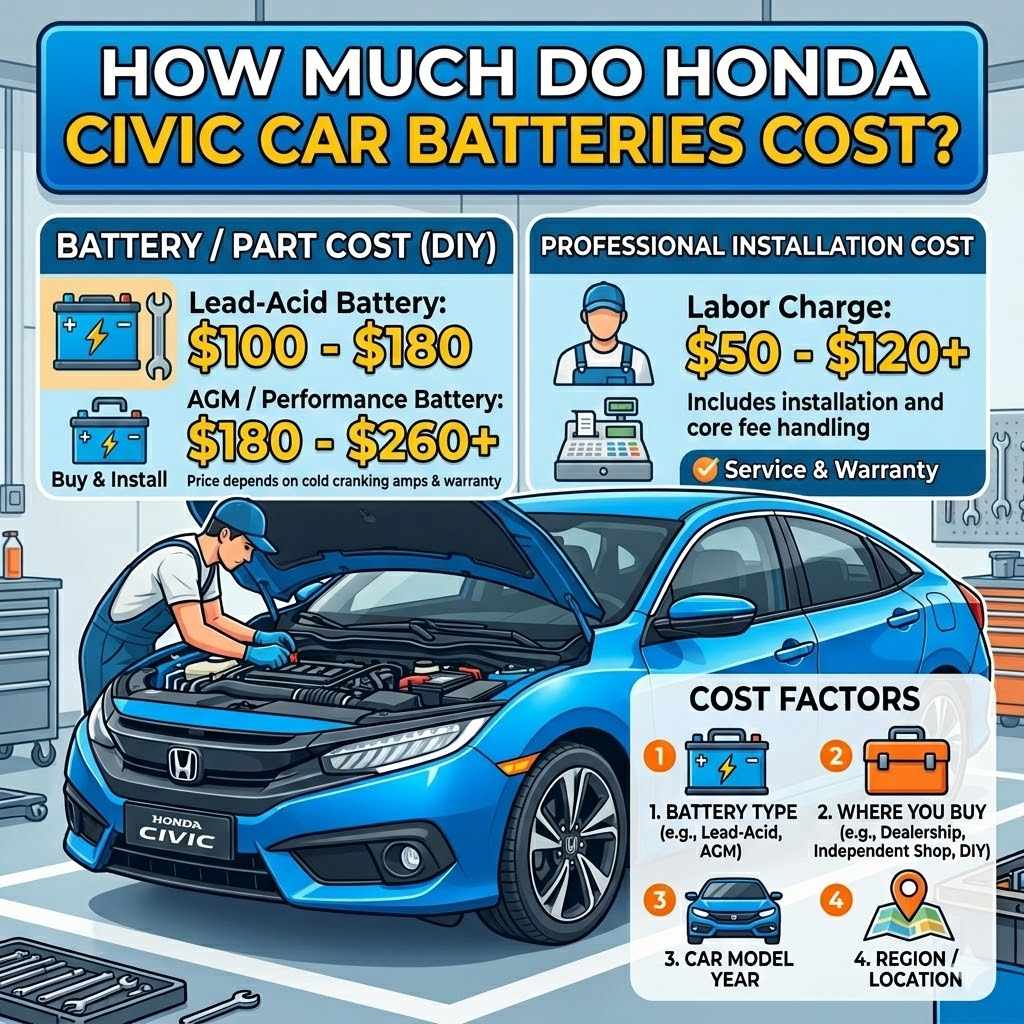
How Much Do Honda Civic Car Batteries Cost?
Figuring out how much to spend on a car battery can be a bit confusing, especially if you’re new to car care. Many people wonder, “How Much Do Honda Civic Car Batteries Cost?” because they want to be prepared and get a good deal. It’s not always easy to know what to look for. This guide will make it super simple. We’ll break down everything you need to know, step by step, so you can get the right battery for your Honda Civic without any stress.
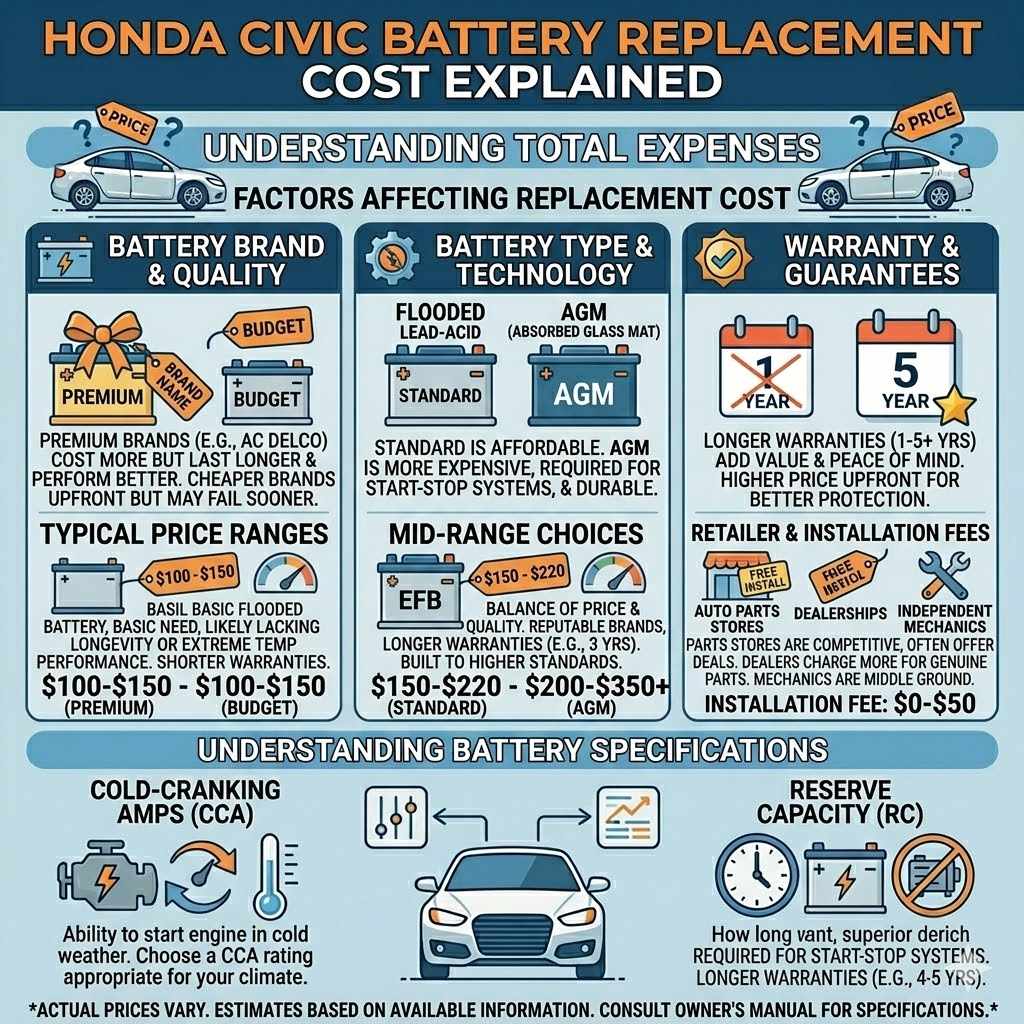
Honda Civic Battery Replacement Cost Explained
Replacing your Honda Civic’s car battery might seem like a big task, but it’s a pretty common maintenance job. The cost can vary a good bit, and knowing what influences this price is key to making a smart decision. This section will break down the typical expenses involved in getting a new battery for your Civic, looking at both the battery itself and any extra fees.

KUST
KUST Windshield Sun Shade for 2022-2024 2025…
- 【Vehicle Specific】Our Windshield Shade Cover custom fit for 2023 2024 2025 Acura Integra, 2022 2023 2024 2025 2026 Honda Civic 11t…
- 【Nice Fabric】Made of 250T Reflective Fabric, this material features higher density.Double-layer design including black heat insula…
- 【Air Condition Works Faster & Easier】Using less energy and gas instead of having to wait 15 minutes for your AC to cool off your c…
As an Amazon Associate I earn from qualifying purchases.
Factors Affecting Honda Civic Battery Prices
Several things can make the price of a Honda Civic battery go up or down. It’s not just a one-size-fits-all price tag. Think about the brand, the type of battery, and where you buy it. These all play a role.
Battery Brand and Quality
When you buy a car battery, you’ll see many different brands. Some are well-known names that have been around for a long time, and they often cost a bit more. These brands usually offer good warranties and are made with high-quality materials. This means they tend to last longer and perform better, especially in tough weather. Cheaper brands might save you money upfront, but they might not last as long or could fail sooner, costing you more in the long run. For instance, a premium battery from a top brand might cost $150-$250, while a budget option could be $100-$150.
Battery Type and Technology
Modern cars, including many Honda Civics, can use different types of batteries. The most common are the standard flooded lead-acid batteries. However, some newer Civics, especially those with start-stop systems, might need an Absorbed Glass Mat (AGM) battery. AGM batteries are more expensive because they are built differently. They use special mats to hold the acid and can handle more charge and discharge cycles, which is important for systems that shut the engine off at stops. An AGM battery for a Civic can cost anywhere from $200 to $350 or more, compared to $100-$200 for a standard flooded battery.
Warranty and Guarantees
A good warranty can really add value to a car battery purchase. Most batteries come with a warranty that covers defects or premature failure. These warranties can range from 1 year to 5 years, and sometimes even longer for premium batteries. A longer warranty usually means a higher price, but it offers peace of mind. If the battery fails within the warranty period, you can get a free replacement or a prorated refund. This is a big benefit and can save you money if something goes wrong.
Retailer and Installation Fees
Where you buy your battery can also affect the price. Auto parts stores like AutoZone, Advance Auto Parts, or O’Reilly Auto Parts often have competitive prices and frequently offer deals or discounts. Dealerships typically charge more for batteries and installation, but they ensure genuine parts and manufacturer-specific service. Independent mechanics can offer a middle ground. Some places offer free battery testing and installation with purchase, while others charge a fee, often between $20 and $50, for installation if you don’t do it yourself.
Typical Price Ranges for Honda Civic Batteries
Based on the factors we just discussed, we can look at some general price ranges for Honda Civic batteries. These figures will give you a good idea of what to expect when you go shopping for a replacement. Remember, these are estimates, and actual prices can vary.
Economy Options
If you’re on a tight budget, you might find basic flooded lead-acid batteries for your Honda Civic for around $100 to $150. These are generally from lesser-known brands or are entry-level models from larger companies. They will get the job done, but they may not have the longest lifespan or the best performance in extreme temperatures. Their warranties are typically shorter, often around 1 to 2 years.
Mid-Range Choices
Most Honda Civic owners will find a good balance of price and quality in the mid-range category, typically costing between $150 and $220. These batteries often come from reputable brands like DieHard, EverStart (Walmart), or ACDelco. They usually offer longer warranties, like 3 years, and better overall performance and reliability than the economy options. Many of these are still flooded lead-acid types but are built to higher standards.
Premium and AGM Batteries
For those who want the best performance, especially if their Civic has advanced features like start-stop technology, premium or AGM batteries are the way to go. These can cost anywhere from $200 to $350 or even more. Brands like Optima, Odyssey, or specific AGM batteries from major manufacturers fall into this category. They offer superior durability, longer life, and better performance in demanding conditions, often with warranties of 4 to 5 years.
Here’s a quick comparison of common battery types and their general price points for a Honda Civic:
| Battery Type | Typical Price Range (USD) | Key Features |
|---|---|---|
| Flooded Lead-Acid (Standard) | $100 – $180 | Most common, affordable, good for basic needs. |
| AGM (Absorbed Glass Mat) | $180 – $300+ | Better for start-stop systems, more durable, spill-proof. |
| Premium/High-Performance | $150 – $250+ | Longer lifespan, better cold-cranking amps, longer warranties. |
Honda Civic Battery Installation Costs
Buying the battery is only part of the equation; you also need to consider the cost of getting it installed. While many car owners can tackle battery replacement themselves, professional installation offers convenience and expertise. The price for this service can vary depending on where you go and your location.
DIY Battery Replacement vs. Professional Installation
Replacing a car battery is often considered one of the easier DIY car maintenance tasks. Most Honda Civics have the battery located under the hood in an easily accessible spot. The basic tools needed are usually a wrench or socket set to remove the terminals and hold-down bracket.
Steps for DIY Battery Replacement
1. Gather your tools: a wrench set, gloves, eye protection, and a wire brush to clean terminals.
2. Locate the battery.
3. Disconnect the negative (black) terminal first, then the positive (red) terminal.
4. Remove any hold-down bracket securing the battery.
5. Lift out the old battery.
6. Clean the battery tray and terminal clamps.
7. Place the new battery in the tray.
8. Secure the battery with the hold-down bracket.
9. Reconnect the positive terminal first, then the negative terminal.
10. Start the car to ensure it works.
The main advantage of doing it yourself is saving money on labor costs. You only pay for the battery itself.
On the other hand, professional installation offers several benefits. Auto repair shops and dealerships have trained technicians who can ensure the battery is installed correctly, especially for modern cars with complex electrical systems. They also have specialized tools and can properly dispose of your old battery.
How Much Does Professional Installation Cost?
If you choose to have your Honda Civic battery replaced by a professional, you can expect to pay an installation fee. This fee typically ranges from $20 to $75.
Auto Parts Stores: Many large auto parts chains offer free installation when you purchase a battery from them. This is a great way to save money and get professional help. They often have mobile installation services or will do it on the spot at their store.
Independent Mechanics: A smaller local garage might charge a labor fee for battery installation, usually falling within the $25 to $50 range.
Dealerships: Honda dealerships tend to have the highest labor rates. Their installation fee for a battery replacement could be between $50 and $100, sometimes more. However, they guarantee genuine Honda parts and service performed by certified technicians.
It’s always a good idea to call around and get quotes for installation if you’re not doing it yourself. This will help you budget accurately. Some services might also include battery testing and checks on your charging system as part of the installation, which is valuable added service.
When to Replace Your Honda Civic Battery
Knowing when your Honda Civic battery needs replacing is just as important as knowing the cost. A failing battery can leave you stranded, and sometimes there are signs to watch out for. Proactive replacement can save you a lot of hassle.
Signs of a Failing Battery
Car batteries don’t usually die without warning. Pay attention to these common signs that your battery might be on its way out:
Slow Engine Crank
When you try to start your car, if the engine cranks over slowly, it’s a strong indicator that your battery is weak. It sounds like the starter motor is struggling to turn the engine over. This happens because the battery doesn’t have enough power to spin the starter quickly.
Dashboard Warning Lights
Most cars have a battery warning light on the dashboard. If this light comes on and stays on while you’re driving, it means there’s an issue with the battery or the charging system. It could be a sign the battery isn’t holding a charge or the alternator isn’t recharging it properly.
Dimming Lights or Electrical Issues
If your headlights seem dim, or your power windows operate slower than usual, it can point to a weak battery. These electrical components rely on a steady power supply from the battery. When the battery is failing, they might not get enough juice.
*Old Age
Car batteries have a lifespan, typically between 3 to 5 years. If your battery is approaching or has passed this age, even if you haven’t noticed other signs, it’s a good idea to have it tested. Batteries degrade over time, and their capacity to hold a charge diminishes.
Corroded Terminals
Look at the metal terminals where the battery cables connect. If you see a white or bluish powdery substance (corrosion), it can interfere with the electrical connection and reduce the battery’s efficiency. While cleaning terminals can help, excessive corrosion can also be a sign of a battery issue.
Battery Lifespan and Maintenance Tips
The lifespan of your Honda Civic battery can be extended with a little bit of care. Regular maintenance can help you get the most out of it and avoid unexpected failures.
Keep Terminals Clean
Periodically check the battery terminals for corrosion. If you see any, disconnect the battery (negative first, then positive) and use a wire brush with a mixture of baking soda and water to clean them. Rinse and dry thoroughly before reconnecting. Clean terminals ensure a good electrical connection.
Ensure a Secure Fit
Make sure the battery is held firmly in its tray. A loose battery can bounce around, damaging its internal components and the battery tray. Check the hold-down clamp regularly to ensure it’s snug.
Avoid Deep Discharges
Try not to drain your battery completely by leaving lights or accessories on when the engine is off. Deep discharges can shorten a battery’s lifespan. Many modern cars have systems to prevent this, but it’s still good practice to be mindful.
Check Fluid Levels (if applicable)
Some older types of batteries are “serviceable” and have caps that can be removed to check the electrolyte fluid level. If the fluid is low, you can top it up with distilled water. Most modern batteries are “maintenance-free” and sealed, so this doesn’t apply.
Test Your Battery Regularly
Especially as the battery ages, have it tested at an auto parts store or by a mechanic. They can measure its voltage and cranking amps to determine its health and remaining lifespan. This is often done for free.
A healthy battery is crucial for your car’s reliability. Following these tips can help prevent premature battery failure and ensure your Honda Civic starts reliably every time.
Where to Buy a Honda Civic Battery
When it’s time to buy a new battery for your Honda Civic, you have several options. Each place offers different benefits, from price and selection to convenience and installation services. Knowing these choices helps you find the best fit for your needs and budget.
Major Retailers and Auto Parts Stores
Large auto parts chains are popular choices for buying car batteries. They offer a wide selection of brands and types to fit most vehicles, including various Honda Civic models.
AutoZone
AutoZone carries a range of battery brands, including their own Duralast line, which is well-regarded for its quality and warranties. They offer free battery testing and often free installation with purchase. Their stores are widely available across the country.
Advance Auto Parts
Similar to AutoZone, Advance Auto Parts provides a broad selection of batteries, including brands like DieHard. They also typically offer free battery testing and installation services. They often have online coupons and loyalty programs that can lead to discounts.
O’Reilly Auto Parts
O’Reilly Auto Parts is another major player with a good selection of battery options. They are known for their knowledgeable staff and often provide free battery installation and testing services. They stock various price points to accommodate different budgets.
Walmart (EverStart Batteries)
Walmart offers its own brand of batteries, EverStart. These are usually among the most budget-friendly options and come with decent warranties, often 3 years for their premium lines. It’s a convenient place to pick up a battery if you’re already shopping there. Installation services may vary by store.
Costco and Sam’s Club
These warehouse clubs sell batteries, often under their house brands (like Kirkland Signature for Costco). They tend to offer good value for money with solid warranties. You generally need a membership to shop there, and installation services might be limited.
Dealerships and Independent Mechanics
Your Honda dealership and local independent mechanics are also places where you can purchase a replacement battery.
Honda Dealerships
Buying a battery from a Honda dealership ensures you get a genuine Honda part, specifically designed for your Civic. While this is often the most expensive option, it guarantees compatibility and comes with the assurance of manufacturer-backed quality and service. They also offer professional installation.
Independent Auto Repair Shops
Many independent mechanics stock or can quickly order
The choice among these retailers often comes down to a balance of price, brand reputation, warranty, and convenience. For example, if you need a battery urgently and want it installed immediately at no extra cost, an auto parts store might be your best bet. If you prioritize genuine parts and dealer service, a Honda dealership is the way to go.
Understanding Battery Specifications and Compatibility
When you’re looking for a new battery for your Honda Civic, it’s essential to ensure it’s the right fit. Batteries come with specific codes and ratings that tell you about their performance and size. Choosing the correct one ensures your car starts properly and all its electrical systems function as they should.
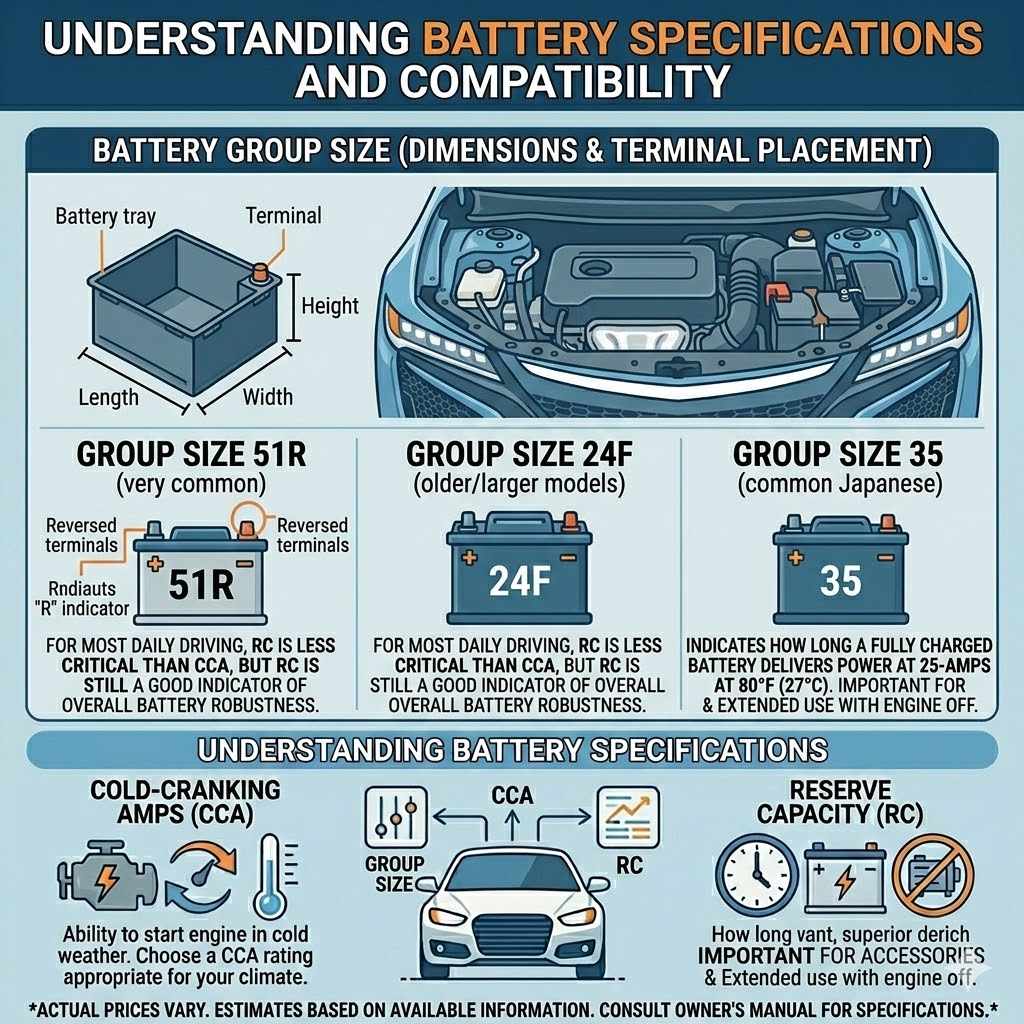
Battery Group Size
Car batteries are categorized into different “group sizes” based on their physical dimensions (length, width, height) and terminal placement. This is crucial because the battery must physically fit into your Honda Civic’s battery tray and the cables must reach the terminals.
For most Honda Civic models, common group sizes include:
Group Size 51R
This is a very common size for many Honda models, including some Civic generations. The “R” indicates that the terminals are reversed compared to a standard battery.
Group Size 24F
Some older or larger Civic models might use this size.
Group Size 35
This is another common size for many Japanese vehicles, and some Civic models might use it.
To find the exact group size for your Honda Civic, you can:
1. Check your car’s owner’s manual.
2. Look at the label on your current battery.
3. Use online battery finder tools provided by battery manufacturers or retailers.
For instance, if your current battery is a Group 51R, you absolutely need to buy a replacement that is also a Group 51R. Using a battery of the wrong size can lead to installation problems, poor electrical connections, or even damage.
Cold Cranking Amps (CCA) and Reserve Capacity (RC)
Two other important ratings to consider are Cold Cranking Amps (CCA) and Reserve Capacity (RC).
Cold Cranking Amps (CCA)
CCA measures how much electrical current a battery can deliver for 30 seconds at 0°F (-18°C) without dropping below a safe voltage. This rating is particularly important if you live in a cold climate. A higher CCA rating means the battery is better equipped to start your engine in freezing temperatures. Your Honda Civic’s owner’s manual or the old battery will specify the minimum recommended CCA. It’s generally a good idea to
Reserve Capacity (RC)
Reserve Capacity (RC) indicates how long a fully charged battery can deliver power at a 25-amp rate at 80°F (27°C) before its voltage drops too low to be useful. This rating is important for powering your car’s accessories if the alternator isn’t working or if you’re running accessories for an extended period with the engine off. A higher RC means the battery can provide power for longer. For most daily driving, the RC is less critical than CCA, but it’s still a good indicator of overall battery robustness.
When purchasing a battery, always refer to your Civic’s specifications to ensure you are getting a compatible group size and adequate CCA and RC ratings. Using a battery that meets these requirements ensures optimal performance and longevity for your vehicle.
Frequently Asked Questions
Question: How long does a Honda Civic battery typically last
Answer: A typical car battery for a Honda Civic can last between 3 to 5 years. This lifespan can be influenced by driving habits, climate, and how well the battery is maintained.
Question: Can I use a different brand of battery in my Honda Civic
Answer: Yes, you can usually use a different brand of battery as long as it is the correct group size and meets or exceeds the recommended CCA and RC ratings for your specific Honda Civic model.
Question: Is it okay to buy a used car battery
Answer: It is generally not recommended to buy a used car battery. Used batteries have an unknown history and may have reduced capacity or a shortened lifespan, leading to potential issues and costs down the road.
Question: Will a weak battery affect my car’s performance
Answer: Yes, a weak battery can affect your car’s performance. It might cause slow starting, dim lights, and issues with electronic components. In severe cases, it can prevent the car from starting at all.
Question: How often should I have my Honda Civic battery tested
Answer: It’s a good idea to have your Honda Civic battery tested annually, especially after it reaches 3 years old. This helps identify any potential issues before they cause a breakdown.
Summary
Knowing how much do Honda Civic car batteries cost involves looking at battery type, brand, and installation. Prices typically range from $100 for basic models to $350 for premium AGM types. Auto parts stores often offer free installation, while dealerships may charge more. Checking for signs of a failing battery and performing basic maintenance can help extend its life. Always ensure the new battery has the correct group size and CCA rating for your specific Honda Civic. See also best car like honda civic top alternatives worth buying.
Related pick: Check today's price on Amazon
Products related to this article
Sponsored / affiliate links. As an Amazon Associate I earn from qualifying purchases. I may earn additional commission from eligible campaigns.