Honda Civic Maintenance Schedule by Mileage: Service Guide
For most Honda Civics, plan oil and tire rotation at regular intervals, brake fluid every few years, coolant around the 100,000-mile mark, spark plugs around 100,000 miles, and transmission service somewhere in the 30,000–60,000-mile range depending on transmission and use. Missing those intervals can shorten engine, brake, and transmission life, and turn low-cost fluids and filters into costly repairs. This guide breaks the Civic schedule by mileage, separates replacement work from inspections, and flags CVT, manual, turbo, and hybrid exceptions.
This guide is part of our Honda Civic maintenance guide series.
Honda Civic maintenance schedule by mileage: the quick map
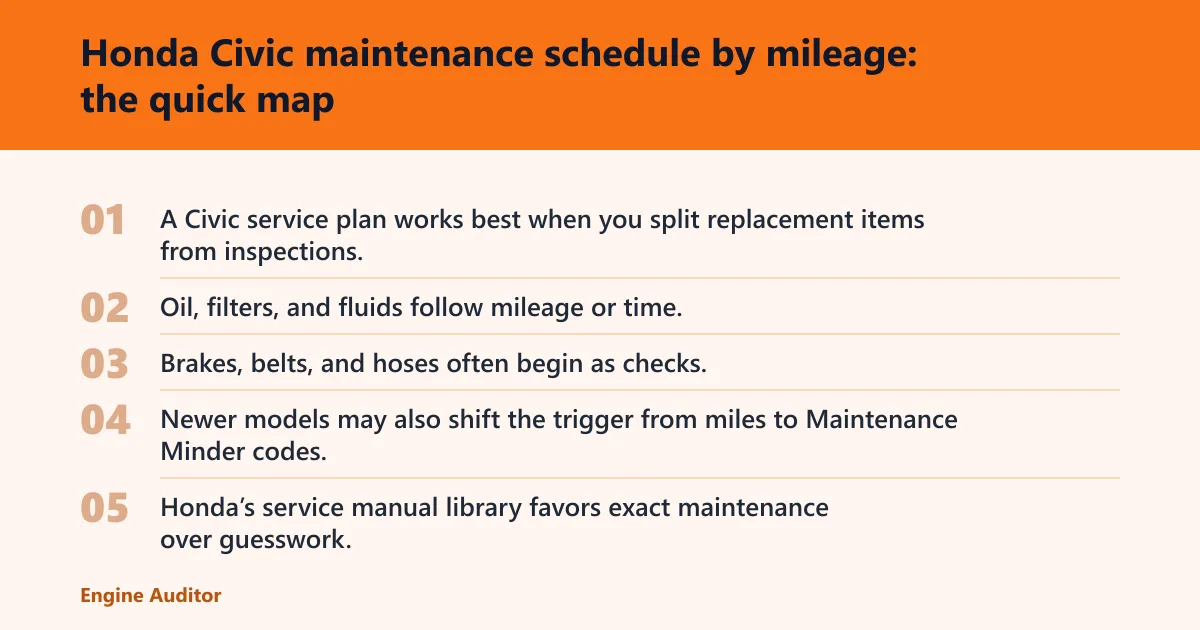


A Civic service plan works best when you split replacement items from inspections. Oil, filters, and fluids follow mileage or time. Brakes, belts, and hoses often begin as checks. Newer models may also shift the trigger from miles to Maintenance Minder codes. Honda’s service manual library favors exact maintenance over guesswork.
How to read the mileage table
The table below uses common Civic service checkpoints: 5,000, 15,000, 30,000, 60,000, and 100,000 miles. “Must-do” means the item is due on time or mileage. “Condition-based” means inspect it and replace only if wear, contamination, or age calls for it.
What counts as a must-do service versus an inspection
Oil change, fluid replacement, and spark plugs are usually schedule-based. Brake pads, rotors, belts, tires, and air filters can move earlier or later, depending on driving conditions, stop-and-go traffic, cold starts, trailer or cargo load, and dirt or road grit. Short trips, repeated cold starts, steep grades, heavy load, and dusty roads all shorten service life.
📊 Honda’s 1.5L turbo engine is described as prone to fuel diluting the engine oil on short, cold trips. Source: Emanualonline.
What changes on newer Civics with Maintenance Minder codes?
Newer Honda Civics often use Maintenance Minder codes instead of a fixed-mileage list. The reminder system turns oil life and service needs into codes such as A or B, then adds sub-items for filters, rotation, brake fluid, or other work. The owner’s manual still matters because it explains what each code means and which tasks match your engine and transmission.
How the code system works
The monitor does not replace the schedule; it refines it. When the dashboard calls for service, the code tells you what needs attention now and what can wait. That matters on hybrids, CVTs, and turbo engines, where fluid type and interval can be specific.
When the code matters more than the odometer
Use the code first if the car is a modern model with Maintenance Minder. A vehicle driven mostly on short, cold trips can need oil attention sooner than the odometer suggests. Honda’s 1.5L turbo engine is described as prone to fuel diluting the engine oil on short, cold trips, so that use case deserves closer oil-condition checks.

Honda Civic maintenance at 5,000 and 15,000 miles
At 5,000 miles, the Civic is usually in inspection mode, not replacement mode. At 15,000 miles, the first repeat service items often appear, especially if the car sees stop-and-go traffic, gravel roads, or frequent short trips. Oil condition, tire wear, and fluid levels matter most here.
5,000-mile checks and fluid lookovers
At this point, inspect engine oil level and condition, tires, brakes, coolant level, washer fluid, and visible leaks. If the car is driven hard or only for short errands, oil condition can degrade sooner than the schedule suggests. A quick under-hood look also helps catch a loose hose clamp or seep before it grows.
15,000-mile service items and rotation timing
By 15,000 miles, tire rotation is commonly due, along with another oil service if the Maintenance Minder calls for it. Inspect the air filter, cabin filter, brake pad thickness, and rotor surfaces. Dusty driving can justify a filter replacement even if the mileage is low.
Picture a Civic that spends most of its time in a city parking garage and makes three-mile trips. The oil may still be within mileage limits, but moisture and fuel contamination build faster in that pattern, so the reminder system deserves more trust than a calendar guess.
What should you do at 30,000 miles on a Honda Civic?
Thirty thousand miles is a filter-and-inspection milestone for many Civics. It is a common point for cabin and engine air filter replacement, brake inspection, tire rotation, and a closer look at fluid condition. On some powertrains, transmission service also enters the discussion here.
Filters, brakes, and fluid checks
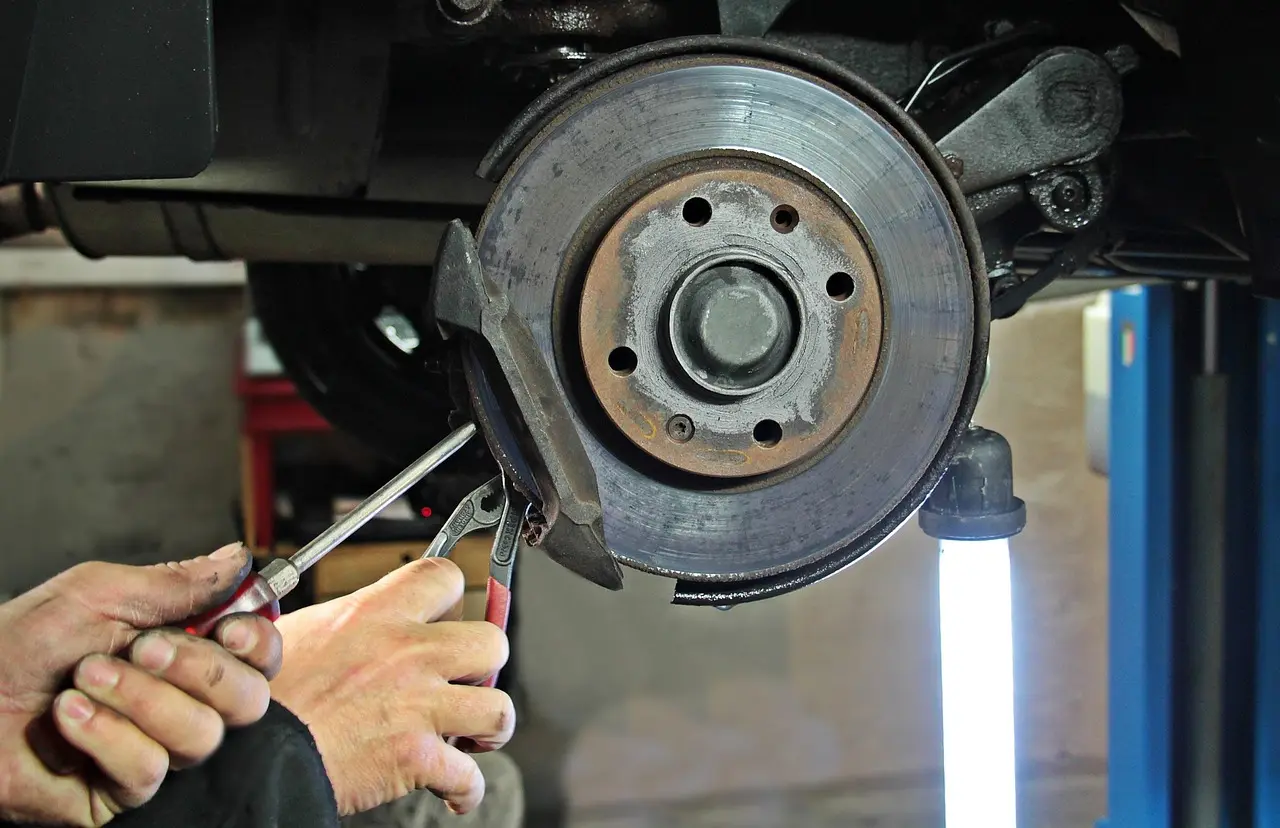
Replace the engine air filter if it is dirty, not by habit. Replace the cabin filter if airflow drops or the filter is visibly loaded with debris. Check brake pad thickness, rotor wear, and brake fluid condition. Brake fluid does not wear out by mileage alone, but it absorbs moisture over time.
Which jobs are usually DIY-safe
Air filters, cabin filters, tire rotation, and visual brake checks are often manageable for a careful owner. Fluid replacement, especially on CVT-equipped Civics, is more sensitive. A wrong fluid or incorrect fill procedure can cause expensive problems.
A common first-timer mistake is replacing the air filter and stopping there. If the Civic has a CVT or a turbo engine, the fluid and oil story matters more than the filter alone, especially once the mileage climbs past 30,000.
What should you service at 60,000 miles on a Honda Civic?
At 60,000 miles, the Civic should get a serious look at transmission service, brake fluid age, coolant condition, and belt wear. This is also a checkpoint for road debris damage, suspension wear, and uneven tire wear that can point to alignment issues.
Transmission and CVT fluid timing
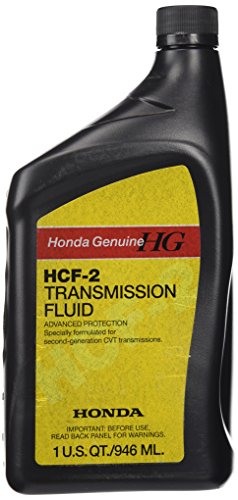
Honda CVTs need Honda’s own HCF-2 fluid rather than a universal substitute. That fluid-specific requirement is the reason CVT service belongs on a schedule, not as a generic “transmission flush.” For many Civics, 60,000 miles is a sensible checkpoint, though use and model year can pull it earlier.
Brake fluid, coolant, and belt inspection
Brake fluid should be checked for age and moisture content, then replaced on time. Coolant should be inspected for level, condition, and leaks, with a full flush and refill usually coming around the 100,000-mile mark on many Honda schedules. Inspect the serpentine belt for cracks, glazing, and edge wear.
Factory manual vs. parts catalog positioning
The owner’s manual tells you when a system needs service. The parts catalog tells you what part number or fluid spec fits. Use both. That matters most for transmission fluid, coolant, and hybrid-specific cooling components, where the wrong product can be worse than delayed service.
What changes at 100,000 miles on a Honda Civic?
At 100,000 miles, high-mileage wear items deserve close attention even if nothing is failing yet. Coolant service becomes a major checkpoint, spark plugs may be nearing their replacement mileage, and belt, hoses, mounts, and suspension parts deserve a more careful inspection. Catching wear early usually costs less than waiting for a breakdown.
High-mileage wear items
Inspect the serpentine belt, radiator hoses, heater hoses, suspension bushings, struts, wheel bearings, and the battery. If the Civic has a CVT, review the fluid history again rather than assuming one service was enough. On a turbo Civic, oil condition and heat management remain important.
What to inspect before failures start
Look for seepage around the water pump, coolant reservoir, valve cover, and axle seals. Check brake rotor thickness and pad life. Listen for wheel bearing noise, which often shows up as a growl that changes with speed or steering input.
Honda Civic maintenance by powertrain: CVT, turbo, and hybrid
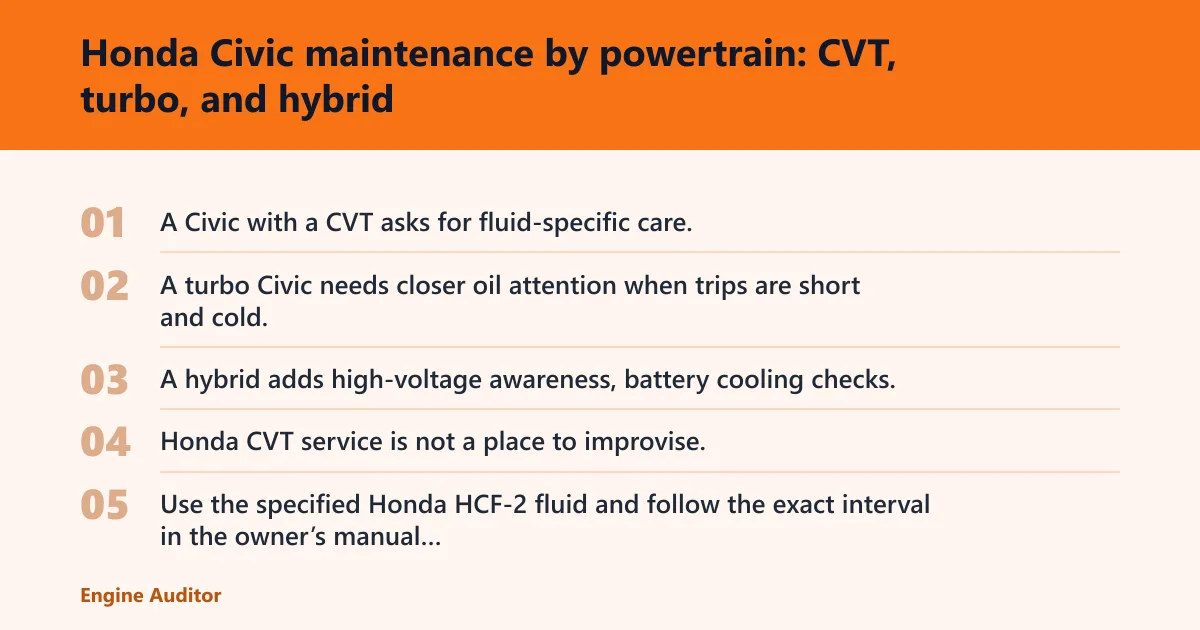
Powertrain type changes the service map. A Civic with a CVT asks for fluid-specific care. A turbo Civic needs closer oil attention when trips are short and cold. A hybrid adds high-voltage awareness, battery cooling checks, and inverter cooling system attention.
CVT fluid and fluid type sensitivity
Honda CVT service is not a place to improvise. Use the specified Honda HCF-2 fluid and follow the exact interval in the owner’s manual or Maintenance Minder code. Dealer service is often the safer choice if the owner does not have the correct fluid, fill procedure, and scan-tool access.
Turbo oil and heat-management considerations
Turbo Civics can deserve earlier oil scrutiny than a naturally aspirated model used the same way. Short trips and cold starts can leave more contamination in the oil, and turbo heat raises the stakes. That does not mean every turbo Civic needs a panic oil change; it means the reminder system should be taken seriously.
Hybrid cooling and high-voltage awareness
Honda Civic Hybrid models add inverter cooling, hybrid battery cooling, and high-voltage safety concerns. High-voltage components are not casual DIY territory. Cooling passages and intake paths for the battery or inverter should be kept clear, and any warning light tied to the hybrid system calls for proper diagnosis.
Suppose a hybrid Civic’s rear seat intake area is blocked by cargo or pet hair. The battery cooling path can be restricted, which is the sort of small problem that becomes expensive if it is ignored. That is a good reminder that hybrid maintenance includes air paths, not only fluids.
Mileage-by-mileage Civic maintenance table
| Mileage | Task | Why it matters | DIY vs shop | Note for hybrid/CVT/turbo models |
|---|---|---|---|---|
| 5,000 miles | Inspect oil level and condition; check tires, brakes, coolant level, leaks, and washer fluid | Catches low fluid, abnormal wear, or early leaks before they turn into damage | DIY for checks; shop if anything looks abnormal | Turbo engines deserve closer oil attention after short, cold trips; hybrid owners should also keep an eye on cooling-air paths |
| 15,000 miles | Oil service if due; tire rotation; inspect air filter, cabin filter, brake pads, and rotors | Maintains even tire wear and identifies early brake or filter restrictions | DIY for rotation and filters; shop for brake measurement if unsure | CVT models still follow the transmission-specific schedule, not the oil interval alone |
| 30,000 miles | Replace filters if dirty; inspect brakes, fluids, hoses, and drive belt; review transmission service timing | Filters and wear items often reach their first real service window here | Filters and visual checks can be DIY; fluid service may suit a shop | CVT fluid timing becomes important; use Honda HCF-2 only |
| 60,000 miles | Transmission or CVT service as scheduled; inspect brake fluid, coolant, belt, hoses, and suspension | Fluid age and mechanical wear start to matter more at this stage | Shop is usually safer for transmission/CVT service; DIY for inspections | Hybrid cooling systems and inverter cooling deserve attention; turbo oil condition should be reviewed carefully |
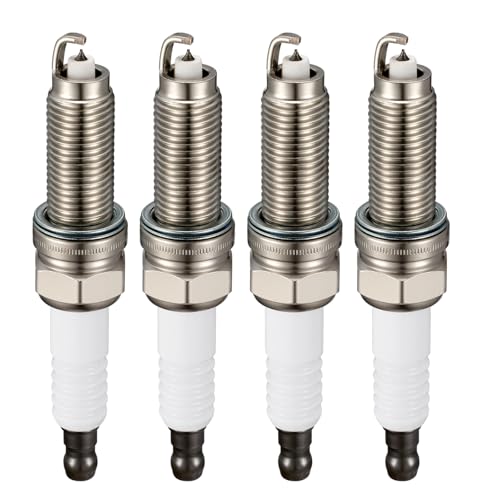
| 100,000 miles | Coolant service, spark plug timing check, belt and hose inspection, brake wear review, suspension inspection | High-mileage parts often fail after this point if ignored | Shop for coolant and plugs if access is tight; DIY for visual checks only if skilled | Exact spark plug mileage depends on engine family; hybrid and turbo drivetrains still need fluid-specific care |
Frequently asked questions
What should I service on a Honda Civic at 5,000 miles?
At 5,000 miles, the main job is inspection rather than replacement. Check oil level and condition, tire pressure, brakes, coolant level, and visible leaks. If the car sees only short trips or heavy traffic, the oil reminder may come sooner than the mileage alone suggests.
What maintenance is due on a Honda Civic at 15,000 miles?
At 15,000 miles, tire rotation is commonly due, along with an oil service if the reminder system asks for it. This is also a good point to inspect the air filter, cabin filter, brake pads, and rotors. Dusty roads or stop-and-go driving can pull filter service forward.
What should be replaced at 30,000 miles on a Honda Civic?
At 30,000 miles, the most common replacements are the engine air filter and cabin filter if they are dirty. Brake service may still be inspection-only, but pad thickness and rotor condition should be checked. Transmission fluid may also be nearing its interval on some Civic variants.
What maintenance is recommended at 60,000 miles on a Honda Civic?
At 60,000 miles, transmission or CVT service often becomes important, along with brake fluid review, coolant inspection, and belt checks. This is also a sensible time to inspect hoses, suspension wear, and tire condition. The exact list depends on transmission type and driving conditions.
What maintenance is needed at 100,000 miles on a Honda Civic?
At 100,000 miles, coolant service, spark plug timing, belt inspection, and a detailed brake and suspension check are the big items. Many Civics also benefit from a close look at hoses, mounts, and seals. If the car has a CVT, fluid history should be reviewed again.
Do newer Honda Civic models use Maintenance Minder codes instead of fixed intervals?
Yes, many newer Honda Civics use Maintenance Minder codes rather than a strict fixed-mileage chart. The system uses codes to tell you what service is due and when. The owner’s manual still matters because it explains each code and the model-specific schedule behind it.
What fluid should be used for a Honda Civic CVT service?
Honda CVTs need Honda HCF-2 fluid, not a universal substitute. That fluid choice matters because CVTs are sensitive to the wrong friction characteristics and viscosity. Use the exact fluid named for the transmission, and follow the model’s service interval in the manual or maintenance code.
How often should a Honda Civic get oil changes on the maintenance schedule?
For many Civics, oil changes are tied to the Maintenance Minder and often land around 7,500 miles in normal use, though short trips, cold starts, and turbo use can pull that earlier. The safe rule is to follow the reminder system and the owner’s manual, not a generic guess.
Products related to this article
Sponsored / affiliate links. As an Amazon Associate I earn from qualifying purchases. I may earn additional commission from eligible campaigns.