Ford brake pads vs rotors: what to replace
Replace brake pads first if the lining is very thin; replace rotors too if they are below the recommended minimum thickness, deeply scored, or causing pedal pulsation. Skip the rotor check and you can end up with noise, longer stops, and another repair bill soon after the pad job. This guide shows the symptoms, wear checks, and service thresholds that tell Ford owners whether to replace pads, rotors, or both.
| Decision factor | Ford brake pads | rotors: what Ford owners should replace | Winner |
|---|---|---|---|
| Earliest wear item | Usually wear faster, especially with city driving, towing, and hard stops. | Usually last longer, unless heat, scoring, or thickness loss is present. | Ford brake pads |
| Symptom match | Squealing, chirping, grinding, and longer stopping distance point here first. | Steering wheel vibration, pedal pulsation, heat spots, and uneven grabbing point here. | Tie |
| Repair cost scope | Lower-cost service when rotors still meet spec and have a smooth surface. | Higher-cost service because rotor replacement or resurfacing adds labor and parts. | Ford brake pads |
| Reuse decision | Can be replaced alone if the rotor is thick enough and not damaged. | Must pass Ford’s minimum thickness check before resurfacing or reuse. | Ford brake pads |
| Best-fit use case | Best when wear material is thin but the pedal stays smooth. | Best when the brake feel, not just the noise, points to disc problems. | Tie |
How to tell what Ford brake part is failing first
Start with the symptom pattern. Ford brake pads usually wear first, so squealing, chirping, grinding, and longer stopping distance point toward pad loss, while rotor trouble more often shows up as steering wheel vibration, brake pedal pulsation, or uneven grabbing under braking.
What pad wear usually sounds and feels like
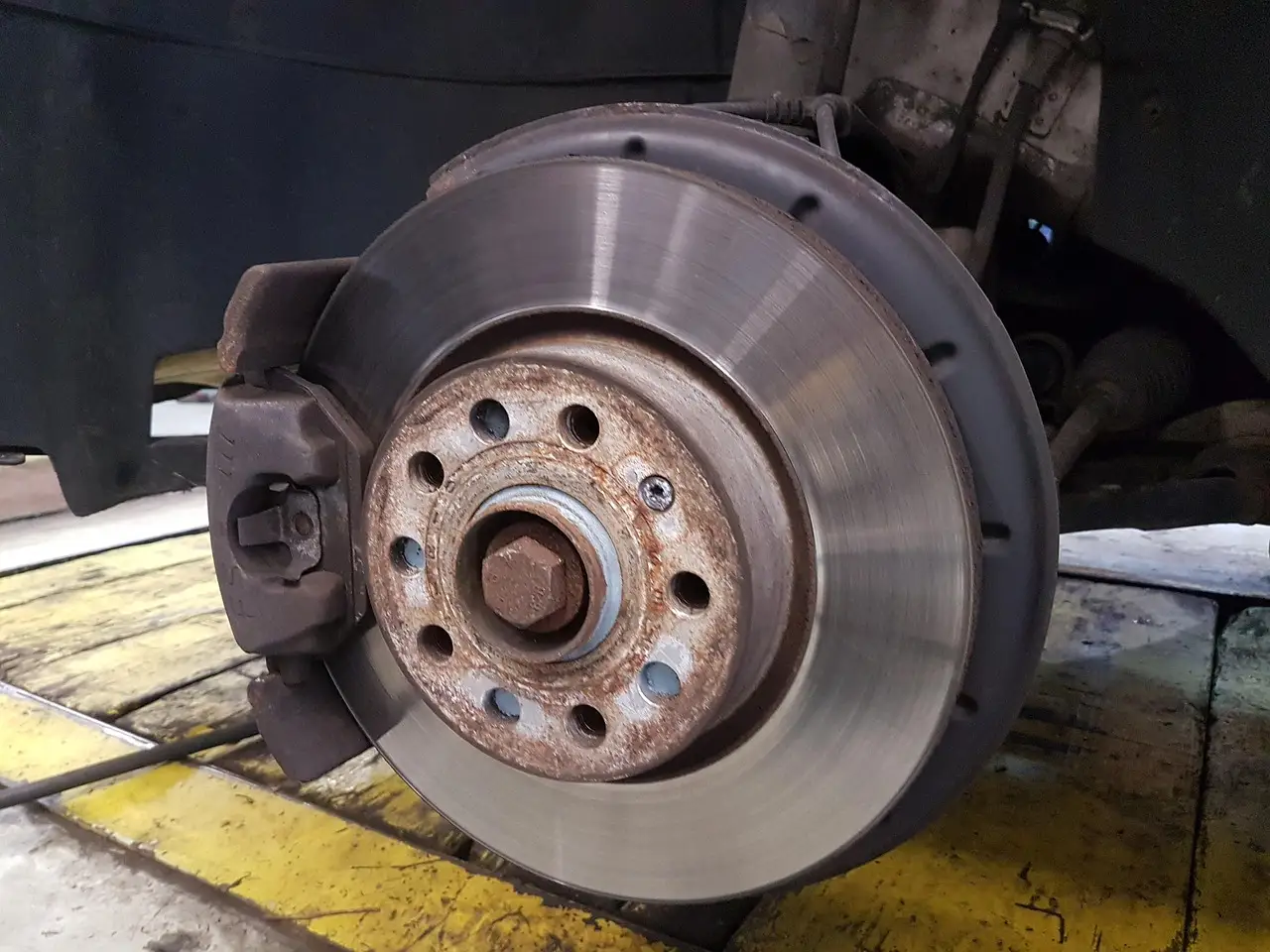
Pads are the friction material, so they take the day-to-day hit. Thin pad material can often be seen through wheel openings, and once the lining gets low enough, metal backing or wear indicators can create squealing or chirping. If the noise has turned into grinding, stop driving and check the brakes right away.
What rotor wear usually sounds and feels like
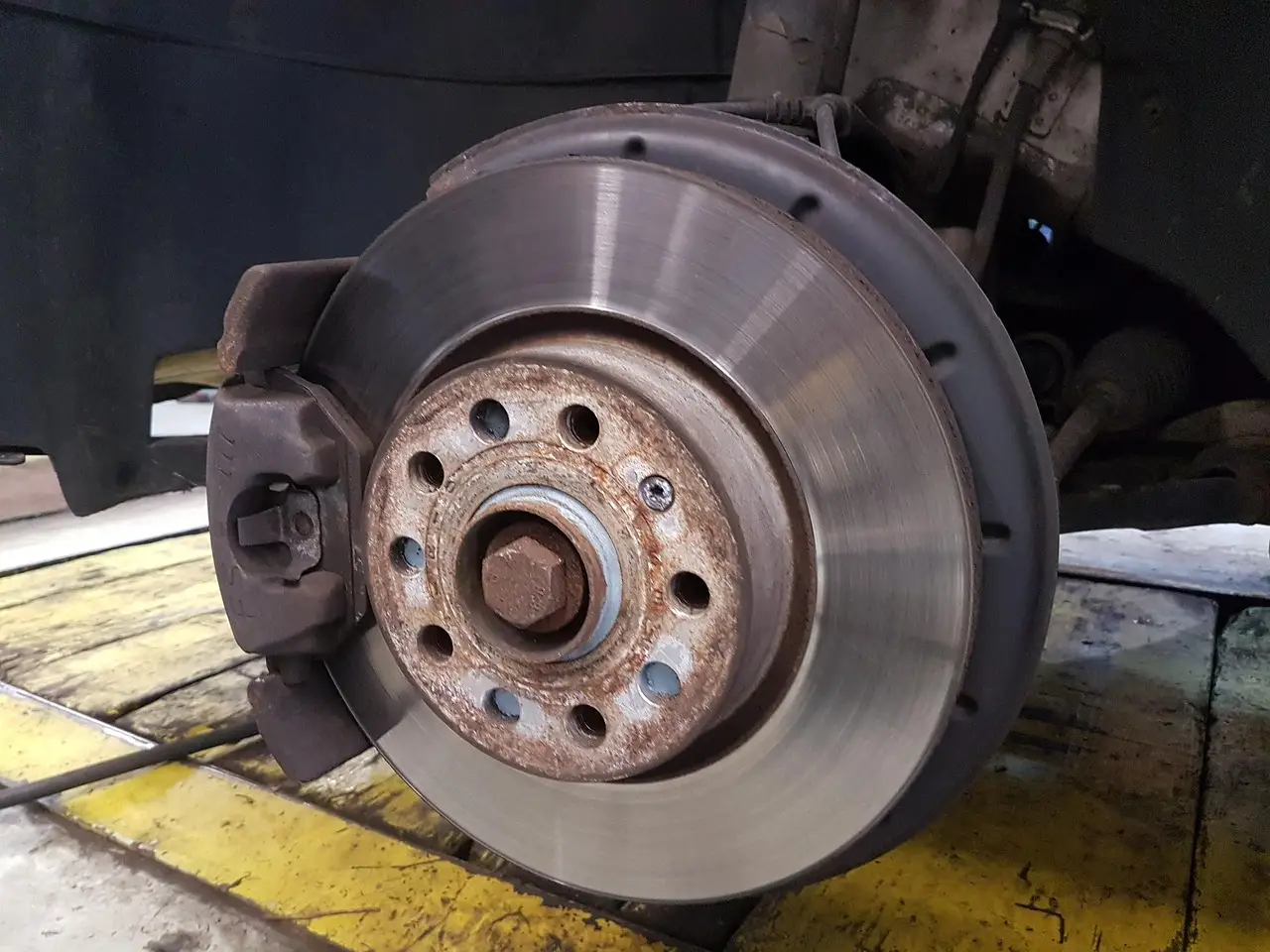
Rotors are the metal discs behind the wheels. They can warp, thin, score, or develop heat spots, and those defects often show up as vibration in the steering wheel or a pulsing pedal under braking. A rotor can also feel fine at low speed and then shake more at highway speed or during firmer stops.
Quick symptom split: noise, vibration, pedal feel, and stopping distance
Noise by itself often starts with pads, but vibration usually shifts the question toward rotors, hubs, or installation issues. A soft or spongy pedal is not a pad-only clue; it calls for a broader brake inspection because fluid, air, or caliper issues may be part of the problem. Longer stopping distance can come from worn pads, contaminated pads, or a rotor surface that no longer grips evenly.
📊 Ford offers 2026 F-150 pricing starting at $37,290. Source: FORD.
Do I need brake pads, rotors, or both on my Ford?
You may need pads only if the lining is thin, but the rotors are above minimum thickness and the pedal stays smooth. You may need rotors only if vibration, pulsation, or scoring is present even though the pad material still has life left. You need both when wear, heat damage, or thickness loss affects both sides of the brake job.
Pad-only replacement signs
Pad-only service fits when the pads are worn down but the rotor face is still flat enough for reuse. Thin pad material visible through the wheel opening can be a clue, along with squealing or a longer stopping distance. This is common on Ford vehicles that see stop-and-go traffic, short trips, or frequent city braking.
Rotor-only replacement signs
Rotor-only replacement is less common, but it happens when the discs are scored, heat-checked, warped, or below Ford’s minimum thickness, while the pads still have usable lining. Steering wheel shake during braking is a strong clue here, especially if the pads were replaced recently and the symptom did not go away.
When both parts should be replaced together
Replace both when the pads are worn and the rotors are below thickness, badly grooved, or have heat damage that cannot be corrected. This is the smarter move if the old pads were run too long, because worn friction material can scar the rotor and cut the next service interval short. Say your Explorer starts grinding after months of city driving; that combination usually means the rotor surface has already paid for the overdue pad wear.
What to inspect before you book Ford brake service
Check the visible wear first, then tie that to how the vehicle feels on the road. Thin pads, scored rotors, heat spots, shake during braking, or a pulsing pedal give you a stronger answer than a quick guess, and towing, traffic, and hot pavement matter because they change how fast the parts wear.
Look through the wheel openings for thin pads, scoring, and heat spots
A flashlight through the wheel opening can reveal a lot. If the pad material looks very thin, or the rotor face shows deep grooves, blue heat spots, or an uneven surface, do not treat the job as pads only without checking the rotor thickness. Visual inspection helps, but it does not replace a measurement.
Check for steering wheel shake and pedal pulsation during braking
Steering wheel shake under braking often points toward rotor trouble, especially on the front axle. Brake pedal pulsation is another warning sign, and it matters even if the pads still look acceptable. Say your F-150 shudders when slowing from highway speed; that is the kind of symptom that deserves a thickness check before you buy pads alone.
Note towing, traffic, and route conditions that speed wear
Stop-and-go traffic, city driving, hot pavement, and heavy loads can all increase brake heat and friction work. Towing raises that load again, and aggressive braking often shortens pad life faster than steady highway use. Hybrid and EV models can wear the brakes unevenly because regenerative braking reduces how often the pads are used, which can leave the front and rear pads in different states of wear.
When can Ford rotors be resurfaced instead of replaced?
Rotors can be resurfaced only if there is enough material left after the cut and the finished rotor still stays above the recommended minimum thickness. Resurfacing removes a small amount of metal, so it can help with light scoring or mild thickness variation, but it is not a fix for a rotor that is already too thin or badly damaged.
How resurfacing works
Resurfacing machines the rotor face to remove light grooves and restore a more even braking surface. That can help when the rotor is otherwise sound and thick enough to remain within spec after machining. It is a repair step, not a substitute for a failing disc.
Why minimum rotor thickness decides the answer
Minimum rotor thickness must be checked against Ford-specific specification before reuse. That number matters more than a visual guess because a rotor can look acceptable and still be too thin to keep. A technician should measure it, since below-spec thickness leaves less thermal capacity and a higher risk of future vibration or cracking.
When replacement is the safer call
Replace the rotor if it is below minimum thickness, deeply scored, heat-damaged, or still causing vibration after a proper service. Replacement is also the safer choice when resurfacing would leave too little material for another service cycle. If the rotor is already near the limit, cutting it once can turn a borderline part into a done part.
Ford brake replacement decision table
This table turns the common symptoms into a quick decision path. Use it as a sorting tool, then confirm with thickness measurements and a proper inspection before you order parts.
| Symptom | Likely cause | Quick driveway check | Recommended action |
|---|---|---|---|
| Squealing or chirping on light stops | Brake pads near end of life | Look through wheel openings for thin pad material | Replace pads; inspect rotors for scoring |
| Grinding noise | Pads worn past the backing material, with possible rotor damage | Inspect for metal-to-metal wear or deep rotor grooves | Replace pads and inspect rotors closely; replace rotors if damaged |
| Steering wheel vibration when braking | Rotor thickness variation, warping, or hub runout | Note whether the shake starts during moderate to firm braking | Check rotor thickness and mounting surfaces; likely rotor service |
| Brake pedal pulsation | Rotor face problem or uneven rotor installation | Compare feel at low speed and higher speed stops | Measure rotors; replace or resurface if within spec |
| Longer stopping distance with no vibration | Pad wear, glazed pads, or contaminated friction material | Check pad thickness and look for uneven wear | Usually pads first; inspect rotors if the surface is rough |
| Vibration after new pads were installed | Wheel torque issue, hub problem, or rotor runout | Verify lug nut torque and inspect hub and rotor mounting faces | Recheck installation before assuming the pads are the problem |
For common Ford platforms such as the F-150, Escape, Explorer, and Maverick, the rule stays the same even though brake size and load differ: match the symptom, then verify thickness. A lightweight crossover can show pad wear sooner in city use, while a truck or three-row SUV may expose rotor issues sooner because of greater brake load.
Pad-only repair usually costs less because it avoids extra parts and machining. Pad-and-rotor service costs more up front, but it can prevent repeat labor if the rotor is already near its limit or the surface is too uneven for the new pads to bed in properly.
Why driving conditions change pad and rotor life
Driving conditions matter because braking is heat management. Stop-and-go traffic and city use cycle the pads more often, towing and heavy loads increase the energy the brakes must absorb, and hot pavement can add more thermal stress. Highway driving is gentler on pads and rotors than repeated low-speed stops.
Stop-and-go traffic and city use
Frequent braking keeps the pads hot and worn, so urban routes usually shorten pad life first. Rotors can still suffer if the vehicle is driven hard while the pads are low, because the disc then has to absorb more heat with less cushioning from the friction material.
Towing, heavy loads, and hot pavement
Towing and cargo load demand more from the brakes on every stop. That extra work can raise rotor temperatures and make pad wear faster, especially on downhill routes or in hot weather. Towing does not automatically mean rotor failure, but it does move the inspection date forward.
Hybrid and EV regen braking and uneven wear patterns
Hybrid and EV models use regenerative braking to slow the vehicle with the electric system first, so the friction brakes may engage less often. That can create uneven front and rear wear, and it can also let rotor surfaces develop rust or uneven deposits if the brakes do not get used regularly. Ford-approved pad materials matter here because the friction blend has to match the vehicle’s braking strategy and noise targets.
Are Ford-approved pad materials worth it?
Ford-approved pad materials are worth serious attention because pad blend affects braking feel, noise control, and rotor life. The right friction formula matters even more on performance models, hybrids, and EVs, where brake use patterns and thermal demands differ from a basic commuter setup.
Brake feel and noise control
Different pad materials bite differently and can change pedal feel, cold-stop response, and squeal tendency. A good match helps the brakes feel consistent instead of grabby or muted, and it can reduce the chance that a new pad job creates noise complaints right away.
Rotor life and application fit
Pad material that is too aggressive can wear rotors faster, while a poor-quality blend can leave deposits or inconsistent transfer film on the disc. That is why the pad choice should fit the vehicle use case, not just the catalog description.
Why material choice matters more on performance, hybrid, and EV models
Performance trims need repeatable heat control, and hybrids or EVs may need a pad material that works well after long periods of light brake use. Ford also offers platform options that can change how owners book service, including Ford Mobile Service for remote brake work and Ford Pickup & Delivery for vehicle collection and return. Ford Rewards is available through the Ford app, and Ford says its available Connectivity Package includes a Wi-Fi hotspot; those features do not change the brake decision, but they can make scheduling easier.
What to check after brake parts are installed
After installation, verify wheel torque, confirm the brake pedal feels normal, and watch for early vibration. Incorrect wheel torque can contribute to rotor-related vibration complaints, so the final check matters as much as the parts choice. If the pedal pulses right away or the steering wheel shakes, the diagnosis is not finished.
Wheel torque verification
Wheel torque after brake service should be checked with the correct specification, not guessed by feel. Uneven or incorrect torque can distort how the wheel sits on the hub and can create vibration that looks like a rotor problem. That check is basic, but it is not optional.
Bed-in expectations and early warning signs
New pads and rotors often need a short bed-in period to establish an even transfer layer. If the brakes squeal loudly, grab unevenly, or pulsate during the first few stops, those are early warning signs that the install, rotor condition, or pad choice needs another look. A normal break-in should not feel like a failure.
What vibration after new pads can point to
Vibration after a pad change can come from rotor runout, uneven hub rust, improper wheel torque, or a rotor that was already too thin. A common first-timer mistake is assuming new pads solve all brake complaints; if the shake remains, the disc, hub face, or torque pattern needs inspection next.
Choose Ford brake pads if…
Choose pads if the lining is thin, the rotors are still above minimum thickness, and the brake pedal stays smooth. This is the better pick for squealing, chirping, or longer stopping distance when the disc face is still usable, and it is usually the lower-cost repair.
Choose rotors if…
Choose rotors if you have steering wheel vibration, pedal pulsation, deep scoring, heat spots, or a thickness reading below Ford’s minimum. This is also the safer call when resurfacing would leave too little metal behind or when the rotor was already close to the limit.
Choose both if…
Choose both when worn pads have already damaged the disc, when the rotor cannot be resurfaced within spec, or when the brake symptoms point to more than one fault at once. If the vehicle tows, runs heavy city routes, or shows vibration after a recent pad job, replacing both often gives the cleanest reset.
Frequently asked questions
Do I need brake pads, rotors, or both on my Ford?
Pad wear usually shows up first, but the answer depends on thickness, surface condition, and pedal feel. Thin pads with smooth rotors point to pads only, while vibration, pulsation, or heavy scoring points toward rotor service, and both are needed when wear has spread to the disc.
How can I tell if my Ford brake pads are worn out?
Look for thin pad material through the wheel openings, listen for squealing or chirping, and note any longer stopping distance. If the sound becomes grinding, the pads may be worn past the usable layer and the rotor may already be damaged.
What does rotor wear feel like on a Ford?
Rotor wear often feels like steering wheel shake, brake pedal pulsation, or uneven grabbing during stops. The symptom may be mild at first and become more obvious at higher speeds or with firmer braking.
Can worn pads damage Ford rotors?
Yes. If pad wear is ignored, the backing plate or worn friction layer can score the rotor and shorten its life. That is how a pad-only repair turns into a pad-and-rotor repair.
When can Ford rotors be resurfaced instead of replaced?
Resurfacing is an option only when enough metal remains after machining and the finished rotor stays above Ford’s minimum thickness. If the disc is below spec, badly scored, or still causing pulsation, replacement is the safer choice.
How thin do Ford brake pads get before replacement?
A practical replacement point is about 3 mm of lining or less. That is thin enough that the margin for heat, noise, and stopping performance drops quickly, especially on vehicles that see towing, city traffic, or repeated hard stops.
Products related to this article
Sponsored / affiliate links. As an Amazon Associate I earn from qualifying purchases. I may earn additional commission from eligible campaigns.